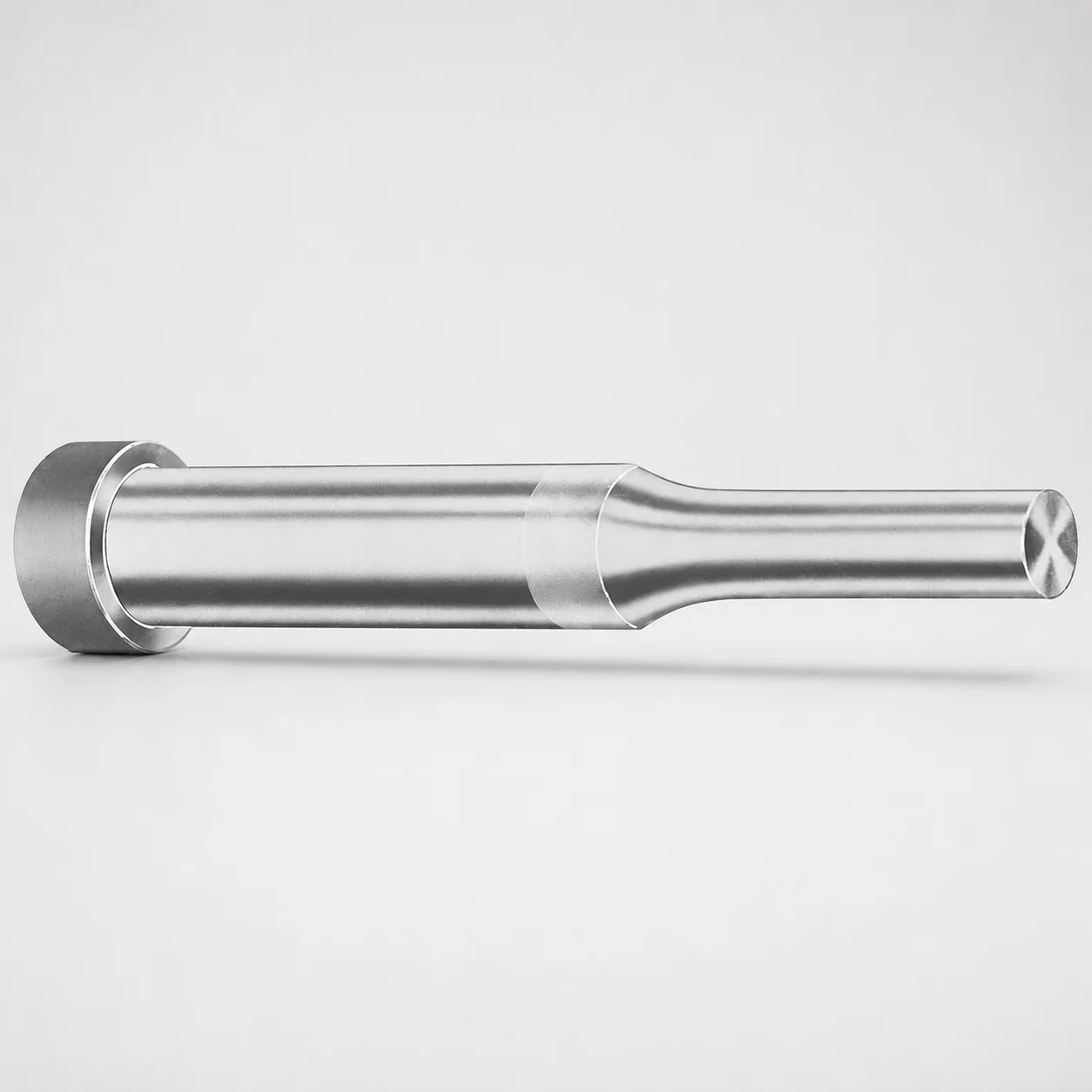
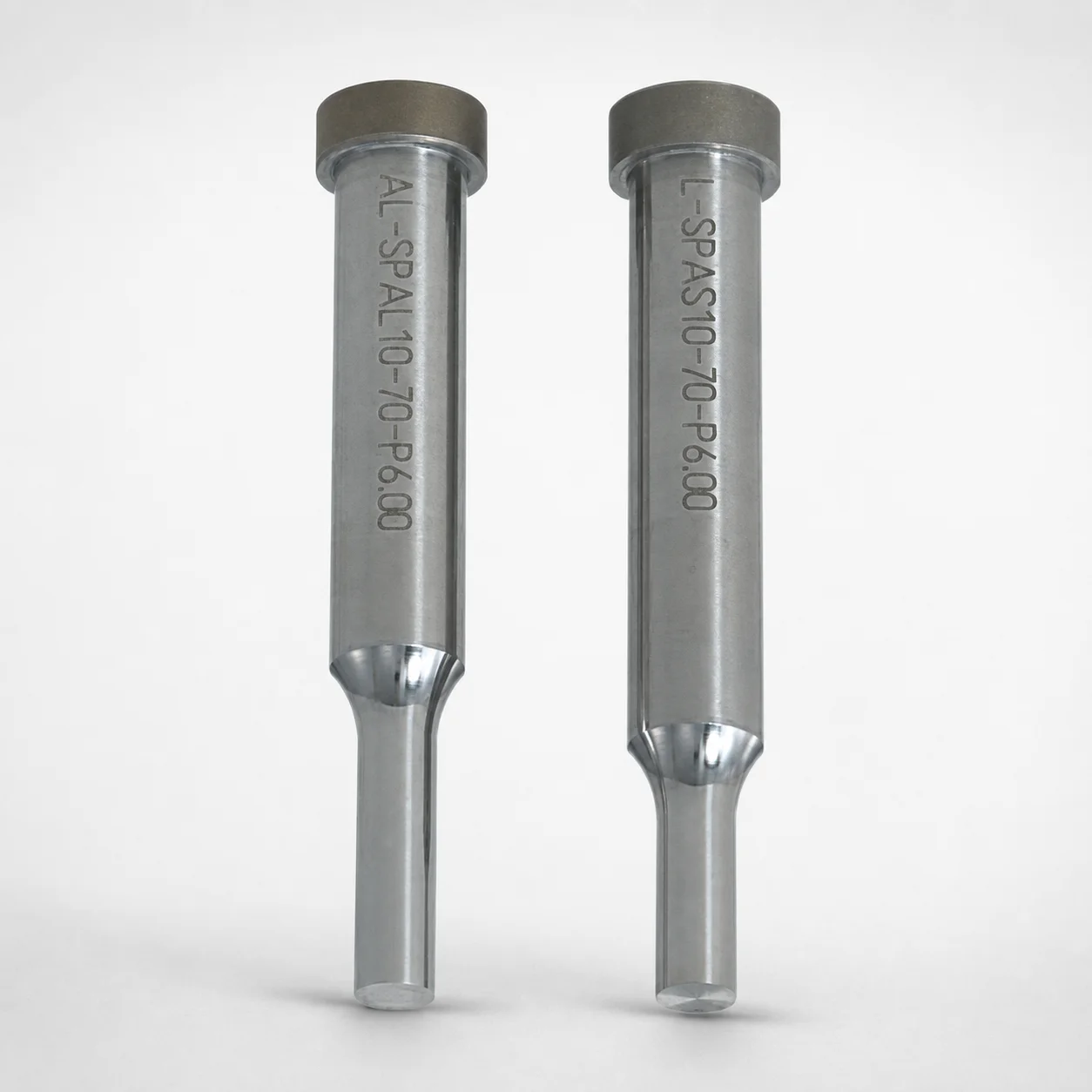
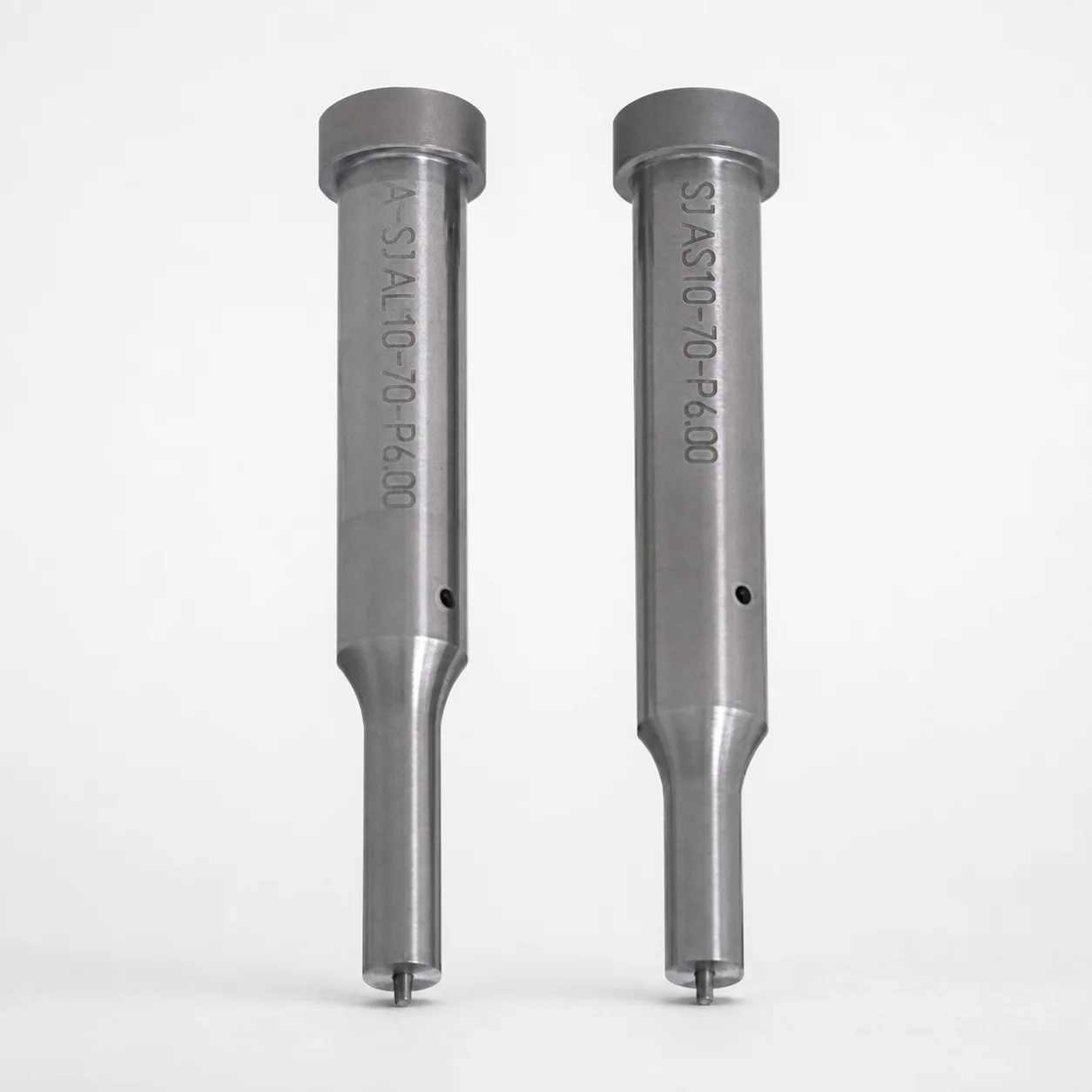
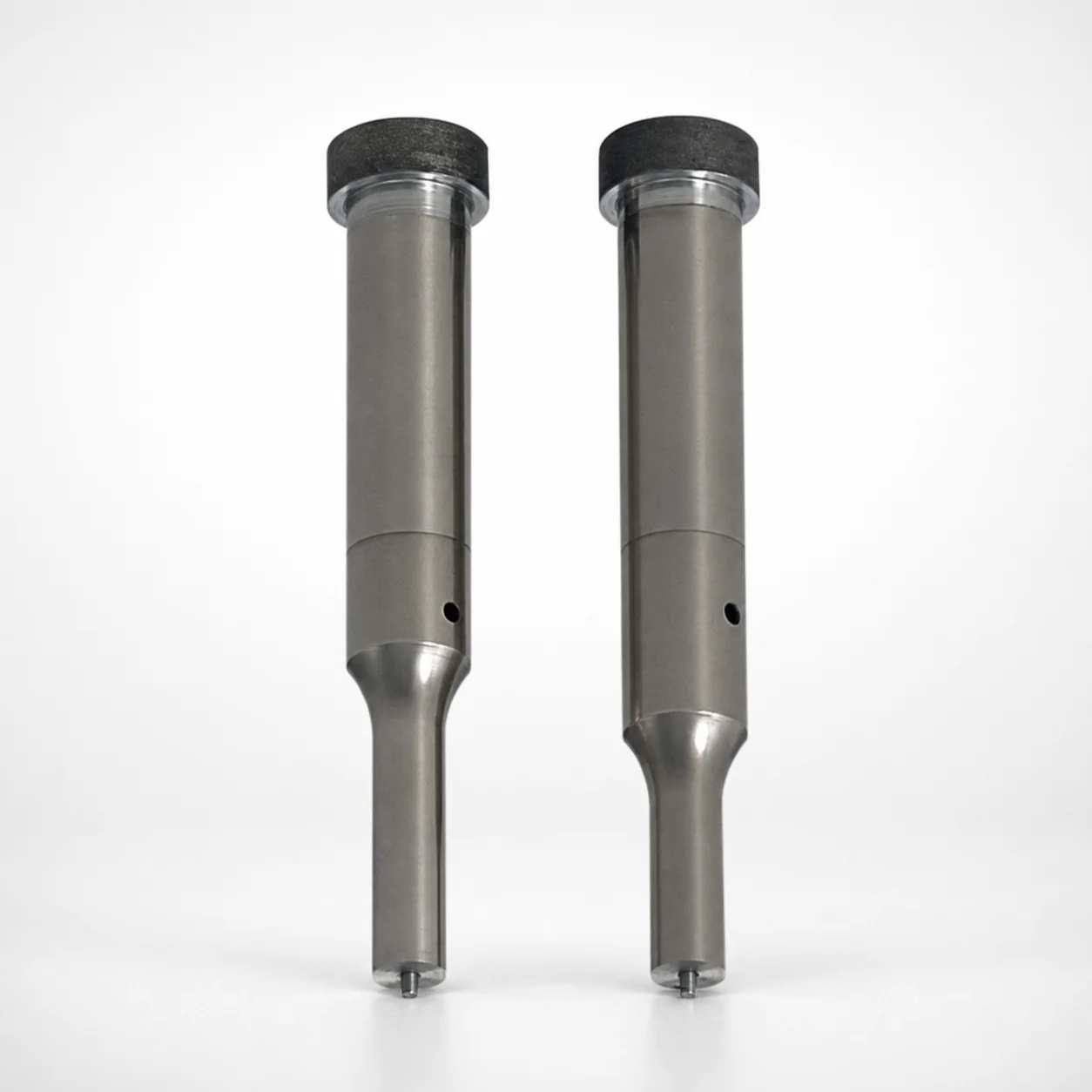
Regular Punches X Tip CRN Coating (M2 Steel)
Regular Punches X tip (M2 steel) with CRN coating are designed for stable punching performance in progressive and transfer dies. The CRN layer helps control wear and supports consistent forming cycles.
- X tip geometry improves material engagement for repeatable punching results
- M2 steel construction delivers strong wear resistance for tooling applications
- CRN coating reduces friction and helps extend punch life in production
- Used in metric stamping and die sets for metal forming operations
Specifications
318 configurations available
| Tip shape | Material | D (Shank dia.) (mm) | L1 (Point Length) (mm) | L (Length) (mm) | P Dimension (mm) | W Dimension (mm) | R Dimension (mm) |
|---|---|---|---|---|---|---|---|
| H | M2 | 04 | 8 ~ 13 | 40 ~ 100 | 1.3 ~ 3.95 | 1.3 ~ 1.59 | - |
| H | M2 | 04 | 8 ~ 13 | 40 ~ 100 | 1.3 ~ 3.95 | 1.6 ~ 3.95 | - |
| H | PS | 04 | 8 ~ 13 | 40 ~ 100 | 1.3 ~ 3.95 | 1.3 ~ 1.59 | - |
| H | PS | 04 | 8 ~ 13 | 40 ~ 100 | 1.3 ~ 3.95 | 1.6 ~ 3.95 | - |
| H | M2 | 05 | 13 ~ 19 | 40 ~ 100 | 1.6 ~ 4.95 | 1.6 ~ 4.95 | - |
| H | PS | 05 | 13 ~ 19 | 40 ~ 100 | 1.6 ~ 4.95 | 1.6 ~ 4.95 | - |
| H | M2 | 06 | 13 ~ 19 | 40 ~ 100 | 1.6 ~ 5.95 | 1.6 ~ 5.95 | - |
| H | PS | 06 | 13 ~ 19 | 40 ~ 100 | 1.6 ~ 5.95 | 1.6 ~ 5.95 | - |
| H | M2 | 08 | 19 ~ 25 | 50 ~ 100 | 2.5 ~ 7.95 | 2.5 ~ 7.95 | - |
| H | PS | 08 | 19 ~ 25 | 50 ~ 100 | 2.5 ~ 7.95 | 2.5 ~ 7.95 | - |
| H | M2 | 10 | 19 ~ 25 | 50 ~ 100 | 3.2 ~ 9.95 | 3.2 ~ 9.95 | - |
| H | PS | 10 | 19 ~ 25 | 50 ~ 100 | 3.2 ~ 9.95 | 3.2 ~ 9.95 | - |
| H | M2 | 13 | 19 ~ 25 | 50 ~ 100 | 4 ~ 12.95 | 4 ~ 4.49 | - |
| H | M2 | 13 | 19 ~ 25 | 50 ~ 100 | 4 ~ 12.95 | 4.5 ~ 12.95 | - |
| H | PS | 13 | 19 ~ 25 | 50 ~ 100 | 4 ~ 12.95 | 4 ~ 4.49 | - |
| H | PS | 13 | 19 ~ 25 | 50 ~ 100 | 4 ~ 12.95 | 4.5 ~ 12.95 | - |
| H | M2 | 16 | 19 ~ 25 | 50 ~ 100 | 6 ~ 15.95 | 6 ~ 15.95 | - |
| H | PS | 16 | 19 ~ 25 | 50 ~ 100 | 6 ~ 15.95 | 6 ~ 15.95 | - |
| H | M2 | 20 | 19 ~ 25 | 56 ~ 100 | 6 ~ 19.95 | 6 ~ 7.99 | - |
| H | M2 | 20 | 19 ~ 25 | 56 ~ 100 | 6 ~ 19.95 | 8 ~ 19.95 | - |
| H | PS | 20 | 19 ~ 25 | 56 ~ 100 | 6 ~ 19.95 | 6 ~ 7.99 | - |
| H | PS | 20 | 19 ~ 25 | 56 ~ 100 | 6 ~ 19.95 | 8 ~ 19.95 | - |
| H | M2 | 25 | 19 ~ 25 | 56 ~ 100 | 6 ~ 24.95 | 6 ~ 8.99 | - |
| H | M2 | 25 | 19 ~ 25 | 56 ~ 100 | 6 ~ 24.95 | 9 ~ 24.95 | - |
| H | PS | 25 | 19 ~ 25 | 56 ~ 100 | 6 ~ 24.95 | 6 ~ 8.99 | - |
| H | PS | 25 | 19 ~ 25 | 56 ~ 100 | 6 ~ 24.95 | 9 ~ 24.95 | - |
| H | M2 | 32 | 25 ~ 30 | 63 ~ 100 | 7.2 ~ 31.95 | 7.2 ~ 9.99 | - |
| H | M2 | 32 | 25 ~ 30 | 63 ~ 100 | 7.2 ~ 31.95 | 10 ~ 31.95 | - |
| H | PS | 32 | 25 ~ 30 | 63 ~ 100 | 7.2 ~ 31.95 | 7.2 ~ 9.99 | - |
| H | PS | 32 | 25 ~ 30 | 63 ~ 100 | 7.2 ~ 31.95 | 10 ~ 31.95 | - |
| J | M2 | 04 | 8 ~ 13 | 40 ~ 100 | 1.3 ~ 3.95 | 1.3 ~ 1.59 | - |
| J | M2 | 04 | 8 ~ 13 | 40 ~ 100 | 1.3 ~ 3.95 | 1.6 ~ 3.95 | - |
| J | PS | 04 | 8 ~ 13 | 40 ~ 100 | 1.3 ~ 3.95 | 1.3 ~ 1.59 | - |
| J | PS | 04 | 8 ~ 13 | 40 ~ 100 | 1.3 ~ 3.95 | 1.6 ~ 3.95 | - |
| J | M2 | 05 | 13 ~ 19 | 40 ~ 100 | 1.6 ~ 4.95 | 1.6 ~ 4.95 | - |
| J | PS | 05 | 13 ~ 19 | 40 ~ 100 | 1.6 ~ 4.95 | 1.6 ~ 4.95 | - |
| J | M2 | 06 | 13 ~ 19 | 40 ~ 100 | 1.6 ~ 5.95 | 1.6 ~ 5.95 | - |
| J | PS | 06 | 13 ~ 19 | 40 ~ 100 | 1.6 ~ 5.95 | 1.6 ~ 5.95 | - |
| J | M2 | 08 | 19 ~ 25 | 50 ~ 100 | 2.5 ~ 7.95 | 2.5 ~ 7.95 | - |
| J | PS | 08 | 19 ~ 25 | 50 ~ 100 | 2.5 ~ 7.95 | 2.5 ~ 7.95 | - |
| J | M2 | 10 | 19 ~ 25 | 50 ~ 100 | 3.2 ~ 9.95 | 3.2 ~ 9.95 | - |
| J | PS | 10 | 19 ~ 25 | 50 ~ 100 | 3.2 ~ 9.95 | 3.2 ~ 9.95 | - |
| J | M2 | 13 | 19 ~ 25 | 50 ~ 100 | 4 ~ 12.95 | 4 ~ 4.49 | - |
| J | M2 | 13 | 19 ~ 25 | 50 ~ 100 | 4 ~ 12.95 | 4.5 ~ 12.95 | - |
| J | PS | 13 | 19 ~ 25 | 50 ~ 100 | 4 ~ 12.95 | 4 ~ 4.49 | - |
| J | PS | 13 | 19 ~ 25 | 50 ~ 100 | 4 ~ 12.95 | 4.5 ~ 12.95 | - |
| J | M2 | 16 | 19 ~ 25 | 50 ~ 100 | 6 ~ 15.95 | 6 ~ 15.95 | - |
| J | PS | 16 | 19 ~ 25 | 50 ~ 100 | 6 ~ 15.95 | 6 ~ 15.95 | - |
| J | M2 | 20 | 19 ~ 25 | 56 ~ 100 | 6 ~ 19.95 | 6 ~ 7.99 | - |
| J | M2 | 20 | 19 ~ 25 | 56 ~ 100 | 6 ~ 19.95 | 8 ~ 19.95 | - |
Product Guide
Application Scenarios+
These standard punches with an X-tip profile are used in progressive and transfer metal-stamping tooling where stable penetration and repeatable part geometry are critical over high cycle counts.
In automotive connector and terminal stamping, the X-tip engagement is suited for consistent material bite, helping maintain stroke-to-stroke forming accuracy. The M2 steel base material supports wear resistance in dies that experience intermittent shock and abrasive particles.
For appliance and electrical housing bracket punching, the CRN coating helps reduce friction at the punch/work interface, supporting longer run life and more consistent forming cycles. This combination is particularly useful when dies are tuned for high output and tool wear can quickly shift clearances.
They are also commonly specified for precision die sets producing small features in stainless or coated sheet, where abrasion and galling risk demand a surface-treated punch and a geometry that feeds reliably into the die opening.
Material & Process Details+
This punch variant is built on M2 steel, a high-speed steel commonly selected for tooling requiring strong wear resistance and acceptable toughness under punching loads. When paired with a CRN coating, the surface is optimized to lower friction and mitigate wear mechanisms that shorten punch life.
- Hardness / wear-toughness balance: High-speed steel tooling grades typically achieve high hardness after heat treatment, delivering better abrasion resistance while retaining enough toughness to tolerate stamping impact.
- Heat treatment state: The cutting/tooling performance relies on proper hardening and tempering for M2, followed by coating application (CRN) to improve tribological behavior at the punch face and flanks.
- Trade-offs: Compared with more softer tooling steels, M2 with CRN generally offers higher wear resistance, but still requires correct alignment and die clearance to avoid premature chipping.
Alternate material options listed for this series include PS; selection depends on desired wear level versus cost and toughness requirements for the specific metal and cycle rate.
Sizing & Selection Guide+
Select dimensions by matching the punch geometry to the press stroke, die opening, and required formed feature depth while staying within available shank and point-length ranges.
- Shank diameter (D, mm): choose from 4 ~ 32 to fit your guide bushings and holder ID/retainer system.
- Overall length (L, mm): available ranges include 40 ~ 100, 50 ~ 100, 56 ~ 100, and 63 ~ 100. Use this to ensure adequate stick-out for maintenance and safe clearance to the stripper/die block.
- Point length (L1, mm): pick from 8 ~ 13, 13 ~ 19, 19 ~ 25, 25 ~ 30, or 19 ~ 25 (range as provided). L1 should align with the required penetration depth into the die land for the part feature.
- P, W, R dimensions: use P: 0.8 ~ 10, W: 1.3 ~ 10, and R: 0.2 to align the X-tip profile with your strip material thickness and die clearance strategy.
Where precise fit is needed (holder/bushing interfaces), prioritize the specified D and verify operational clearance; coating does not remove the need for dimensional compliance at the shank.
Frequently Asked Questions
Which tip shape options are available for this regular punch series, and is X tip the recommended selection for consistent engagement?+
How do I choose the correct shank diameter (D) and overall length (L) for my punch holder and press setup?+
What point length (L1) should I select to achieve the required penetration depth in my die?+
What is the role of the CRN coating in a metal-forming die, and what failure modes does it help reduce?+
Between the available materials (M2 and PS), how should I decide for wear resistance versus toughness needs?+
Related Products
Need Custom Specifications?
Our engineering team can help with custom configurations, material selection, and volume pricing.