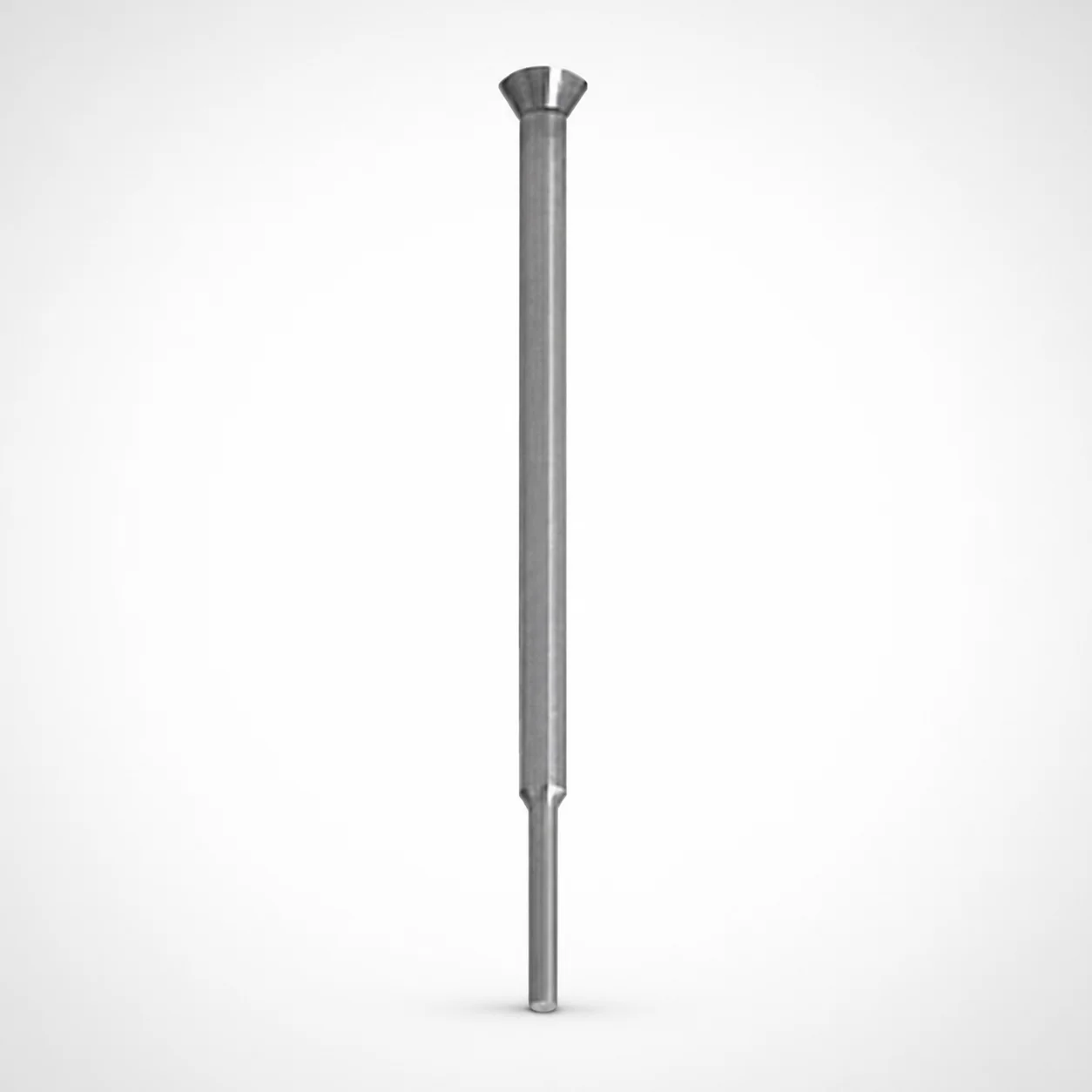
SHCL Type Mini Quill Punches
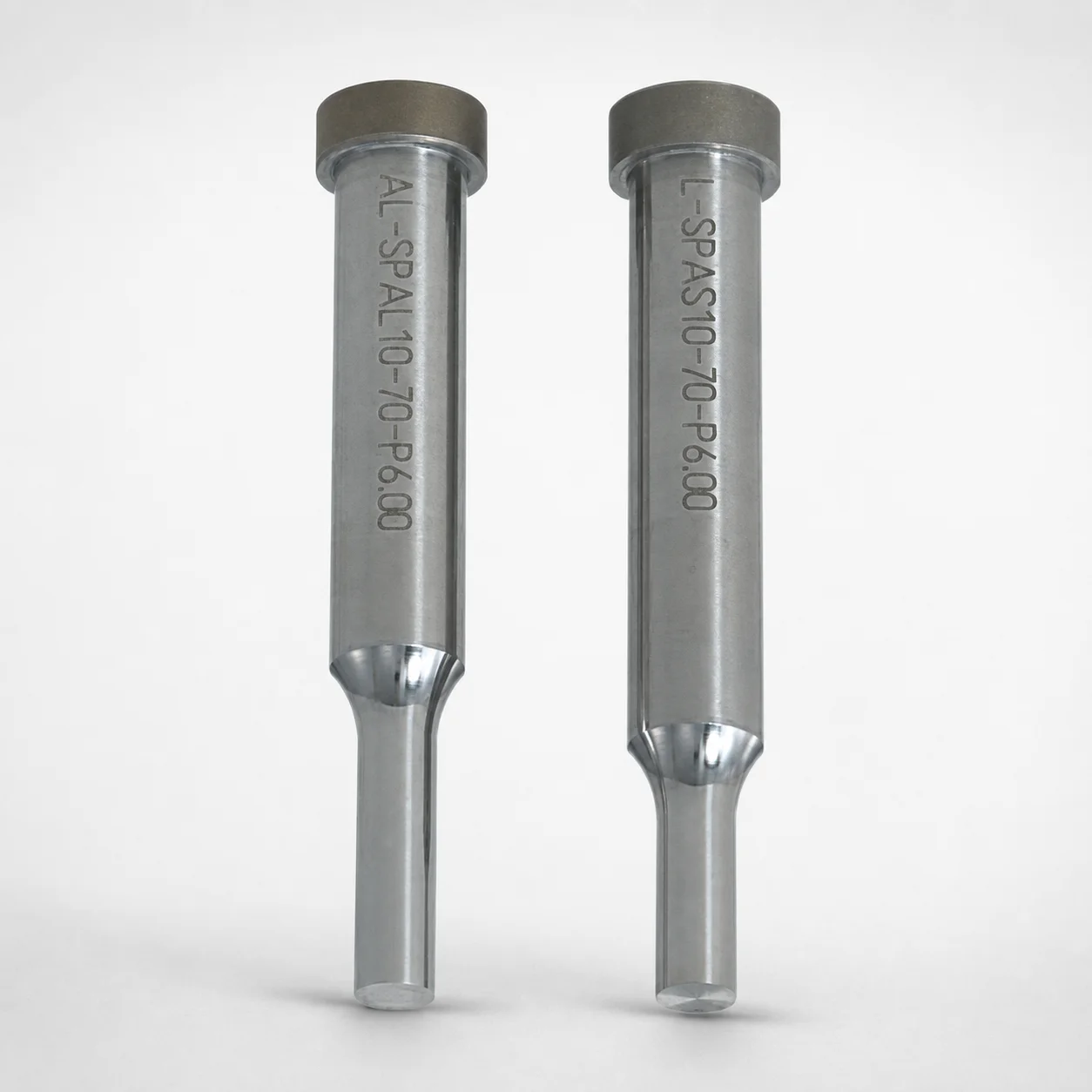
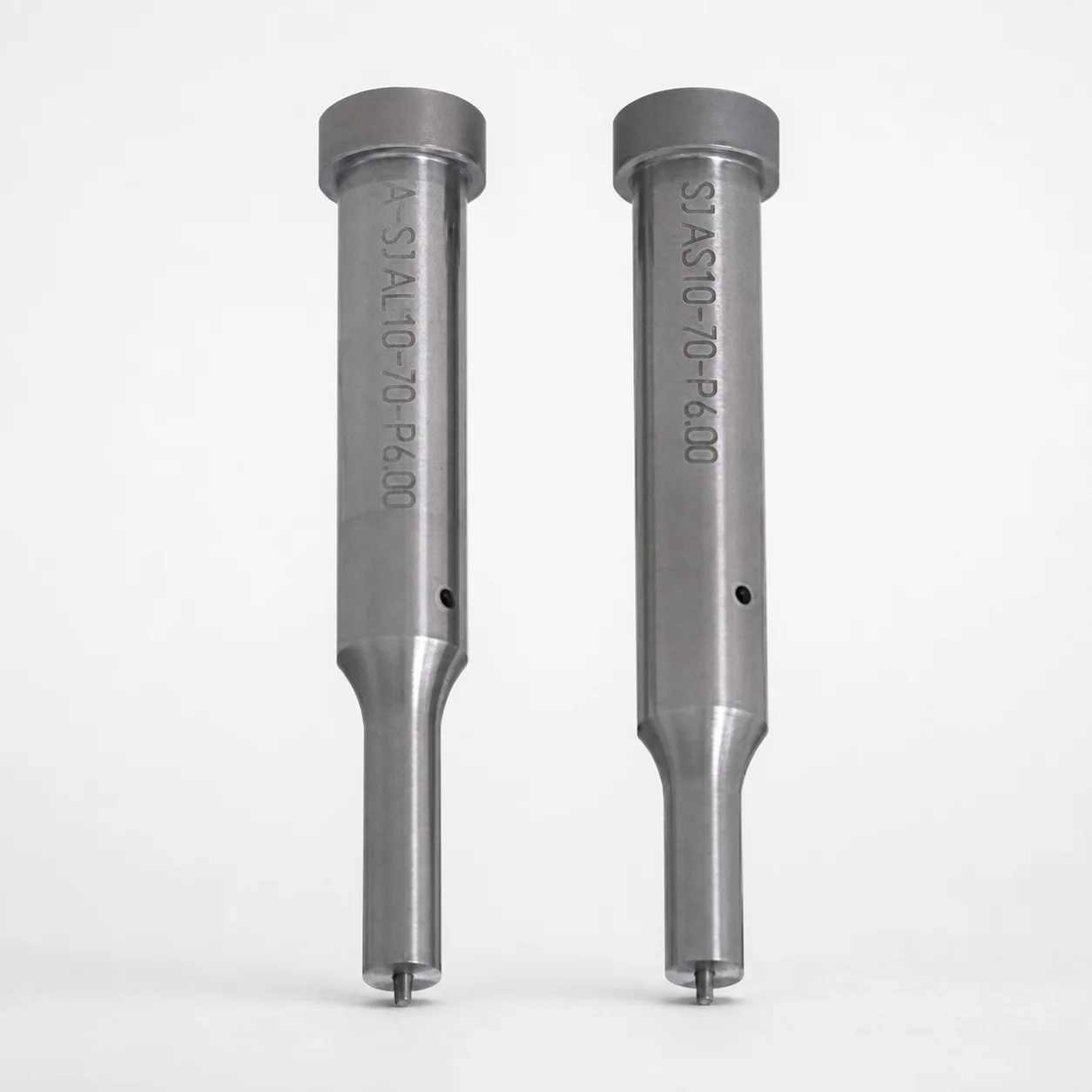
Mini Quill Punches (SHCL type) deliver reliable heavy-load performance with a round tip and single-stepped shank geometry for consistent forming in production tooling. Built from SKH51 equivalent (M2) steel, they support durable operation under demanding cycles.
- Single-stepped quill design supports controlled punch seating during operation
- Round tip geometry helps maintain predictable contact and material shear
- SKH51 equivalent (M2) steel offers strong wear resistance for long runs
- SHCL type construction suits close-tolerance punching applications using quill tooling
Specifications
10 configurations available
| D (Shank diameter) (mm) | P (Tip dimension) (mm) | L (L dimension) (mm) | LC (Full length alteration) (mm) | PC (Tip dimension alteration) (mm) | type |
|---|---|---|---|---|---|
| 1.6 | 0.3 ~ 1.59 | 25 ~ 50 | - | - | - |
| 1.6 | 0.3 ~ 1.59 | - | 25 ~ 50 | - | - |
| 2.0 | 0.5 ~ 1.99 | 25 ~ 50 | - | - | - |
| 2.0 | - | 25 ~ 50 | - | 0.3 ~ 0.5 | - |
| 2.0 | 0.5 ~ 1.99 | - | 25 ~ 50 | - | - |
| 2.0 | - | - | 25 ~ 50 | 0.3 ~ 0.5 | - |
| 2.5 | 1 ~ 2.49 | 25 ~ 50 | - | - | - |
| 2.5 | - | 25 ~ 50 | - | 0.5 ~ 1 | - |
| 2.5 | 1 ~ 2.49 | - | 25 ~ 50 | - | - |
| 2.5 | - | - | 25 ~ 50 | 0.5 ~ 1 | - |
Product Guide
Application Scenarios+
These SHCL-type mini quill punches are used in injection mold tooling and progressive-style forming stations where short, stable punch penetration is required. The round tip helps establish predictable shear engagement, while the single-stepped shank supports consistent seating in the quill system during repeated cycles.
- Electronics and automotive connector molds: Suitable for punching thin features such as insert windows or localized forming steps, where controlled punch contact reduces variation across cavity shots.
- Appliance and small-part brackets: Used to form or trim small stamped-like geometries within mold steel pockets, benefiting from the quill design’s stable guidance under load.
- Close-tolerance production tooling: The compact shank and selectable tip ranges (P) make it easier to match fine cavity/core requirements without oversized punch bodies.
The SKH51-equivalent hardened steel variant is selected for stable punching performance over long production runs, balancing wear resistance with reliable toughness for everyday molding cycles.
Material & Process Details+
SHCL-type mini quill punches are manufactured from SKH51 equivalent (M2) high-speed steel, a grade known for high wear resistance during repetitive punching. As a hardened cutting tool steel, it is typically supplied in a hardened condition (quench & temper) to achieve stable hardness for prolonged contact and shear operations.
- Hardness: Hardened high-speed steel is generally specified in the high-HRC range (commonly about 62–66 HRC for M2/SKH51 equivalents), supporting durable edges under cyclic punching.
- Wear resistance vs. toughness: The high hardness improves edge retention and reduces tip rounding, while toughness is lower than more ductile steels—so proper support and correct punch seating are important.
- Manufacturing process: Tool-grade blanking followed by precision tip/grinding for the round tip and single-stepped shank, ensuring consistent seating and shear geometry.
If lower wear resistance steels were used instead, tip wear would accelerate on long runs; compared with tougher die steels, M2/SKH51 focuses on edge life for high-cycle punching.
Sizing & Selection Guide+
Correct selection is mainly about matching the shank and tip features to the quill tooling and the cavity/core cutting profile. This SHCL series provides D (shank diameter) options of 1.6, 2.0, and 2.5 mm, and L (length) fixed at 25 to 50 mm (as listed for the series).
- Step 1 — Select shank diameter (D): Choose D to fit the quill bore and guide system. Using the wrong D can cause misalignment, poor seating, and inconsistent punch penetration.
- Step 2 — Choose tip dimension (P) set: Match P to the required punch face size with available ranges: 0.3–1.59 mm, 0.5–1.99 mm, or 1–2.49 mm.
- Step 3 — Verify length and offsets: L and LC (full length alteration) are specified as 25–50 mm. Use PC (tip dimension alteration) options of 0.3–0.5 or 0.5–1 mm to fine-tune the tip profile while keeping the shank geometry consistent.
- Tolerance/fit considerations: Ensure the chosen D and the quill guide clearance maintain smooth sliding and repeatable seating for stable punching results.
Frequently Asked Questions
Which shank diameter (D) options are available for SHCL type mini quill punches, and how does D affect alignment in the quill system?+
What tip dimension (P) ranges can be selected, and how should P be matched to the required punching geometry?+
How do the single-stepped shank and the round tip contribute to stable punching in close-tolerance applications?+
What steel grade is used (SKH51 equivalent / M2), and what is the key trade-off engineers should consider?+
How should L, LC, and PC be selected when adjusting the punch length and tip alteration?+
Related Products
Need Custom Specifications?
Our engineering team can help with custom configurations, material selection, and volume pricing.