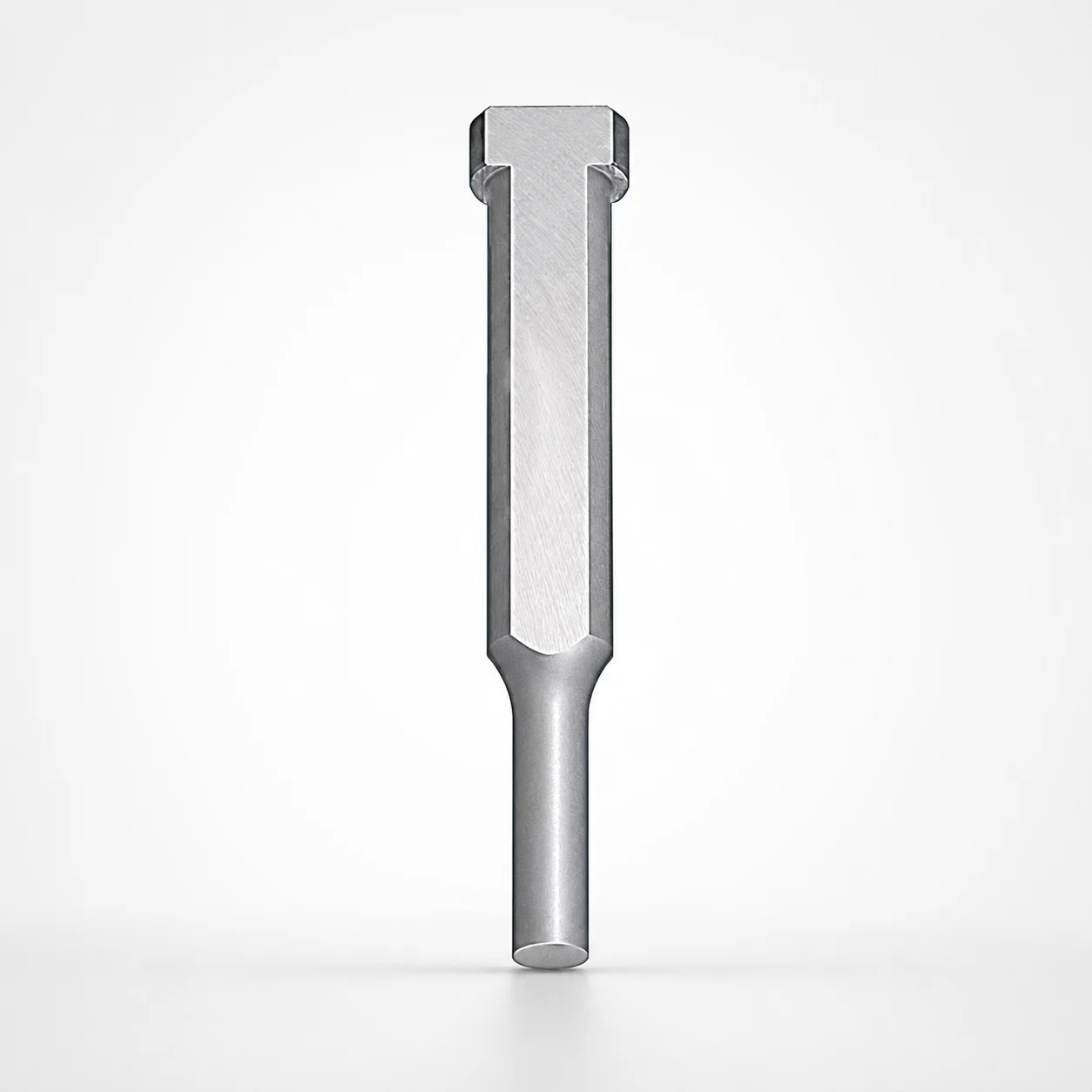
Alpha Treatment Key Flat Shank Shoulder Punches
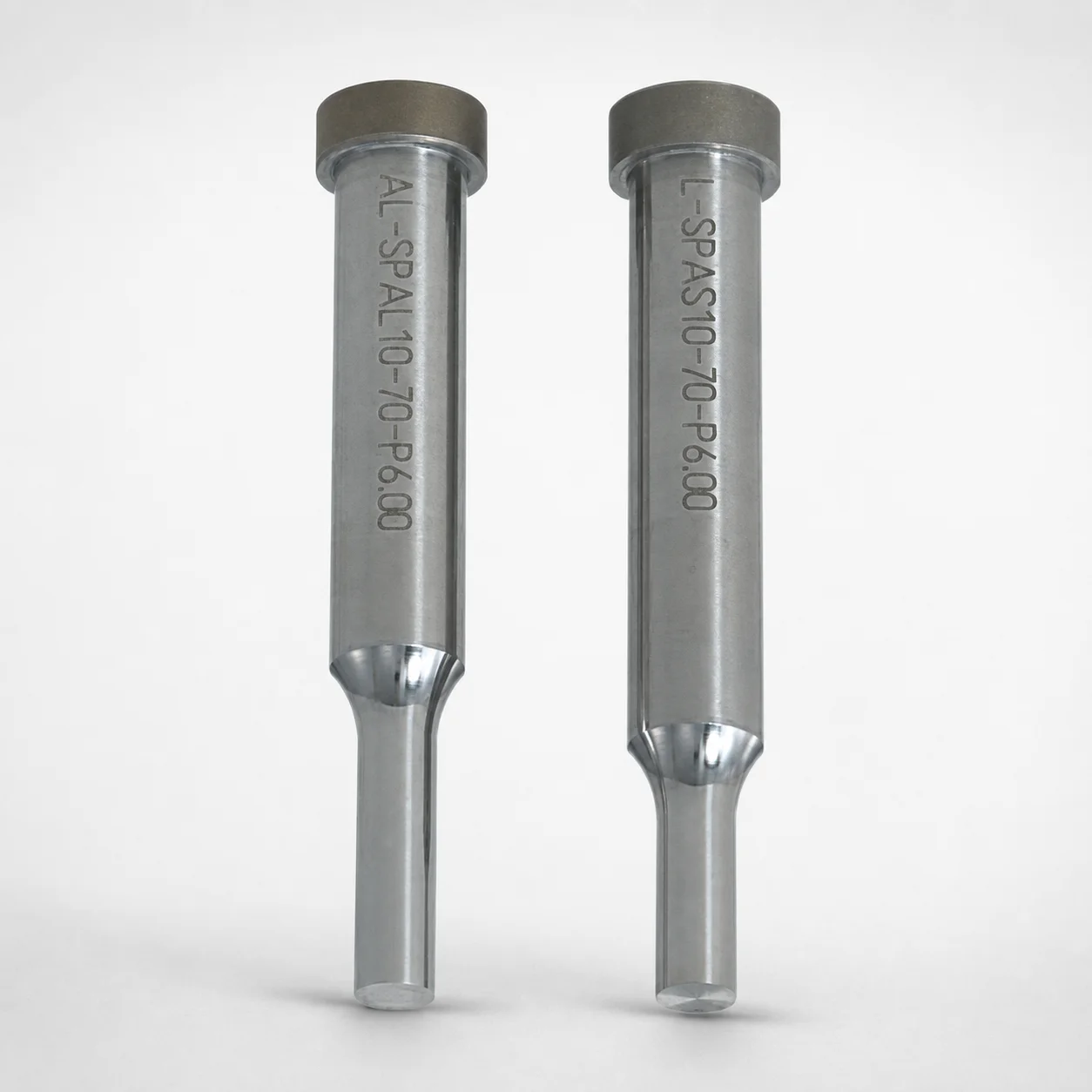
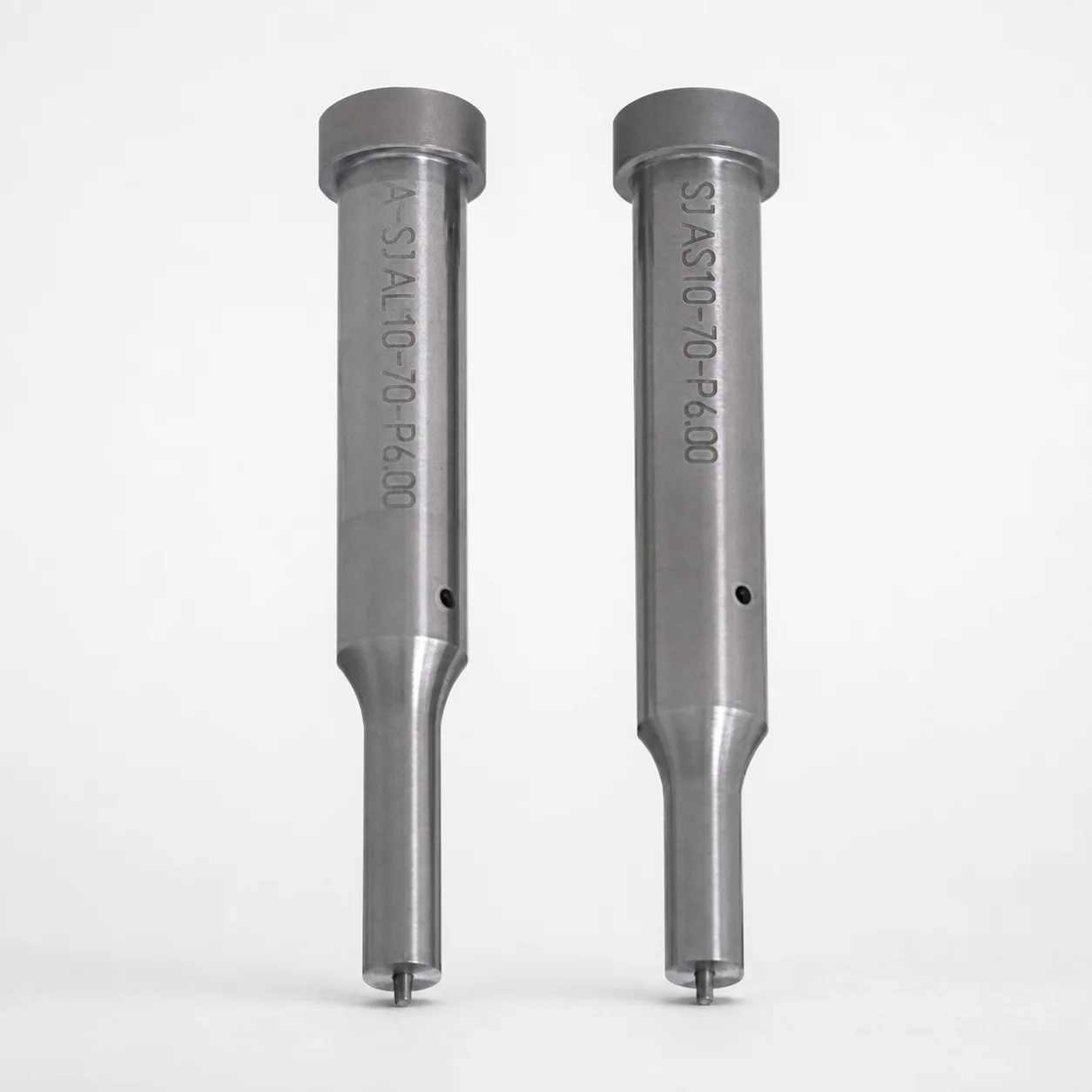
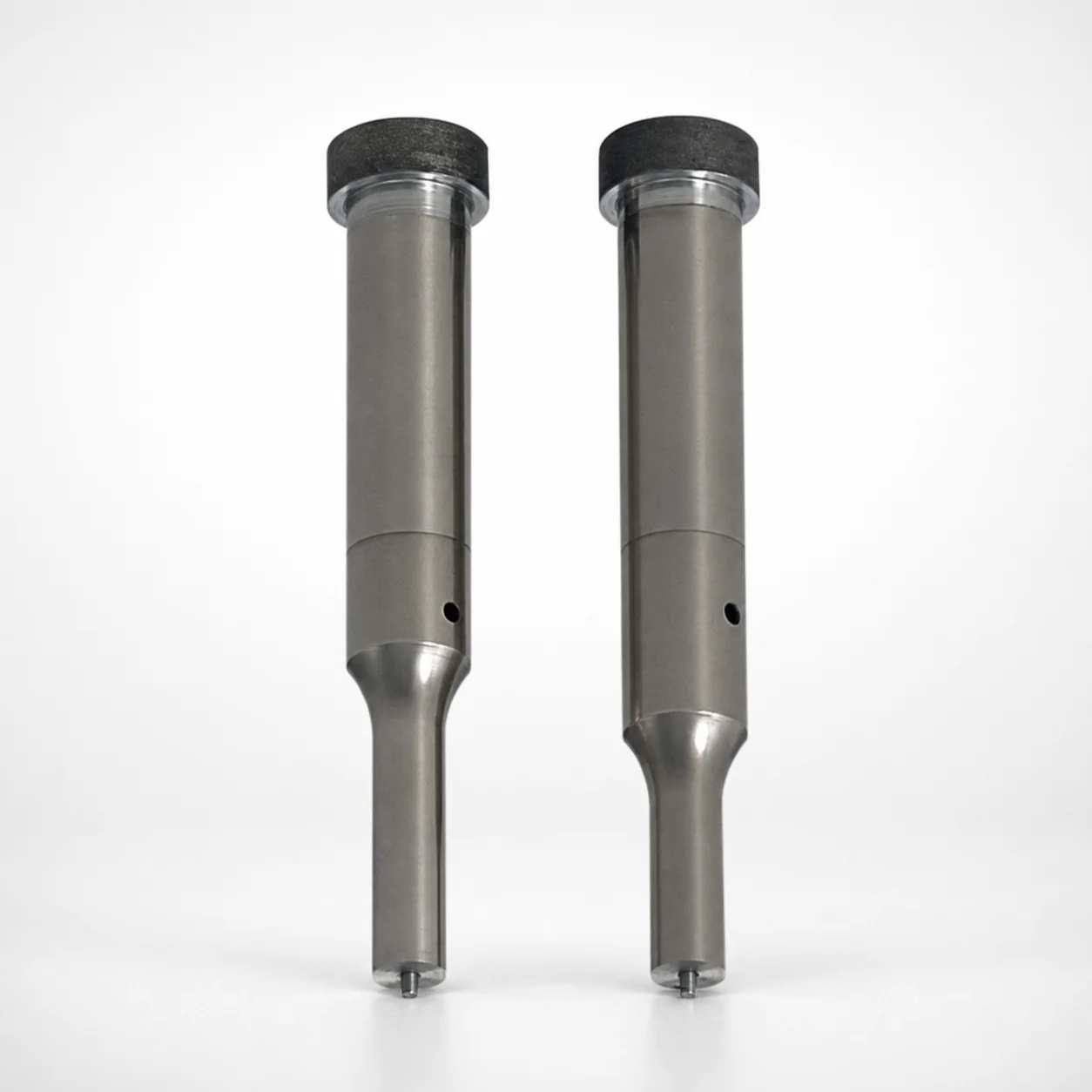
Alpha Treatment key flat shank shoulder punches use a nanocrystallized surface to increase hardness without sacrificing toughness or altering punch geometry during cutting. A microtexture also reduces friction for smoother sliding and improved oil retention in operation.
- Alpha Treatment hardening increases surface strength while maintaining edge shape and dimensional stability.
- Nanocrystallization boosts wear resistance while preserving toughness for reliable forming cycles.
- Microtexture lowers the coefficient of friction to improve sliding performance and oil retention.
- Built for shoulder punch applications in precision die sets and progressive tooling where consistent punch behavior matters.
Specifications
4488 configurations available
| Tip shape | Material | B (Tip length) | D (Shank diameter) (mm) | P (Tip dimension) (mm) | L (L dimension) (mm) | LC (Full length alteration) (mm) | LCT (Head thickness tolerance change + total length alteration) (mm) | LMT (Head thickness tolerance change + total length alteration) (mm) | PC (Tip dimension alteration) (mm) | R (Tip corner R) (mm) | W (Tip dimension) (mm) | WC (Tip dimension alteration) (mm) | type |
|---|---|---|---|---|---|---|---|---|---|---|---|---|---|
| Round | SKH40 Equivalent (Powdered High-Speed Steel) | L | 3 | 1 ~ 1.8 | 40 ~ 100 | - | - | - | - | - | - | - | - |
| Round | SKH40 Equivalent (Powdered High-Speed Steel) | L | 3 | - | 40 ~ 100 | - | - | - | 0.5 ~ 0.99 | - | - | - | - |
| Round | SKH40 Equivalent (Powdered High-Speed Steel) | L | 3 | 1 ~ 1.8 | - | 27 ~ 99.9 | - | - | - | - | - | - | - |
| Round | SKH40 Equivalent (Powdered High-Speed Steel) | L | 3 | - | - | 27 ~ 99.9 | - | - | 0.5 ~ 0.99 | - | - | - | - |
| Round | SKH40 Equivalent (Powdered High-Speed Steel) | L | 3 | 1 ~ 1.8 | - | - | 27 ~ 99.9 | - | - | - | - | - | - |
| Round | SKH40 Equivalent (Powdered High-Speed Steel) | L | 3 | - | - | - | 27 ~ 99.9 | - | 0.5 ~ 0.99 | - | - | - | - |
| Round | SKH40 Equivalent (Powdered High-Speed Steel) | L | 3 | 1 ~ 1.8 | - | - | - | 27 ~ 99.9 | - | - | - | - | - |
| Round | SKH40 Equivalent (Powdered High-Speed Steel) | L | 3 | - | - | - | - | 27 ~ 99.9 | 0.5 ~ 0.99 | - | - | - | - |
| Round | SKH40 Equivalent (Powdered High-Speed Steel) | L | 4 | 1 ~ 2.8 | 50 ~ 100 | - | - | - | - | - | - | - | - |
| Round | SKH40 Equivalent (Powdered High-Speed Steel) | L | 4 | - | 50 ~ 100 | - | - | - | 0.5 ~ 0.99 | - | - | - | - |
| Round | SKH40 Equivalent (Powdered High-Speed Steel) | L | 4 | 1 ~ 2.8 | - | 27 ~ 99.9 | - | - | - | - | - | - | - |
| Round | SKH40 Equivalent (Powdered High-Speed Steel) | L | 4 | - | - | 27 ~ 99.9 | - | - | 0.5 ~ 0.99 | - | - | - | - |
| Round | SKH40 Equivalent (Powdered High-Speed Steel) | L | 4 | 1 ~ 2.8 | - | - | 27 ~ 99.9 | - | - | - | - | - | - |
| Round | SKH40 Equivalent (Powdered High-Speed Steel) | L | 4 | - | - | - | 27 ~ 99.9 | - | 0.5 ~ 0.99 | - | - | - | - |
| Round | SKH40 Equivalent (Powdered High-Speed Steel) | L | 4 | 1 ~ 2.8 | - | - | - | 27 ~ 99.9 | - | - | - | - | - |
| Round | SKH40 Equivalent (Powdered High-Speed Steel) | L | 4 | - | - | - | - | 27 ~ 99.9 | 0.5 ~ 0.99 | - | - | - | - |
| Round | SKH40 Equivalent (Powdered High-Speed Steel) | L | 5 | 2 ~ 3.8 | 50 ~ 100 | - | - | - | - | - | - | - | - |
| Round | SKH40 Equivalent (Powdered High-Speed Steel) | L | 5 | - | 50 ~ 100 | - | - | - | 1 ~ 1.99 | - | - | - | - |
| Round | SKH40 Equivalent (Powdered High-Speed Steel) | L | 5 | 2 ~ 3.8 | - | 27 ~ 99.9 | - | - | - | - | - | - | - |
| Round | SKH40 Equivalent (Powdered High-Speed Steel) | L | 5 | - | - | 27 ~ 99.9 | - | - | 1 ~ 1.99 | - | - | - | - |
| Round | SKH40 Equivalent (Powdered High-Speed Steel) | L | 5 | 2 ~ 3.8 | - | - | 27 ~ 99.9 | - | - | - | - | - | - |
| Round | SKH40 Equivalent (Powdered High-Speed Steel) | L | 5 | - | - | - | 27 ~ 99.9 | - | 1 ~ 1.99 | - | - | - | - |
| Round | SKH40 Equivalent (Powdered High-Speed Steel) | L | 5 | 2 ~ 3.8 | - | - | - | 27 ~ 99.9 | - | - | - | - | - |
| Round | SKH40 Equivalent (Powdered High-Speed Steel) | L | 5 | - | - | - | - | 27 ~ 99.9 | 1 ~ 1.99 | - | - | - | - |
| Round | SKH40 Equivalent (Powdered High-Speed Steel) | L | 6 | 2 ~ 4.8 | 50 ~ 100 | - | - | - | - | - | - | - | - |
| Round | SKH40 Equivalent (Powdered High-Speed Steel) | L | 6 | - | 50 ~ 100 | - | - | - | 1 ~ 1.99 | - | - | - | - |
| Round | SKH40 Equivalent (Powdered High-Speed Steel) | L | 6 | 2 ~ 4.8 | - | 27 ~ 99.9 | - | - | - | - | - | - | - |
| Round | SKH40 Equivalent (Powdered High-Speed Steel) | L | 6 | - | - | 27 ~ 99.9 | - | - | 1 ~ 1.99 | - | - | - | - |
| Round | SKH40 Equivalent (Powdered High-Speed Steel) | L | 6 | 2 ~ 4.8 | - | - | 27 ~ 99.9 | - | - | - | - | - | - |
| Round | SKH40 Equivalent (Powdered High-Speed Steel) | L | 6 | - | - | - | 27 ~ 99.9 | - | 1 ~ 1.99 | - | - | - | - |
| Round | SKH40 Equivalent (Powdered High-Speed Steel) | L | 6 | 2 ~ 4.8 | - | - | - | 27 ~ 99.9 | - | - | - | - | - |
| Round | SKH40 Equivalent (Powdered High-Speed Steel) | L | 6 | - | - | - | - | 27 ~ 99.9 | 1 ~ 1.99 | - | - | - | - |
| Round | SKH40 Equivalent (Powdered High-Speed Steel) | L | 8 | 3 ~ 5.8 | 50 ~ 100 | - | - | - | - | - | - | - | - |
| Round | SKH40 Equivalent (Powdered High-Speed Steel) | L | 8 | - | 50 ~ 100 | - | - | - | 1.5 ~ 2.99 | - | - | - | - |
| Round | SKH40 Equivalent (Powdered High-Speed Steel) | L | 8 | 3 ~ 5.8 | - | 27 ~ 99.9 | - | - | - | - | - | - | - |
| Round | SKH40 Equivalent (Powdered High-Speed Steel) | L | 8 | - | - | 27 ~ 99.9 | - | - | 1.5 ~ 2.99 | - | - | - | - |
| Round | SKH40 Equivalent (Powdered High-Speed Steel) | L | 8 | 3 ~ 5.8 | - | - | 27 ~ 99.9 | - | - | - | - | - | - |
| Round | SKH40 Equivalent (Powdered High-Speed Steel) | L | 8 | - | - | - | 27 ~ 99.9 | - | 1.5 ~ 2.99 | - | - | - | - |
| Round | SKH40 Equivalent (Powdered High-Speed Steel) | L | 8 | 3 ~ 5.8 | - | - | - | 27 ~ 99.9 | - | - | - | - | - |
| Round | SKH40 Equivalent (Powdered High-Speed Steel) | L | 8 | - | - | - | - | 27 ~ 99.9 | 1.5 ~ 2.99 | - | - | - | - |
| Round | SKH40 Equivalent (Powdered High-Speed Steel) | L | 10 | 3 ~ 7.8 | 50 ~ 100 | - | - | - | - | - | - | - | - |
| Round | SKH40 Equivalent (Powdered High-Speed Steel) | L | 10 | - | 50 ~ 100 | - | - | - | 1.5 ~ 2.99 | - | - | - | - |
| Round | SKH40 Equivalent (Powdered High-Speed Steel) | L | 10 | 3 ~ 7.8 | - | 27 ~ 99.9 | - | - | - | - | - | - | - |
| Round | SKH40 Equivalent (Powdered High-Speed Steel) | L | 10 | - | - | 27 ~ 99.9 | - | - | 1.5 ~ 2.99 | - | - | - | - |
| Round | SKH40 Equivalent (Powdered High-Speed Steel) | L | 10 | 3 ~ 7.8 | - | - | 27 ~ 99.9 | - | - | - | - | - | - |
| Round | SKH40 Equivalent (Powdered High-Speed Steel) | L | 10 | - | - | - | 27 ~ 99.9 | - | 1.5 ~ 2.99 | - | - | - | - |
| Round | SKH40 Equivalent (Powdered High-Speed Steel) | L | 10 | 3 ~ 7.8 | - | - | - | 27 ~ 99.9 | - | - | - | - | - |
| Round | SKH40 Equivalent (Powdered High-Speed Steel) | L | 10 | - | - | - | - | 27 ~ 99.9 | 1.5 ~ 2.99 | - | - | - | - |
| Round | SKH40 Equivalent (Powdered High-Speed Steel) | L | 13 | 6 ~ 10.8 | 50 ~ 100 | - | - | - | - | - | - | - | - |
| Round | SKH40 Equivalent (Powdered High-Speed Steel) | L | 13 | - | 50 ~ 100 | - | - | - | 3 ~ 5.99 | - | - | - | - |
Product Guide
Application Scenarios+
Shoulder punches are used to create controlled features in precision dies where the punch head-to-shoulder transition defines part geometry and location. In progressive tooling, this style supports repeatable forming cycles because the shoulder provides a consistent seating reference as the punch advances and retracts.
For automotive connector and terminal housing trims, the nanocrystallized surface strengthening is well-suited to resist tip wear and maintain edge shape under high cycle counts. The microtextured surface can also help manage lubrication behavior, supporting smoother sliding through stripper and guide elements.
In electrical bracket and thin-gauge sheet forming, the variant’s focus on preserving punch geometry during cutting helps reduce dimensional drift that can otherwise affect downstream mating fits.
- Use when consistent punch behavior and edge stability are required in precision die sets.
- Match to fine tip dimension ranges (P, W, R) to control small formed features.
- Beneficial where wear resistance and low-friction sliding improve cycle reliability.
Material & Process Details+
This punch series is available in SKH40 Equivalent (powdered high-speed steel), SKH51 Equivalent (M2), and SKD11 Equivalent (D2). The “Alpha Treatment” described for these punches uses nanocrystallization to raise surface hardness and strength while aiming to preserve toughness and punch geometry during cutting and repeated contact.
- SKH51 (M2 equivalent): typically selected for a balance of wear resistance and toughness in high-speed forming.
- SKD11 (D2 equivalent): often chosen when abrasion/edge retention is prioritized (with the usual consideration that tool steels can trade toughness vs. hardness).
- SKH40 powdered HSS: offers fine carbide distribution from powder processing, supporting stable performance under wear.
Heat-treatment state is presented as an Alpha Treatment hardening process (nanocrystallized surface). Specific target hardness values (HRC) and exact tempering parameters are not provided in the supplied data, so selection should be validated against your trial forming results and lubrication conditions.
Sizing & Selection Guide+
Selection is driven by matching the tip geometry and shank/head stack dimensions to the die cavity/core and the shoulder seating requirements of your tool. Start with the tip dimension set: choose tip shape (Round, Rectangle, Oblong, Double Flatted Round, Radius Rectangle) and then select P (tip dimension) from 1–18 mm and W (tip dimension) from 1–6 mm, including corner radius R = 0.15 mm when applicable.
- Verify shank diameter D = 3–25 mm fits your guide and clearance. Use a fit that prevents side play while allowing smooth sliding under lubrication.
- Confirm tip length B option (L, S, X) corresponds to your cavity penetration depth.
- Select L (overall length) within the listed ranges (40–100, 50–100, 60–100, or 70–100 depending on configuration).
- Check LC (full length alteration) 27–99.9 mm and the related tolerance-change metrics LCT / LMT (also 27–99.9 mm) if you require length adjustment.
For small geometry tuning, apply PC 0.5–9 mm and tip alteration WC 0.8–3 mm only when your die layout and wear compensation strategy can accommodate the change.
Frequently Asked Questions
Which material option should I choose for higher wear in progressive die shoulder punch applications?+
For improved wear resistance, the available options include SKH51 Equivalent (M2) and SKD11 Equivalent (D2). Both are compatible with the series’ Alpha Treatment nanocrystallized surface concept intended to boost surface strength while preserving geometry.
If your process demands a balanced response to wear and toughness, SKH51 (M2) is commonly selected; for more abrasion-focused needs, SKD11 (D2) may be preferred. Validate the choice using your forming load, material thickness, and lubrication.
How do I match tip geometry for small features when selecting this key flat shank shoulder punch?+
Start by selecting the tip shape (Round, Rectangle, Oblong, Double Flatted Round, or Radius Rectangle) and then match P (1–18 mm). For rectangle/flat-related profiles, also check W (1–6 mm) and the provided R = 0.15 mm where applicable.
Use PC (0.5–9 mm) and WC (0.8–3 mm) only if your die design allows controlled tip modification.
What shank diameter range is available, and how does it affect fit with guides?+
The shank diameter D is specified in the range 3–25 mm. Your guide bore and clearance should be selected to support smooth sliding without excessive side play, especially in high-cycle progressive tooling.
Because the series emphasizes maintaining geometry through cutting with Alpha Treatment, selecting the correct D helps maintain consistent punch alignment over time.
How should I choose the overall length L and length alteration options (LC, LCT, LMT) for tool setup?+
Overall length L is available in grouped ranges: 40–100, 50–100, 60–100, and 70–100 depending on configuration. If your tool design requires length compensation, the data lists LC (27–99.9 mm) and tolerance-change related metrics LCT and LMT (each also 27–99.9 mm).
Confirm these values against your die stack height and the required punch stroke clearance.
Does this punch series prioritize low friction, and where is that relevant in molding/die contact zones?+
The provided description attributes performance to a microtexture intended to reduce friction and improve lubrication behavior (including oil retention). This is most relevant in regions where the punch slides relative to guides, strippers, or wear surfaces during repeated cycles.
For best results, pair the chosen material with your expected lubrication regime and validate alignment with the specified D (3–25 mm) and the required shoulder seating geometry.
Related Products
Need Custom Specifications?
Our engineering team can help with custom configurations, material selection, and volume pricing.