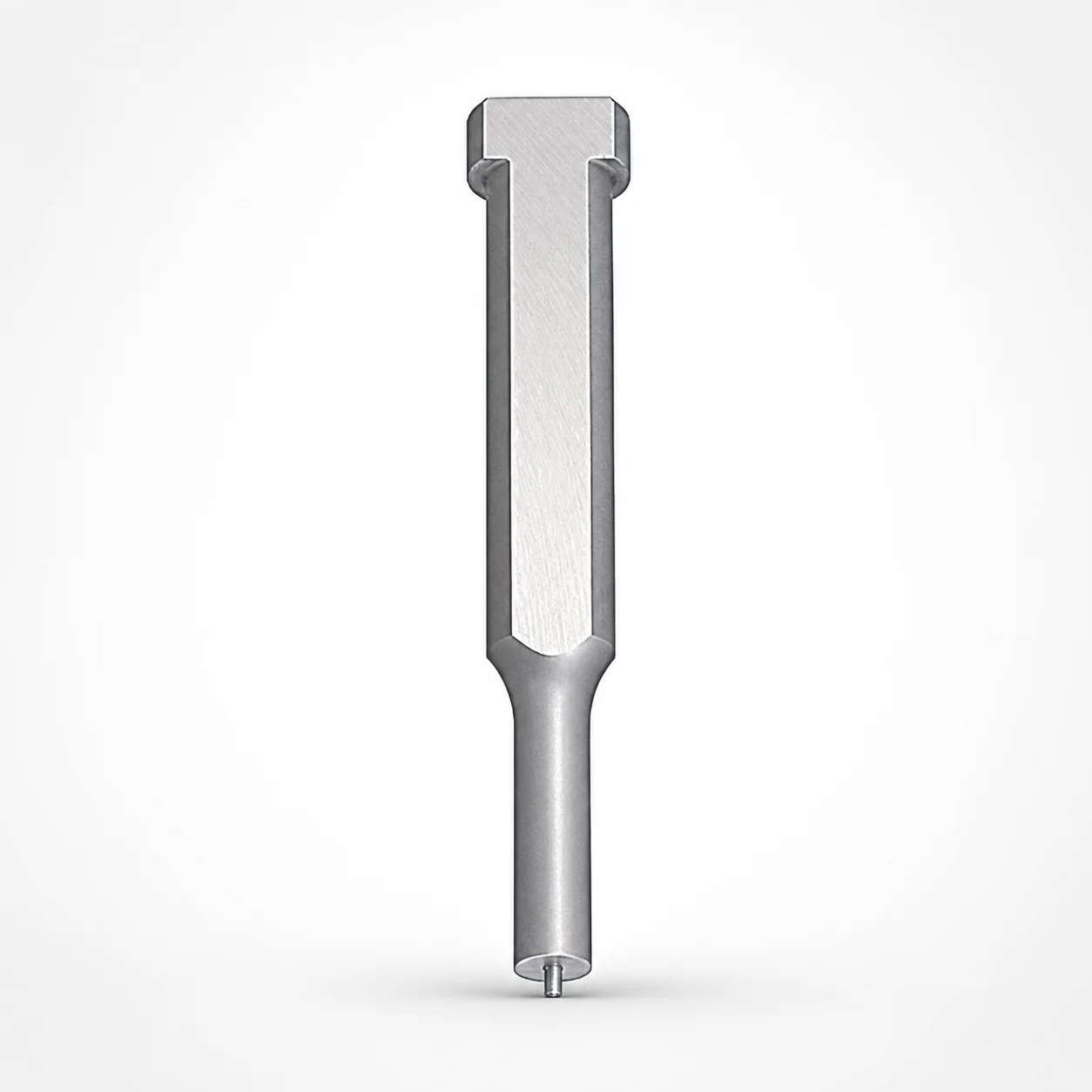
Alpha Treatment Key Flat Shank Jector Punches
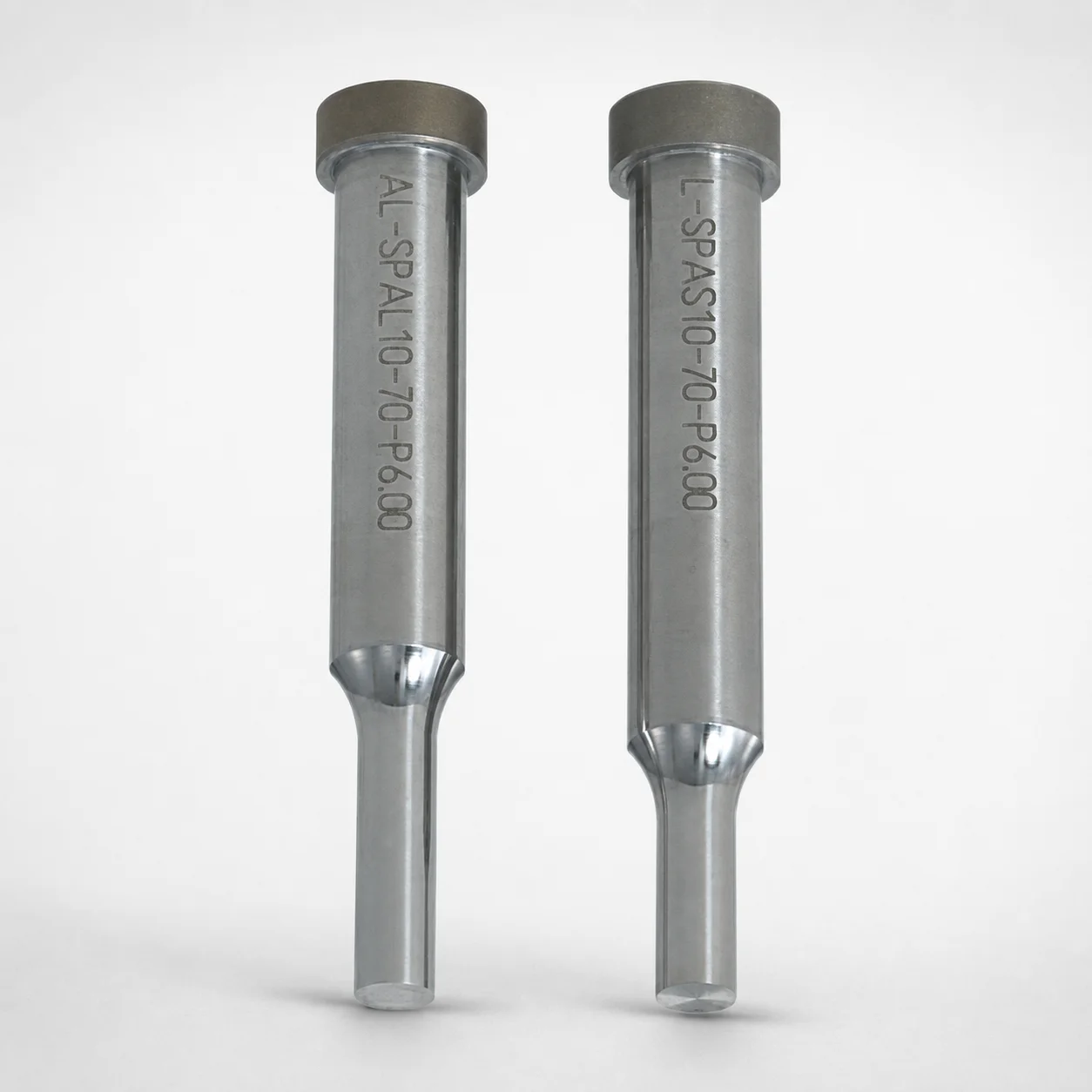
Alpha Treatment Key Flat Shank Jector Punches use nanocrystallization of the treated surface to raise hardness while maintaining toughness. The microtexture lowers friction and supports stable sliding with improved oil retention during production.
- Flat shank key geometry for secure alignment in ejector systems
- Alpha Treatment surface strengthens the cutting area without toughness loss
- Microtexture reduces coefficient of friction and improves oil retention
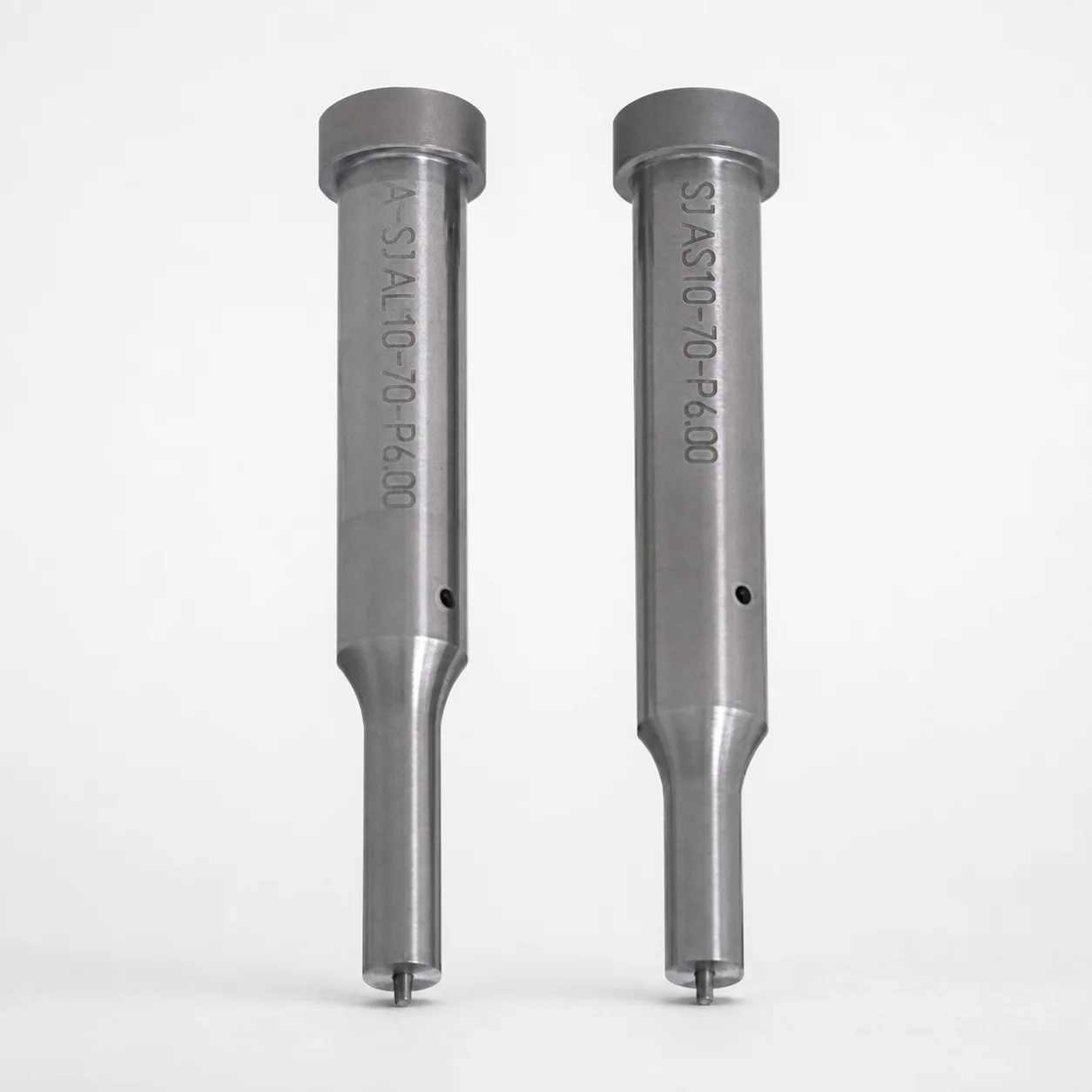
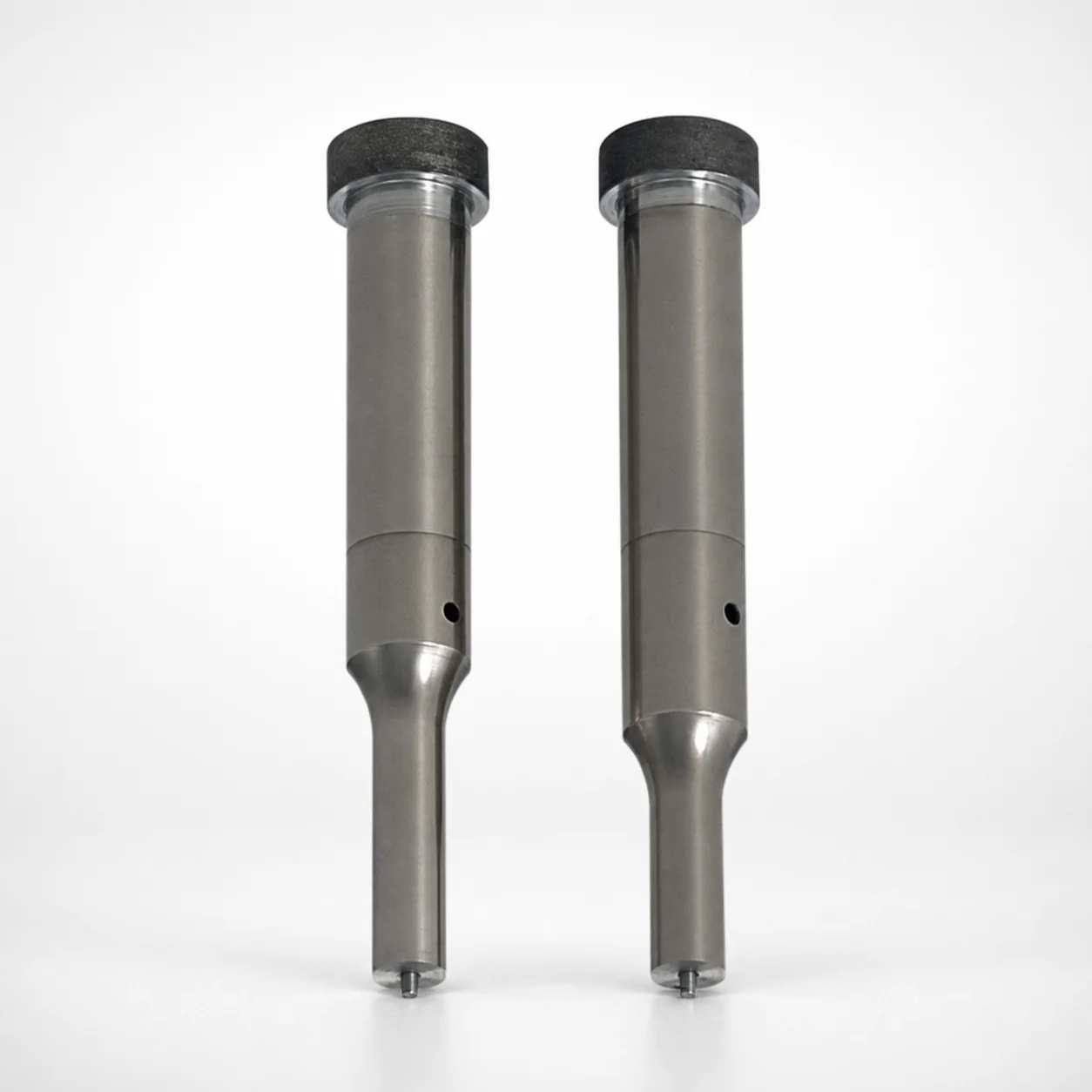
- Available as Standard or Spring Reinforced jectors for different press conditions
Specifications
11181 configurations available
| Jector | Tip shape | Material | B (Tip length) | D (Shank diameter) (mm) | P (Tip dimension) (mm) | L (L dimension) (mm) | LC (Full length alteration) (mm) | LCT (Head thickness tolerance change + total length alteration) (mm) | LMT (Head thickness tolerance change + total length alteration) (mm) | PC (Tip dimension alteration) (mm) | R (Tip corner R) (mm) | W (Tip dimension) (mm) | WC (Tip dimension alteration) (mm) | type |
|---|---|---|---|---|---|---|---|---|---|---|---|---|---|---|
| Standard | Round | SKH40 Equivalent (Powdered High-Speed Steel) | L | 4 | 1 ~ 2.8 | 50 ~ 80 | - | - | - | - | - | - | - | - |
| Standard | Round | SKH40 Equivalent (Powdered High-Speed Steel) | L | 4 | - | 50 ~ 80 | - | - | - | 0.9 ~ 0.99 | - | - | - | - |
| Standard | Round | SKH40 Equivalent (Powdered High-Speed Steel) | L | 4 | 1 ~ 2.8 | - | 39 ~ 49.9 | - | - | - | - | - | - | - |
| Standard | Round | SKH40 Equivalent (Powdered High-Speed Steel) | L | 4 | - | - | 39 ~ 49.9 | - | - | 0.9 ~ 0.99 | - | - | - | - |
| Standard | Round | SKH40 Equivalent (Powdered High-Speed Steel) | L | 4 | 1 ~ 2.8 | - | 50.1 ~ 59.9 | - | - | - | - | - | - | - |
| Standard | Round | SKH40 Equivalent (Powdered High-Speed Steel) | L | 4 | - | - | 50.1 ~ 59.9 | - | - | 0.9 ~ 0.99 | - | - | - | - |
| Standard | Round | SKH40 Equivalent (Powdered High-Speed Steel) | L | 4 | 1 ~ 2.8 | - | 60.1 ~ 69.9 | - | - | - | - | - | - | - |
| Standard | Round | SKH40 Equivalent (Powdered High-Speed Steel) | L | 4 | - | - | 60.1 ~ 69.9 | - | - | 0.9 ~ 0.99 | - | - | - | - |
| Standard | Round | SKH40 Equivalent (Powdered High-Speed Steel) | L | 4 | 1 ~ 2.8 | - | 70.1 ~ 79.9 | - | - | - | - | - | - | - |
| Standard | Round | SKH40 Equivalent (Powdered High-Speed Steel) | L | 4 | - | - | 70.1 ~ 79.9 | - | - | 0.9 ~ 0.99 | - | - | - | - |
| Standard | Round | SKH40 Equivalent (Powdered High-Speed Steel) | L | 4 | 1 ~ 2.8 | - | - | 39 ~ 49.9 | - | - | - | - | - | - |
| Standard | Round | SKH40 Equivalent (Powdered High-Speed Steel) | L | 4 | - | - | - | 39 ~ 49.9 | - | 0.9 ~ 0.99 | - | - | - | - |
| Standard | Round | SKH40 Equivalent (Powdered High-Speed Steel) | L | 4 | 1 ~ 2.8 | - | - | 50.1 ~ 59.9 | - | - | - | - | - | - |
| Standard | Round | SKH40 Equivalent (Powdered High-Speed Steel) | L | 4 | - | - | - | 50.1 ~ 59.9 | - | 0.9 ~ 0.99 | - | - | - | - |
| Standard | Round | SKH40 Equivalent (Powdered High-Speed Steel) | L | 4 | 1 ~ 2.8 | - | - | 60.1 ~ 69.9 | - | - | - | - | - | - |
| Standard | Round | SKH40 Equivalent (Powdered High-Speed Steel) | L | 4 | - | - | - | 60.1 ~ 69.9 | - | 0.9 ~ 0.99 | - | - | - | - |
| Standard | Round | SKH40 Equivalent (Powdered High-Speed Steel) | L | 4 | 1 ~ 2.8 | - | - | 70.1 ~ 79.9 | - | - | - | - | - | - |
| Standard | Round | SKH40 Equivalent (Powdered High-Speed Steel) | L | 4 | - | - | - | 70.1 ~ 79.9 | - | 0.9 ~ 0.99 | - | - | - | - |
| Standard | Round | SKH40 Equivalent (Powdered High-Speed Steel) | L | 4 | 1 ~ 2.8 | - | - | - | 39 ~ 49.9 | - | - | - | - | - |
| Standard | Round | SKH40 Equivalent (Powdered High-Speed Steel) | L | 4 | - | - | - | - | 39 ~ 49.9 | 0.9 ~ 0.99 | - | - | - | - |
| Standard | Round | SKH40 Equivalent (Powdered High-Speed Steel) | L | 4 | 1 ~ 2.8 | - | - | - | 50.1 ~ 59.9 | - | - | - | - | - |
| Standard | Round | SKH40 Equivalent (Powdered High-Speed Steel) | L | 4 | - | - | - | - | 50.1 ~ 59.9 | 0.9 ~ 0.99 | - | - | - | - |
| Standard | Round | SKH40 Equivalent (Powdered High-Speed Steel) | L | 4 | 1 ~ 2.8 | - | - | - | 60.1 ~ 69.9 | - | - | - | - | - |
| Standard | Round | SKH40 Equivalent (Powdered High-Speed Steel) | L | 4 | - | - | - | - | 60.1 ~ 69.9 | 0.9 ~ 0.99 | - | - | - | - |
| Standard | Round | SKH40 Equivalent (Powdered High-Speed Steel) | L | 4 | 1 ~ 2.8 | - | - | - | 70.1 ~ 79.9 | - | - | - | - | - |
| Standard | Round | SKH40 Equivalent (Powdered High-Speed Steel) | L | 4 | - | - | - | - | 70.1 ~ 79.9 | 0.9 ~ 0.99 | - | - | - | - |
| Standard | Round | SKH40 Equivalent (Powdered High-Speed Steel) | L | 5 | 2 ~ 3.8 | 50 ~ 80 | - | - | - | - | - | - | - | - |
| Standard | Round | SKH40 Equivalent (Powdered High-Speed Steel) | L | 5 | - | 50 ~ 80 | - | - | - | 1.8 ~ 1.99 | - | - | - | - |
| Standard | Round | SKH40 Equivalent (Powdered High-Speed Steel) | L | 5 | 2 ~ 3.8 | - | 39 ~ 49.9 | - | - | - | - | - | - | - |
| Standard | Round | SKH40 Equivalent (Powdered High-Speed Steel) | L | 5 | - | - | 39 ~ 49.9 | - | - | 1.8 ~ 1.99 | - | - | - | - |
| Standard | Round | SKH40 Equivalent (Powdered High-Speed Steel) | L | 5 | 2 ~ 3.8 | - | 50.1 ~ 59.9 | - | - | - | - | - | - | - |
| Standard | Round | SKH40 Equivalent (Powdered High-Speed Steel) | L | 5 | - | - | 50.1 ~ 59.9 | - | - | 1.8 ~ 1.99 | - | - | - | - |
| Standard | Round | SKH40 Equivalent (Powdered High-Speed Steel) | L | 5 | 2 ~ 3.8 | - | 60.1 ~ 69.9 | - | - | - | - | - | - | - |
| Standard | Round | SKH40 Equivalent (Powdered High-Speed Steel) | L | 5 | - | - | 60.1 ~ 69.9 | - | - | 1.8 ~ 1.99 | - | - | - | - |
| Standard | Round | SKH40 Equivalent (Powdered High-Speed Steel) | L | 5 | 2 ~ 3.8 | - | 70.1 ~ 79.9 | - | - | - | - | - | - | - |
| Standard | Round | SKH40 Equivalent (Powdered High-Speed Steel) | L | 5 | - | - | 70.1 ~ 79.9 | - | - | 1.8 ~ 1.99 | - | - | - | - |
| Standard | Round | SKH40 Equivalent (Powdered High-Speed Steel) | L | 5 | 2 ~ 3.8 | - | - | 39 ~ 49.9 | - | - | - | - | - | - |
| Standard | Round | SKH40 Equivalent (Powdered High-Speed Steel) | L | 5 | - | - | - | 39 ~ 49.9 | - | 1.8 ~ 1.99 | - | - | - | - |
| Standard | Round | SKH40 Equivalent (Powdered High-Speed Steel) | L | 5 | 2 ~ 3.8 | - | - | 50.1 ~ 59.9 | - | - | - | - | - | - |
| Standard | Round | SKH40 Equivalent (Powdered High-Speed Steel) | L | 5 | - | - | - | 50.1 ~ 59.9 | - | 1.8 ~ 1.99 | - | - | - | - |
| Standard | Round | SKH40 Equivalent (Powdered High-Speed Steel) | L | 5 | 2 ~ 3.8 | - | - | 60.1 ~ 69.9 | - | - | - | - | - | - |
| Standard | Round | SKH40 Equivalent (Powdered High-Speed Steel) | L | 5 | - | - | - | 60.1 ~ 69.9 | - | 1.8 ~ 1.99 | - | - | - | - |
| Standard | Round | SKH40 Equivalent (Powdered High-Speed Steel) | L | 5 | 2 ~ 3.8 | - | - | 70.1 ~ 79.9 | - | - | - | - | - | - |
| Standard | Round | SKH40 Equivalent (Powdered High-Speed Steel) | L | 5 | - | - | - | 70.1 ~ 79.9 | - | 1.8 ~ 1.99 | - | - | - | - |
| Standard | Round | SKH40 Equivalent (Powdered High-Speed Steel) | L | 5 | 2 ~ 3.8 | - | - | - | 39 ~ 49.9 | - | - | - | - | - |
| Standard | Round | SKH40 Equivalent (Powdered High-Speed Steel) | L | 5 | - | - | - | - | 39 ~ 49.9 | 1.8 ~ 1.99 | - | - | - | - |
| Standard | Round | SKH40 Equivalent (Powdered High-Speed Steel) | L | 5 | 2 ~ 3.8 | - | - | - | 50.1 ~ 59.9 | - | - | - | - | - |
| Standard | Round | SKH40 Equivalent (Powdered High-Speed Steel) | L | 5 | - | - | - | - | 50.1 ~ 59.9 | 1.8 ~ 1.99 | - | - | - | - |
| Standard | Round | SKH40 Equivalent (Powdered High-Speed Steel) | L | 5 | 2 ~ 3.8 | - | - | - | 60.1 ~ 69.9 | - | - | - | - | - |
| Standard | Round | SKH40 Equivalent (Powdered High-Speed Steel) | L | 5 | - | - | - | - | 60.1 ~ 69.9 | 1.8 ~ 1.99 | - | - | - | - |
Product Guide
Application Scenarios+
Alpha-treated jector punches are used in injection mold tooling to help eject molded parts by driving localized contact forces through the ejector plate. Their key flat shank geometry provides secure alignment, reducing lateral wobble during repeated press cycles.
- Automotive connector and housing molds: select the Standard jector option when steady ejection force is required and you want stable sliding with improved oil retention at the contact surface.
- Small molded components with tight ejector guidance: the microtexture friction control supports consistent movement, helping maintain predictable ejection timing as parting loads rise.
- High-cycle or higher load press conditions: choose the Spring Reinforced variant to better accommodate variations in stack-up and reduce the risk of binding under load fluctuations.
The Alpha Treatment improves hardness while maintaining toughness, making this variant suitable where wear at the jector tip and stable sliding are both critical.
Material & Process Details+
These jector punches are offered in multiple tool steels with Alpha Treatment to enhance surface hardness via nanocrystallization while preserving core toughness. The treated microtexture is designed to control friction and support stable sliding performance during production.
- SKH40 (powdered high-speed steel equivalent): typically selected for balanced wear resistance and toughness for general jector applications.
- SKH51 (M2 equivalent): suited where higher hardness and abrasion resistance are prioritized.
- SKD11 (D2 equivalent): commonly chosen for strong wear performance, with a toughness trade-off versus the HSS options depending on operating conditions.
Hardness level is not explicitly provided in the supplied specifications, so engineers should confirm the final HRC after Alpha Treatment and any required heat-treatment route. Manufacturing generally includes steel selection, machining of the flat shank and tip profile, then surface Alpha Treatment to create the nanocrystallized friction-controlled layer. Final polishing/finishing of the sliding surfaces is typically important to achieve consistent friction behavior.
Sizing & Selection Guide+
Correct sizing ensures that the jector tip supports proper parting while the flat shank maintains alignment in the ejector system. Use the provided diameter and dimensional ranges to match your mold cavity/core and ejector plate layout.
- Shank diameter (D): select within 4 ~ 25 mm to fit the corresponding guidance hole/slot in the ejector support.
- Tip dimensions (P): choose 1 ~ 18 mm according to the required contact area shape.
- Tip length/option B: pick B = L, S, or X to reach the needed projection and support depth.
- Overall length (L): select 40 ~ 80 mm, then verify full-length alteration ranges: LC 27 ~ 90.1 mm and LCT/LMT 27 ~ 90.1 mm.
Account for dimensional alterations and tolerance behavior during design review. Tip corner radius is fixed at R = 0.15 mm; tip dimension alteration ranges (PC 0.9 ~ 9, WC sets) should be matched to your final drawing to ensure the intended contact geometry. Standard or spring reinforced jectors should be selected based on your press and stack-up stability needs.
Frequently Asked Questions
Which steel option (SKH40/M2/SKD11-D2 equivalent) is best for wear-critical jector tip surfaces?+
Your selection depends on whether you prioritize abrasion resistance or balanced toughness. The product line provides SKH40 equivalent (powdered HSS), SKH51 equivalent (M2), and SKD11 equivalent (D2). If wear resistance is the primary concern, SKH51 (M2 equivalent) or SKD11 (D2 equivalent) are commonly considered; for a more balanced wear/toughness approach, SKH40 is often selected. Confirm final hardness in HRC after the Alpha Treatment route for your exact configuration.
How do I choose the correct shank diameter (D) and tip size (P) to avoid ejector binding?+
Start with the guidance geometry in your ejector plate and select D within 4 ~ 25 mm to match the mold’s guiding hole/slot. Then size the contact area using P within 1 ~ 18 mm based on the part ejection contact requirements. Binding risk is reduced by maintaining correct clearance around the shank and ensuring the selected tip profile supports the intended load path.
What does “Standard” vs “Spring Reinforced” mean for jector punch performance?+
This variant determines how the jector punch responds to load and stack-up variation during cycling. Choose Standard when ejection forces and alignment are stable. Choose Spring Reinforced when press conditions or mold stack-up variations are expected, helping reduce sticking/binding risk and improving compliance under fluctuating loads.
How should I match overall length (L) and full-length alteration ranges (LC/LCT/LMT) to my ejector system?+
Select L within 40 ~ 80 mm for the required installed projection, then verify alteration ranges in your design. The product provides LC 27 ~ 90.1 mm and LCT/LMT 27 ~ 90.1 mm for the length alteration behavior. Use these ranges to reconcile drawing intent with the final packaged geometry in your mold stack-up calculation.
Which tip geometry options are available, and how do they affect part contact?+
Tip shape can be selected from: Round, Rectangle, Oblong, Double Flatted Round, and Radius Rectangle. The chosen shape controls the effective contact area and load distribution at ejection. For designs with constrained space or specific contact patterns, pick the geometry that best matches your parting surface while keeping the required P within 1 ~ 18 mm and maintaining the fixed R = 0.15 mm corner radius where applicable.
Related Products
Need Custom Specifications?
Our engineering team can help with custom configurations, material selection, and volume pricing.