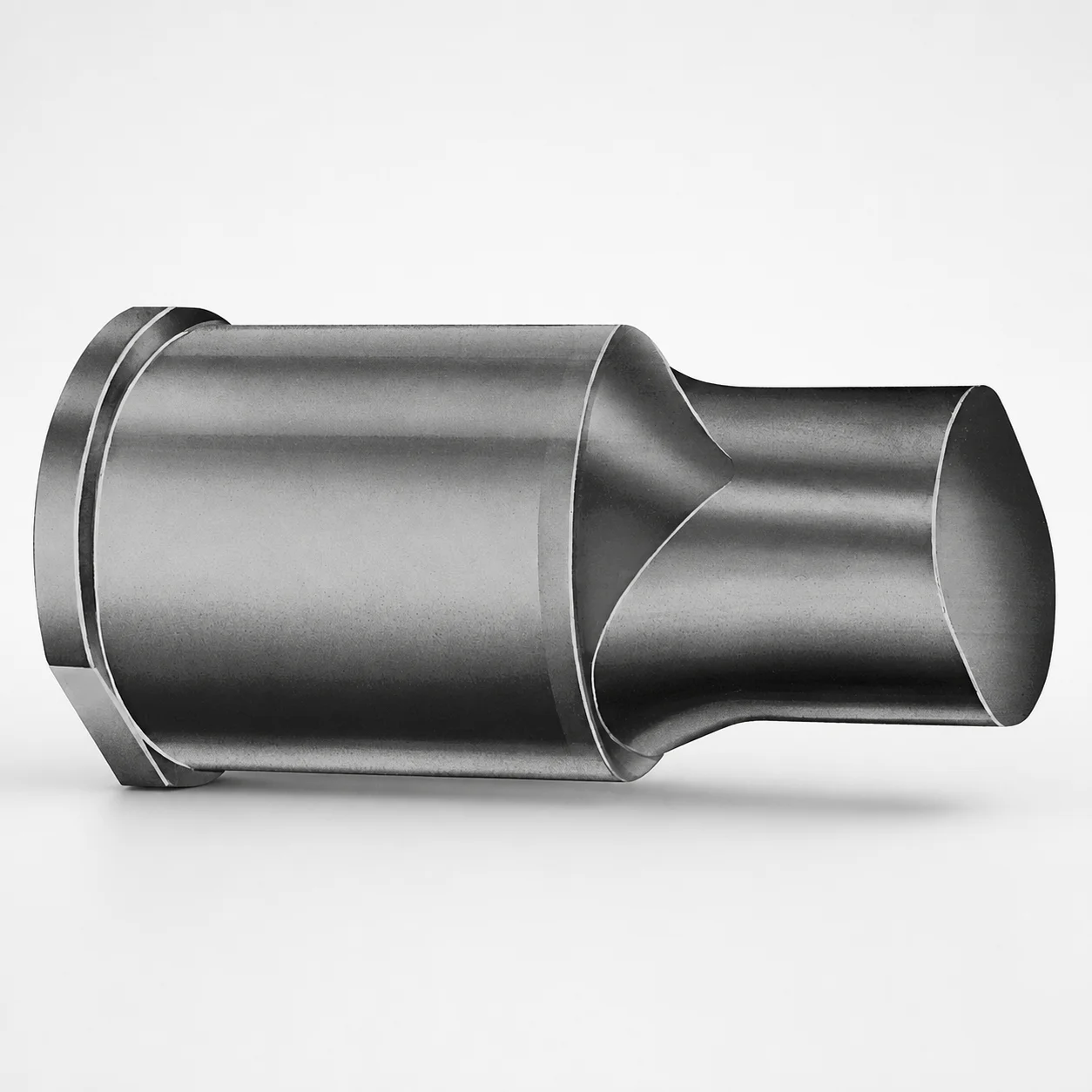
Metric Extended Range Punches XNAP Coating
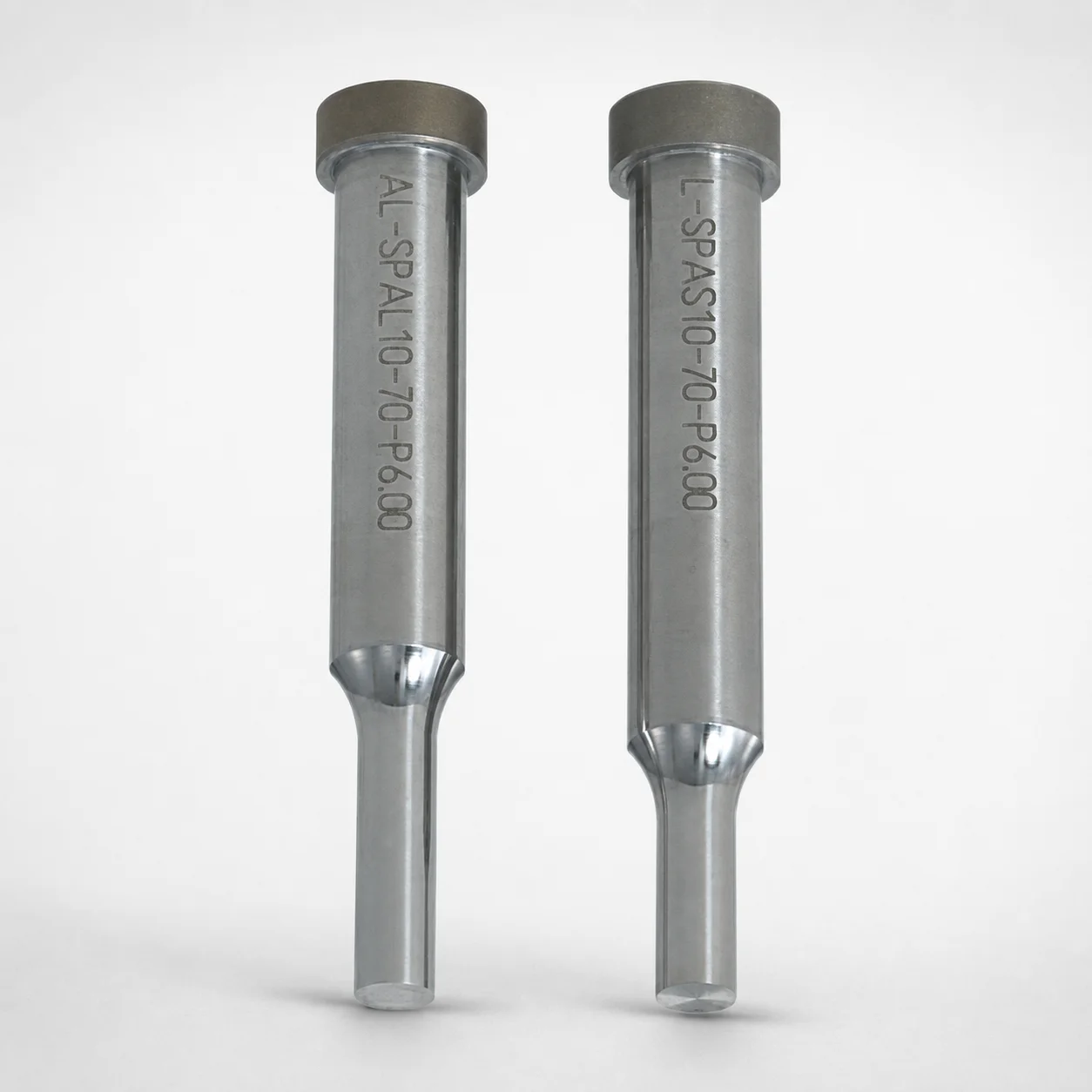
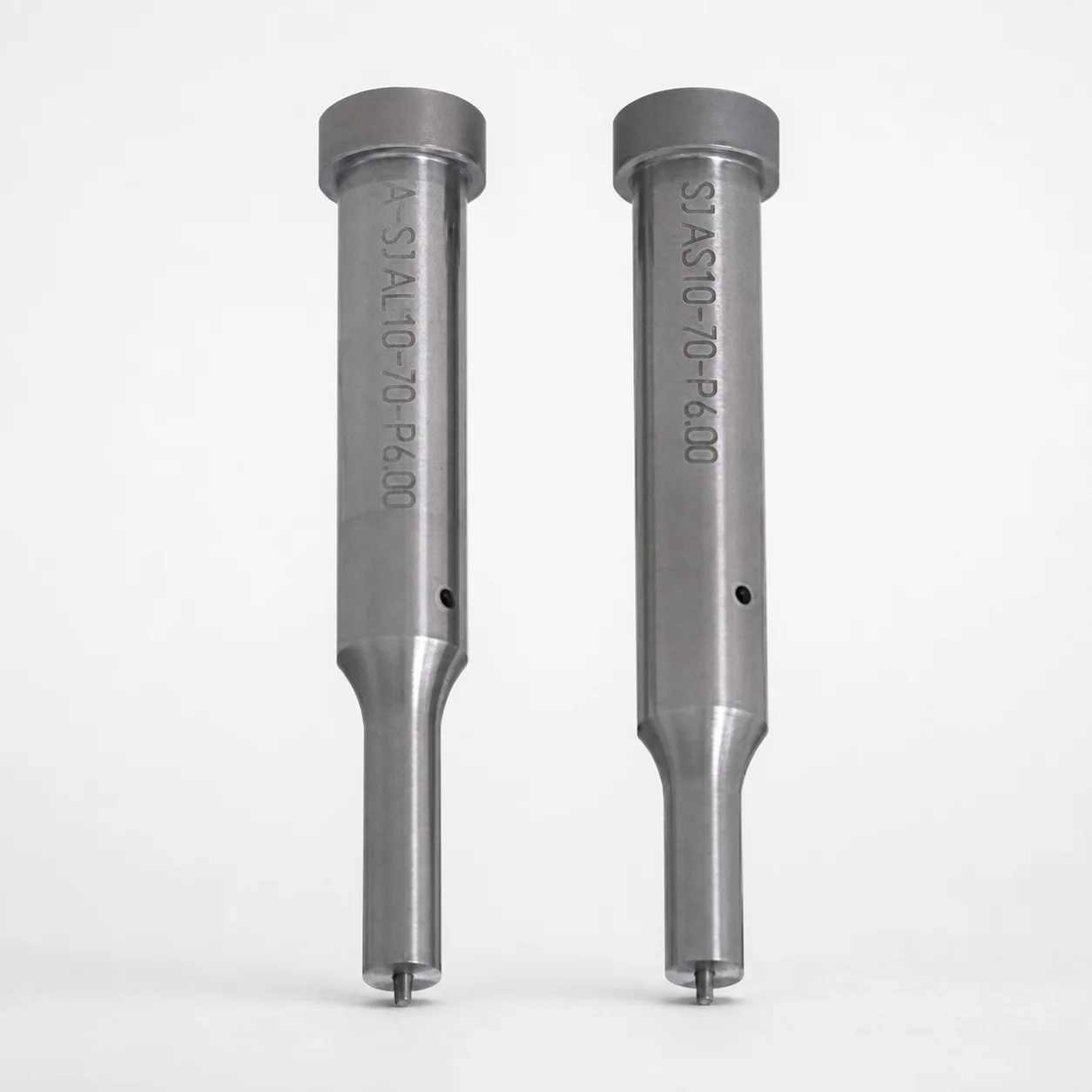
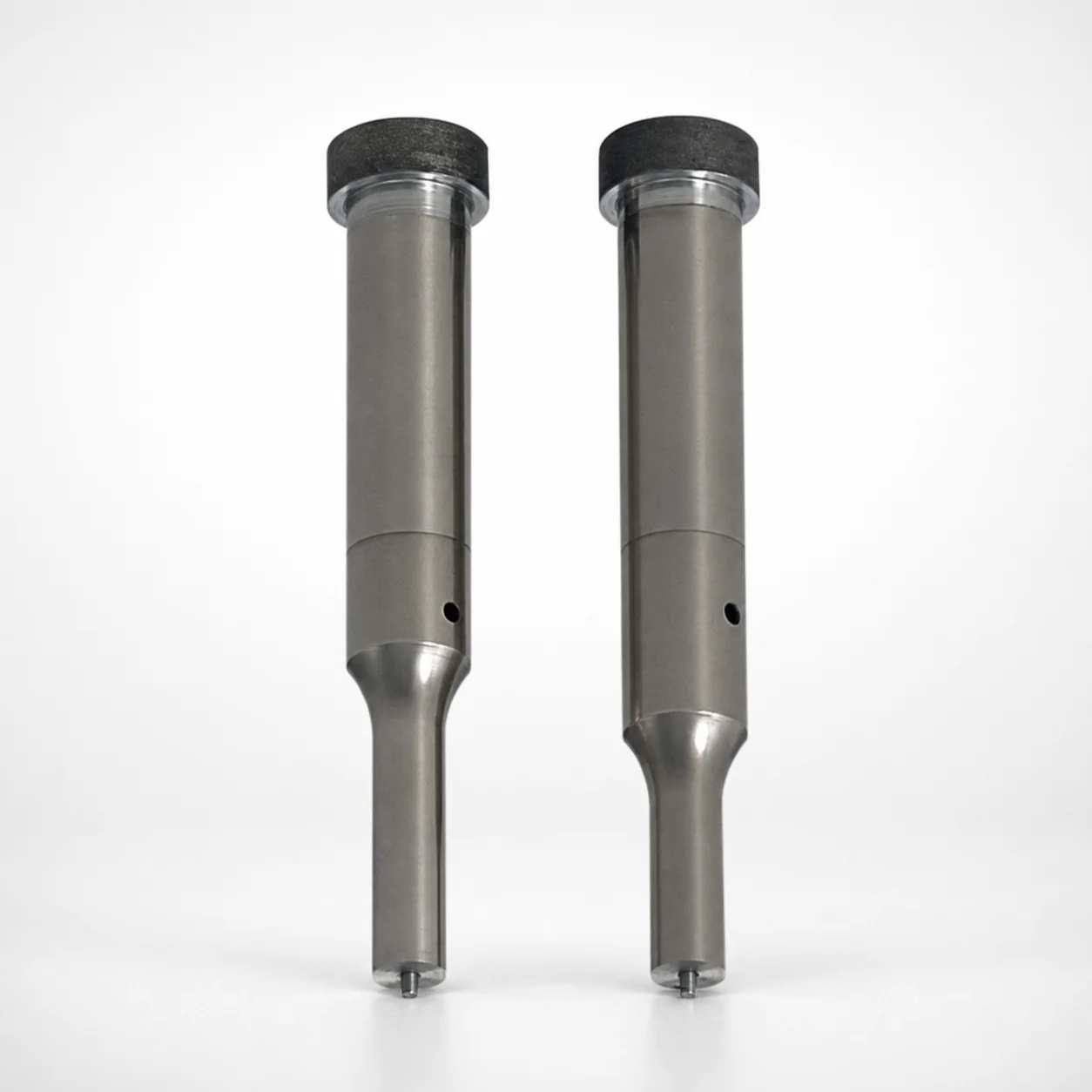
Metric extended range punches with XNAP coating are designed for deeper stroke forming where stable punch guidance and wear resistance are critical in production dies. DAYTON construction helps maintain consistent performance across repeated cycles.
- Extended range punch geometry improves forming reach and cycle stability
- XNAP coating supports smoother cutting action and longer wear life
- Optional Tip shapes (X, R, K, O, H, J, N, V, Y, Z) match your process requirements
- Use in metric progressive and forming die stations needing reliable punch feed
Specifications
50 configurations available
| Tip shape | D (Shank dia.) (mm) | L1 (Point Length) (mm) | L (Length) (mm) | P Dimension (mm) | W Dimension (mm) | R Dimension (mm) |
|---|---|---|---|---|---|---|
| H | 40 | 25 ~ 30 | 63 ~ 100 | 20 ~ 39.95 | 8 ~ 39.95 | - |
| H | 45 | 25 ~ 30 | 63 ~ 100 | 25 ~ 44.95 | 9 ~ 44.95 | - |
| H | 50 | 25 ~ 30 | 63 ~ 100 | 30 ~ 49.95 | 10 ~ 49.95 | - |
| H | 56 | 25 ~ 30 | 63 ~ 100 | 35 ~ 55.95 | 11 ~ 55.95 | - |
| H | 63 | 25 ~ 30 | 63 ~ 100 | 40 ~ 62.95 | 12 ~ 62.95 | - |
| J | 40 | 25 ~ 30 | 63 ~ 100 | 20 ~ 39.95 | 8 ~ 39.95 | - |
| J | 45 | 25 ~ 30 | 63 ~ 100 | 25 ~ 44.95 | 9 ~ 44.95 | - |
| J | 50 | 25 ~ 30 | 63 ~ 100 | 30 ~ 49.95 | 10 ~ 49.95 | - |
| J | 56 | 25 ~ 30 | 63 ~ 100 | 35 ~ 55.95 | 11 ~ 55.95 | - |
| J | 63 | 25 ~ 30 | 63 ~ 100 | 40 ~ 62.95 | 12 ~ 62.95 | - |
| K | 40 | 25 ~ 30 | 63 ~ 100 | 20 ~ 39.95 | 8 ~ 39.95 | 0.2 ~ 19.975 |
| K | 45 | 25 ~ 30 | 63 ~ 100 | 25 ~ 44.95 | 9 ~ 44.95 | 0.2 ~ 22.475 |
| K | 50 | 25 ~ 30 | 63 ~ 100 | 30 ~ 49.95 | 10 ~ 49.95 | 0.2 ~ 24.975 |
| K | 56 | 25 ~ 30 | 63 ~ 100 | 35 ~ 55.95 | 11 ~ 55.95 | 0.2 ~ 27.975 |
| K | 63 | 25 ~ 30 | 63 ~ 100 | 40 ~ 62.95 | 12 ~ 62.95 | 0.2 ~ 31.475 |
| N | 40 | 25 ~ 30 | 63 ~ 100 | - | 8 ~ 39.95 | - |
| N | 45 | 25 ~ 30 | 63 ~ 100 | - | 9 ~ 44.95 | - |
| N | 50 | 25 ~ 30 | 63 ~ 100 | - | 10 ~ 49.95 | - |
| N | 56 | 25 ~ 30 | 63 ~ 100 | - | 11 ~ 55.95 | - |
| N | 63 | 25 ~ 30 | 63 ~ 100 | - | 12 ~ 62.95 | - |
| O | 40 | 25 ~ 30 | 63 ~ 100 | 20 ~ 39.95 | 8 ~ 39.95 | - |
| O | 45 | 25 ~ 30 | 63 ~ 100 | 25 ~ 44.95 | 9 ~ 44.95 | - |
| O | 50 | 25 ~ 30 | 63 ~ 100 | 30 ~ 49.95 | 10 ~ 49.95 | - |
| O | 56 | 25 ~ 30 | 63 ~ 100 | 35 ~ 55.95 | 11 ~ 55.95 | - |
| O | 63 | 25 ~ 30 | 63 ~ 100 | 40 ~ 62.95 | 12 ~ 62.95 | - |
| R | 40 | 25 ~ 30 | 63 ~ 100 | 20 ~ 39.95 | 8 ~ 39.95 | - |
| R | 45 | 25 ~ 30 | 63 ~ 100 | 25 ~ 44.95 | 9 ~ 44.95 | - |
| R | 50 | 25 ~ 30 | 63 ~ 100 | 30 ~ 49.95 | 10 ~ 49.95 | - |
| R | 56 | 25 ~ 30 | 63 ~ 100 | 35 ~ 55.95 | 11 ~ 55.95 | - |
| R | 63 | 25 ~ 30 | 63 ~ 100 | 40 ~ 62.95 | 12 ~ 62.95 | - |
| V | 40 | 25 ~ 30 | 63 ~ 100 | 20 ~ 39.95 | 8 ~ 39.95 | - |
| V | 45 | 25 ~ 30 | 63 ~ 100 | 25 ~ 44.95 | 9 ~ 44.95 | - |
| V | 50 | 25 ~ 30 | 63 ~ 100 | 30 ~ 49.95 | 10 ~ 49.95 | - |
| V | 56 | 25 ~ 30 | 63 ~ 100 | 35 ~ 55.95 | 11 ~ 55.95 | - |
| V | 63 | 25 ~ 30 | 63 ~ 100 | 40 ~ 62.95 | 12 ~ 62.95 | - |
| X | 40 | 25 ~ 30 | 63 ~ 100 | 20 ~ 39.95 | - | - |
| X | 45 | 25 ~ 30 | 63 ~ 100 | 25 ~ 44.95 | - | - |
| X | 50 | 25 ~ 30 | 63 ~ 100 | 30 ~ 49.95 | - | - |
| X | 56 | 25 ~ 30 | 63 ~ 100 | 35 ~ 55.95 | - | - |
| X | 63 | 25 ~ 30 | 63 ~ 100 | 40 ~ 62.95 | - | - |
| Y | 40 | 25 ~ 30 | 63 ~ 100 | 20 ~ 39.95 | 8 ~ 39.95 | 0.2 ~ 19.975 |
| Y | 45 | 25 ~ 30 | 63 ~ 100 | 25 ~ 44.95 | 9 ~ 44.95 | 0.2 ~ 22.475 |
| Y | 50 | 25 ~ 30 | 63 ~ 100 | 30 ~ 49.95 | 10 ~ 49.95 | 0.2 ~ 24.975 |
| Y | 56 | 25 ~ 30 | 63 ~ 100 | 35 ~ 55.95 | 11 ~ 55.95 | 0.2 ~ 27.975 |
| Y | 63 | 25 ~ 30 | 63 ~ 100 | 40 ~ 62.95 | 12 ~ 62.95 | 0.2 ~ 31.475 |
| Z | 40 | 25 ~ 30 | 63 ~ 100 | - | 8 ~ 39.95 | 0.2 ~ 19.975 |
| Z | 45 | 25 ~ 30 | 63 ~ 100 | - | 9 ~ 44.95 | 0.2 ~ 22.475 |
| Z | 50 | 25 ~ 30 | 63 ~ 100 | - | 10 ~ 49.95 | 0.2 ~ 24.975 |
| Z | 56 | 25 ~ 30 | 63 ~ 100 | - | 11 ~ 55.95 | 0.2 ~ 27.975 |
| Z | 63 | 25 ~ 30 | 63 ~ 100 | - | 12 ~ 62.95 | 0.2 ~ 31.475 |
Product Guide
Application Scenarios+
These metric extended range punches with an XNAP coating are used in injection and forming tooling where the punch must travel deeper into a workpiece while maintaining stable alignment under repeated cycles. A common scenario is progressive and compound die stations for metal forming, where consistent punch guidance reduces chatter and helps keep forming quality uniform across long stroke lengths.
They also fit automotive component production dies that require smooth, reliable cutting action during high-volume runs. The extended range geometry (with a fixed point length and overall punch length range) supports deeper reach and helps maintain cycle stability as loads fluctuate.
For appliance and industrial housing forming operations, selecting an appropriate tip shape improves material flow and edge interaction. The XNAP coating is suited for these applications because it enhances wear resistance and supports smoother operation, extending punch life in abrasive or highly repetitive processes.
- Deep-stroke forming in metric progressive die stations
- Long run production where guidance stability matters
- Tip shape selection to match forming and cutting conditions
Material & Process Details+
Material details and steel grade are not provided in the supplied specifications, so coating-focused characteristics are emphasized. The XNAP coating is specified for smoother cutting action and longer wear life, supporting stable performance during extended stroke forming.
For die makers, this typically translates to improved resistance to coating wear and edge degradation under repeated contact, which can reduce maintenance frequency and help maintain dimensional stability over time.
- Wear resistance: enhanced by the XNAP coating for longer punch service intervals
- Toughness trade-off: as with many hard coatings, wear resistance is prioritized; edge protection and proper alignment remain important for preventing premature chipping
- Heat treatment: not specified in the provided data; confirm the punch base material temper/hardness with the manufacturer for exact HRC comparison
If multiple base materials or coating variants are available, select based on the combination of required hardness (HRC), impact toughness, and abrasive conditions—then verify that heat treatment state matches your press load and cycle rate.
Sizing & Selection Guide+
To size these metric extended range punches, start with the shank diameter D selection from 40, 45, 50, 56, 63 mm so the punch fits your guide system and maintains rigidity under load. Choose the overall length L within 63 to 100 mm to match your press stroke stack-up and die clearance without bottoming.
Next, set the forming reach using the fixed point length L1 = 25 to 30 mm. This is the effective tip engagement zone, so it should correspond to the cavity/core depth and the die designer’s required material penetration.
Fine geometry is selected via the variable parameters:
- P dimension: 20–39.95 / 25–44.95 / 30–49.95 / 35–55.95 / 40–62.95 mm
- W dimension: 8–39.95 / 9–44.95 / 10–49.95 / 11–55.95 / 12–62.95 mm
- R dimension: 0.2–19.975 / 0.2–22.475 / 0.2–24.975 / 0.2–27.975 / 0.2–31.475 mm
Where mating features exist (punch holder bore, guide bushing, and die openings), ensure your guiding fit and clearances are consistent with your standard tolerance practice. Tip shape (H, J, K, N, O, R, V, X, Y, Z) should be matched to the forming/cutting profile your cavity requires.
Frequently Asked Questions
Which tip shapes (H, J, K, N, O, R, V, X, Y, Z) are best suited for deeper metric stroke forming with stable guidance?+
The correct tip shape depends on your forming profile and how you want the punch to interact with the die opening. In deep-stroke stations, selecting a tip shape that matches your required entry geometry helps maintain stable cutting action and reduces unpredictable edge loading.
This product supports multiple variable tip shapes (H, J, K, N, O, R, V, X, Y, Z) so you can align the punch’s point interaction with your cavity/core requirements while keeping the extended reach geometry.
How do I choose the punch shank diameter D for this extended range punch series?+
Select D (Shank dia.) from the available metric sizes: 40, 45, 50, 56, or 63 mm. D directly affects punch stiffness and guidance performance in the punch holder and guide system.
For long overall length configurations (L up to 100 mm), choosing the higher D options can help manage deflection and maintain stable alignment under repeated cycles.
What guidance lengths should be matched to the die depth: L1 or overall length L?+
Use L1 (Point Length) = 25 to 30 mm to match the effective engagement zone for penetration into the formed section. Use L (Length) = 63 to 100 mm to ensure the punch stack-up fits your die’s overall spacing and stroke without bottoming.
Incorrect pairing (too long L or too long/short L1) can lead to inadequate forming reach or excessive load at the end of stroke.
How should I interpret the variable geometry dimensions P, W, and R when fitting to the cavity/core?+
The provided ranges define the selectable geometry for the punch’s profile: P (20–39.95 / 25–44.95 / 30–49.95 / 35–55.95 / 40–62.95 mm), W (8–39.95 / 9–44.95 / 10–49.95 / 11–55.95 / 12–62.95 mm), and R (0.2–19.975 / 0.2–22.475 / 0.2–24.975 / 0.2–27.975 / 0.2–31.475 mm).
Match these dimensions to your designed die opening and the intended cutting/flow radius and widths to achieve the target material forming behavior.
Does the XNAP coating change how I should plan wear and maintenance for long production runs?+
This series is explicitly specified with XNAP coating, aimed at smoother cutting action and longer wear life during deep stroke forming. For planning maintenance, treat the coating as a wear-life enhancer that helps sustain performance across repeated cycles.
Because base material grade, hardness (HRC), and heat treatment state are not included in the supplied data, confirm those details separately if you need an HRC-based comparison for your maintenance interval model.
Related Products
Need Custom Specifications?
Our engineering team can help with custom configurations, material selection, and volume pricing.