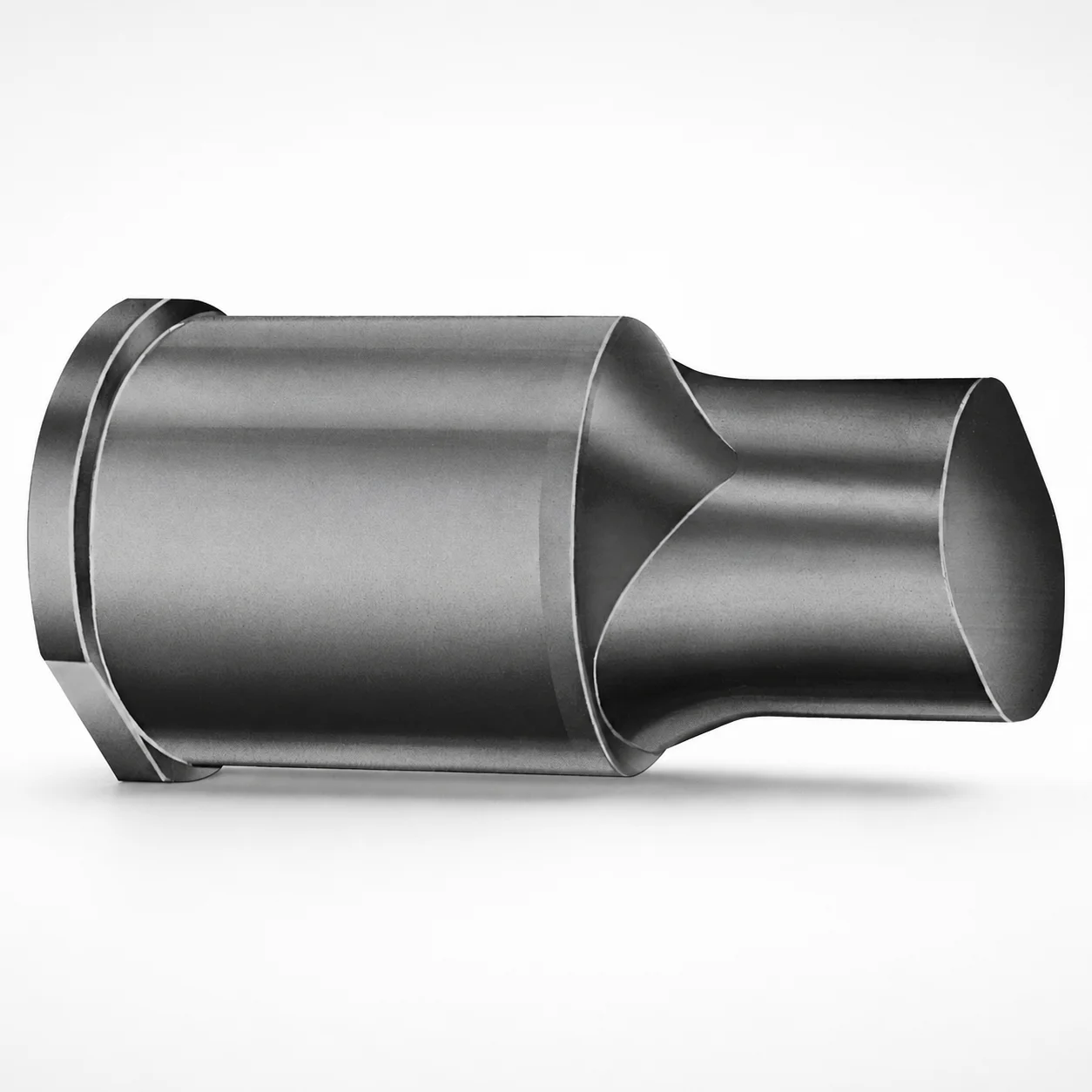
Extended Range Punches Metric XNAD Coating
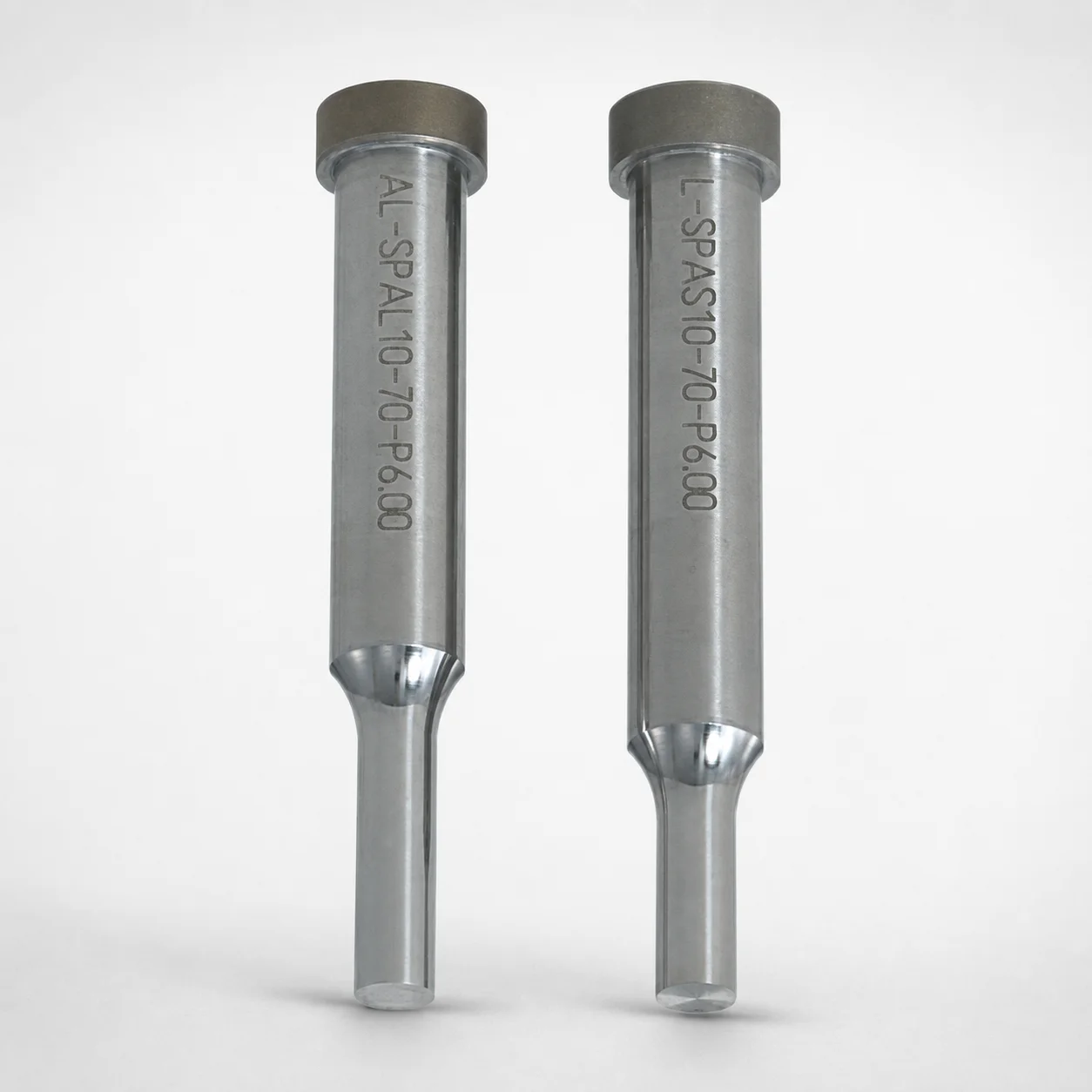
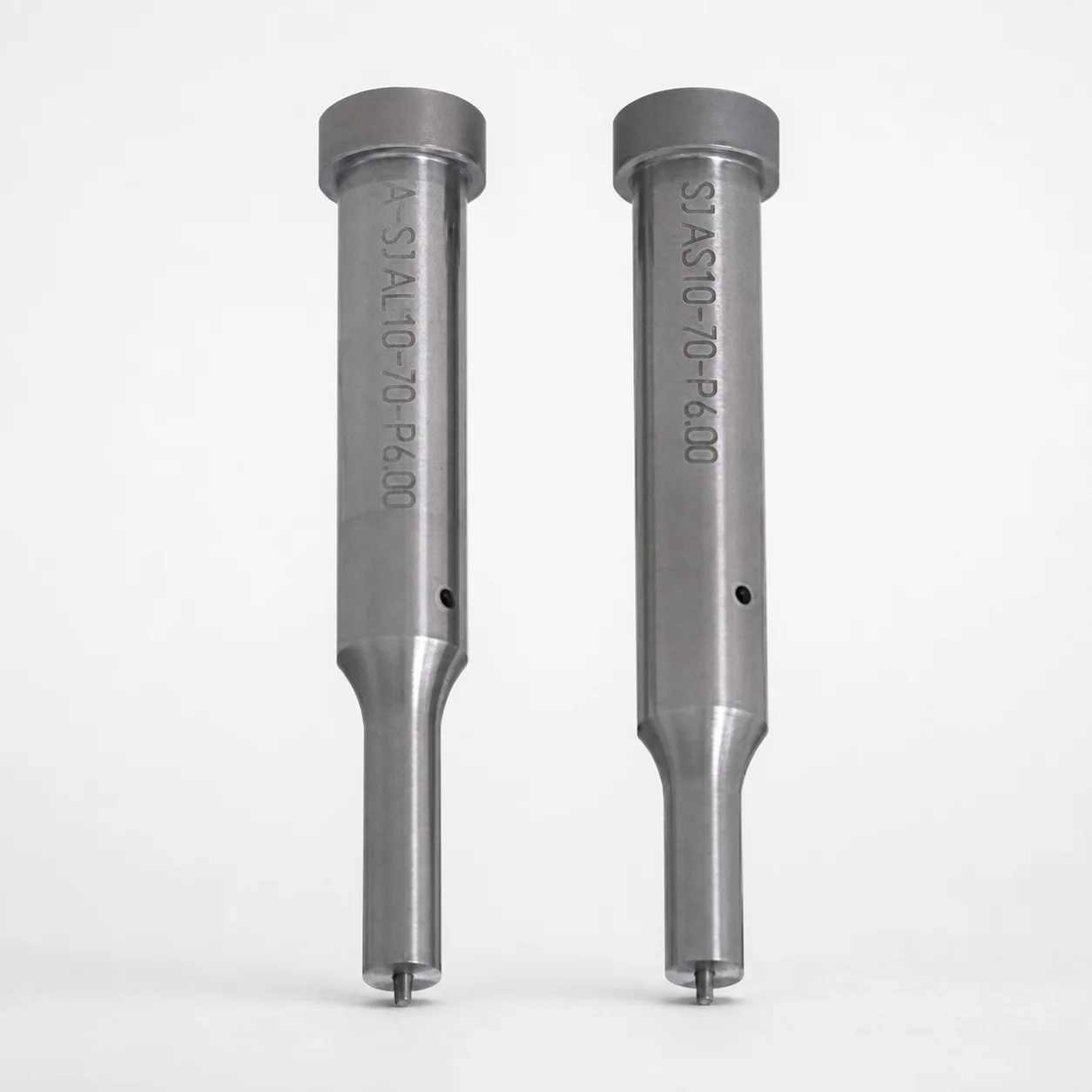
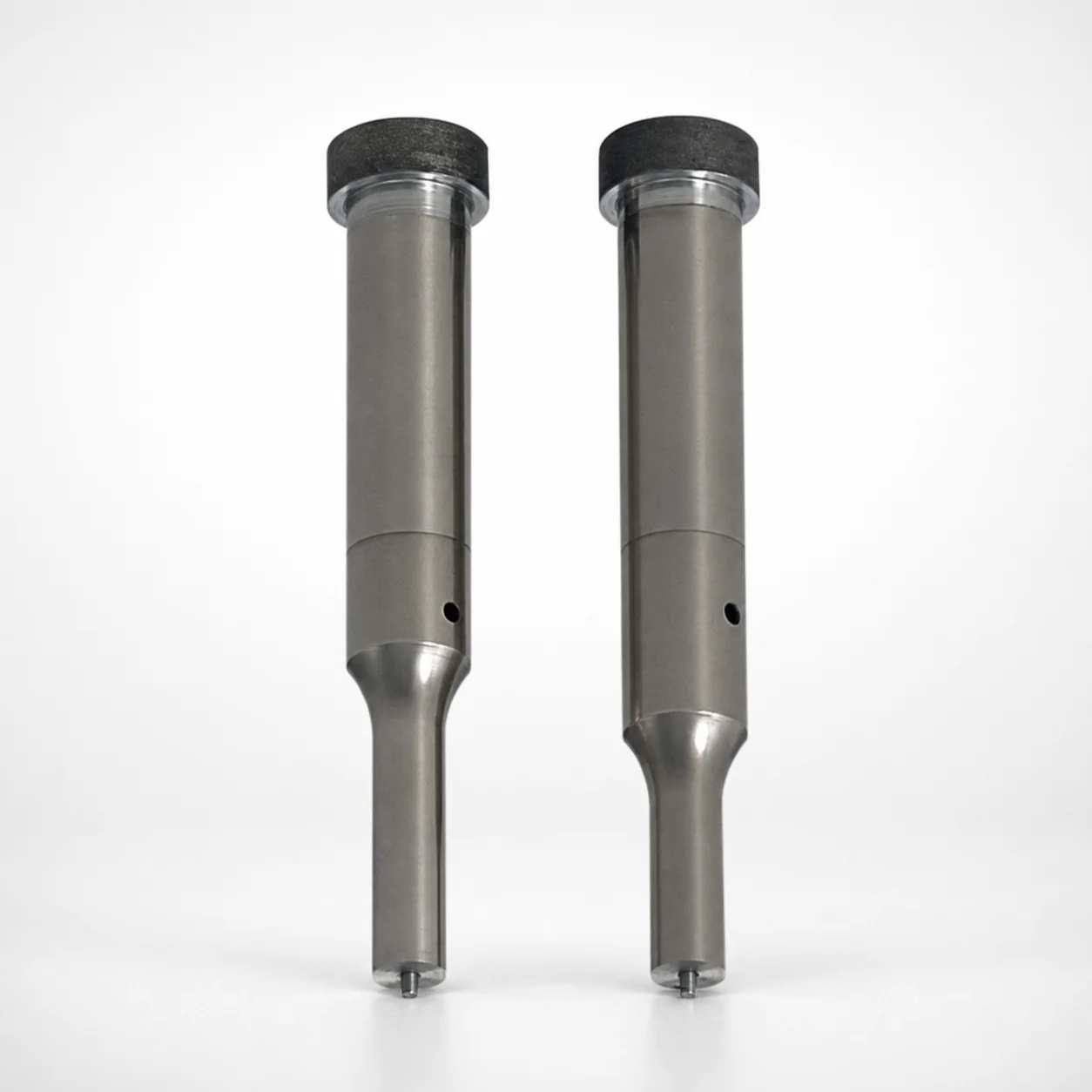
Extended Range Punches Metric XNAD Coating from DAYTON are designed for punch tooling where longer reach and reliable wear performance matter. The XNAD coating supports stable operation across repeated forming cycles.
- Extended range punch geometry supports controlled blanking in tight layouts
- XNAD coating helps improve surface durability under punching loads
- Metric punch options cover multiple tip shapes for different forming requirements
- Suitable for metal stamping operations in progressive and transfer dies
Specifications
50 configurations available
| Tip shape | D (Shank dia.) (mm) | L1 (Point Length) (mm) | L (Length) (mm) | P Dimension (mm) | W Dimension (mm) | R Dimension (mm) |
|---|---|---|---|---|---|---|
| H | 40 | 25 ~ 30 | 63 ~ 100 | 20 ~ 39.95 | 8 ~ 39.95 | - |
| H | 45 | 25 ~ 30 | 63 ~ 100 | 25 ~ 44.95 | 9 ~ 44.95 | - |
| H | 50 | 25 ~ 30 | 63 ~ 100 | 30 ~ 49.95 | 10 ~ 49.95 | - |
| H | 56 | 25 ~ 30 | 63 ~ 100 | 35 ~ 55.95 | 11 ~ 55.95 | - |
| H | 63 | 25 ~ 30 | 63 ~ 100 | 40 ~ 62.95 | 12 ~ 62.95 | - |
| J | 40 | 25 ~ 30 | 63 ~ 100 | 20 ~ 39.95 | 8 ~ 39.95 | - |
| J | 45 | 25 ~ 30 | 63 ~ 100 | 25 ~ 44.95 | 9 ~ 44.95 | - |
| J | 50 | 25 ~ 30 | 63 ~ 100 | 30 ~ 49.95 | 10 ~ 49.95 | - |
| J | 56 | 25 ~ 30 | 63 ~ 100 | 35 ~ 55.95 | 11 ~ 55.95 | - |
| J | 63 | 25 ~ 30 | 63 ~ 100 | 40 ~ 62.95 | 12 ~ 62.95 | - |
| K | 40 | 25 ~ 30 | 63 ~ 100 | 20 ~ 39.95 | 8 ~ 39.95 | 0.2 ~ 19.975 |
| K | 45 | 25 ~ 30 | 63 ~ 100 | 25 ~ 44.95 | 9 ~ 44.95 | 0.2 ~ 22.475 |
| K | 50 | 25 ~ 30 | 63 ~ 100 | 30 ~ 49.95 | 10 ~ 49.95 | 0.2 ~ 24.975 |
| K | 56 | 25 ~ 30 | 63 ~ 100 | 35 ~ 55.95 | 11 ~ 55.95 | 0.2 ~ 27.975 |
| K | 63 | 25 ~ 30 | 63 ~ 100 | 40 ~ 62.95 | 12 ~ 62.95 | 0.2 ~ 31.475 |
| N | 40 | 25 ~ 30 | 63 ~ 100 | - | 8 ~ 39.95 | - |
| N | 45 | 25 ~ 30 | 63 ~ 100 | - | 9 ~ 44.95 | - |
| N | 50 | 25 ~ 30 | 63 ~ 100 | - | 10 ~ 49.95 | - |
| N | 56 | 25 ~ 30 | 63 ~ 100 | - | 11 ~ 55.95 | - |
| N | 63 | 25 ~ 30 | 63 ~ 100 | - | 12 ~ 62.95 | - |
| O | 40 | 25 ~ 30 | 63 ~ 100 | 20 ~ 39.95 | 8 ~ 39.95 | - |
| O | 45 | 25 ~ 30 | 63 ~ 100 | 25 ~ 44.95 | 9 ~ 44.95 | - |
| O | 50 | 25 ~ 30 | 63 ~ 100 | 30 ~ 49.95 | 10 ~ 49.95 | - |
| O | 56 | 25 ~ 30 | 63 ~ 100 | 35 ~ 55.95 | 11 ~ 55.95 | - |
| O | 63 | 25 ~ 30 | 63 ~ 100 | 40 ~ 62.95 | 12 ~ 62.95 | - |
| R | 40 | 25 ~ 30 | 63 ~ 100 | 20 ~ 39.95 | 8 ~ 39.95 | - |
| R | 45 | 25 ~ 30 | 63 ~ 100 | 25 ~ 44.95 | 9 ~ 44.95 | - |
| R | 50 | 25 ~ 30 | 63 ~ 100 | 30 ~ 49.95 | 10 ~ 49.95 | - |
| R | 56 | 25 ~ 30 | 63 ~ 100 | 35 ~ 55.95 | 11 ~ 55.95 | - |
| R | 63 | 25 ~ 30 | 63 ~ 100 | 40 ~ 62.95 | 12 ~ 62.95 | - |
| V | 40 | 25 ~ 30 | 63 ~ 100 | 20 ~ 39.95 | 8 ~ 39.95 | - |
| V | 45 | 25 ~ 30 | 63 ~ 100 | 25 ~ 44.95 | 9 ~ 44.95 | - |
| V | 50 | 25 ~ 30 | 63 ~ 100 | 30 ~ 49.95 | 10 ~ 49.95 | - |
| V | 56 | 25 ~ 30 | 63 ~ 100 | 35 ~ 55.95 | 11 ~ 55.95 | - |
| V | 63 | 25 ~ 30 | 63 ~ 100 | 40 ~ 62.95 | 12 ~ 62.95 | - |
| X | 40 | 25 ~ 30 | 63 ~ 100 | 20 ~ 39.95 | - | - |
| X | 45 | 25 ~ 30 | 63 ~ 100 | 25 ~ 44.95 | - | - |
| X | 50 | 25 ~ 30 | 63 ~ 100 | 30 ~ 49.95 | - | - |
| X | 56 | 25 ~ 30 | 63 ~ 100 | 35 ~ 55.95 | - | - |
| X | 63 | 25 ~ 30 | 63 ~ 100 | 40 ~ 62.95 | - | - |
| Y | 40 | 25 ~ 30 | 63 ~ 100 | 20 ~ 39.95 | 8 ~ 39.95 | 0.2 ~ 19.975 |
| Y | 45 | 25 ~ 30 | 63 ~ 100 | 25 ~ 44.95 | 9 ~ 44.95 | 0.2 ~ 22.475 |
| Y | 50 | 25 ~ 30 | 63 ~ 100 | 30 ~ 49.95 | 10 ~ 49.95 | 0.2 ~ 24.975 |
| Y | 56 | 25 ~ 30 | 63 ~ 100 | 35 ~ 55.95 | 11 ~ 55.95 | 0.2 ~ 27.975 |
| Y | 63 | 25 ~ 30 | 63 ~ 100 | 40 ~ 62.95 | 12 ~ 62.95 | 0.2 ~ 31.475 |
| Z | 40 | 25 ~ 30 | 63 ~ 100 | - | 8 ~ 39.95 | 0.2 ~ 19.975 |
| Z | 45 | 25 ~ 30 | 63 ~ 100 | - | 9 ~ 44.95 | 0.2 ~ 22.475 |
| Z | 50 | 25 ~ 30 | 63 ~ 100 | - | 10 ~ 49.95 | 0.2 ~ 24.975 |
| Z | 56 | 25 ~ 30 | 63 ~ 100 | - | 11 ~ 55.95 | 0.2 ~ 27.975 |
| Z | 63 | 25 ~ 30 | 63 ~ 100 | - | 12 ~ 62.95 | 0.2 ~ 31.475 |
Product Guide
Application Scenarios+
This extended-range punch supports metal stamping and blanking operations in progressive and transfer dies where tool access is limited. The longer reach (L = 63–100 mm) helps maintain alignment and consistent punching at stations with tighter packaging, while the fixed point length (L1 = 25–30 mm) supports controlled penetration and product stability.
- Automotive bracket and connector housings: Use when thicker strip stacks and deeper die locations require extended straight-line punching to reduce deflection-related variation.
- Appliance and HVAC stamping: Metric shank diameters (D = 40–63 mm) provide stiffness for repeated cycles, helping maintain surface durability under punching loads.
- General forming of patterned or shaped blanks: Select from the available tip shapes (H, J, K, N, O, R, V, X, Y, Z) to match the required shearing/blanking edge geometry.
The XNAD coating is suited to these applications because it is engineered to reduce wear and support consistent forming across repeated cycles.
Material & Process Details+
The provided data specifies an XNAD coating on extended-range punch tooling, but it does not include the underlying steel grade, heat-treatment condition, or hardness (HRC). Therefore, material heat treatment and hardness values cannot be stated from the supplied information.
- Coating function: The XNAD coating is designed to improve surface durability under punching loads, supporting steadier performance over repeated forming cycles.
- Wear vs. toughness trade-off: In punch steels, higher hardness generally increases wear resistance but can reduce impact toughness; coating systems are often used to extend wear life while maintaining the punch’s base-material integrity.
- Tip geometry influence: Available tip shapes (H, J, K, N, O, R, V, X, Y, Z) affect edge contact stress distribution, which interacts with coating performance.
If you share the steel grade/heat treatment from the drawing (or the punch’s technical datasheet), we can map it to an equivalent grade and provide an exact hardness and treatment description.
Sizing & Selection Guide+
Select the extended-range punch by matching the tool reach, shank stiffness, and working point geometry to your die layout and cavity/core depths. Use L = 63–100 mm to span the die stack where the punch must reach the shear/blanking zone, and keep the point length L1 = 25–30 mm consistent with your required penetration profile.
- Shank diameter (D): Choose D in 40, 45, 50, 56, or 63 mm to ensure adequate stiffness and guide support inside the punch holder and corresponding die components.
- Tip shape: Select from H, J, K, N, O, R, V, X, Y, Z based on the blanking edge form and required shearing characteristics.
- Interface dimensions: Match the available P (20–39.95, 25–44.95, 30–49.95, 35–55.95, 40–62.95 mm) and W (8–39.95, 9–44.95, 10–49.95, 11–55.95, 12–62.95 mm) ranges to the die’s designed engagement area; verify R (0.2 up to 0.2–31.475 mm) for the required radius/edge relief.
Tolerance/fit values are not included in the provided specs, so confirm final fit by referencing your punch holder bore and die machining tolerances.
Frequently Asked Questions
Which tip shapes (H/J/K/N/O/R/V/X/Y/Z) should I choose for my blanking profile?+
This series offers multiple metric tip shapes: H, J, K, N, O, R, V, X, Y, and Z. Choose the tip shape based on your required edge geometry and how you want the punch to contact the strip during shearing/blanking. If you share your blanking cross-section and required edge form, we can help map the tip shape selection to the stress and clearance strategy.
How do I select the correct punch length (L) for my die stack depth?+
Use L = 63–100 mm to cover the distance from the punch mounting interface to the shear/blanking zone in your die. The fixed point length L1 = 25–30 mm helps define the active working region. Verify that your die stack clearance and guide length keep the punch aligned through the full stroke.
What shank diameter options are available, and how do they affect stiffness in progressive dies?+
Available shank diameters are D = 40, 45, 50, 56, and 63 mm. Larger D generally increases bending stiffness, which is beneficial in progressive or transfer dies where tool access is limited and repeated forming cycles can amplify deflection-related variation. Select D to match both your punch holder design and the mechanical stiffness required by your strip thickness and press tonnage.
How do the P/W/R dimensional ranges relate to die engagement and edge relief?+
This series provides variable ranges for P, W, and R (radius). Match P and W to the designed engagement geometry in your die for stable guidance and predictable shearing contact. Confirm R to ensure the intended radius/relief is achieved at the working portion.
What material hardness and heat treatment should I expect for this XNAD-coated punch?+
The supplied product data specifies an XNAD coating but does not provide the underlying steel grade, heat-treatment state, or hardness in HRC. Because those values are not included, you should confirm the base-material specification from the drawing or datasheet before selecting for high-wear or impact-heavy applications. Once provided, we can interpret the heat treatment and expected wear/toughness behavior for your process.
Related Products
Need Custom Specifications?
Our engineering team can help with custom configurations, material selection, and volume pricing.