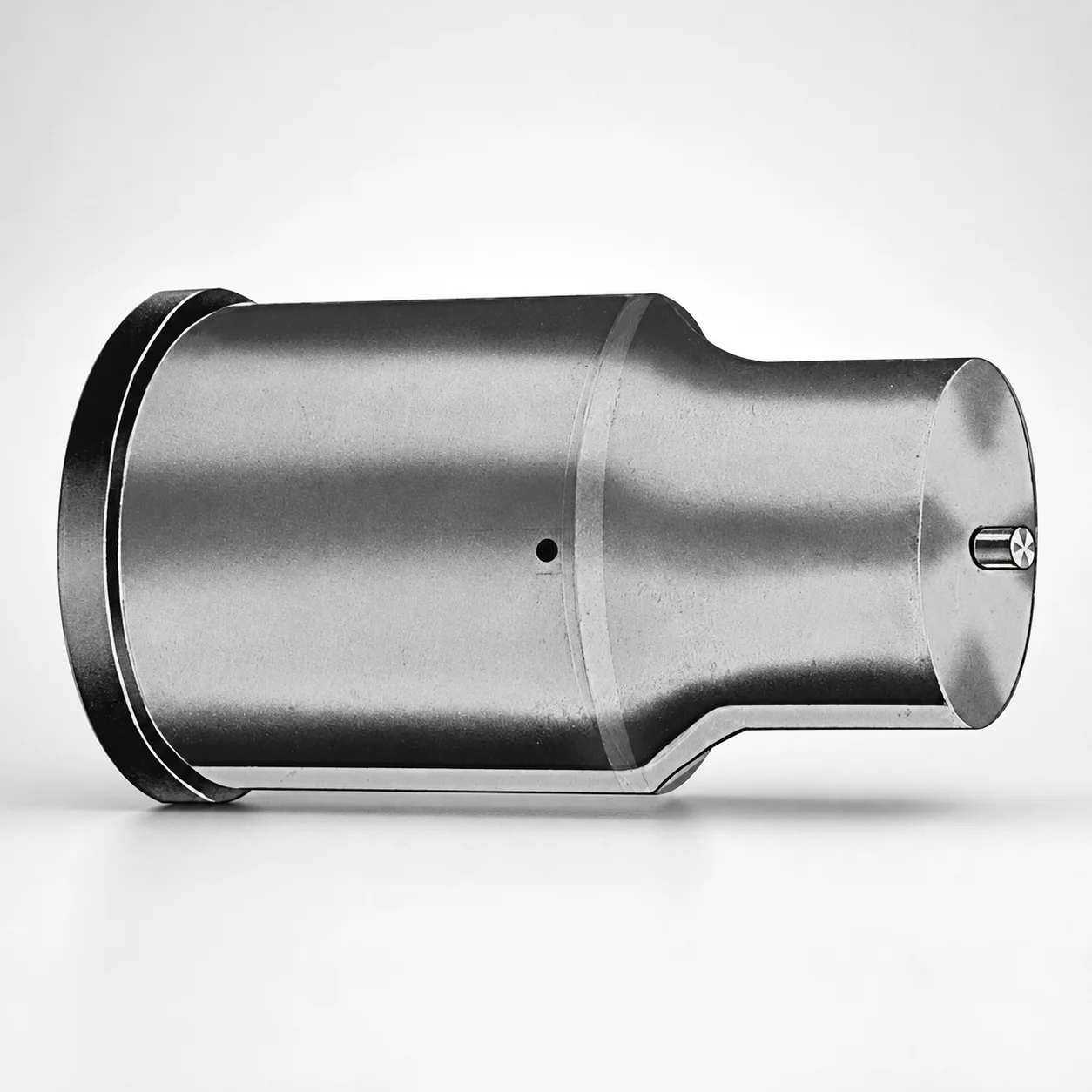
Extended Range Ejector Punches - Metric XCN Coating
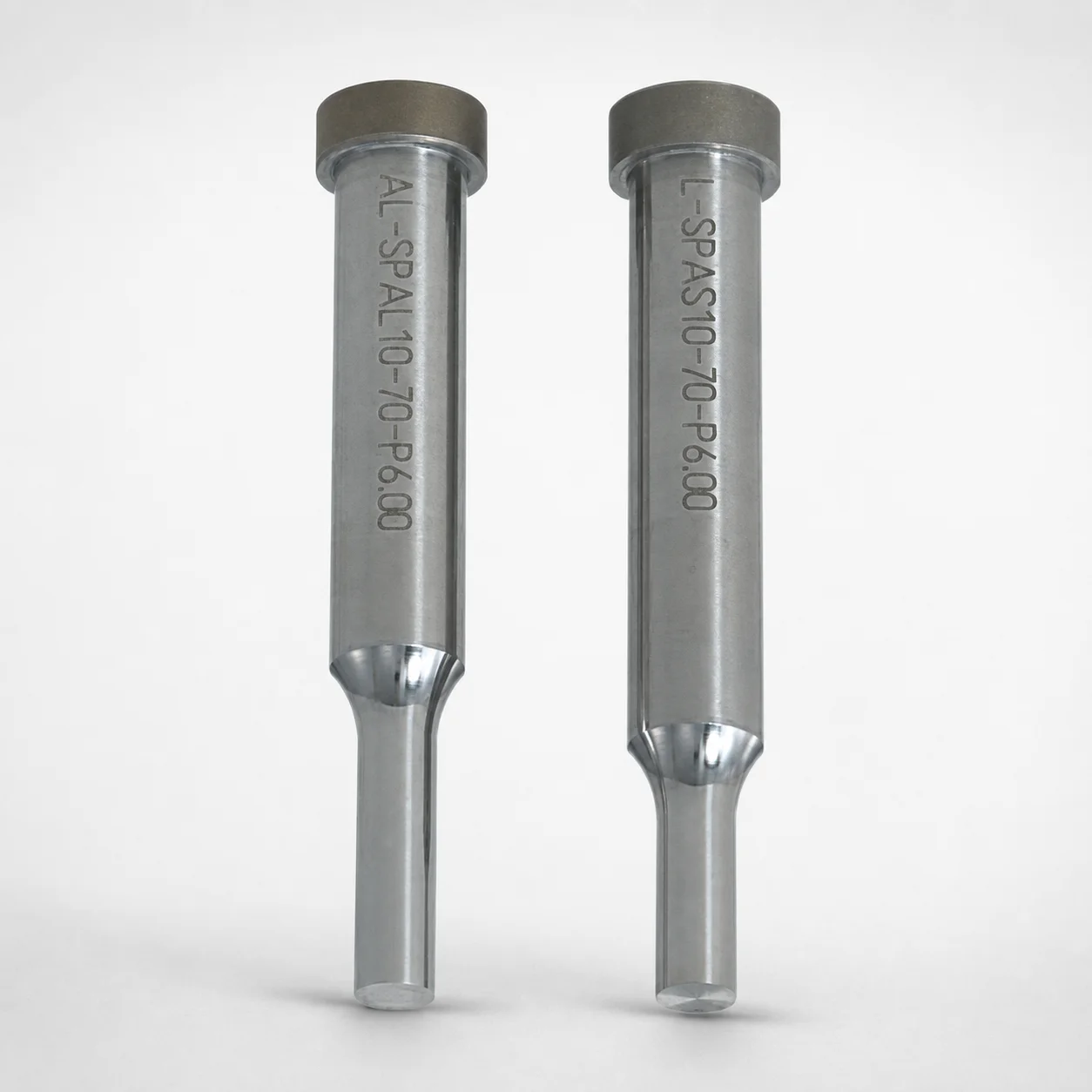
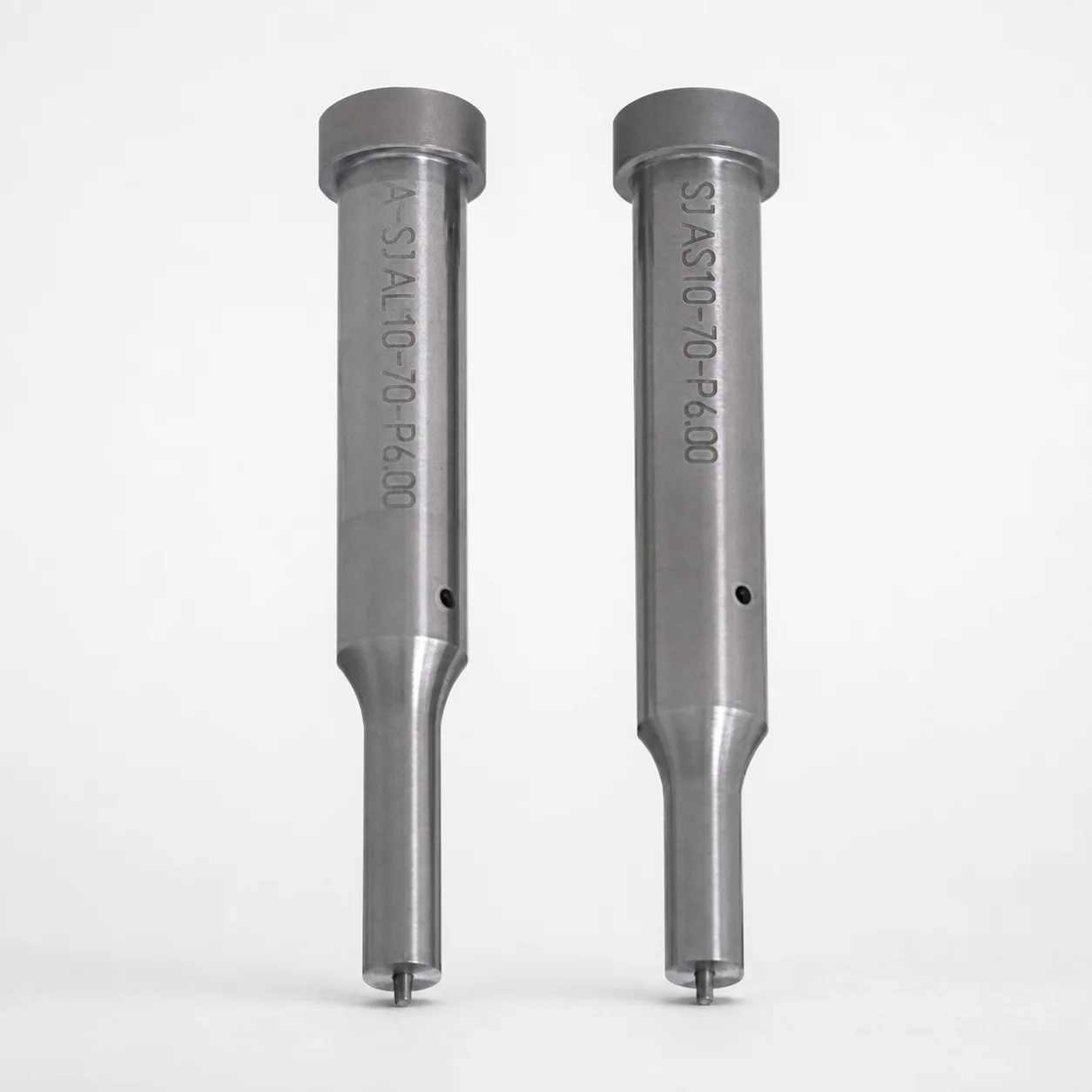
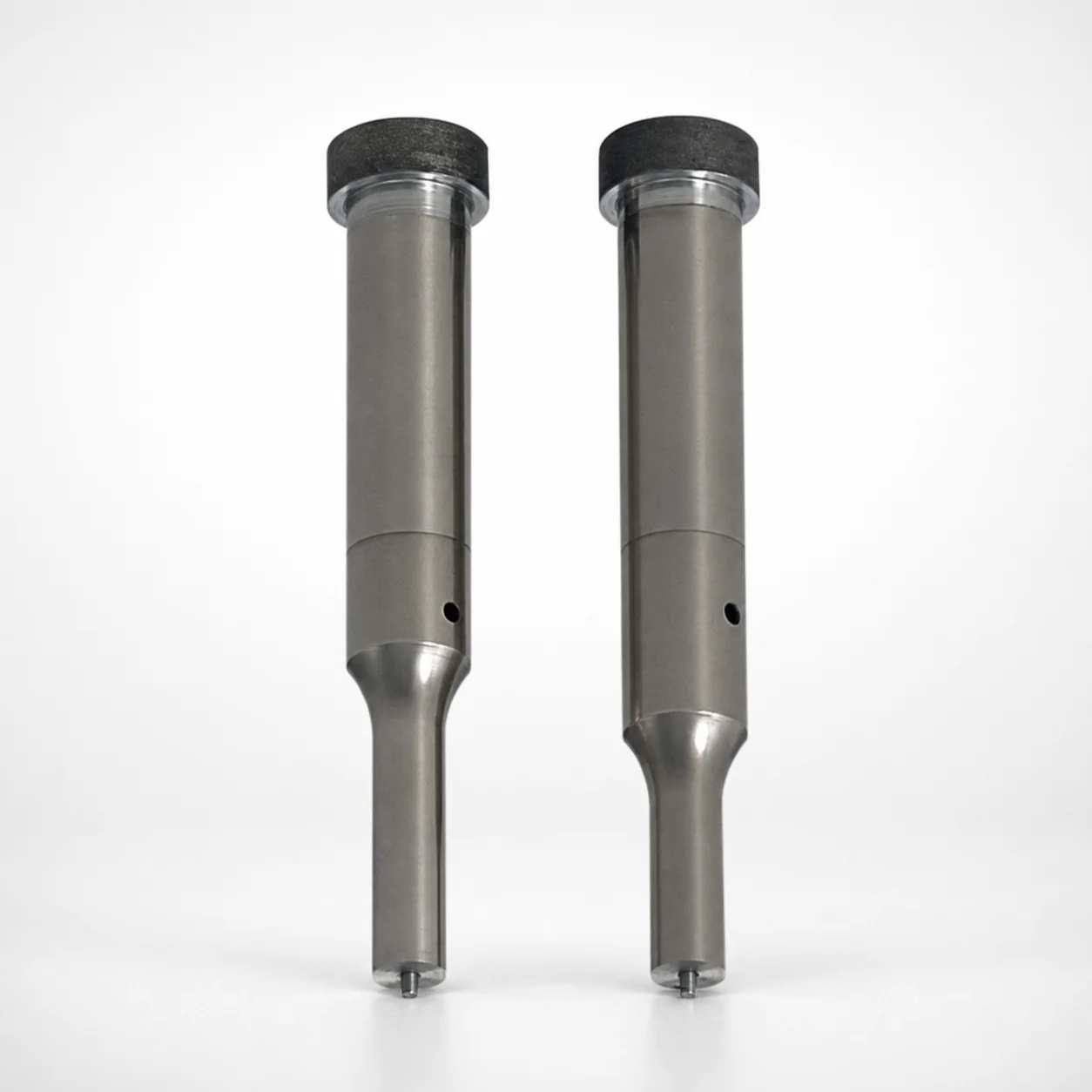
Extended Range ejector punches - metric (XCN coating) are designed for reliable, long-stroke ejection in progressive and forming dies. Their extended reach helps maintain consistent punching performance as tool length requirements increase.
- Extended range geometry supports efficient force transmission and stable punching
- XCN coating helps reduce wear for longer service life on production tooling
- Tip shape options (X, R, K, O, H, J, N, V, Y, Z) support fit to different die layouts
- Metric ejector punch standard for compatibility with metric die designs and assemblies
Specifications
50 configurations available
| Tip shape | D (Shank dia.) (mm) | L1 (Point Length) (mm) | L (Length) (mm) | P Dimension (mm) | W Dimension (mm) | R Dimension (mm) |
|---|---|---|---|---|---|---|
| H | 40 | 25 ~ 30 | 63 ~ 100 | 20 ~ 39.95 | 8 ~ 39.95 | - |
| H | 45 | 25 ~ 30 | 63 ~ 100 | 25 ~ 44.95 | 9 ~ 44.95 | - |
| H | 50 | 25 ~ 30 | 63 ~ 100 | 30 ~ 49.95 | 10 ~ 49.95 | - |
| H | 56 | 25 ~ 30 | 63 ~ 100 | 35 ~ 55.95 | 11 ~ 55.95 | - |
| H | 63 | 25 ~ 30 | 63 ~ 100 | 40 ~ 62.95 | 12 ~ 62.95 | - |
| J | 40 | 25 ~ 30 | 63 ~ 100 | 20 ~ 39.95 | 8 ~ 39.95 | - |
| J | 45 | 25 ~ 30 | 63 ~ 100 | 25 ~ 44.95 | 9 ~ 44.95 | - |
| J | 50 | 25 ~ 30 | 63 ~ 100 | 30 ~ 49.95 | 10 ~ 49.95 | - |
| J | 56 | 25 ~ 30 | 63 ~ 100 | 35 ~ 55.95 | 11 ~ 55.95 | - |
| J | 63 | 25 ~ 30 | 63 ~ 100 | 40 ~ 62.95 | 12 ~ 62.95 | - |
| K | 40 | 25 ~ 30 | 63 ~ 100 | 20 ~ 39.95 | 8 ~ 39.95 | 0.2 ~ 19.975 |
| K | 45 | 25 ~ 30 | 63 ~ 100 | 25 ~ 44.95 | 9 ~ 44.95 | 0.2 ~ 22.475 |
| K | 50 | 25 ~ 30 | 63 ~ 100 | 30 ~ 49.95 | 10 ~ 49.95 | 0.2 ~ 24.975 |
| K | 56 | 25 ~ 30 | 63 ~ 100 | 35 ~ 55.95 | 11 ~ 55.95 | 0.2 ~ 27.975 |
| K | 63 | 25 ~ 30 | 63 ~ 100 | 40 ~ 62.95 | 12 ~ 62.95 | 0.2 ~ 31.475 |
| N | 40 | 25 ~ 30 | 63 ~ 100 | - | 8 ~ 39.95 | - |
| N | 45 | 25 ~ 30 | 63 ~ 100 | - | 9 ~ 44.95 | - |
| N | 50 | 25 ~ 30 | 63 ~ 100 | - | 10 ~ 49.95 | - |
| N | 56 | 25 ~ 30 | 63 ~ 100 | - | 11 ~ 55.95 | - |
| N | 63 | 25 ~ 30 | 63 ~ 100 | - | 12 ~ 62.95 | - |
| O | 40 | 25 ~ 30 | 63 ~ 100 | 20 ~ 39.95 | 8 ~ 39.95 | - |
| O | 45 | 25 ~ 30 | 63 ~ 100 | 25 ~ 44.95 | 9 ~ 44.95 | - |
| O | 50 | 25 ~ 30 | 63 ~ 100 | 30 ~ 49.95 | 10 ~ 49.95 | - |
| O | 56 | 25 ~ 30 | 63 ~ 100 | 35 ~ 55.95 | 11 ~ 55.95 | - |
| O | 63 | 25 ~ 30 | 63 ~ 100 | 40 ~ 62.95 | 12 ~ 62.95 | - |
| R | 40 | 25 ~ 30 | 63 ~ 100 | 20 ~ 39.95 | 8 ~ 39.95 | - |
| R | 45 | 25 ~ 30 | 63 ~ 100 | 25 ~ 44.95 | 9 ~ 44.95 | - |
| R | 50 | 25 ~ 30 | 63 ~ 100 | 30 ~ 49.95 | 10 ~ 49.95 | - |
| R | 56 | 25 ~ 30 | 63 ~ 100 | 35 ~ 55.95 | 11 ~ 55.95 | - |
| R | 63 | 25 ~ 30 | 63 ~ 100 | 40 ~ 62.95 | 12 ~ 62.95 | - |
| V | 40 | 25 ~ 30 | 63 ~ 100 | 20 ~ 39.95 | 8 ~ 39.95 | - |
| V | 45 | 25 ~ 30 | 63 ~ 100 | 25 ~ 44.95 | 9 ~ 44.95 | - |
| V | 50 | 25 ~ 30 | 63 ~ 100 | 30 ~ 49.95 | 10 ~ 49.95 | - |
| V | 56 | 25 ~ 30 | 63 ~ 100 | 35 ~ 55.95 | 11 ~ 55.95 | - |
| V | 63 | 25 ~ 30 | 63 ~ 100 | 40 ~ 62.95 | 12 ~ 62.95 | - |
| X | 40 | 25 ~ 30 | 63 ~ 100 | 20 ~ 39.95 | - | - |
| X | 45 | 25 ~ 30 | 63 ~ 100 | 25 ~ 44.95 | - | - |
| X | 50 | 25 ~ 30 | 63 ~ 100 | 30 ~ 49.95 | - | - |
| X | 56 | 25 ~ 30 | 63 ~ 100 | 35 ~ 55.95 | - | - |
| X | 63 | 25 ~ 30 | 63 ~ 100 | 40 ~ 62.95 | - | - |
| Y | 40 | 25 ~ 30 | 63 ~ 100 | 20 ~ 39.95 | 8 ~ 39.95 | 0.2 ~ 19.975 |
| Y | 45 | 25 ~ 30 | 63 ~ 100 | 25 ~ 44.95 | 9 ~ 44.95 | 0.2 ~ 22.475 |
| Y | 50 | 25 ~ 30 | 63 ~ 100 | 30 ~ 49.95 | 10 ~ 49.95 | 0.2 ~ 24.975 |
| Y | 56 | 25 ~ 30 | 63 ~ 100 | 35 ~ 55.95 | 11 ~ 55.95 | 0.2 ~ 27.975 |
| Y | 63 | 25 ~ 30 | 63 ~ 100 | 40 ~ 62.95 | 12 ~ 62.95 | 0.2 ~ 31.475 |
| Z | 40 | 25 ~ 30 | 63 ~ 100 | - | 8 ~ 39.95 | 0.2 ~ 19.975 |
| Z | 45 | 25 ~ 30 | 63 ~ 100 | - | 9 ~ 44.95 | 0.2 ~ 22.475 |
| Z | 50 | 25 ~ 30 | 63 ~ 100 | - | 10 ~ 49.95 | 0.2 ~ 24.975 |
| Z | 56 | 25 ~ 30 | 63 ~ 100 | - | 11 ~ 55.95 | 0.2 ~ 27.975 |
| Z | 63 | 25 ~ 30 | 63 ~ 100 | - | 12 ~ 62.95 | 0.2 ~ 31.475 |
Product Guide
Application Scenarios+
Extended-reach ejector punches are used in injection mold tooling where consistent ejection is required even as tool length increases. In progressive blanking and forming dies, the longer overall length helps maintain stable force transfer across multiple stations, reducing the risk of uneven ejection as part geometry and strip handling demand tighter control.
For automotive and industrial connector housings, where fine features often rely on repeatable knock-out timing and alignment, the punched tip shape options (X, R, K, O, H, J, N, V, Y, Z) allow engineers to match die layout and clearance requirements. The metric series supports integration with metric die assemblies.
- XCN coating is selected to improve wear resistance in high-cycle production, supporting longer run times and more consistent punching results.
- Extended reach supports long-stroke ejection while maintaining predictable punching performance in high-efficiency blanking operations.
Material & Process Details+
The provided specification data for this series focuses on geometry and XCN coating, but does not list the underlying steel grade or measured hardness (HRC). For tooling engineers, the key material-related differentiator available here is the XCN coating, which is used to reduce surface wear under repeated punching/contact conditions.
In general practice for extended-range ejector punches, the steel is selected to balance toughness (to resist bending and shock during forming) with wear resistance (to maintain dimensional stability at the tip and bearing interfaces). Coatings such as XCN primarily improve wear performance at the contact surfaces, typically trading off some dependences on base hardness—meaning base metal robustness still matters for long tool life.
- Coating state: XCN coated (as specified).
- Selection implication: choose tip geometry to reduce edge loading, complementing the coating’s wear-reduction role.
Sizing & Selection Guide+
Select dimensions by matching the punch reach and tip geometry to your die layout, ensuring the ejector’s contact point is positioned correctly throughout the stroke. This series offers Tip shape options: H, J, K, N, O, R, V, X, Y, Z—choose based on required clearance, alignment, and contact profile in the cavity/core.
Use the D (Shank diameter) to match available guide and retention hardware. Available shank diameters are 40, 45, 50, 56, 63 mm. The L (Length) range is 63 to 100 mm and the L1 (Point length) is fixed at 25 to 30 mm, which together define working reach for long-stroke ejection.
- For your build-up, verify P and W compatibility against housing/guide constraints (P ranges: 20–39.95, 25–44.95, 30–49.95, 35–55.95, 40–62.95; W ranges: 8–39.95, 9–44.95, 10–49.95, 11–55.95, 12–62.95).
- Confirm tip/body curvature features via the R dimension range (0.2–19.975 up to 0.2–31.475), since radius affects bearing and wear location.
Tolerance/fit note: because the dataset does not provide explicit tolerances, confirm dimensional and clearance requirements against your die standards and guidance system before final selection.
Frequently Asked Questions
How do I choose the correct tip shape (X, R, K, O, H, J, N, V, Y, Z) for an extended-range ejector application?+
Which shank diameter D options are available, and what should they match in my die assembly?+
What are the available overall length ranges (L and L1) for long-stroke ejection?+
How do I select P and W dimensions when the punch must fit within a constrained die structure?+
What is the benefit of the XCN coating for high-cycle blanking and forming?+
Related Products
Need Custom Specifications?
Our engineering team can help with custom configurations, material selection, and volume pricing.