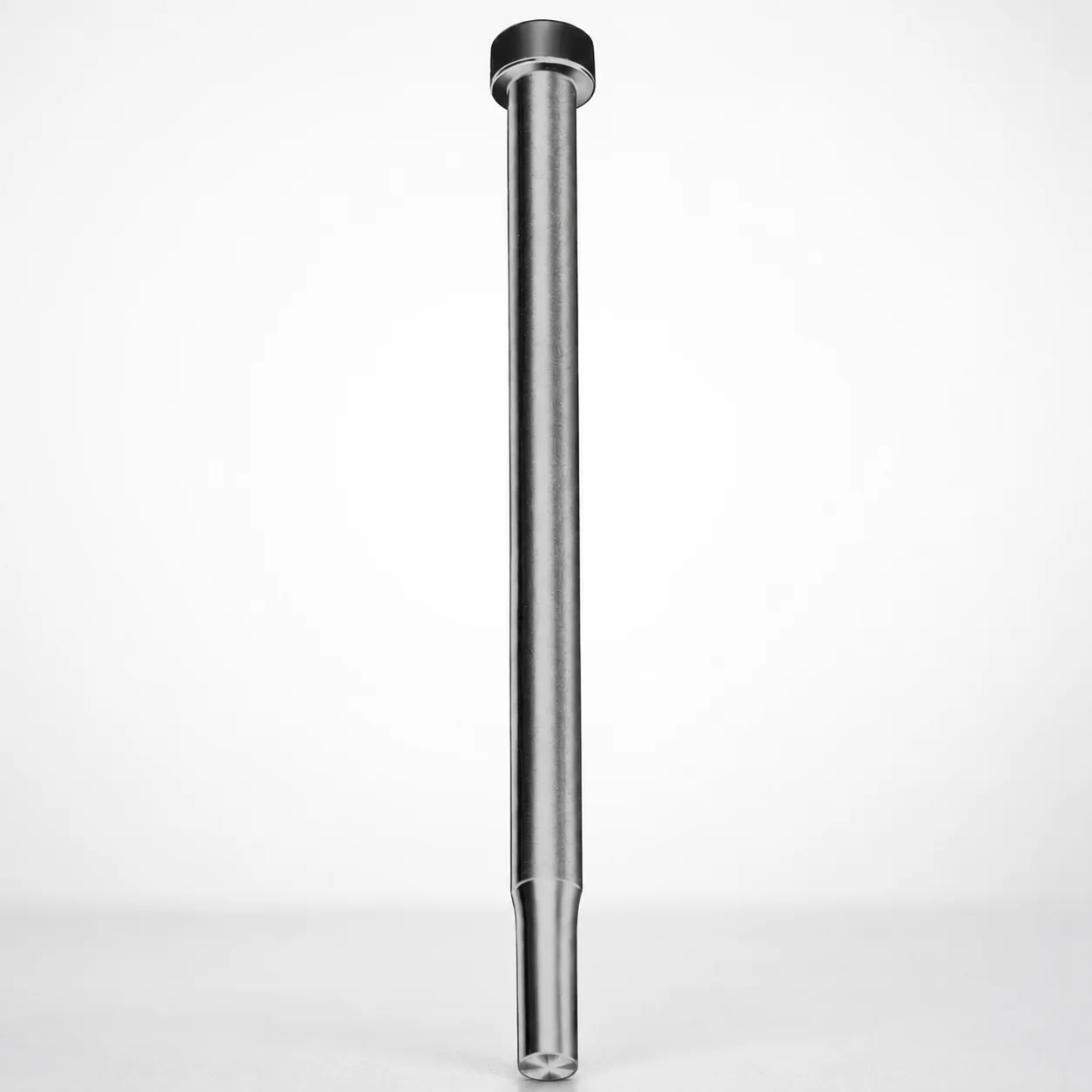
Close Space Punches - Metric XCN Coating
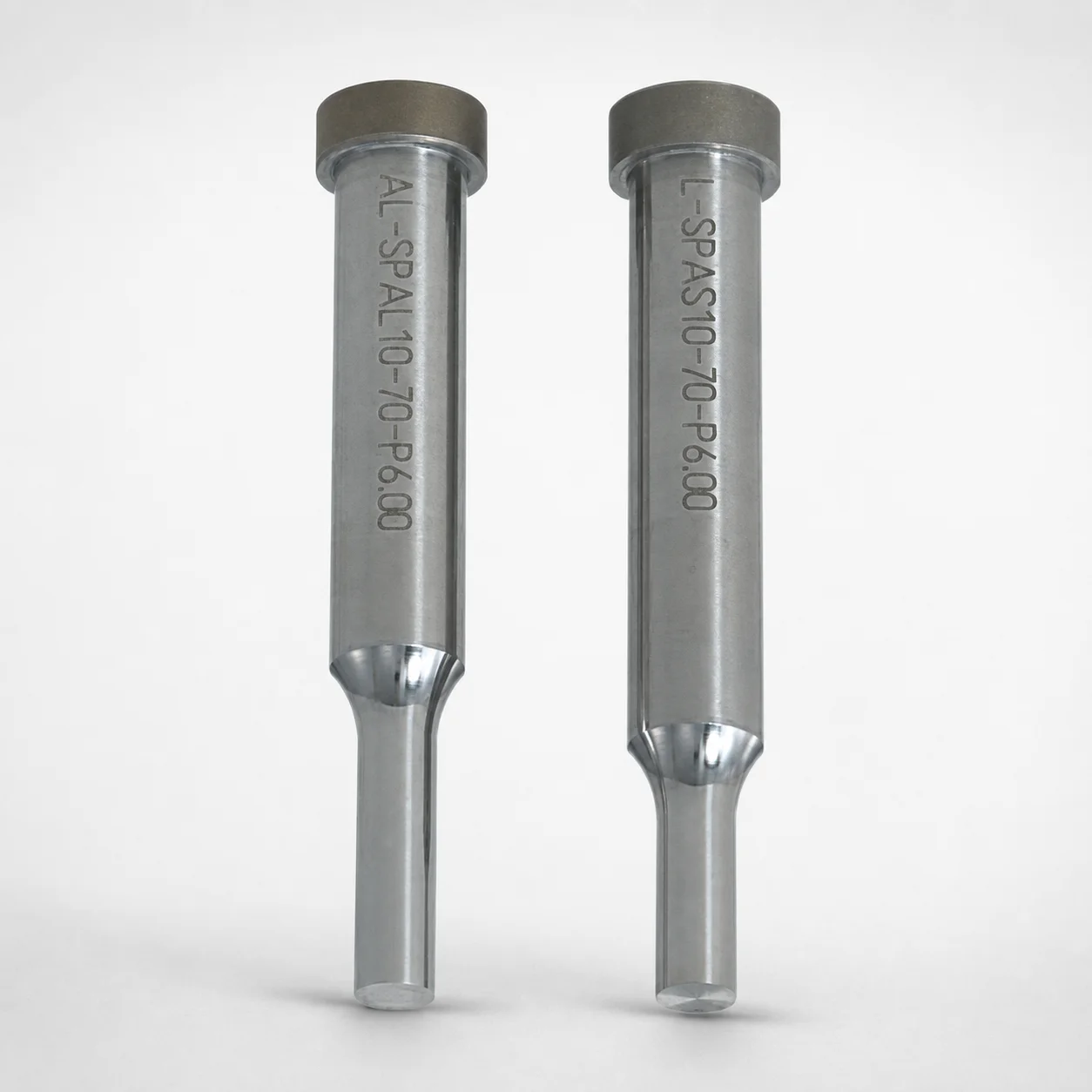
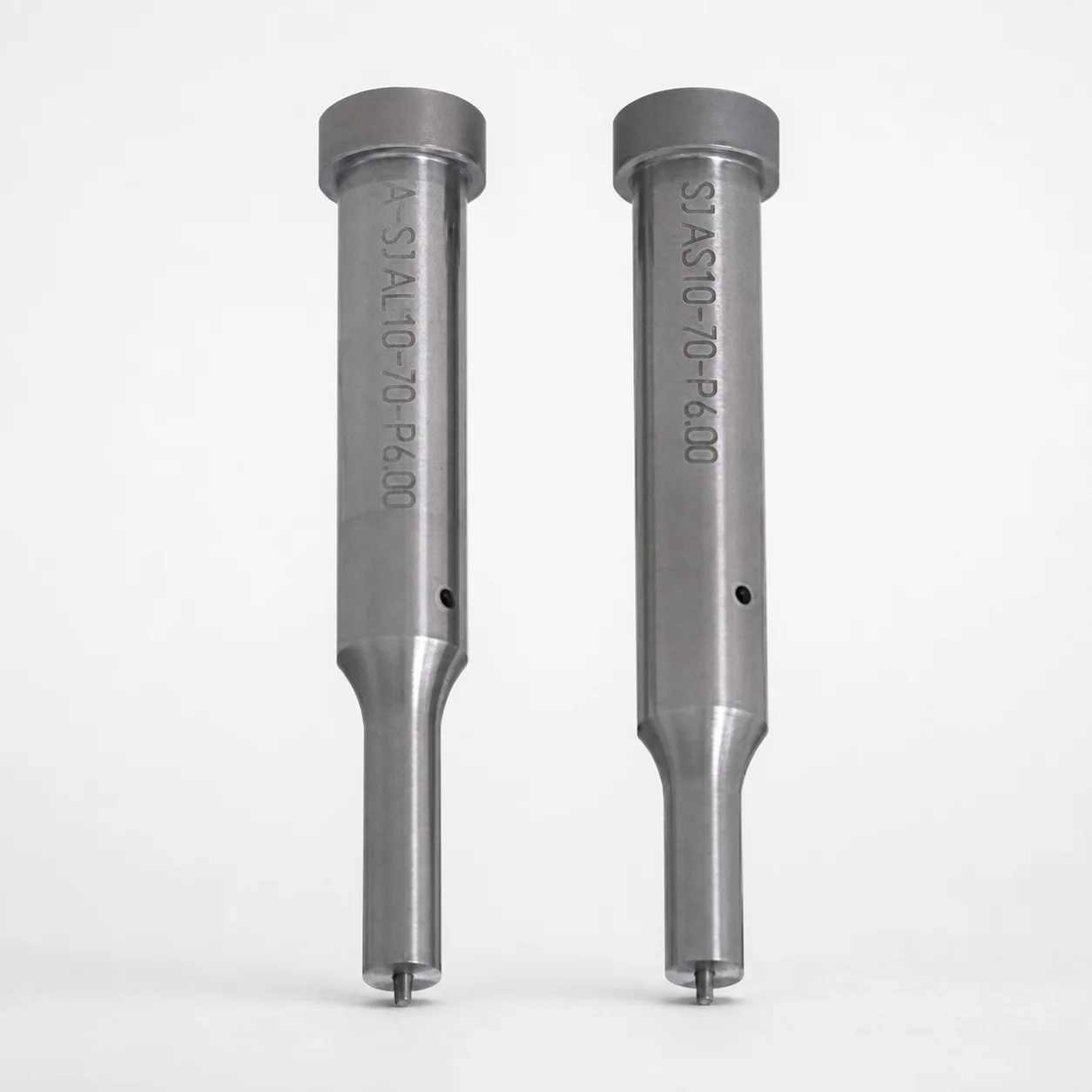
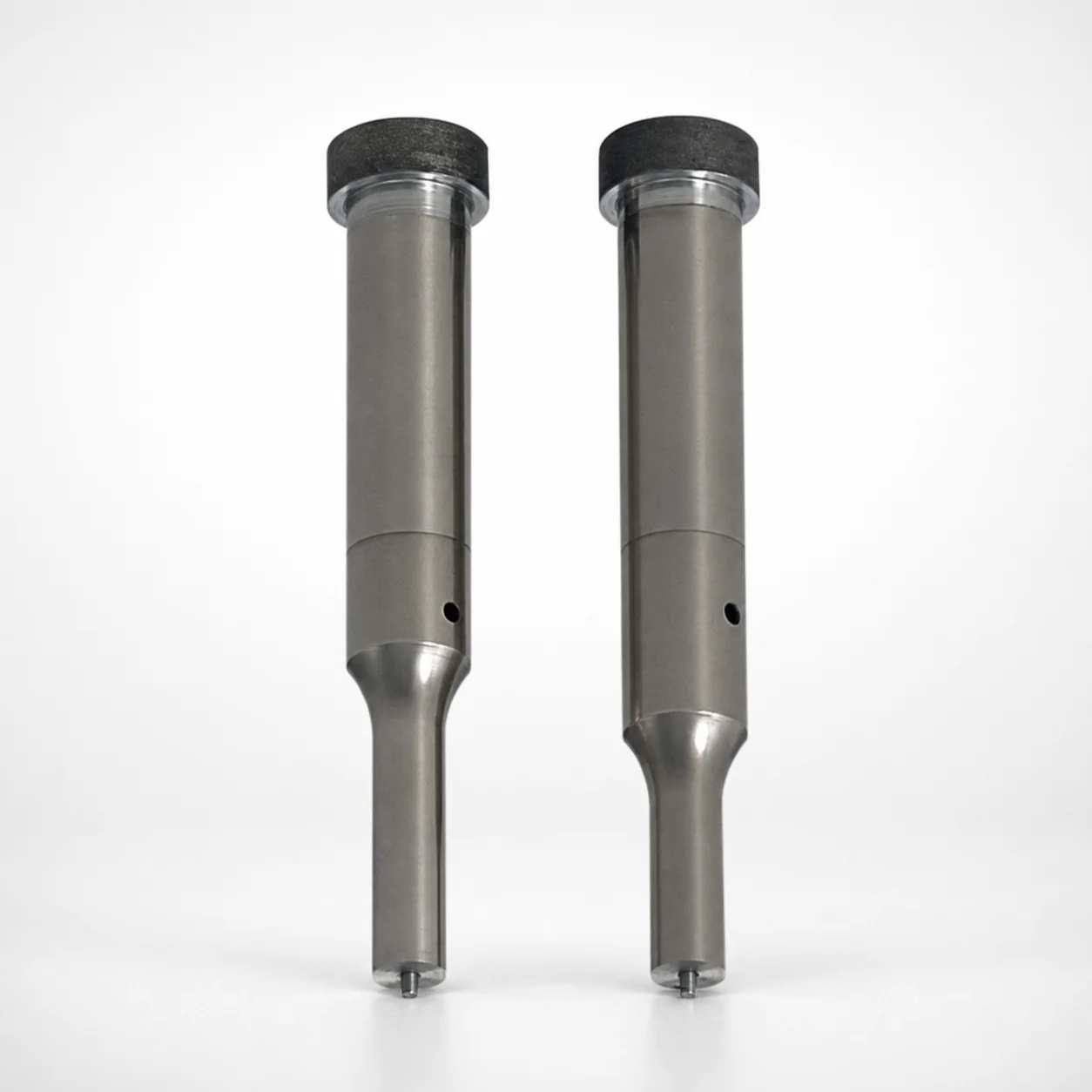
Close Space Punches - Metric XCN Coating are designed for reliable punching where die space is limited. The XCN coating supports consistent tool performance and improved wear resistance in production cycles.
- Close-space punch geometry helps maintain clearance in compact tooling
- XCN coating enhances abrasion resistance for stable service life
- Fixed P dimension 0.8 mm supports repeatable seating and alignment
- Metric sizes for versatile use in stamping and precision forming applications
Specifications
12 configurations available
| D (Shank dia.) (mm) | L (Length) (mm) | P Dimension (mm) |
|---|---|---|
| 02 | 40 ~ 100 | 0.8 |
| 02 | 40 ~ 100 | 0.81 ~ 2 |
| 03 | 40 ~ 100 | 1.1 ~ 2 |
| 03 | 40 ~ 100 | 2.01 ~ 3 |
| 04 | 40 ~ 100 | 1.3 ~ 3 |
| 04 | 40 ~ 100 | 3.01 ~ 4 |
| 05 | 40 ~ 100 | 1.3 ~ 4 |
| 05 | 40 ~ 100 | 4.01 ~ 5 |
| 06 | 40 ~ 100 | 1.3 ~ 5 |
| 06 | 40 ~ 100 | 5.01 ~ 6 |
| 07 | 40 ~ 100 | 1.3 ~ 6 |
| 07 | 40 ~ 100 | 6.01 ~ 7 |
Product Guide
Application Scenarios+
Close space punches are used in precision progressive and transfer die sets where available die land and clearance are tight. This particular punch variant, with a close-space geometry and controlled seating behavior, is suited for high-cycle metal stamping operations such as automotive bracket and connector terminals punching, where maintaining consistent hole quality depends on stable guidance through limited die space.
- Automotive connector molds/dies: XCN-coated wear surface supports predictable punch life during repetitive piercing in compact tool layouts.
- Appliance and electronics stampings: Metric shank diameters (D = 2–7 mm) help match common die insert designs for clean, repeatable forming tolerances.
- Thin-gauge precision forming: Fixed P = 0.8 mm supports consistent positioning in the die opening, reducing drift in long production runs.
The XCN coating improves abrasion resistance in abrasive materials and interrupted feed conditions, helping reduce wear-related dimensional changes.
Material & Process Details+
The product metadata specifies a metric close-space punch variant with an XCN coating, which is primarily selected for surface durability in production punching. While the input data does not list the base steel grade or an exact heat-treatment cycle, the coating functionally targets abrasion and adhesive wear resistance at the cutting/working zone.
- XCN coating: enhances wear resistance for stable tool performance and helps mitigate edge degradation over high production cycles.
- Hardness & toughness trade-off: the coated surface prioritizes wear resistance, while the underlying punch steel must retain sufficient toughness to resist chipping under punch load.
- Available material comparison: no alternate steel grades are provided in the input; selection should therefore be based on coating performance and compatibility with your press loads, strip thickness, and die clearance strategy.
For final confirmation of hardness (HRC) and heat treatment state (e.g., quenched & tempered vs. nitrided), request the material certificate for the specific lot.
Sizing & Selection Guide+
Use the provided geometry to match the punch to your die opening and guide arrangement. The shank diameter D is available in 02, 03, 04, 05, 06, 07 mm, so select the smallest diameter that maintains the required rigidity for your load and die clearance design.
- Length (L): choose from 40 to 100 mm to ensure full engagement through the die set thickness and stripper/holder stack-up.
- P dimension: the fixed P = 0.8 mm in the description is consistent with the stated range P = 0.8 to 6.01 mm; verify whether your order uses the 0.8 mm variant or a different P value, since P influences seating/alignment in close-space tooling.
- Fit & tolerances: match D to the holder/bushing bore specification in your die design. Maintain appropriate clearance in guides to prevent binding, and ensure L supports straight, non-tilting punching under load.
When transitioning between die sets, confirm both the D and P values because close-space punches are sensitive to seating position.
Frequently Asked Questions
How do I select the correct shank diameter (D) for close-space tooling?+
Select D from the available options: 02, 03, 04, 05, 06, 07 mm. Your die design should use a matching holder or guide bore for stable alignment and to avoid binding during cycling. For compact tool layouts, choose the smallest D that still provides adequate stiffness for your punch load.
What determines the required punch length (L) when die stack height changes?+
The punch length L is specified as 40 ~ 100 mm. Choose L to cover your die set thickness and ensure correct engagement through the stripper/holder while leaving enough margin to prevent interference. If you change the stack-up, re-check L to avoid under-support or over-projection.
This series mentions P = 0.8 mm—how does P affect seating and alignment?+
The product description highlights a fixed P dimension of 0.8 mm to support repeatable seating and alignment in tight die space. The specification also lists a P range of 0.8 to 6.01 mm, so confirm the exact P for your part number before designing the cavity/core interface. Using the wrong P can change how the punch seats and can lead to dimensional variation.
What performance benefit does the XCN coating provide for punching?+
This punch uses XCN coating to improve abrasion resistance and support stable service life in production cycles. It is especially useful where contact wear on the working surface accelerates—such as repetitive piercing in abrasive or hard-to-form sheet materials. The input data does not list a base steel grade, so request lot-specific material details if you need hardness (HRC) verification.
Can I use this close-space punch across different metric die sizes?+
Yes, it is offered in metric shank diameters D = 2–7 mm and a metric length range of 40–100 mm, allowing adaptation to common stamping die standards. However, keep P selection consistent with your die seating requirements, since P is tied to close-space alignment. Validate compatibility with your guide/bushing bore before committing to tool builds.
Related Products
Need Custom Specifications?
Our engineering team can help with custom configurations, material selection, and volume pricing.