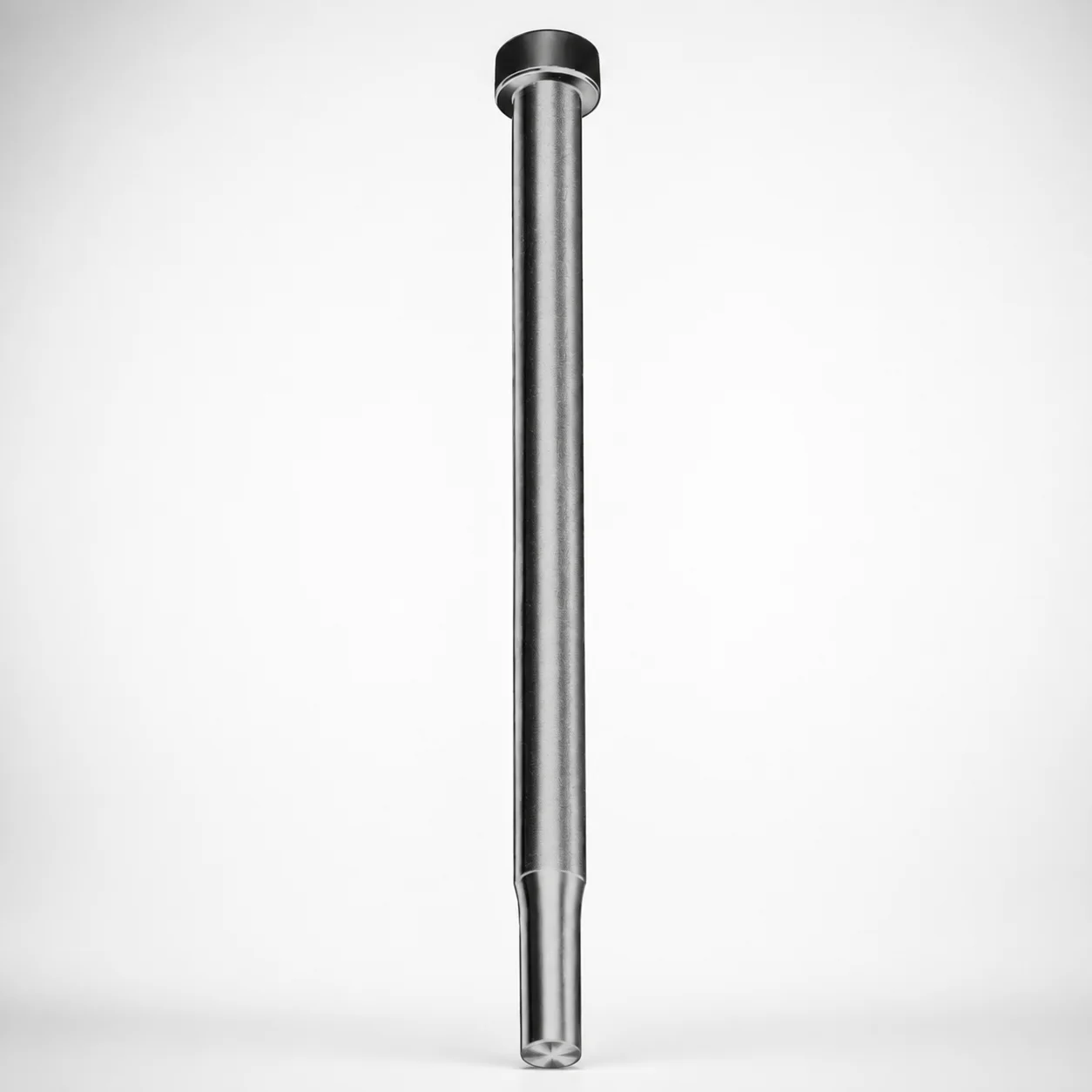
Metric Close Space Punches XCDP Coating
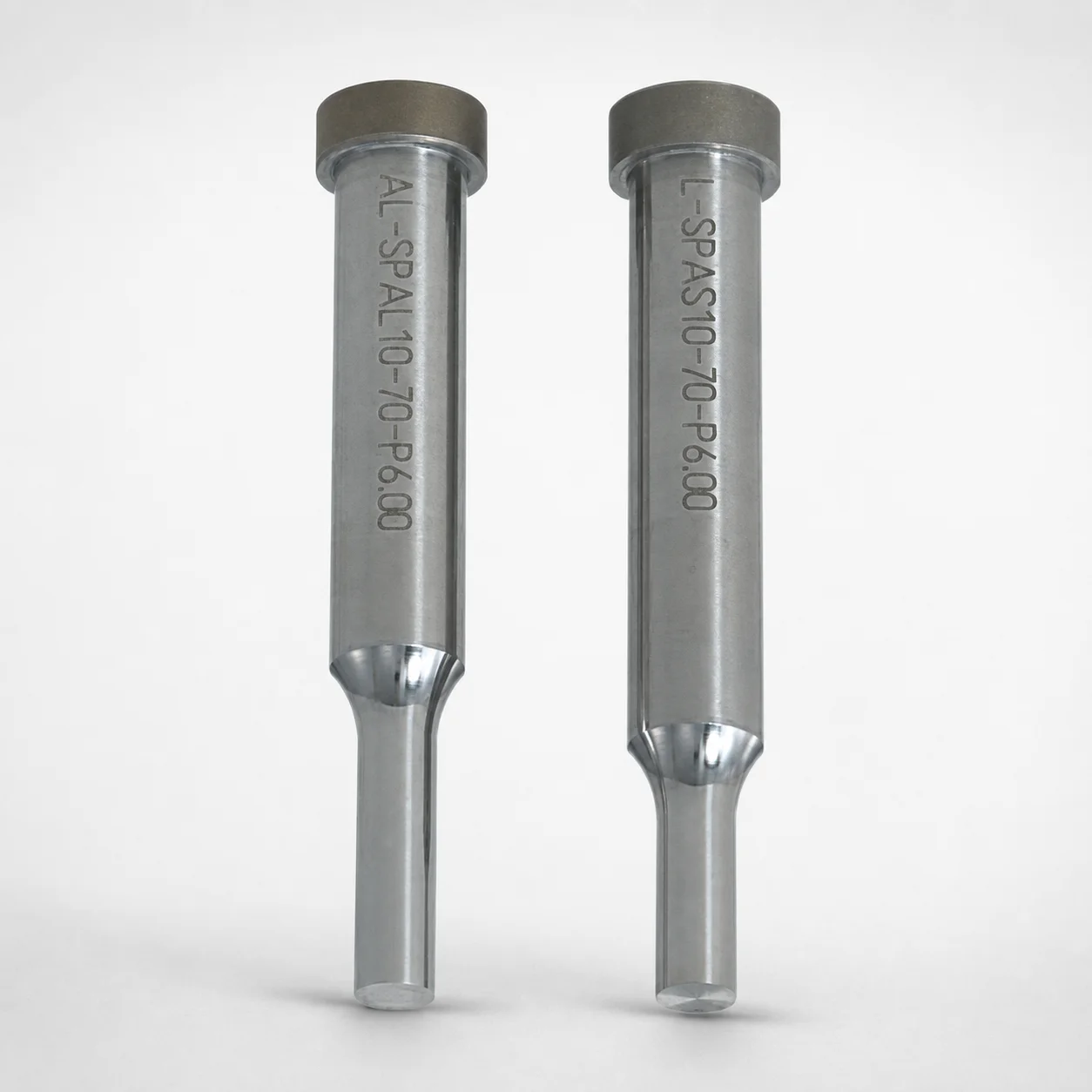
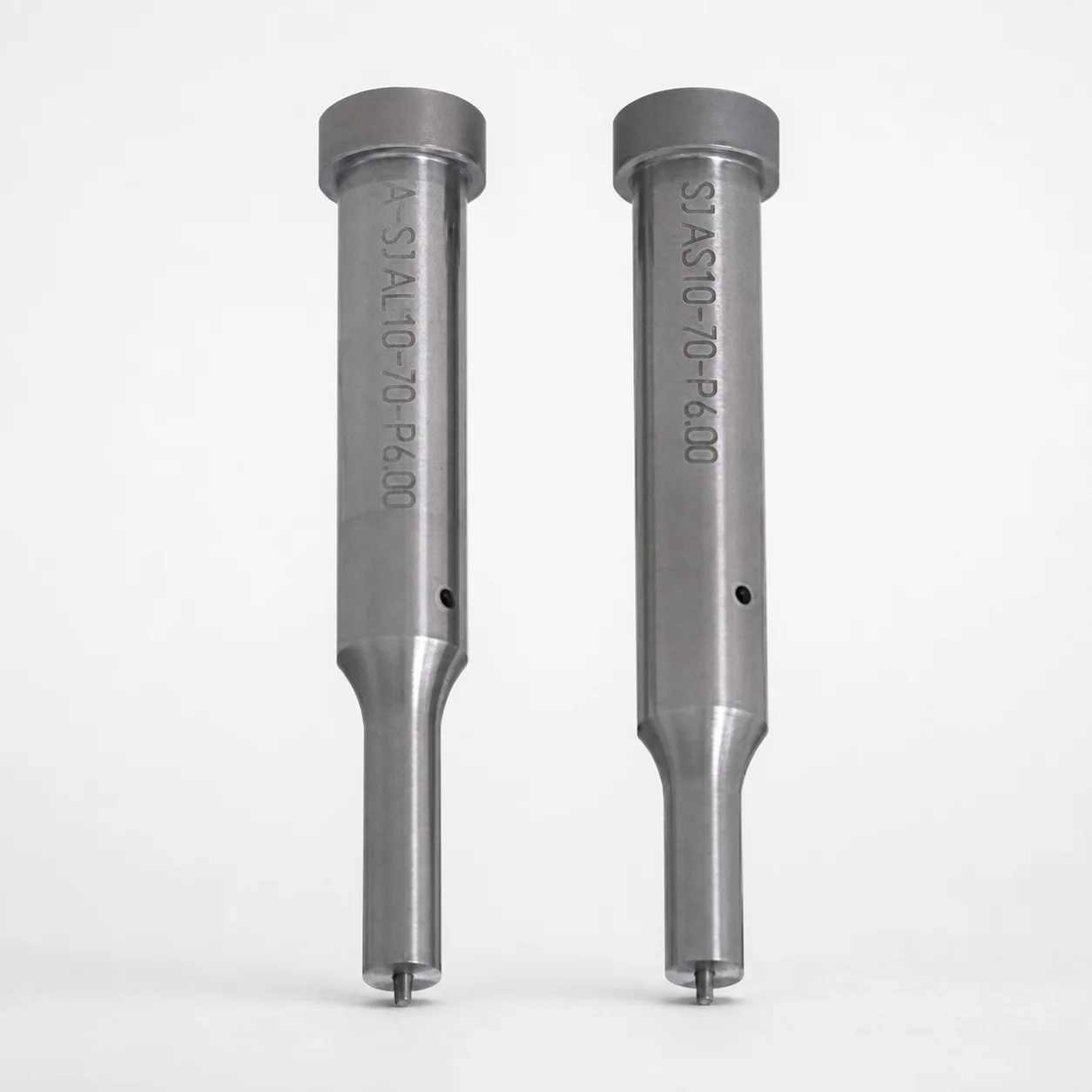
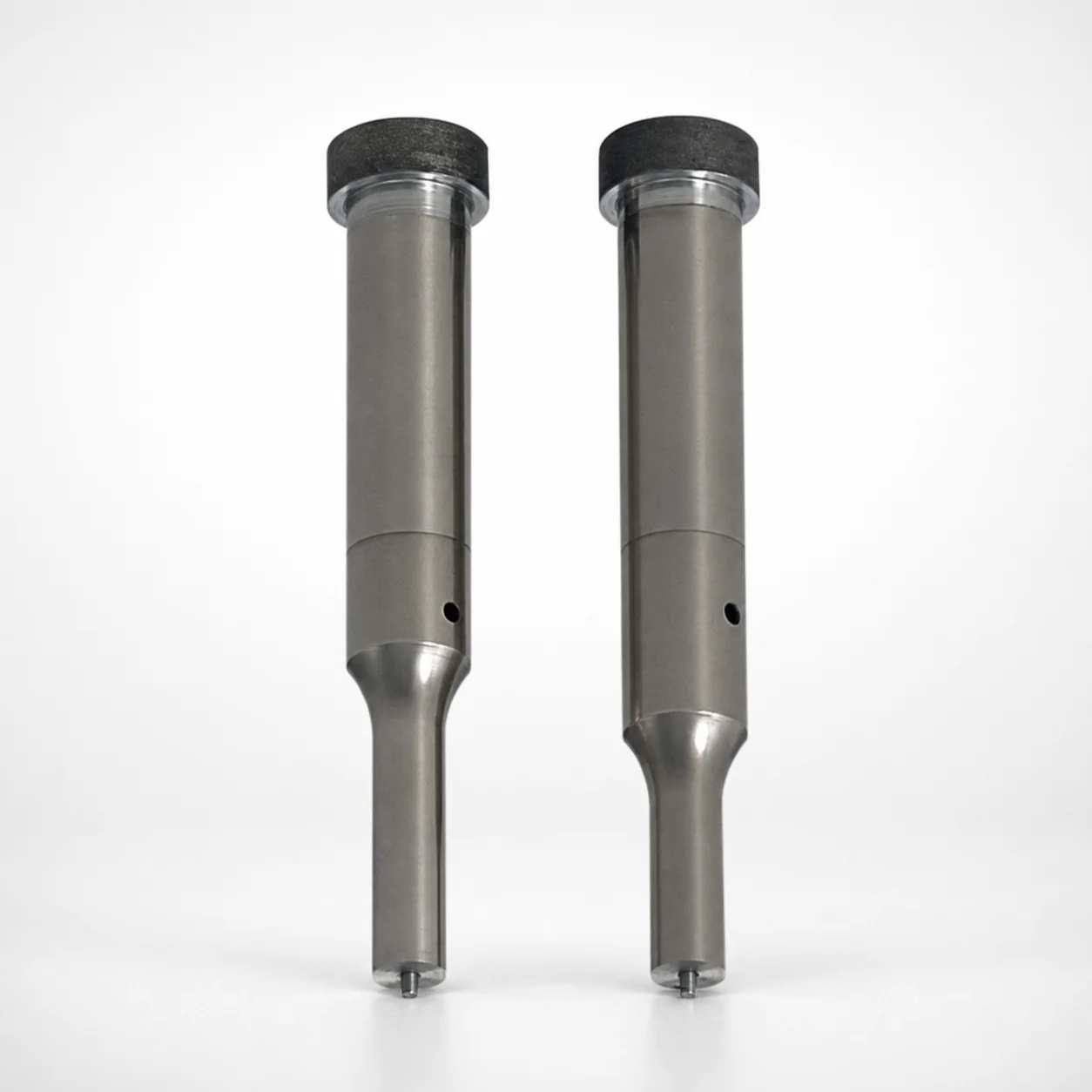
Metric close space punches (XCDP coating) are designed for efficient punching in tight clearance die systems where dimensional stability and surface protection are critical. DAYTON tooling supports consistent punch performance across production runs.
- Optimized close-space punch form for precise material piercing in compact die layouts
- Enhanced XCDP coating helps improve wear resistance and reduce sticking
- Standardized metric shank sizes D = 0.2–0.7 mm for flexible tool design selection
- Suited to metric punch stations handling repeatable production cycles
Specifications
12 configurations available
| D (Shank dia.) (mm) | L (Length) (mm) | P Dimension (mm) |
|---|---|---|
| 02 | 40 ~ 100 | 0.8 |
| 02 | 40 ~ 100 | 0.81 ~ 2 |
| 03 | 40 ~ 100 | 1.1 ~ 2 |
| 03 | 40 ~ 100 | 2.01 ~ 3 |
| 04 | 40 ~ 100 | 1.3 ~ 3 |
| 04 | 40 ~ 100 | 3.01 ~ 4 |
| 05 | 40 ~ 100 | 1.3 ~ 4 |
| 05 | 40 ~ 100 | 4.01 ~ 5 |
| 06 | 40 �� 100 | 1.3 ~ 5 |
| 06 | 40 ~ 100 | 5.01 ~ 6 |
| 07 | 40 ~ 100 | 1.3 ~ 6 |
| 07 | 40 ~ 100 | 6.01 ~ 7 |
Product Guide
Application Scenarios+
Close-space punches with XCDP surface treatment are used in tight-clearance punching stations where the die space is limited and parts must be pierced without damaging adjacent geometry. In automotive and appliance brackets, they support reliable piercing by maintaining cutting edge performance despite repeated cycles and close die-wall proximity.
They are also well-suited for electrical terminal and connector blanking in progressive dies, where close tolerance between punch and die contributes to stable hole quality and reduced burr risk. The XCDP coating is chosen for improved surface protection, helping reduce sticking and wear in lubricated or semi-lubricated toolsets.
- Compact die layouts: the close-space punch form enables piercing in confined tooling geometry.
- Repeat production runs: coating and standardized metric shanks help keep performance consistent across batches.
- Metric punch stations: metric shank sizing supports predictable tool selection and setup.
Material & Process Details+
The provided datasheet specifies the geometry and coating (XCDP), but does not list a steel grade or heat-treatment condition. For material selection and performance expectations, engineers should treat this as a coating-driven close-space punch variant intended to enhance cutting stability under friction and contact wear.
- XCDP coating: designed to improve wear resistance at the contact surfaces and reduce sticking during punching.
- Wear vs. toughness: in close-clearance applications, the coating helps mitigate surface degradation that would otherwise force earlier tool regrinding; toughness trade-offs depend on the underlying punch steel grade, which is not specified in the input data.
If you share the underlying steel specification (e.g., equivalent to common tool steels) and any hardness (HRC) targets, we can align the heat-treatment state (quenched & tempered, nitrided, etc.) to your expected cutting load and cycle count.
Sizing & Selection Guide+
Select the punch shank diameter (D) and length (L) based on the punch holder and the effective working height needed for your die set. This product offers metric shank options: D = 0.2, 0.3, 0.4, 0.5, 0.6, or 0.7 mm, enabling matching to close-space tool cavities and guide constraints.
- Match D to holder and guide fit: choose the shank diameter that matches the corresponding holder bore and guide requirements for minimal play while avoiding binding.
- Match L to working depth: select L = 40–100 mm to ensure sufficient reach through the upper die and stable engagement with the stripper/ejector system.
- Validate P dimension: confirm the P = 0.8–6.01 mm geometry so the punch head profile aligns with your required piercing dimensions and die clearance strategy.
For final assembly, confirm any tolerances required by your toolholder system; because the input data lists discrete D sizes and ranges for L and P, dimensional fit should be verified against the mating components in your close-clearance die stack.
Frequently Asked Questions
Which shank diameter (D) options are available for DAYTON metric close space punches with XCDP coating?+
How do I choose the correct punch length (L) for a close-clearance die stack?+
What is the valid range for the P dimension and why does it matter?+
What performance advantage does the XCDP coating provide in close-space punching?+
Are tolerances or fit guidance provided for D, L, and P to ensure compatibility with punch holders?+
Related Products
Need Custom Specifications?
Our engineering team can help with custom configurations, material selection, and volume pricing.