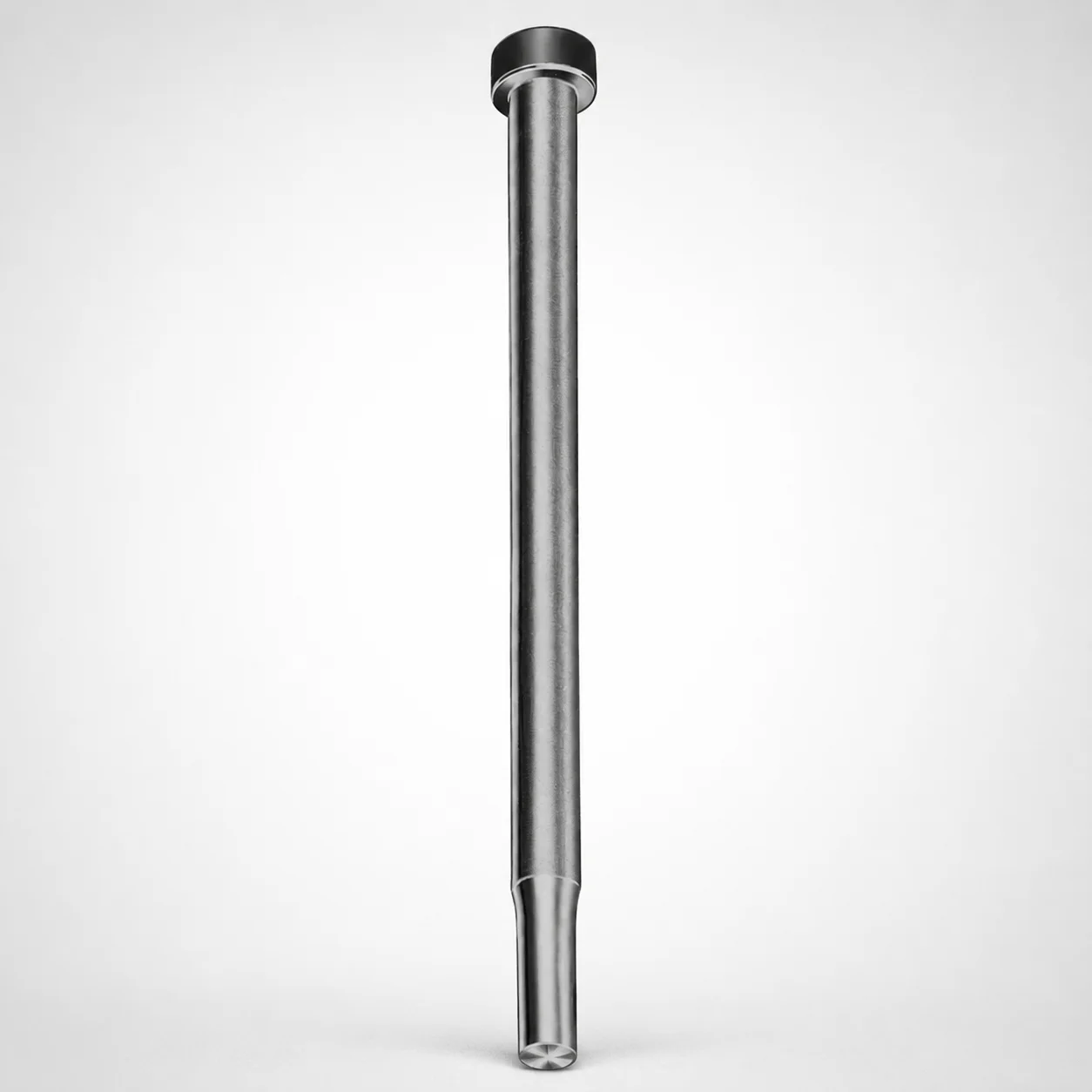
Close Space Punches Metric XCD Coating
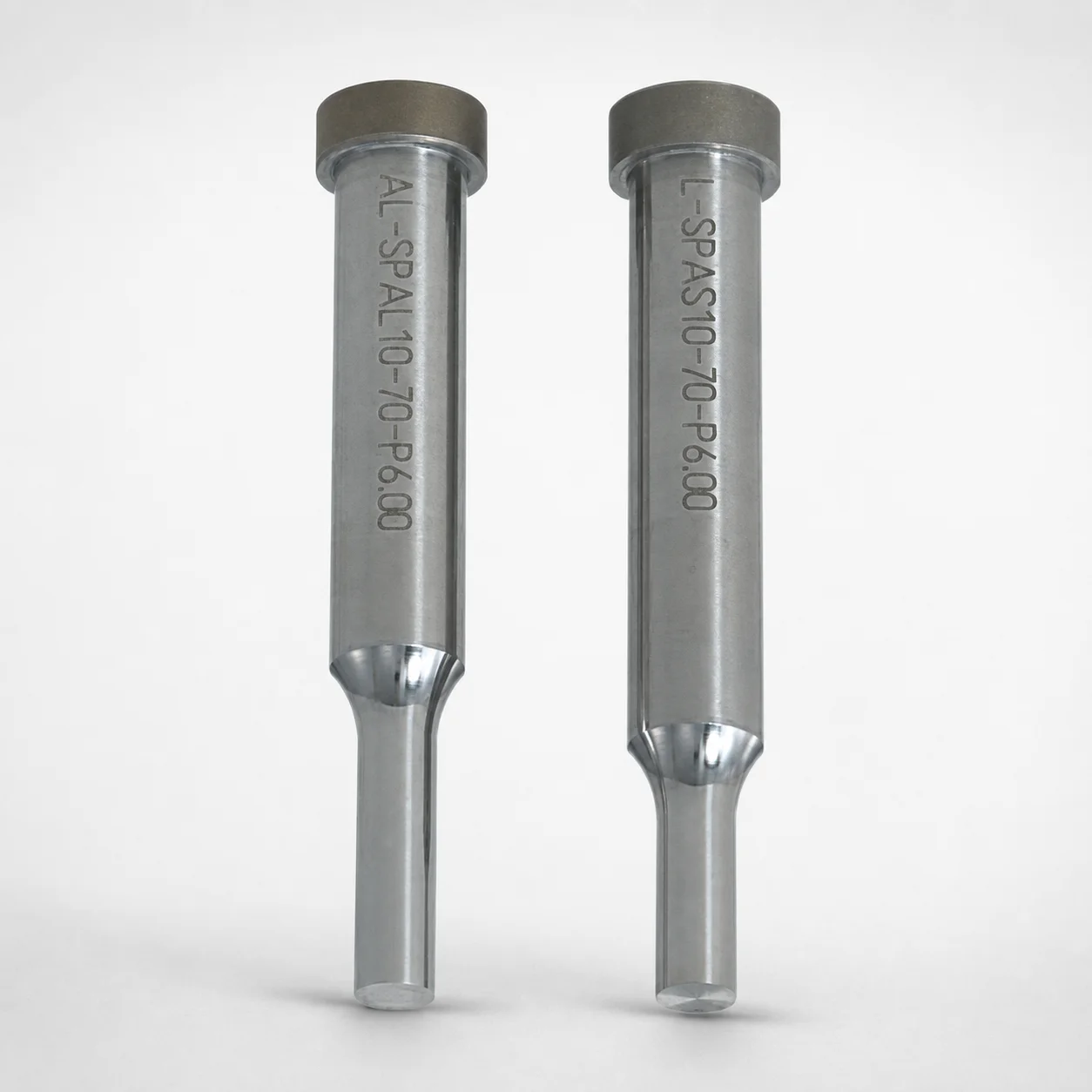
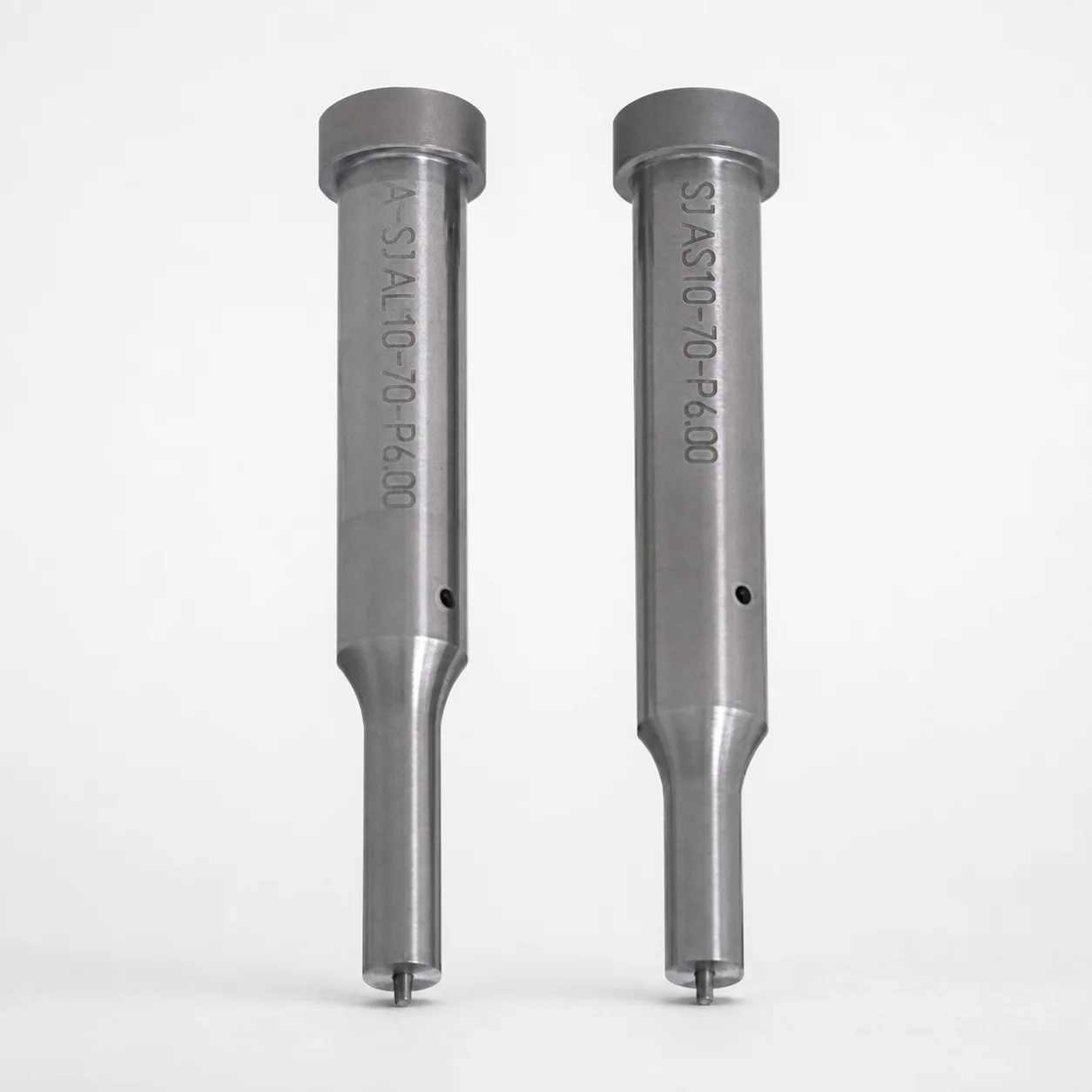
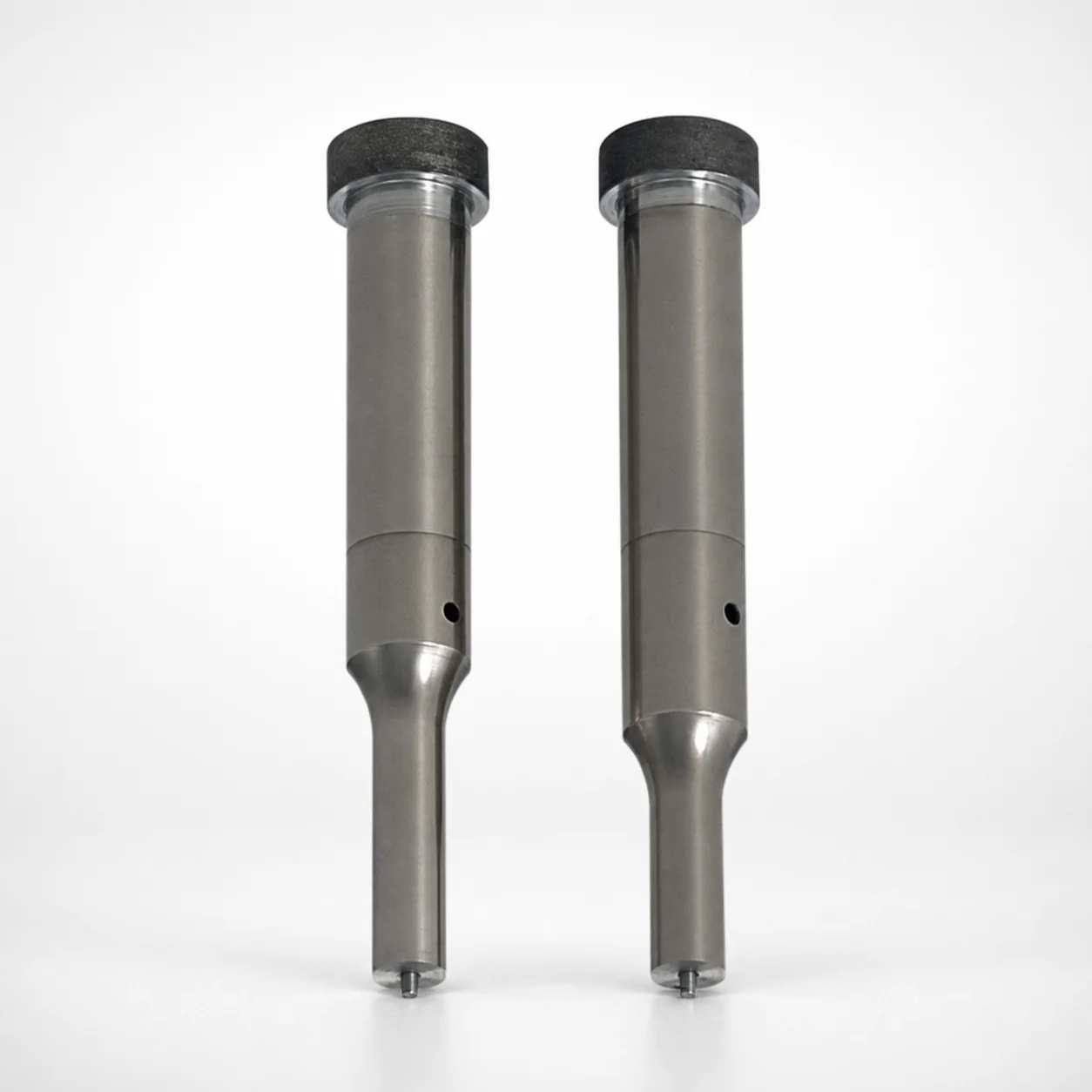
Close Space Punches Metric XCD Coating (DAYTON) are designed for tight-geometry press tooling where close clearances matter. The XCD coated surface supports consistent wear performance and stable punch life in production runs.
- Close-space punch geometry supports stable alignment in tight die sets
- XCD coating helps reduce friction and improve wear resistance
- P dimension 0.8 mm supports repeatable fit during assembly
- Suitable for metric press applications requiring controlled cutting action
Specifications
12 configurations available
| D (Shank dia.) (mm) | L (Length) (mm) | P Dimension (mm) |
|---|---|---|
| 02 | 40 ~ 100 | 0.8 |
| 02 | 40 ~ 100 | 0.81 ~ 2 |
| 03 | 40 ~ 100 | 1.1 ~ 2 |
| 03 | 40 ~ 100 | 2.01 ~ 3 |
| 04 | 40 ~ 100 | 1.3 ~ 3 |
| 04 | 40 ~ 100 | 3.01 ~ 4 |
| 05 | 40 ~ 100 | 1.3 ~ 4 |
| 05 | 40 ~ 100 | 4.01 ~ 5 |
| 06 | 40 ~ 100 | 1.3 ~ 5 |
| 06 | 40 ~ 100 | 5.01 ~ 6 |
| 07 | 40 ~ 100 | 1.3 ~ 6 |
| 07 | 40 ~ 100 | 6.01 ~ 7 |
Product Guide
Application Scenarios+
Close-space punches are used in injection-mold related press tooling operations such as trimming, piercing, and forming features inside a die set where package space is limited. This punch style is especially suited to automotive connector housings and other high-throughput molded parts that require consistent hole quality and predictable punch life.
In tight die assemblies, the close clearance geometry helps maintain alignment between the punch and mating die elements, reducing edge chipping and improving dimensional repeatability. The XCD coated surface is intended to lower friction at the cutting interface, supporting stable wear performance during long production runs.
It is also a strong fit for medical device housing fabrication where clean, controlled cutting is critical. Select this variant when you need reliable performance with metric tooling builds and a punch that can be matched to small clearance stacks.
- Use for trimming/piercing where the tool cavity space is constrained
- Leverage XCD coating to improve wear behavior under repetitive cycles
- Match shank and P dimension to your press die alignment requirements
Material & Process Details+
The provided configuration specifies a XCD coating that is applied to the punch surface to enhance cutting-interface behavior. While the underlying steel grade and heat treatment are not specified in the input data, the coating is typically selected to improve wear resistance and reduce friction during repeated punching.
From a performance standpoint, expect a trade-off common to coated cutting tools: the coating improves surface durability and helps maintain geometry, but final toughness and through-life reliability still depend on the base steel’s core properties.
- XCD coating: supports reduced friction and improved wear performance in production cycles
- Hardness/toughness note: without the base grade provided, hardness (HRC) and quenched & tempered/nitrided state cannot be confirmed from the given specifications
- When comparing variants: choose higher-performance coatings for abrasive or high-cycle workloads; choose simple uncoated punches only when cost or specific material compatibility dominates
Sizing & Selection Guide+
Correct sizing is essential for close-clearance press tooling. Start by matching the shank diameter (D) to your guide/bushing and alignment interface: available D values are 02, 03, 04, 05, 06, 07 mm.
Next, select the working tool depth using the fixed length (L) range of 40 ~ 100 mm. The chosen L should provide adequate reach through the die set while avoiding interference with your upper and lower plates.
Finally, confirm the P dimension (a close-fit/geometry-related parameter) to ensure correct clearance and repeatable assembly fit. P is available from 0.8 ~ 6.01 mm; choose the smallest value that meets your functional clearance stack and stripping requirements.
- Match D to the guide hole/bushing bore for stable alignment
- Choose L to clear the die pack and tooling components
- Select P to achieve the intended close-space clearance during assembly
Tolerance guidance cannot be specified from the provided data; verify your die design clearance targets against the actual punch measurements on receipt.
Frequently Asked Questions
Which shank diameter (D) options are available for this close-space punch, and how do they affect alignment in the die set?+
How should I choose the length (L) between 40 and 100 mm for a multi-plate tooling stack?+
What does the P dimension (0.8 to 6.01 mm) control for close-space press tooling?+
What performance benefit does the XCD coating provide compared with an uncoated close-space punch?+
Do I need to know the base steel grade and heat treatment to select the right punch for my process?+
Related Products
Need Custom Specifications?
Our engineering team can help with custom configurations, material selection, and volume pricing.