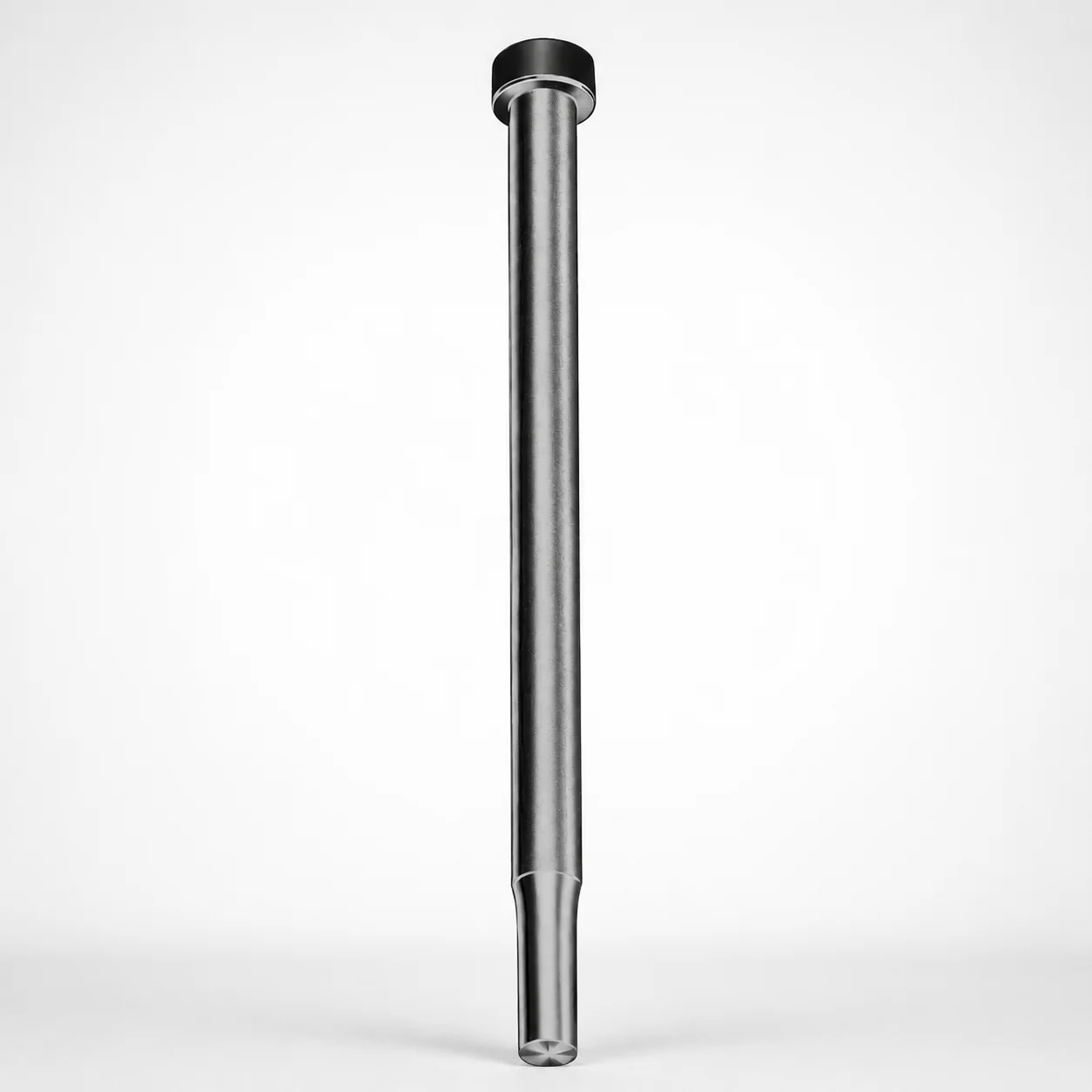
Metric Close Space Punches P=0.8
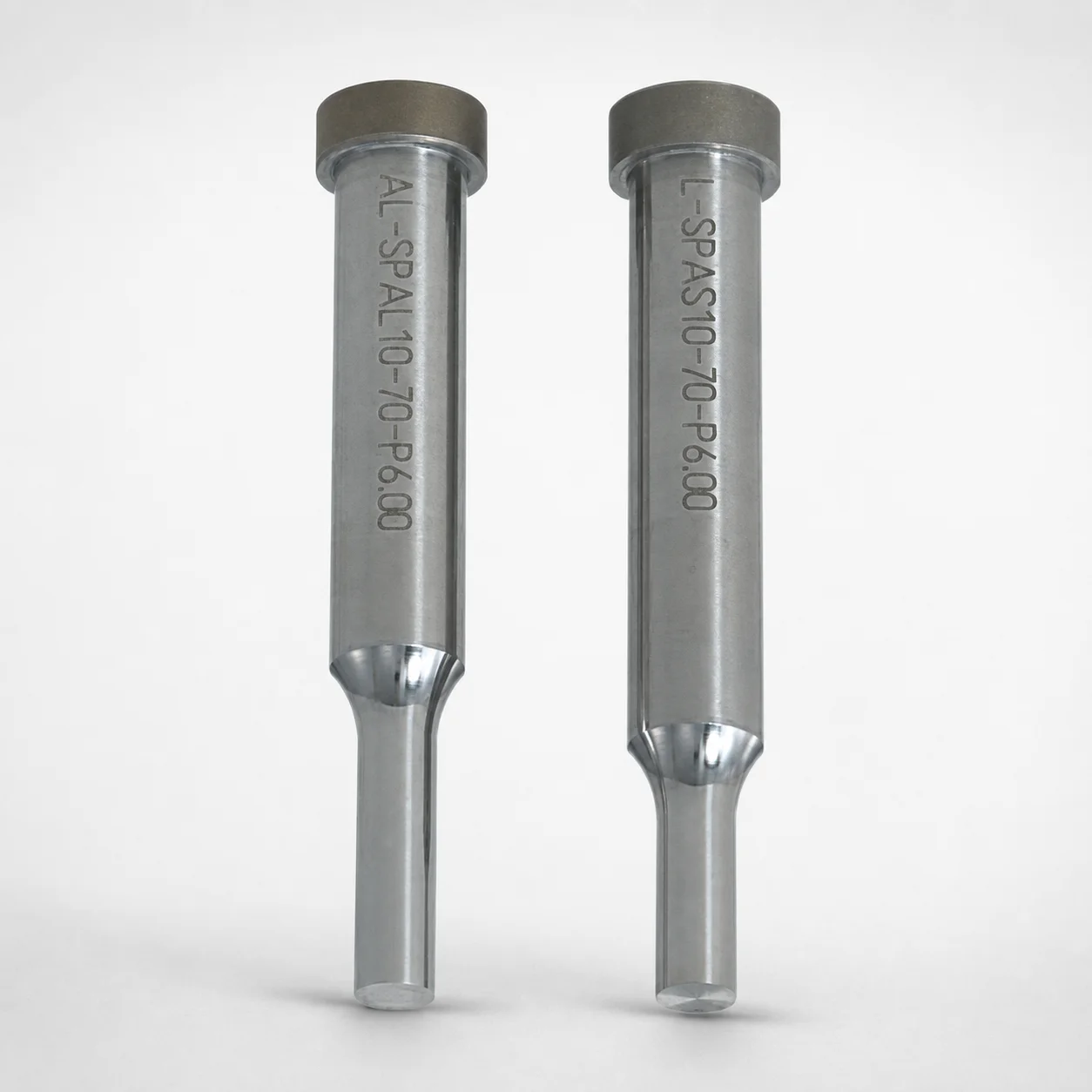
Metric close space punches (P 0.8) are designed for compact punch layouts where reliable alignment and consistent piercing performance are required in production dies. The XAN DayTAN™ coating option helps support smoother operation and controlled wear under cutting loads.
- Close-space geometry supports stable positioning in tight die pockets
- Fixed P dimension 0.8 for repeatable assembly and setup
- Optional shank diameters (D 02–07 mm) for matching die design
- Typical use in sheet metal piercing, blanking, and precision forming tools
Specifications
12 configurations available
| D (Shank dia.) (mm) | L (Length) (mm) | P Dimension (mm) |
|---|---|---|
| 02 | 40 ~ 100 | 0.8 |
| 02 | 40 ~ 100 | 0.81 ~ 2 |
| 03 | 40 ~ 100 | 1.1 ~ 2 |
| 03 | 40 ~ 100 | 2.01 ~ 3 |
| 04 | 40 ~ 100 | 1.3 ~ 3 |
| 04 | 40 ~ 100 | 3.01 ~ 4 |
| 05 | 40 ~ 100 | 1.3 ~ 4 |
| 05 | 40 ~ 100 | 4.01 ~ 5 |
| 06 | 40 ~ 100 | 1.3 ~ 5 |
| 06 | 40 ~ 100 | 5.01 ~ 6 |
| 07 | 40 ~ 100 | 1.3 ~ 6 |
| 07 | 40 ~ 100 | 6.01 ~ 7 |
Product Guide
Application Scenarios+
Metric close-space punches are used in injection-mold tooling only when the mold’s tooling elements require controlled piercing/blanking-like contact operations, such as in integrated metal inserts, feeding systems, or post-mold assembly stations that punch thin carriers or film backing used with the molded part.
In automotive connector and housing manufacturing, these punches help form consistent holes in thin metal shields or backing layers that may be overmolded or assembled to molded components. The fixed close-space P dimension (0.8) supports repeatable positioning in compact die pockets, improving hole-to-feature registration across production runs.
For electrical panel and sensor bracket forming, the tight layout reduces die area while maintaining alignment. The optional XAN DayTAN™ coating is suited for smoother operation and more controlled wear under cutting loads, helping maintain punching performance over cycles.
- Use in tight punch layouts where die pocket space is limited
- Best matched when consistent setup and alignment are critical
- Consider coating when abrasive/cyclic cutting increases wear
Material & Process Details+
The provided product data specifies geometry (D, L, and fixed P=0.8) and an optional XAN DayTAN™ coating, but it does not include the underlying steel grade, heat-treatment route, or target hardness (HRC). Therefore, hardness, wear resistance, and toughness trade-offs can’t be stated from the supplied specifications.
What can be concluded from the variant selection is that the XAN DayTAN™ coating option is intended to support smoother sliding/contact and help manage wear during cutting loads in close-space layouts. When selecting for durability, engineers should confirm the base steel grade and heat treatment (e.g., quenched & tempered, nitrided, or pre-hardened) from the project documentation or request the material certificate.
- Base steel: not specified in the input data
- Heat treatment: not specified in the input data
- Coating: XAN DayTAN™ optional to improve operational wear behavior
Sizing & Selection Guide+
Selection starts with matching the shank diameter (D) and length (L) to your die/tooling interface. Available D values are 02, 03, 04, 05, 06, 07 mm, and available L ranges from 40 to 100 mm (40 ~ 100).
This series is identified as a close-space punch with fixed P=0.8. Practically, that means the close-space geometry and the positioning feature based on P dimension are fixed to 0.8, so you should verify that your die pocket spacing and punch-to-guide clearances are designed for this fixed layout.
- Match D to the punch retainer/bushing bore and guide fit requirements
- Choose L to ensure full working engagement without bottoming in the tool cavity
- Confirm clearance and stack-up effects from your die plate thickness and backing support
If your assembly requires different P values, note that while the broader dataset shows P dimension values from 0.8 to 6.01, this specific variant is the fixed P 0.8 configuration.
Frequently Asked Questions
How do I select the correct shank diameter (D) for this metric close-space punch in a tight die pocket?+
Choose D from the available options: 02, 03, 04, 05, 06, 07 mm. The selected diameter must match the bore/guide size in your punch retainer and ensure the intended sliding fit and stability in close-space layouts.
Because the input data does not provide tolerance values, validate the fit with your bushing and guide tolerances in the die stack-up drawing.
This series says P=0.8—what does that mean for die spacing and punch-to-feature registration?+
For this variant, the P dimension is fixed at 0.8 mm, so the close-space geometry is designed for that pocket spacing. Use it when your die design and clearance scheme assume close-space P=0.8 to maintain repeatable positioning.
Although other P dimension values exist in the dataset (0.8 ~ 6.01), this configuration should not be substituted for a different P requirement.
What length (L) should I choose between 40 and 100 mm to avoid bottoming while maintaining engagement?+
Select L within 40 ~ 100 mm based on your die plate thickness, stripper/guide height, and working stroke. The goal is full effective engagement at the die working face without allowing the punch to bottom out against the stop surfaces.
Account for any tool wear compensation and stack-up changes over production.
What is the purpose of the XAN DayTAN™ coating option for this close-space punch?+
The meta description indicates XAN DayTAN™ is an optional coating that supports smoother operation and controlled wear under cutting loads. For close-space punch applications with cyclic contact, this can help maintain performance across repeated cycles.
Base steel grade and heat-treatment details are not provided in the input data, so confirm material specs when selecting for a specific wear target.
If I need a different P dimension than 0.8 mm, can I use this punch?+
No—this SKU is specified as Metric Close Space Punches P=0.8 with a fixed P dimension of 0.8. If your design requires another P value, you must select a configuration that matches that required P dimension.
The broader range shows P values from 0.8 to 6.01, but that range does not apply to the fixed-P variant.
Related Products
Need Custom Specifications?
Our engineering team can help with custom configurations, material selection, and volume pricing.