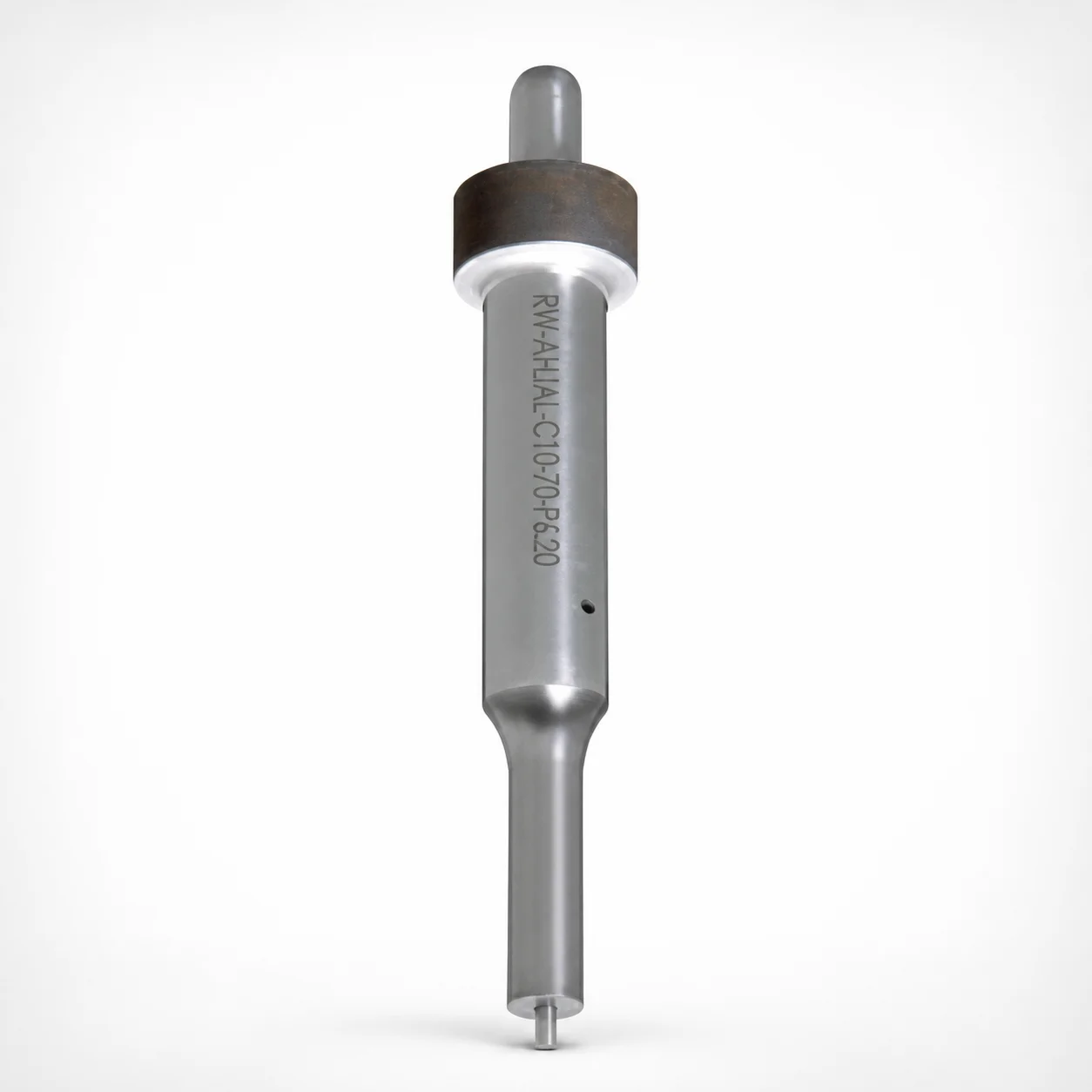
Center Dowel Ejector Punches for Heavy Load (RW Coating) - SKH51 Steel
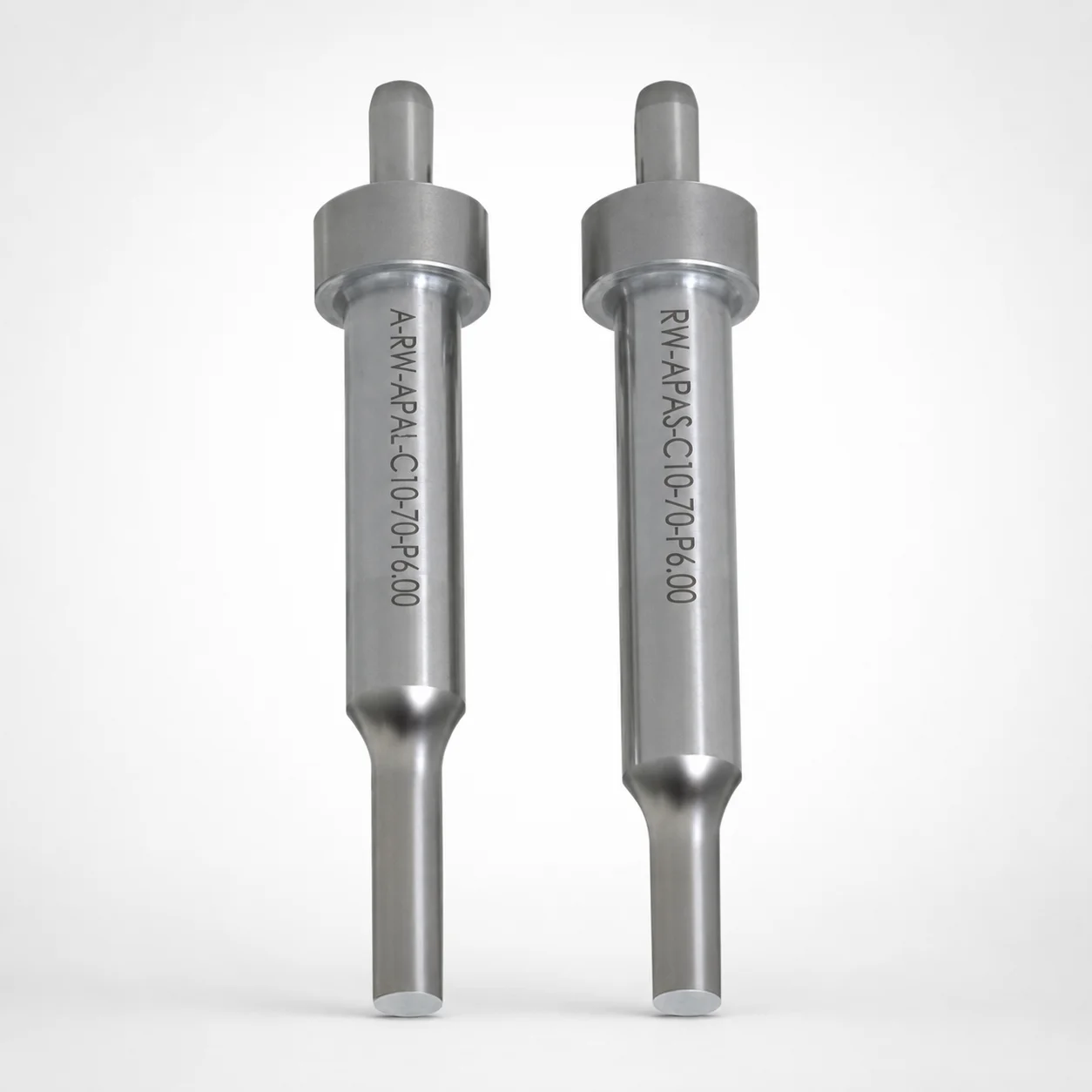
Center Dowel Ejector Punches for Heavy Load (SKH51 equivalent, RW coated) are designed for stable, repeatable part ejection with dowel-hole locating for precise alignment. The single-stepped shank supports heavy-load press applications.
- Locating dowel hole mounting helps maintain coaxial alignment during ejection
- RW coat surface treatment improves wear resistance for demanding production cycles
- SKH51 equivalent hardened steel construction supports reliable heavy-load performance
- Suitable for precision tooling where center guidance and punch rigidity are critical
Specifications
320 configurations available
| Jector | Tip shape | B (Tip length) | D (Shank diameter) (mm) | P (Tip dimension) (mm) | L (L Dimension) (mm) | LC (Full length alteration) (mm) | R (Tip corner R) (mm) | W (Tip dimension) (mm) | type |
|---|---|---|---|---|---|---|---|---|---|
| Standard type | Round | L | 10 | 5 ~ 9.99 | 60 ~ 130 | - | - | - | - |
| Standard type | Round | L | 10 | 5 ~ 9.99 | - | 53 ~ 129.9 | - | - | - |
| Standard type | Round | L | 13 | 6 ~ 12.99 | 60 ~ 130 | - | - | - | - |
| Standard type | Round | L | 13 | 6 ~ 12.99 | - | 53 ~ 129.9 | - | - | - |
| Standard type | Round | L | 16 | 10 ~ 15.99 | 70 ~ 130 | - | - | - | - |
| Standard type | Round | L | 16 | 10 ~ 15.99 | - | 53 ~ 129.9 | - | - | - |
| Standard type | Round | L | 20 | 13 ~ 19.99 | 70 ~ 130 | - | - | - | - |
| Standard type | Round | L | 20 | 13 ~ 19.99 | - | 53 ~ 129.9 | - | - | - |
| Standard type | Round | L | 25 | 18 ~ 24.99 | 70 ~ 130 | - | - | - | - |
| Standard type | Round | L | 25 | 18 ~ 24.99 | - | 53 ~ 129.9 | - | - | - |
| Standard type | Round | L | 32 | 20 ~ 31.99 | 70 ~ 130 | - | - | - | - |
| Standard type | Round | L | 32 | 20 ~ 31.99 | - | 47 ~ 129.9 | - | - | - |
| Standard type | Round | L | 38 | 28 ~ 37.99 | 70 ~ 130 | - | - | - | - |
| Standard type | Round | L | 38 | 28 ~ 37.99 | - | 47 ~ 129.9 | - | - | - |
| Standard type | Round | L | 45 | 35 ~ 44.99 | 70 ~ 130 | - | - | - | - |
| Standard type | Round | L | 45 | 35 ~ 44.99 | - | 47 ~ 129.9 | - | - | - |
| Standard type | Round | S | 10 | 5 ~ 9.99 | 60 ~ 130 | - | - | - | - |
| Standard type | Round | S | 10 | 5 ~ 9.99 | - | 53 ~ 129.9 | - | - | - |
| Standard type | Round | S | 13 | 6 ~ 12.99 | 60 ~ 130 | - | - | - | - |
| Standard type | Round | S | 13 | 6 ~ 12.99 | - | 53 ~ 129.9 | - | - | - |
| Standard type | Round | S | 16 | 10 ~ 15.99 | 60 ~ 130 | - | - | - | - |
| Standard type | Round | S | 16 | 10 ~ 15.99 | - | 53 ~ 129.9 | - | - | - |
| Standard type | Round | S | 20 | 13 ~ 19.99 | 60 ~ 130 | - | - | - | - |
| Standard type | Round | S | 20 | 13 ~ 19.99 | - | 53 ~ 129.9 | - | - | - |
| Standard type | Round | S | 25 | 18 ~ 24.99 | 60 ~ 130 | - | - | - | - |
| Standard type | Round | S | 25 | 18 ~ 24.99 | - | 53 ~ 129.9 | - | - | - |
| Standard type | Round | S | 32 | 20 ~ 31.99 | 70 ~ 130 | - | - | - | - |
| Standard type | Round | S | 32 | 20 ~ 31.99 | - | 53 ~ 129.9 | - | - | - |
| Standard type | Round | S | 38 | 28 ~ 37.99 | 70 ~ 130 | - | - | - | - |
| Standard type | Round | S | 38 | 28 ~ 37.99 | - | 53 ~ 129.9 | - | - | - |
| Standard type | Round | S | 45 | 35 ~ 44.99 | 70 ~ 130 | - | - | - | - |
| Standard type | Round | S | 45 | 35 ~ 44.99 | - | 53 ~ 129.9 | - | - | - |
| Standard type | Rectangle | L | 10 | 5 ~ 9.97 | 60 ~ 130 | - | - | 5 ~ 9.97 | - |
| Standard type | Rectangle | L | 10 | 5 ~ 9.97 | - | 54 ~ 129.9 | - | 5 ~ 9.97 | - |
| Standard type | Rectangle | L | 13 | 6 ~ 12.97 | 60 ~ 130 | - | - | 6 ~ 12.97 | - |
| Standard type | Rectangle | L | 13 | 6 ~ 12.97 | - | 54 ~ 129.9 | - | 6 ~ 12.97 | - |
| Standard type | Rectangle | L | 16 | 6 ~ 15.97 | 70 ~ 130 | - | - | 6 ~ 15.97 | - |
| Standard type | Rectangle | L | 16 | 6 ~ 15.97 | - | 54 ~ 129.9 | - | 6 ~ 15.97 | - |
| Standard type | Rectangle | L | 20 | 6 ~ 19.97 | 70 ~ 130 | - | - | 6 ~ 19.97 | - |
| Standard type | Rectangle | L | 20 | 6 ~ 19.97 | - | 54 ~ 129.9 | - | 6 ~ 19.97 | - |
| Standard type | Rectangle | L | 25 | 6 ~ 24.97 | 70 ~ 130 | - | - | 6 ~ 24.97 | - |
| Standard type | Rectangle | L | 25 | 6 ~ 24.97 | - | 54 ~ 129.9 | - | 6 ~ 24.97 | - |
| Standard type | Rectangle | L | 32 | 7 ~ 31.97 | 70 ~ 130 | - | - | 7 ~ 31.97 | - |
| Standard type | Rectangle | L | 32 | 7 ~ 31.97 | - | 47 ~ 129.9 | - | 7 ~ 31.97 | - |
| Standard type | Rectangle | L | 38 | 8 ~ 37.97 | 70 ~ 130 | - | - | 8 ~ 37.97 | - |
| Standard type | Rectangle | L | 38 | 8 ~ 37.97 | - | 47 ~ 129.9 | - | 8 ~ 37.97 | - |
| Standard type | Rectangle | L | 45 | 9 ~ 44.97 | 70 ~ 130 | - | - | 9 ~ 44.97 | - |
| Standard type | Rectangle | L | 45 | 9 ~ 44.97 | - | 47 ~ 129.9 | - | 9 ~ 44.97 | - |
| Standard type | Rectangle | S | 10 | 5 ~ 9.97 | 60 ~ 130 | - | - | 5 ~ 9.97 | - |
| Standard type | Rectangle | S | 10 | 5 ~ 9.97 | - | 54 ~ 129.9 | - | 5 ~ 9.97 | - |
Product Guide
Application Scenarios+
This heavy-load center-dowel ejector punch variant is used in injection mold tooling where rigid, repeatable ejection depends on tight positional control between the punch and the guide system. The built-in locating dowel hole supports stable coaxial alignment, helping reduce mis-triggers, scuffing, and uneven wear during cyclic ejection.
- Automotive connector and sensor housings: Multi-cavity molds often demand consistent ejection force and alignment across cavities; the dowel-hole guidance and hardened SKH51-equivalent steel construction help maintain punch straightness under heavy press conditions.
- Appliance and consumer electronic housings: Large molded parts with deep ribs benefit from the punch’s single-stepped rigidity and wear-oriented RW coating for longer production runs.
- Industrial packaging components: When cycle time is high and ejector wear directly impacts dimensional stability, the RW coating supports improved surface endurance while the round/rectangle/oblong tip options enable compatible cavity release geometries.
Material & Process Details+
These center dowel ejector punches are made from SKH51 steel (commonly used as an AISI M2–equivalent high-speed steel family grade in mold and punch applications). SKH51 provides a strong balance of wear resistance and hot/cyclic toughness for heavy-load ejection where sliding and impact coexist.
- Coating: The RW coating is applied to the working surface to improve abrasion and reduce wear during demanding production cycles.
- Hardness & trade-off: High-speed steels like SKH51 are typically selected for higher hardness (often in the mid-to-high HRC range) to resist edge rounding and surface damage; this generally requires careful control of toughness versus wear performance.
- Heat treatment state: The design is intended for hardened steel service; final performance depends on the manufacturer’s quench-and-temper approach and grinding/finishing after hardening.
Compared with lower-alloy tool steels, SKH51 selection prioritizes wear resistance for long ejection life; compared with uncoated variants, the RW surface treatment targets reduced surface degradation under repetitive cycles.
Sizing & Selection Guide+
Select the ejector punch dimensions by matching the shank diameter (D), tip geometry (P, W), and overall length (L / LC) to the mold cavity/core clearance and ejection travel requirements. Start with D = 10 ~ 45 mm to fit the ejector guide bore and maintain guidance integrity with the dowel-hole locating feature.
- Tip and fit to cavity: Choose tip dimension P = 5 ~ 35 mm and W = 5 ~ 9 mm, then select the tip shape (round, rectangle, oblong, double flatted round, or radius rectangle) to match the ejector contact area and part geometry.
- Length for ejection stroke: Use L options (e.g., 60–130, 70–130, 60–100, 70–100 mm) to ensure sufficient engagement without bottoming; then verify LC full-length alteration ranges (e.g., 53–129.9 down to 54–99.9 mm depending on configuration).
- Tolerance considerations: Account for clearance between shank and guide, and for how the locating dowel hole controls coaxial alignment during motion—tight fits help accuracy but require proper polishing and alignment to avoid binding.
Frequently Asked Questions
Which SKH51 equivalent is used for the heavy-load center dowel ejector punches, and how does it affect wear life?+
How do I choose the correct shank diameter (D = 10–45 mm) and keep alignment during ejection?+
What tip sizes (P = 5–35 mm, W = 5–9 mm) should I use for my part geometry and release area?+
How do I select overall length using L (60–130 / 70–130 / 60–100 / 70–100) and LC (53–129.9 / 47–129.9 / 54–129.9, etc.)?+
Is the RW coating intended for abrasive wear, and does it change how I should finish or assemble the punch?+
Related Products
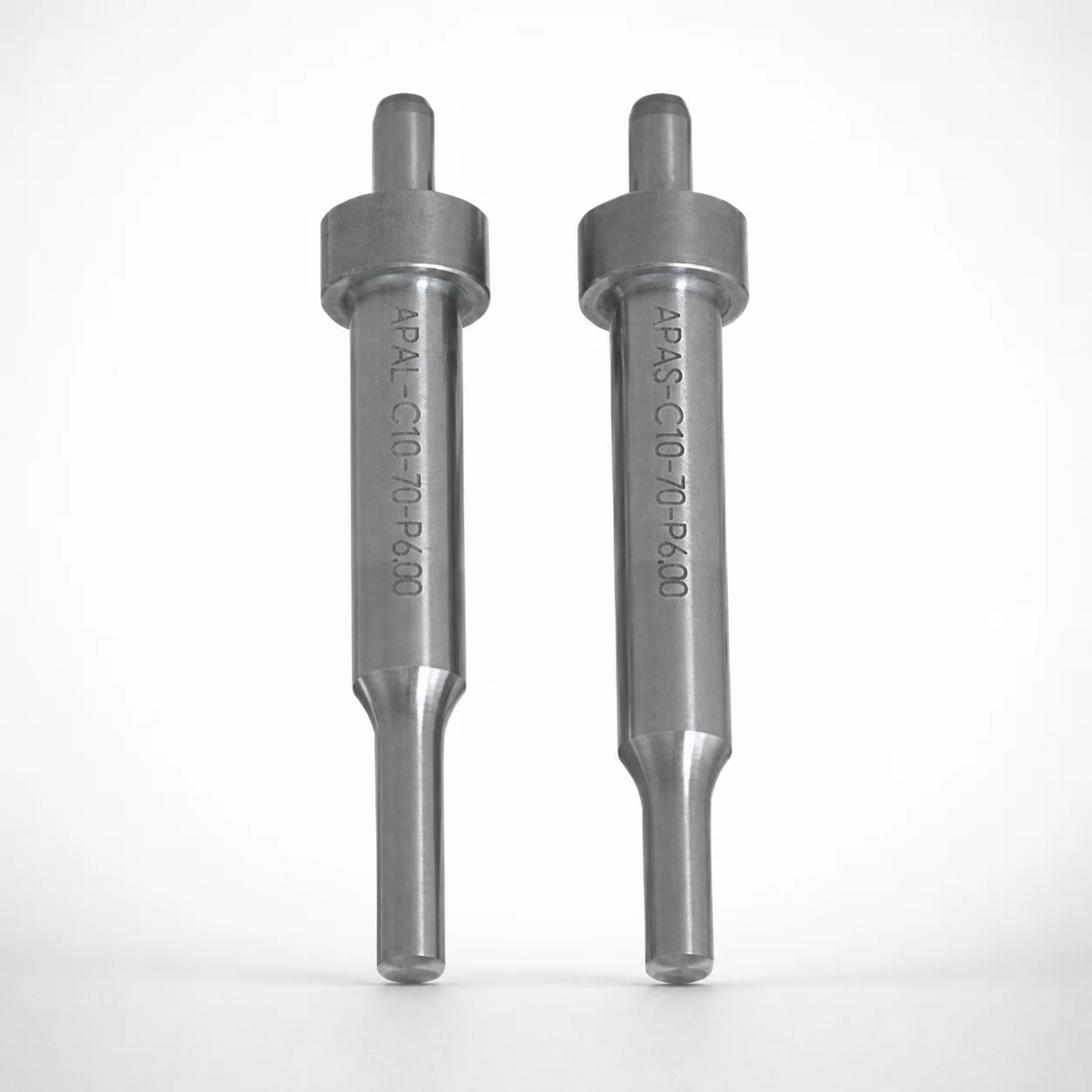
Metric Dowel Punches for Heavy Load with Single-Stepped Shank (M5)
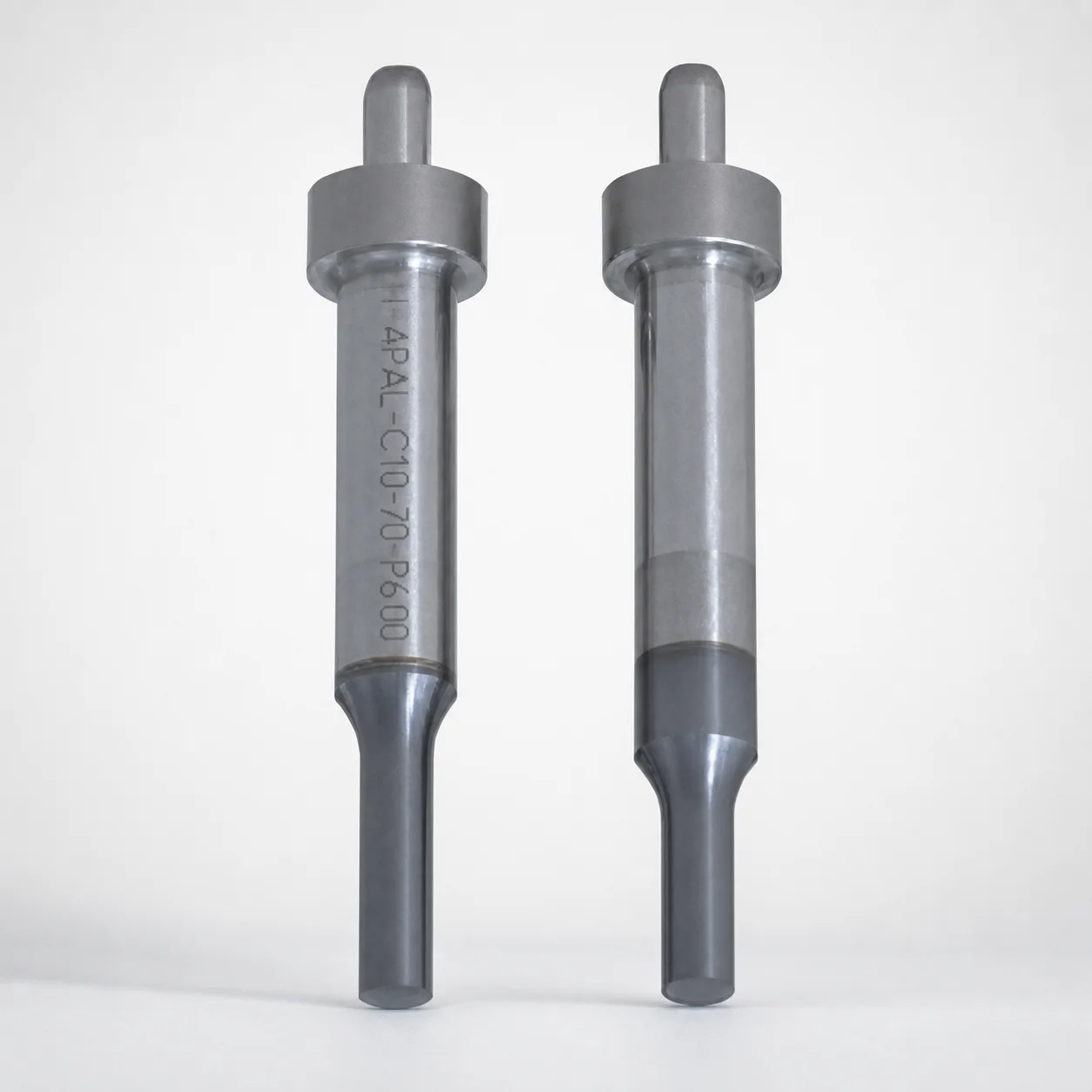
Metric Center Dowel Punches for Heavy Load TiCN Coated
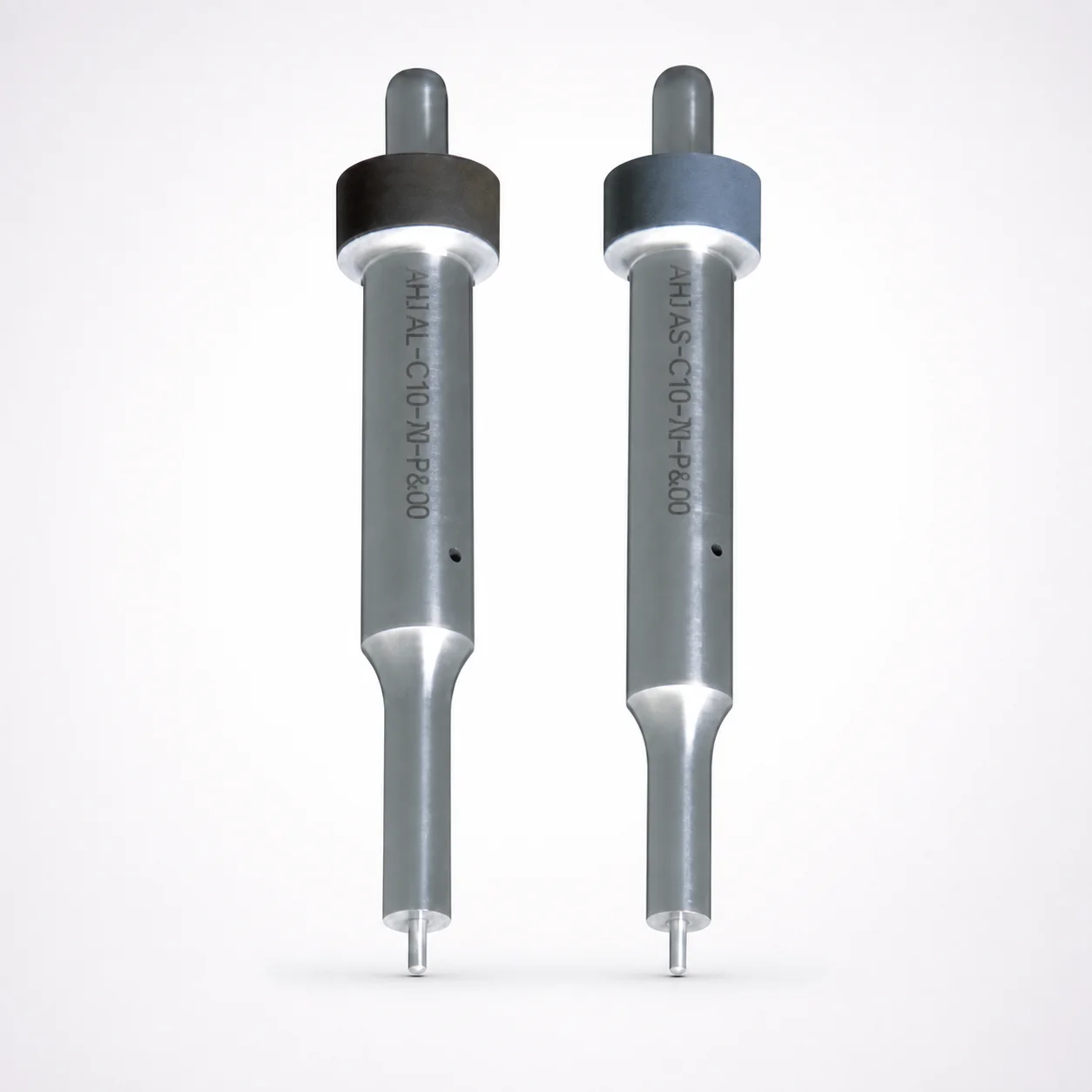
JIS Standard SKH51 Steel Ejector Punches for Heavy Load with Dowel Holes
SKH51 Steel TiCN Coating Ejector Punches for Heavy Load with Dowel Holes
RW Coated Dowel Punches for Heavy Load - Single-Stepped Shank
Center Dowel Punches for Heavy Load (HW Coating) | Metric
Need Custom Specifications?
Our engineering team can help with custom configurations, material selection, and volume pricing.