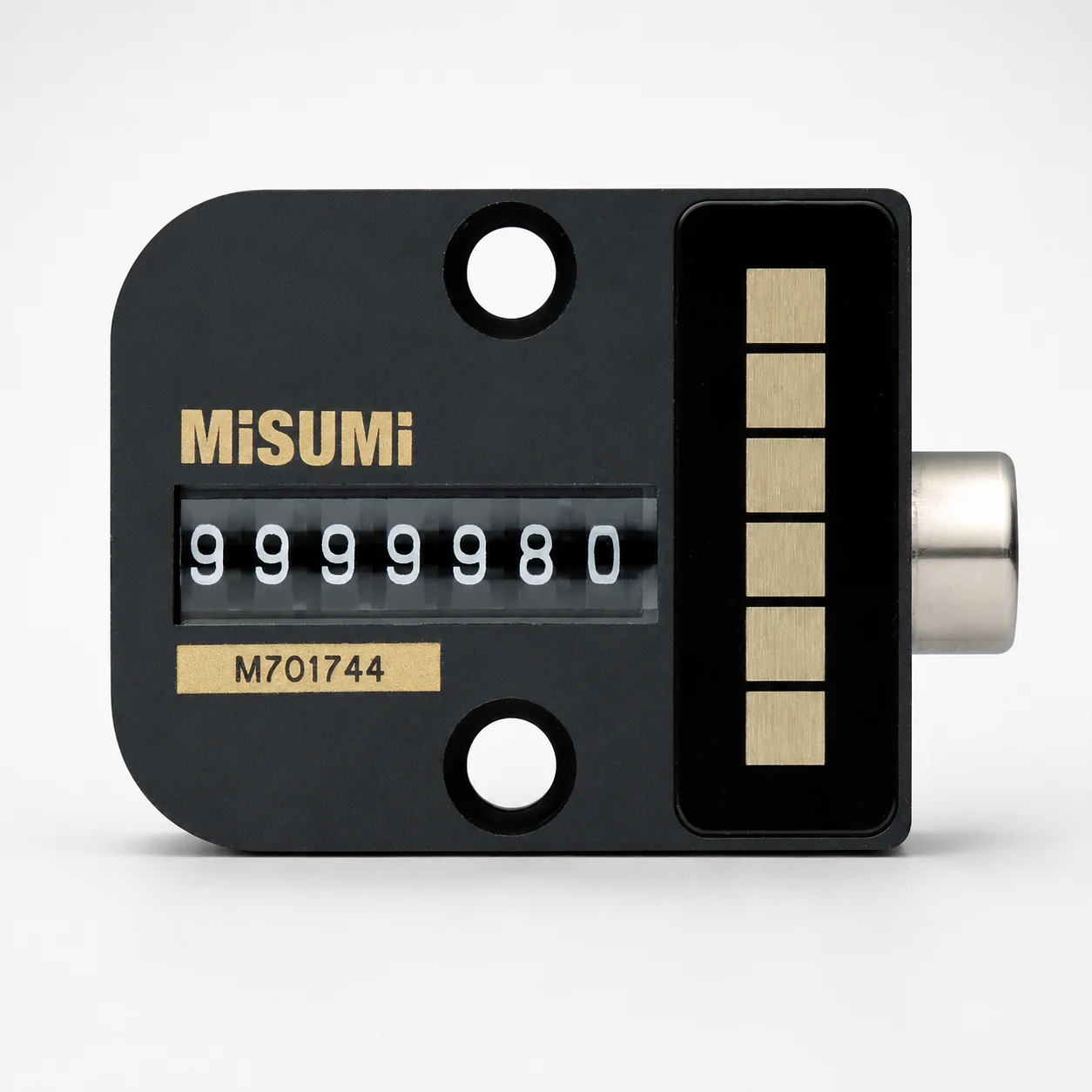
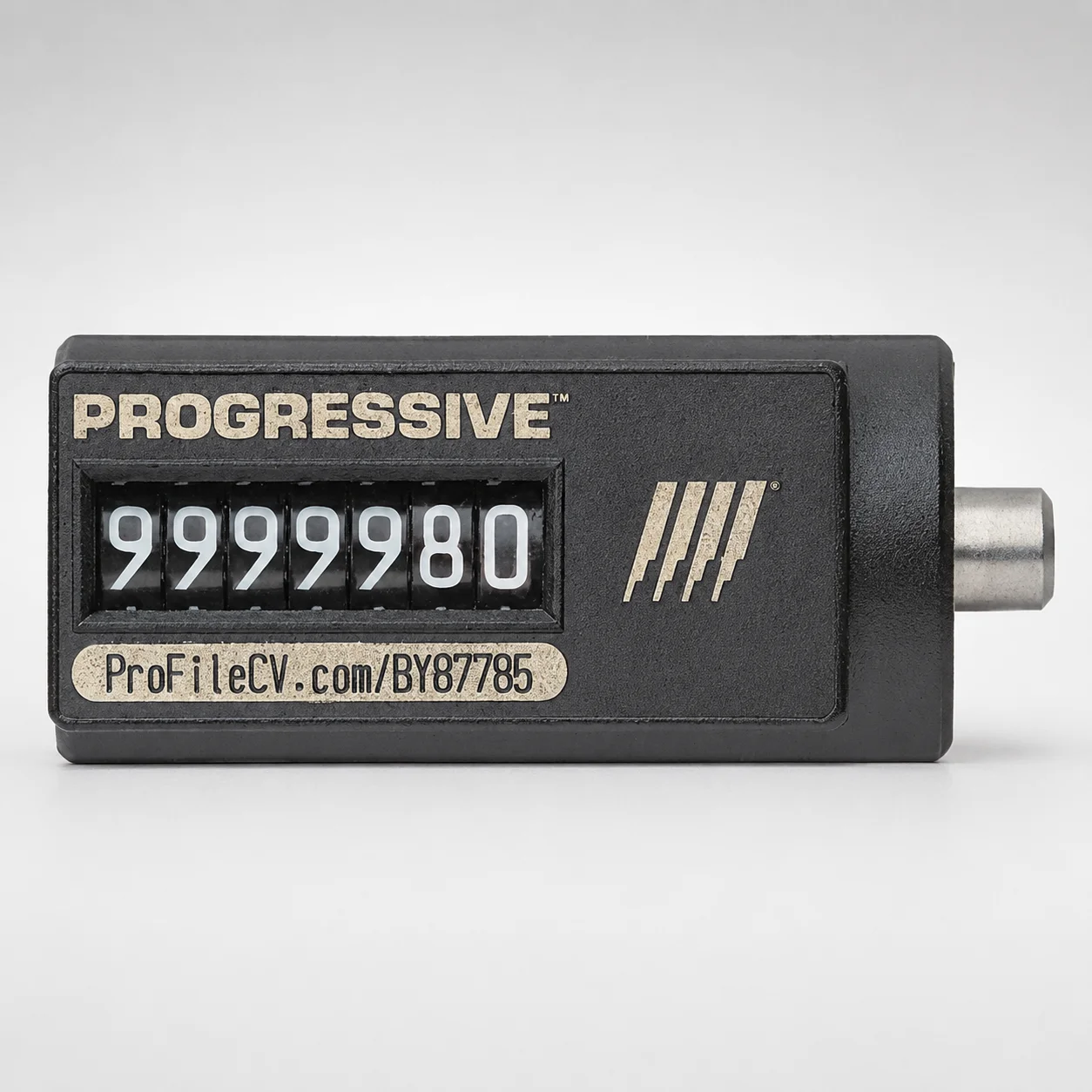
Cycle Counter for Plastic Molds - Block
Cycle Counter for Plastic Molds - Block provides dependable machine cycle tracking by delivering accurate counts and performance data for shop-floor monitoring. It supports stable operation of automated manufacturing lines.
- Accurately counts machine cycles to improve process monitoring
- Durable electronic construction helps protect equipment integrity
- Compatible with automated cycle tracking requirements for plastics molding
- Built for long service life and consistent readout reliability
Specifications
2 configurations available
| Type | type |
|---|---|
| Inlay Type | - |
| Outside Mount Type | - |
Product Guide
Application Scenarios+
This cycle counter block is used in injection molding cells to track machine cycle counts and operational performance. It can be mounted as an outside mount or integrated as an inlay type depending on panel layout, allowing reliable visibility on machine consoles or guarding systems.
- Automotive & electronics connector molding: Use the counter to record repeatable cycle totals for multi-cavity production lines, supporting preventive maintenance schedules and monitoring drift in automated runs.
- Medical device housings & precision plastics: Pair cycle-count data with production logging to improve traceability and verify stable throughput between validation lots.
- Consumer goods overmolding lines: Track cycles through automated molding to help correlate downtime, jams, or process parameter changes with production history.
Because this variant is specifically built for plastic molding automation monitoring, it aligns with shop-floor requirements for stable readout and consistent counting over long service intervals.
Material & Process Details+
The provided product data identifies the item as a cycle counter block with variable mounting configuration (inlay type or outside mount type). No steel grade, hardness (HRC), or heat-treatment state is specified in the available specifications.
As a result, the exact material composition and any heat treatment (e.g., quench & tempering, nitriding) cannot be stated from the given input. Engineers should confirm the enclosure, sensor, and electronic components’ material details from the manufacturer documentation when selecting mounting hardware for specific environments (e.g., coolants, cleaning chemicals, or vibration).
- Mounting variant: Inlay type is typically used for flush panel integration; outside mount type suits surface installation where wiring access and serviceability are prioritized.
- Wear/toughness trade-off: For electronic devices, mechanical durability and enclosure integrity are the determining factors, not tool-steel wear ratings.
Sizing & Selection Guide+
Selection is driven by the required Type configuration: Inlay Type or Outside Mount Type (as listed in the specification parameters). Choose inlay type when you need a flush installation into a cutout or panel opening; choose outside mount type when surface mounting is acceptable and easier maintenance access is required.
- Match to cavity/core requirements: This component does not size to mold cavity or core geometry; instead, match it to the machine interface location where cycle signals are handled and displayed.
- Mounting interface: Ensure the selected type fits the intended panel/guard thickness and cutout (for inlay) or bolt-pattern/clearance constraints (for outside mount).
- Tolerance/fit: Because no dimensional tolerances or ranges are provided for this SKU, use the manufacturer’s drawings to verify installation clearances, gasket compression (if applicable), and screw engagement requirements.
If multiple mounting options exist for the same counter family, treat type as the fixed selection parameter and confirm dimensions via the product drawing before final integration.
Frequently Asked Questions
Which mounting configuration should I select: inlay type or outside mount type for a molding machine panel?+
Is this cycle counter block intended to be integrated into the mold (core/cavity) or into the machine control area?+
What material grade and hardness (HRC) is used for the cycle counter block?+
How do I verify the installation tolerances and fit when dimensions are not listed in the specs?+
Related Products
Need Custom Specifications?
Our engineering team can help with custom configurations, material selection, and volume pricing.