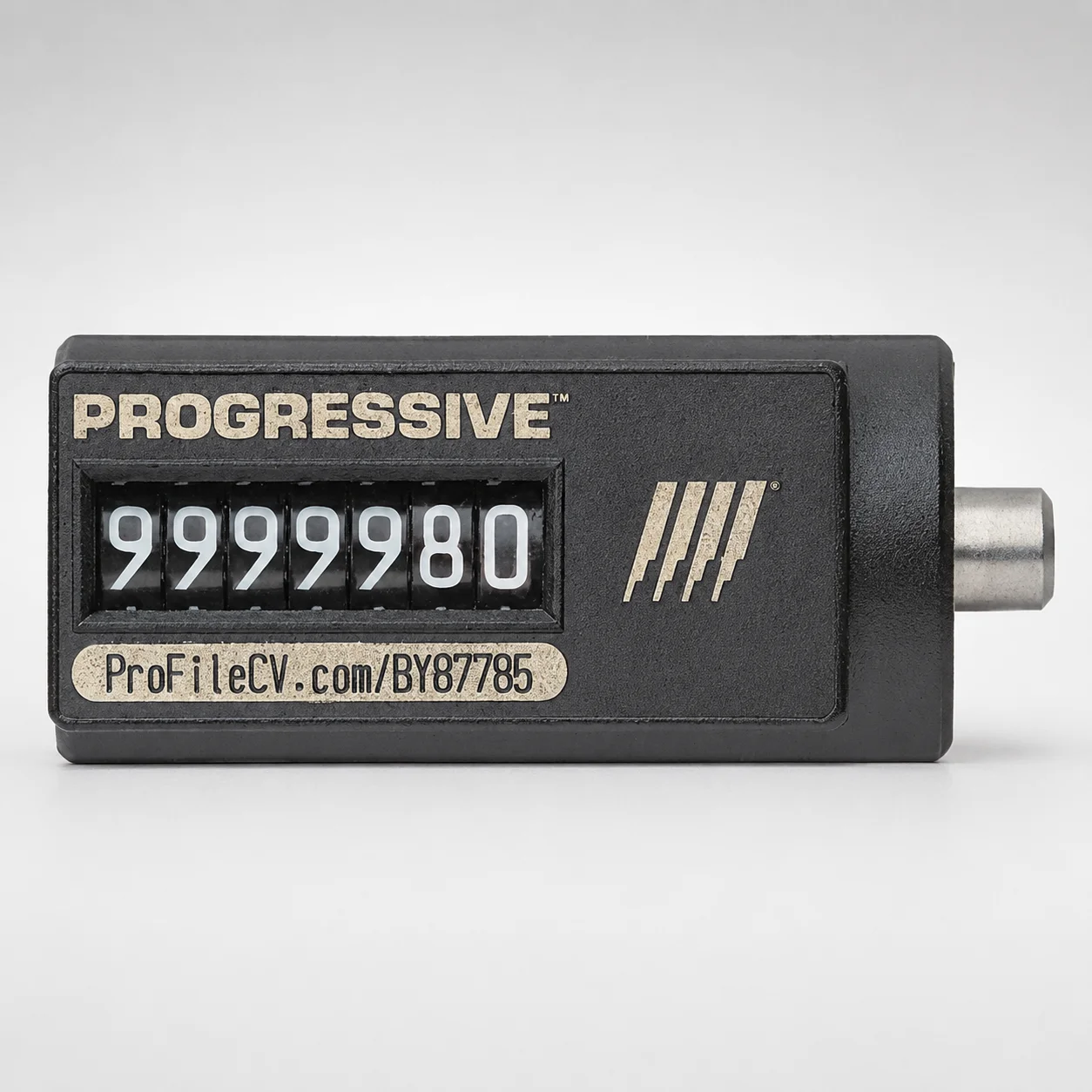
M-CVR Shot Counters for Plastic Molds - Cylinder
M-CVR shot counters for plastic molds - cylinder provide a compact cycle monitoring component that helps you track shot counts for smarter maintenance planning. It is designed to support steady mold operation by keeping usage data available for operational decisions.
- M-CVR cylinder type for compact integration in plastic mold assemblies
- Supports cycle/shot count monitoring to plan servicing and reduce unexpected downtime
- Designed for the specified L dimension range (60 to 124 mm) for fitment flexibility
- Built for plastic mold maintenance workflows where shot history matters
Specifications
1 configurations available
| L (L dimension) (mm) | type |
|---|---|
| 60 ~ 124 | - |
Product Guide
Application Scenarios+
This cylinder-type shot counter is used in injection mold tooling where shot-cycle history is needed for preventive maintenance and process reliability. It is typically integrated on the mold base or near the mold’s transfer/operational interface so operators and maintenance teams can monitor usage without disassembling tooling.
- Automotive and appliance plastic parts: In high-cycle production, the component’s compact cylinder form factor supports easy installation within limited space, helping schedule service before wear-related downtime occurs. The specified L range (60–124 mm) makes it suitable for different mold mounting envelopes.
- Consumer electronics housings: Cycle monitoring supports uptime-focused maintenance routines for family molds that run varied part geometries. Stable cycle tracking helps correlate repeated operations with quality checks.
- Medical and industrial device housings: For regulated environments where traceability of machine usage matters, shot count reporting can be used to trigger inspection intervals and reduce unplanned stops.
Why this variant fits: the cylinder type and the 60–124 mm L dimension range are designed for practical fitment across diverse plastic mold assemblies while maintaining straightforward integration into existing maintenance workflows.
Material & Process Details+
The provided metadata for this MISUMI M-CVR shot counter specifies the cylinder-type configuration and the L dimension range (60–124 mm), but it does not include the steel grade, heat treatment state, or hardness values. Because no material composition or treatment (e.g., nitriding, quench & temper) is listed, the exact wear resistance/toughness balance cannot be stated from the supplied data.
From a manufacturing-process standpoint, shot counters used as mold accessories are typically built from durable machine-part materials to withstand normal tool-shop handling and repetitive cycling; however, details such as coating type, backing steel, and hardness (HRC) are not available here.
- Material comparison: Not possible with the given inputs because only one material option is documented (none specified).
- Heat treatment: Not specified in the provided data.
If you share a drawing/spec sheet that lists the material grade and heat treatment, we can accurately map hardness (HRC) and discuss the wear-resistance vs. toughness trade-offs.
Sizing & Selection Guide+
Correct selection is primarily driven by the L dimension (60 to 124 mm). This L length should match the available mounting envelope and the required positioning relative to your mold’s actuation/shot interface so that the counter reliably tracks cycles.
- Match mold space constraints: Measure the usable length along the intended installation axis; choose an L within 60–124 mm that allows clearance from adjacent mold components.
- Ensure functional alignment: The counter must be positioned so its sensing/actuation point aligns with the moving or triggering element used for shot-count detection in your assembly design.
- Tolerance & fit considerations: While specific tolerance values are not provided, treat the L length as the primary locating dimension and verify additional clearances (brackets, mounting bosses, and fastener access) to avoid interference during mold clamping/opening.
- Configurable vs. fixed: The product family supports the L dimension range, indicating length selection is configurable within 60–124 mm. Other dimensions are not given in the supplied specifications.
After selecting the L value, confirm that installation does not compromise mold maintenance access, tooling safety clearances, or cycle repeatability.
Frequently Asked Questions
What L (length) values are supported for the cylinder-type M-CVR shot counter?+
The fixed specification provided lists L = 60–124 mm. Select an L length that fits your mold’s available mounting envelope and positions the counter correctly relative to the shot-count actuation point.
How should I choose the correct cylinder-type shot counter for a specific mold’s mounting space?+
Use the L dimension range (60–124 mm) as the main sizing criterion. Confirm the counter’s placement does not interfere with adjacent mold components during clamping and opening, and verify alignment with the triggering mechanism used for cycle detection.
Does the provided data include the material grade and hardness for wear resistance?+
No material grade, heat treatment state, or hardness (HRC) is included in the supplied specifications. To compare wear resistance vs. toughness or confirm durability for a given duty cycle, you’ll need the material details from a drawing or spec sheet.
Is this shot counter intended for preventive maintenance based on shot-cycle history?+
Yes. The description indicates it is used to track shot/cycle counts to support maintenance planning and reduce unexpected downtime. This makes it suitable for workflows where shot history is used to schedule inspections or servicing intervals.
Can the cylinder-type M-CVR shot counter be integrated into compact plastic mold assemblies?+
The component is described as a cylinder type intended for compact integration in plastic mold assemblies. The L = 60–124 mm range helps accommodate different installation envelopes across varying mold designs.
Related Products
Need Custom Specifications?
Our engineering team can help with custom configurations, material selection, and volume pricing.