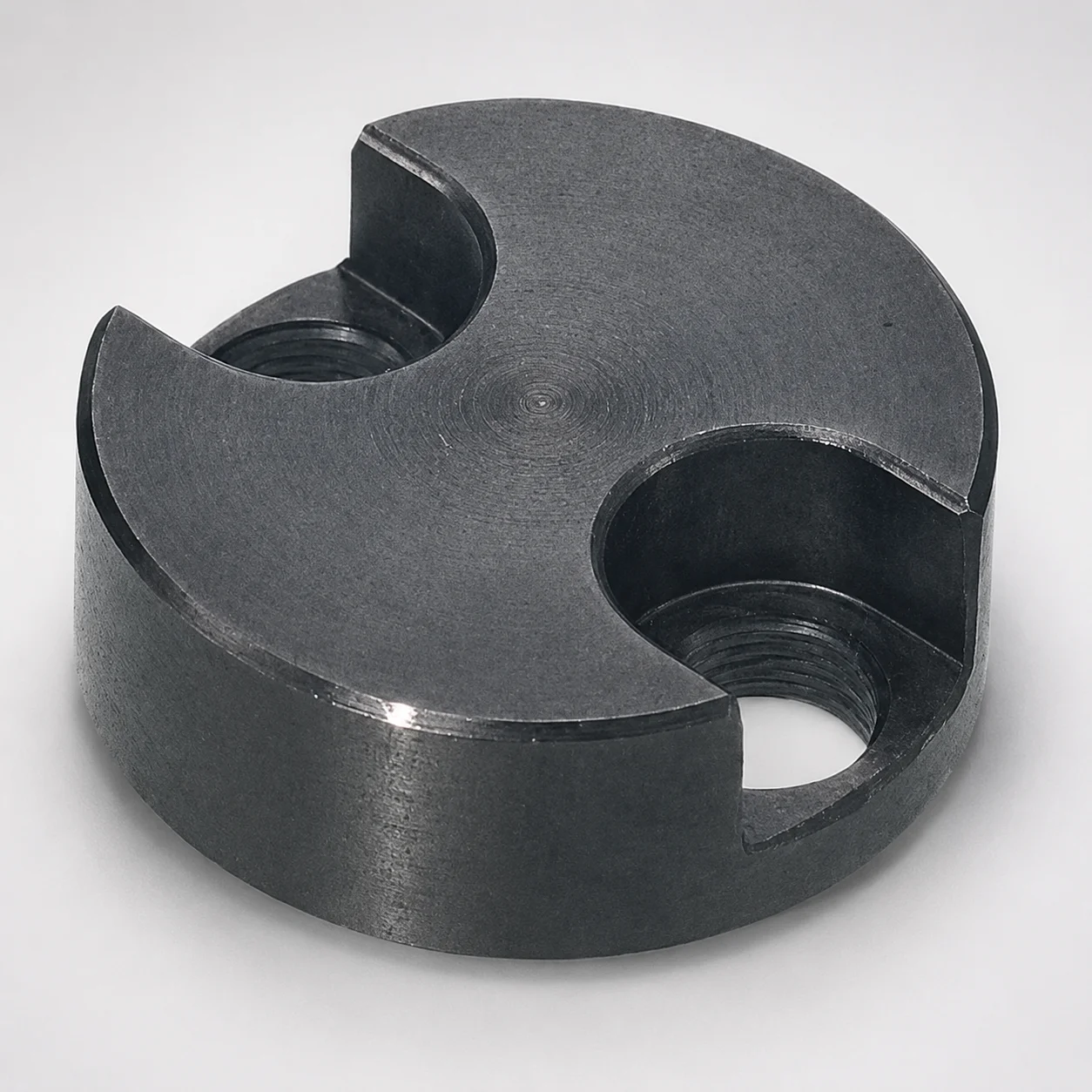
CPHP Type Holding Plates for Ejector Pins
CPHP Type holding plates for ejector pins are precision pin stabilizers made from durable plastic. They securely position ejector pins during molding to support consistent results in precision plastic injection environments.
- CPHP mounting plate design for reliable ejector pin stability
- Durable plastic construction helps protect tooling and sensitive systems
- Available for multiple outer diameters to match common ejector layouts
- Optimized for efficient assembly and long-term equipment reliability
Specifications
5 configurations available
| D (Outer diameter) (mm) | type |
|---|---|
| 20 | - |
| 25 | - |
| 30 | - |
| 34 | - |
| 40 | - |
Product Guide
Application Scenarios+
CPHP-style holding plates are used inside plastic injection mold tooling to stabilize ejector pins during repeated press cycles. They help maintain consistent pin alignment between the mold halves, reducing the risk of pin wobble, mis-stroking, and localized wear on ejector-related components.
- Automotive connector and small electronics housings: In high-repeat runs, stable ejector motion supports uniform part release and helps protect fine ejector features from vibration and side-loading.
- Appliance and industrial enclosure molds: When ejector trains experience longer strokes or higher ejection force, the plate’s pin-holding geometry supports repeatable clearance and smoother actuation.
- General precision plastic parts: For molds with tight packaging, the ability to select an outer diameter that matches common ejector layouts improves assembly efficiency and alignment.
This variant is suited because its durable plastic construction is designed to position ejector pins reliably while helping safeguard sensitive tooling during assembly and operation.
Material & Process Details+
The CPHP holding plates are manufactured from durable plastic rather than steel. Using a plastic plate emphasizes dimensional stability for locating ejector pins without adding metal mass to the ejector system.
Because the provided specifications list only the outer diameter options (D = 20, 25, 30, 34, 40 mm), no specific steel grade, heat-treatment process (e.g., quenched & tempered, nitriding), or measured hardness (HRC) is applicable to this plastic component. As a result, performance trade-offs are primarily driven by plastic behavior under molding temperatures and mechanical loading rather than wear resistance typical of hardened tool steels.
- Wear/impact trade-off: Plastic plates prioritize protection of tooling and smoother handling; they generally rely on proper loading limits rather than maximum abrasion resistance.
- Steel plates (comparison): Steel would offer higher hardness and wear resistance, but could increase mass and harshness at interfaces—whereas this plastic design supports efficient assembly and reliable pin positioning.
Sizing & Selection Guide+
Select the holding plate outer diameter D to match the ejector pin layout and the surrounding mold interface where the plate seats. Available sizes are D = 20, 25, 30, 34, 40 mm; choosing the correct D helps ensure the pin stabilizer aligns with the intended pin centerline and maintains consistent positioning during molding.
- Match to ejector layout: Use the ejector pin arrangement in your core/cavity design and choose the plate D that corresponds to the available mounting space.
- Check seating clearance: Confirm that the plate can be installed without interference with adjacent mold components (guide elements, ejector rods, or return hardware).
- Fit considerations: While specific tolerance values are not provided in the dataset, plan for standard assembly practices by verifying critical clearances around the ejector path.
In this product family, the outer diameter is configurable via the listed D options; other parameters (such as thickness, bore details, and tolerances) are not specified here, so confirm those from the product drawing for your exact assembly.
Frequently Asked Questions
Which outer diameter (D) options are available for CPHP type holding plates for ejector pins?+
How does choosing the correct outer diameter help maintain ejector pin stability during injection molding?+
Is this component made from tool steel, and what heat treatment should be considered for wear performance?+
When should I consider a metal (steel) alternative instead of this plastic holding plate?+
Do I need to worry about tolerances when matching the holding plate to my ejector assembly?+
Related Products
Need Custom Specifications?
Our engineering team can help with custom configurations, material selection, and volume pricing.