Mold Springs
Heat-resistant coil springs, gate cut springs, and spring guide pins engineered for injection mold ejection, stripper plate return, and runner separation. Available in round wire and flat wire types with deflection grades from 30% to 65%, rated for continuous operation up to 200°C.
Spring Types
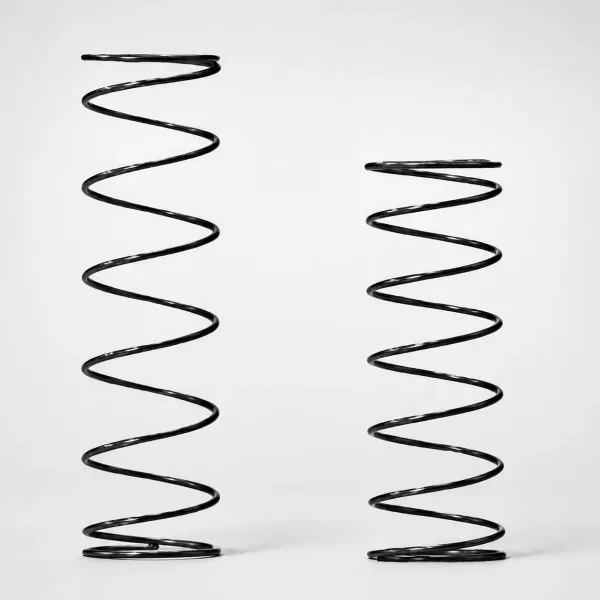
Heat-Resistant Coil Springs
Round wire and flat wire coil springs in 30-65% deflection grades. SWF/SWL/SWM/SWH/SWU/SWY series, rated up to 200°C for ejector and stripper plate return.
Browse 10+ Products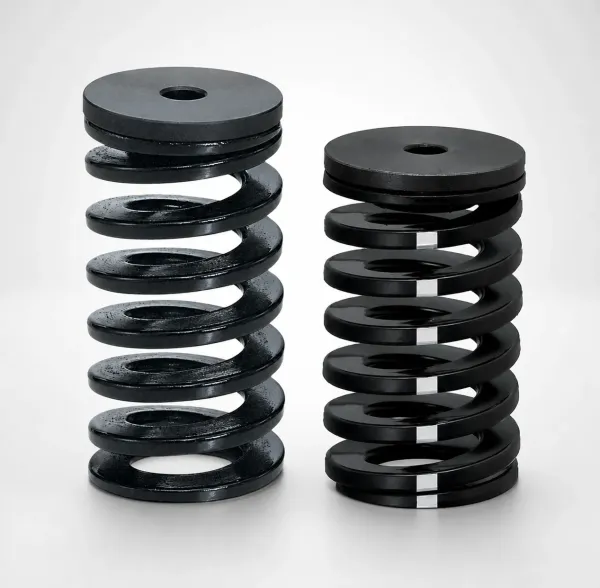
Gate Cut Springs
Flat wire gate cut springs for automated runner stripper plate operation. Heat-resistant to 120°C or 200°C. Designed for consistent gate separation force.
View Gate Cut Springs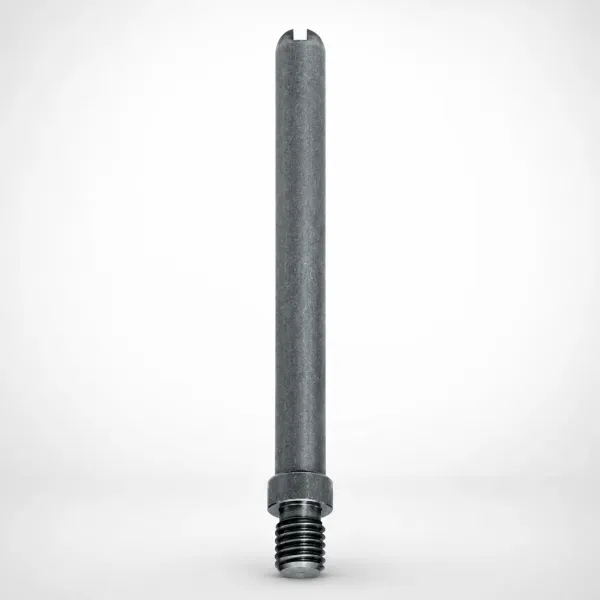
Spring Guide Pins
SGAMK Series spring guide pins for precise coil spring alignment. Prevents buckling and lateral deflection in deep-bore spring pockets.
View Guide PinsCoil Spring Load Grade Comparison
Mold springs are color-coded by load grade following international standards. Selecting the correct load grade ensures the ejector or stripper plate returns with sufficient force without overstressing the spring:
| Load Grade | Color Code | Max Deflection | Wire Type | Typical Use |
|---|---|---|---|---|
| SWF (Extra Light) | Yellow | 60% | Round | Light ejector return, small mold cavities |
| SWL (Light) | Blue | 50% | Round | Standard ejector return, medium molds |
| SWM (Medium) | Red | 40% | Round | Stripper plates, heavy ejector systems |
| SWH (Heavy) | Green | 35% | Round | High-force ejection, deep-draw molds |
| SWU (Super Heavy) | Brown | 60% | Flat | Maximum return force, large plate molds |
| SWY (Ultra Heavy) | — | 65% | Flat | Extreme force requirements, die-casting |
Why Heat Resistance Matters for Mold Springs
Standard compression springs lose 10-15% of their load capacity when operating above 80°C due to stress relaxation in the wire. In injection molds where the mold base temperature routinely reaches 80-120°C (and up to 200°C for high-temperature resins like PPS, PEEK, and LCP), this leads to progressively weaker ejection force over thousands of cycles.
Our heat-resistant coil springs use oil-tempered SiCr alloy wire (conforming to JIS G3561 SWOSC-V) with a maximum continuous service temperature of 200°C. At this temperature, load loss is less than 5% over 1 million cycles. The flat wire variants (SWU/SWY) use a proprietary cold-rolled section that delivers 20-30% higher force per unit pocket depth compared to equivalent round wire springs.
Coil Springs vs Gas Springs — Which Do You Need?
| Factor | Coil Springs | Gas Springs |
|---|---|---|
| Force Source | Mechanical (wire deformation) | Compressed nitrogen gas |
| Force Profile | Linear (F = k × x) | Near-constant throughout stroke |
| Initial Force | Low at free length, increases with compression | High from the start of stroke |
| Cost | Low ($2-15 per spring) | High ($50-200 per unit) |
| Maintenance | Replace when set height decreases by 3%+ | Recharge nitrogen or replace unit |
| Best For | Standard ejection, stripper return, low-medium force | High-force ejection, long-stroke applications |
Engineering Resources
How to Choose the Right Spring for Your Injection Mold
Load grade selection, deflection calculation, and pocket depth sizing for mold springs.
Why Heat-Resistant Springs Matter — Temperature Effects
Stress relaxation data, load loss curves, and material comparison for high-temperature mold applications.
When to Replace Mold Springs — Signs of Fatigue
Set height measurement, cycle counting, and replacement intervals for mold springs.
Frequently Asked Questions
What is the standard color coding for mold springs?+
How do I calculate the correct spring deflection for my mold?+
Can flat wire springs replace round wire springs?+
What is the maximum operating temperature for your mold springs?+
Need a Custom Quote?
Send your specifications and receive a quote. MOQ: 1 piece. Custom dimensions available.