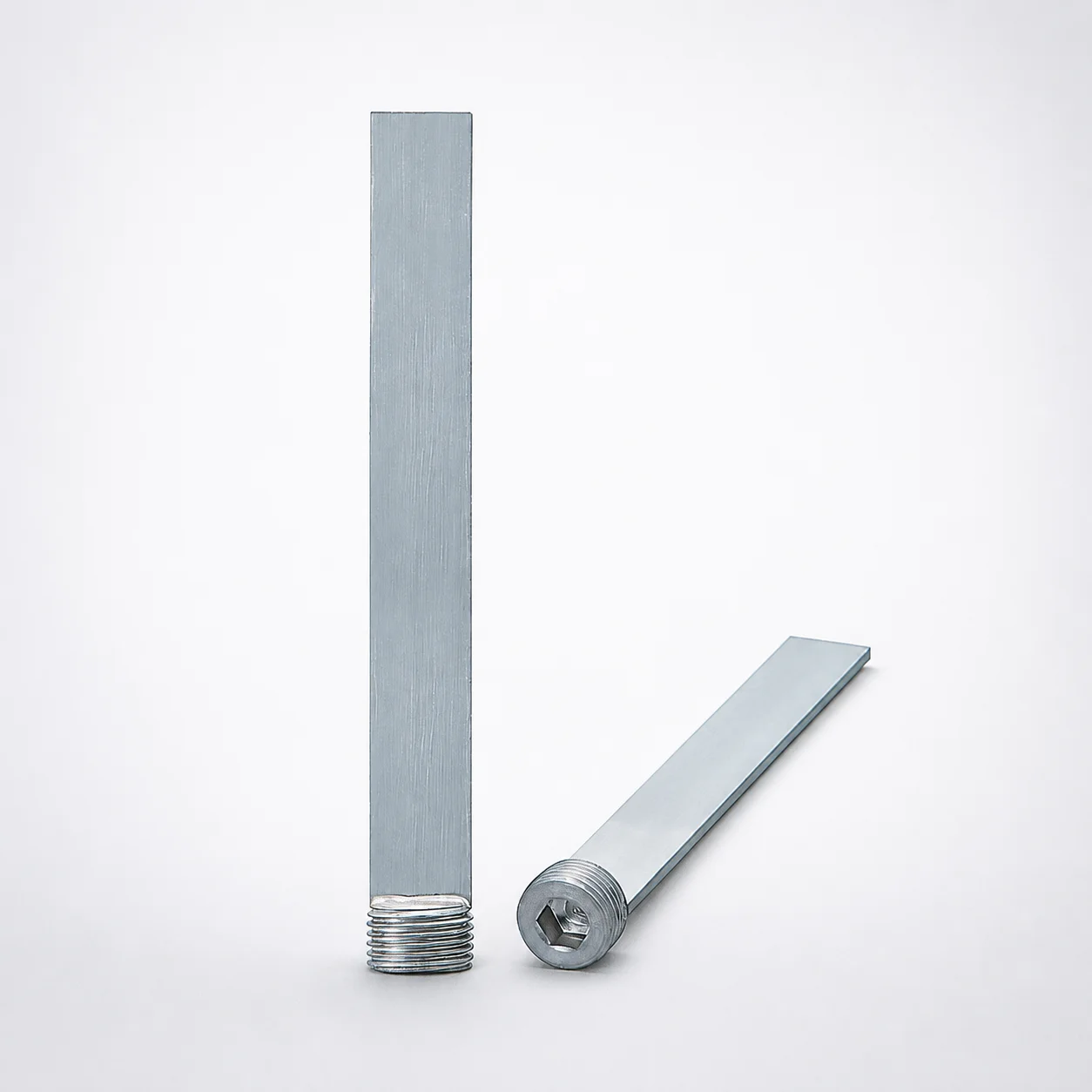
BFPT Brass Baffle Boards with Tapered Screw Plugs
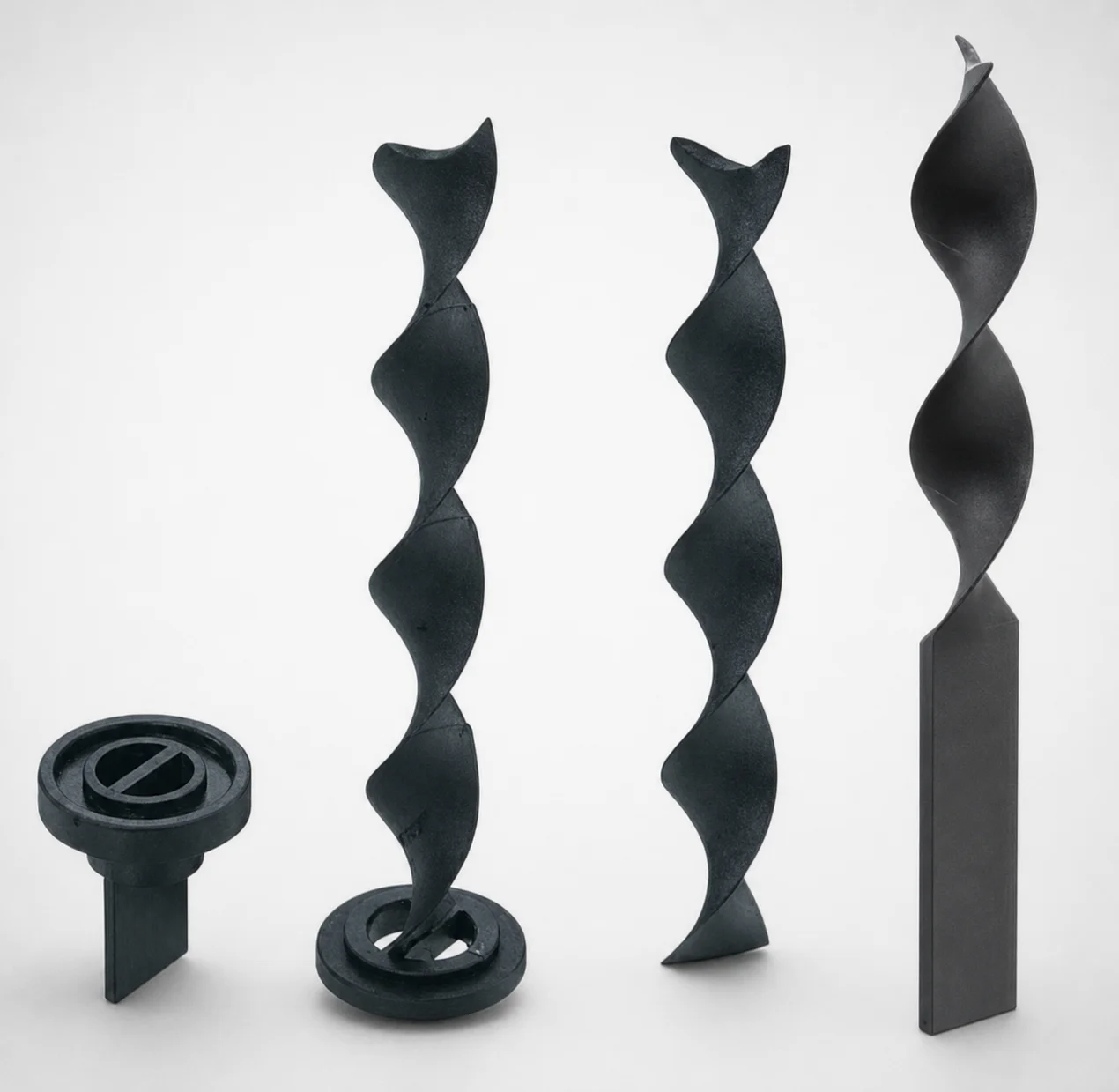
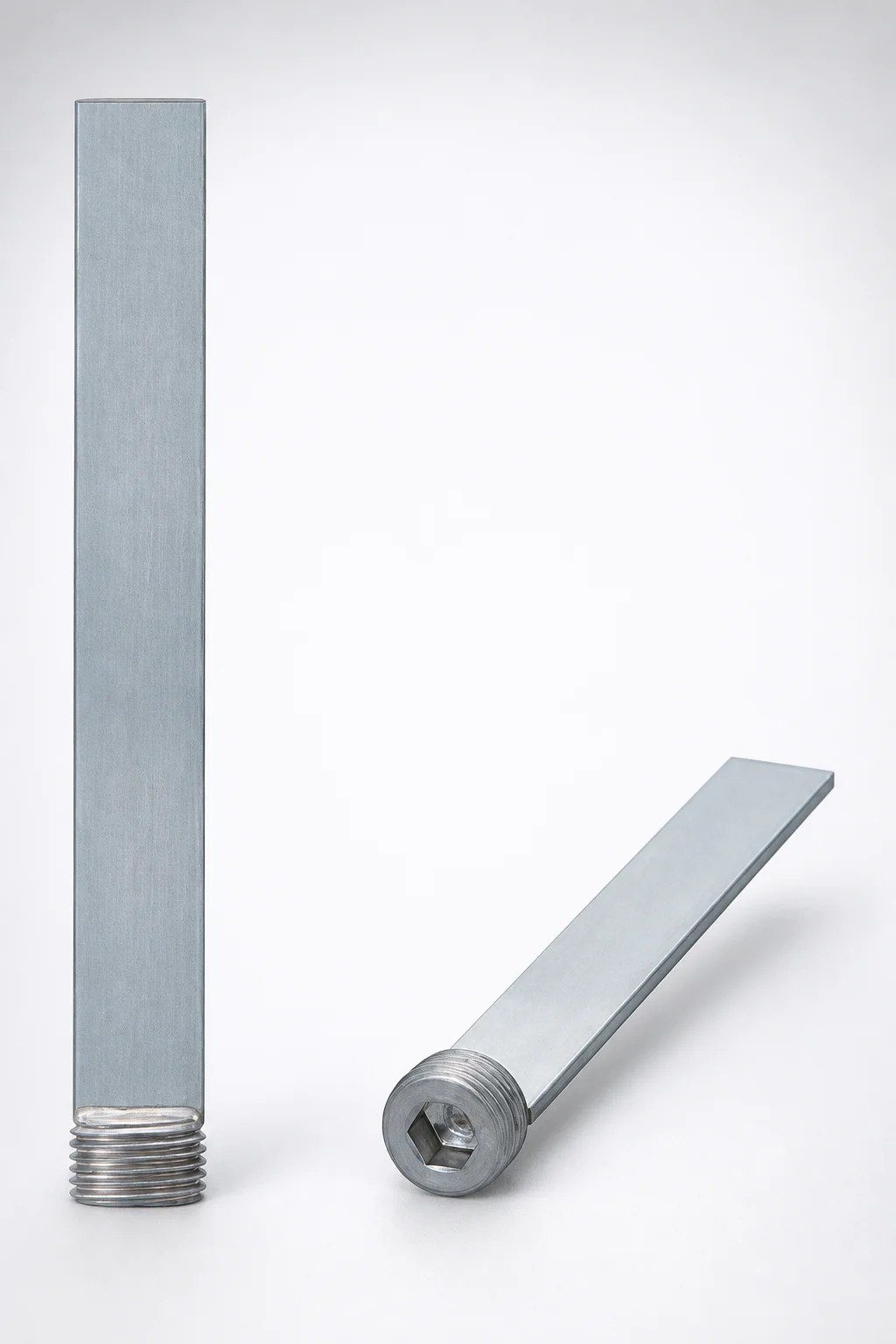
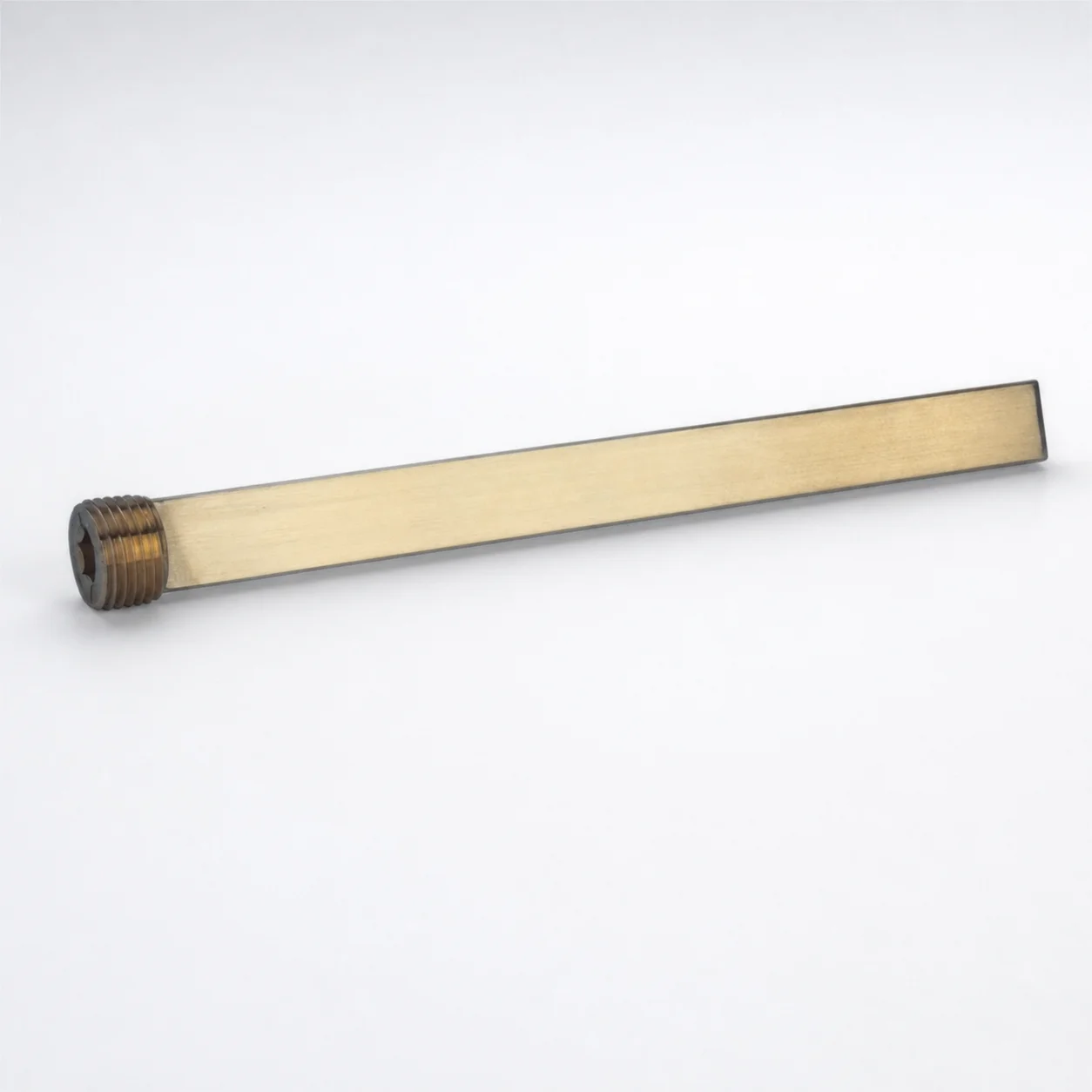
BFPT brass baffle boards with tapered screw plugs deliver controlled fluid flow by reducing turbulence and guiding smoother movement through the system. White zinc plating supports durable operation in demanding industrial environments.
- BFPT baffle board design helps minimize turbulence for stable flow
- Tapered screw plug mounting supports secure installation and alignment
- Brass body with white zinc plating improves corrosion resistance
- Blank type BFPT suits equipment requiring consistent hydraulic performance
Specifications
6 configurations available
| type | A (Width) (mm) | L(L dimension) (mm) |
|---|---|---|
| - | 6 | 30 ~ 200 |
| - | 8 | 30 ~ 200 |
| - | 9 | 30 ~ 250 |
| - | 10 | 30 ~ 250 |
| - | 12 | 30 ~ 300 |
| - | 14 | 30 ~ 300 |
Product Guide
Application Scenarios+
BFPT-style baffle boards are used inside injection molds to stabilize temperature control by managing coolant flow. Their baffle geometry reduces turbulence and helps maintain a more uniform hydraulic path, which is especially valuable when consistent cavity thermal behavior is required.
- Automotive connector and housing molds: Install baffle boards with tapered screw plugs in channels that experience variable flow. The tapered plug mounting improves alignment and helps keep the flow-path stable across repeated thermal cycles.
- Electronics enclosure molds: Use the controlled-flow design to reduce hot spots near thick-to-thin transitions. Brass plus white zinc plating supports reliable operation in industrial cooling environments where corrosion resistance matters.
- General industrial molded parts: The “blank” BFPT type is suited to applications needing consistent hydraulic performance without adding complex channel features.
Material & Process Details+
This product uses a brass baffle board body with white zinc plating. Brass provides good machinability for forming precise baffle features, supporting reliable installation in mold cooling assemblies.
- Corrosion resistance: White zinc plating improves resistance to corrosion in typical mold cooling water environments.
- Wear and service behavior: Brass baffles are generally chosen when stable flow control is prioritized over extreme abrasive wear.
- Heat treatment: No specific heat-treatment process or hardness value is provided in the supplied specifications; therefore, detailed HRC guidance cannot be stated for this exact variant.
When comparing materials for baffle plates, engineers often choose steel for higher mechanical/abrasive resistance, while brass variants like this one are selected for corrosion behavior and manufacturability where abrasive conditions are limited.
Sizing & Selection Guide+
Selection is driven by matching the baffle width A and the L length span to the available interior cooling space. Available A values are 6, 8, 9, 10, 12, 14 mm. Available L ranges are 30–200 mm, 30–250 mm, and 30–300 mm depending on the configuration.
- Match cavity thermal needs: Use a width and length that cover the intended restriction/flow-guiding area so the baffle effectively reduces turbulence in the coolant path.
- Check installation clearances: Confirm that the tapered screw plug mounting fits the surrounding channel geometry and that the baffle does not interfere with flow.
- Tolerance/fit: The provided data lists size ranges only; no tolerance values are specified. In practice, verify fit against your cooling plate/channel machining tolerances and plan for standard assembly clearance.
Pick the configuration whose L maximum meets the channel length requirement while using the closest A to the available baffle mounting width.
Frequently Asked Questions
Which baffle width (A) should I select for a given cooling channel width in my mold?+
How do I choose the correct L length range to cover the target turbulence zone?+
Does the tapered screw plug design affect alignment during assembly?+
What corrosion-resistance benefit does the white zinc plating provide for cooling circuits?+
Is this brass baffle board suitable for high-wear or abrasive cooling conditions?+
Related Products
Need Custom Specifications?
Our engineering team can help with custom configurations, material selection, and volume pricing.