Straight Ejector Pins
Uniform round cross-section ejector pins — the workhorse of injection mold ejection systems. 50 product series across 4 functional variants, covering M2, H13, and 440C steels with JIS and DIN head standards.
Straight Ejector Pin Types
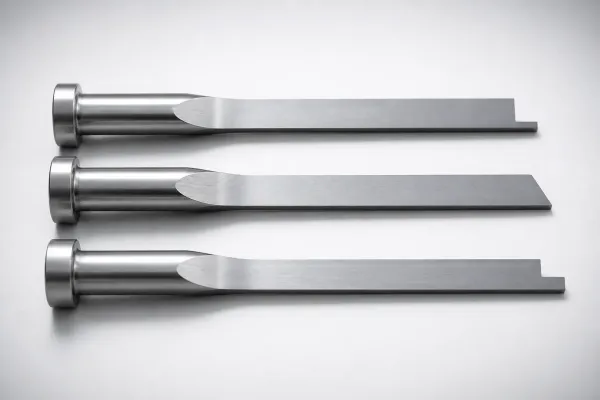
Without Tip Processing
Standard straight pins with as-ground tip finish. The base product — M2, H13, 440C steels, chrome plated, and nitrided options. 24 series.
View ProductsWith Tip Processing
Pre-machined tip geometries — flat grind, radius, chamfer, and Z-groove. Saves secondary operations at the mold shop. 7 series.
View Products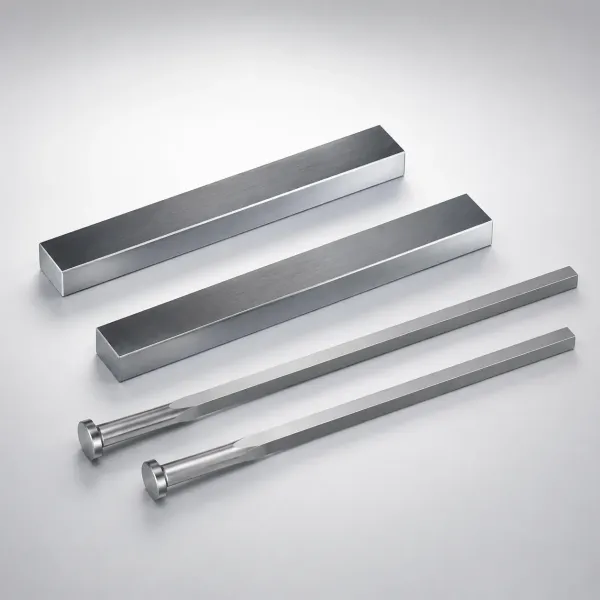
With Engraving
Date code and cavity number engraving for part traceability. Essential for medical, automotive, and quality-critical production. 5 series.
View Products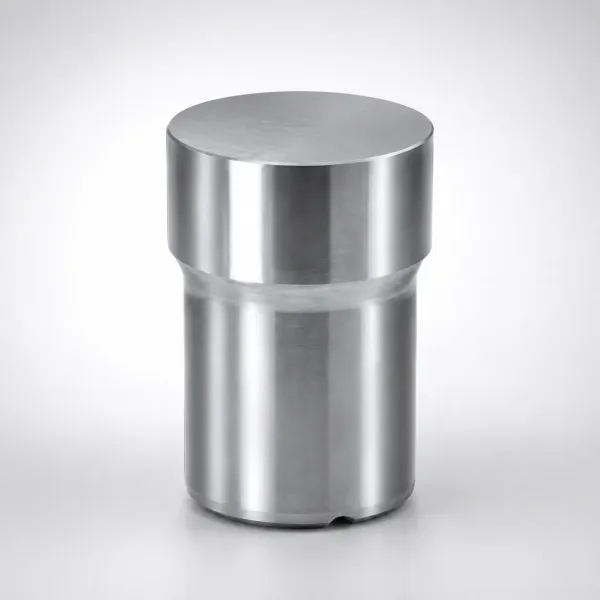
Gas Release
Built-in venting channels that allow trapped air to escape during injection. Prevents burn marks in deep cavities and blind ribs. 14 series.
View ProductsWhich Feature Do You Need?
Answer two questions to find the right straight ejector pin variant for your application.
What is the primary functional requirement beyond basic ejection?
Do you need to combine features?
Selection tip: Start with Without Tip Processing for most new mold designs. If testing reveals burn marks, upgrade to Gas Release. For a detailed comparison of all feature variants, see our M2 vs H13 vs 440C Material Comparison.
Material Selection Guide
| Property | M2 / SKH51 | H13 / SKD61 (Nitrided) | 440C / SUS440C | Chrome Plated M2 |
|---|---|---|---|---|
| Hardness | HRC 60–62 | HRC 48–52 (HV 900+ surface) | HRC 56–58 | HRC 60–62 (HV 800+ chrome) |
| Wear Resistance | ★★★★★ | ★★★★ (nitrided surface) | ★★★★ | ★★★★★ (chrome layer) |
| Toughness | ★★★ | ★★★★★ | ★★★ | ★★★ |
| Corrosion Resistance | ★ | ★★ | ★★★★★ | ★★★★ |
| Max Temperature | ~600°C | ~600°C | ~400°C | ~350°C |
| Best For | General purpose, high-cycle | High-temp resins, ø10mm+ | PVC, POM, medical resins | Corrosive resins, slide release |
| Cost | $ | $$ | $$$ | $$ |
Selection rule: Start with M2 for general-purpose applications (80% of cases). Switch to H13 nitrided when operating temperature exceeds 200°C or pin diameter exceeds 10mm. Use 440C only when the resin releases corrosive gases. For a detailed comparison, see our M2 vs H13 vs 440C Ejector Pin Material: Complete Comparison.
Troubleshooting Straight Ejector Pin Issues
| Symptom | Root Cause | Solution |
|---|---|---|
| Pin bending / deflection | L/D ratio too high (>15:1) or insufficient guidance | Increase pin diameter, add guide bushing, or switch to stepped pin |
| Pin breakage at head | Counterbore too deep / head not fully seated | Verify counterbore depth = head thickness ± 0.01mm |
| Pin seizure (galling) | Insufficient clearance or misalignment | Verify H7/h6 bore/shaft fit, add nitriding or chrome plating |
| Flash around pin | Pin diameter too small / bore worn | Replace with oversized pin, re-bore if necessary |
| Ejector pin mark too deep | Excessive ejection force / insufficient cooling | Add more pins, extend cooling time, polish tip to Ra 0.2 |
Engineering note: 90% of ejector pin failures originate from installation errors, not material defects. Verify L/D ratio, counterbore depth, and bore/shaft fit before blaming the pin. For a systematic root cause analysis, see our Ejector Pin Breakage Analysis: Root Causes and Prevention.
Application Scenarios
High-Cycle Automotive Parts
Production molds running 1M+ cycles with glass-filled PA66, requiring maximum wear resistance and minimal maintenance downtime.
Why straight pins fit: M2 steel (HRC 60-62) provides the highest wear resistance for abrasive resins. Standard round geometry fits the vast majority of automotive part ejection layouts.
Recommended: M2 straight pins, h6 tolerance, TiCN coated for glass-filled resins
Medical Device Molding (ISO 13485)
Syringe barrels and diagnostic housings in PC or PMMA requiring corrosion-resistant tooling and full cavity traceability.
Why straight pins fit: 440C stainless resists sterilization-grade resin corrosion. Engraved pins satisfy FDA 21 CFR Part 820 traceability requirements.
Recommended: 440C stainless + engraved pins for cavity marking
Frequently Asked Questions
M2 vs H13 ejector pins?+
JIS head vs DIN head?+
What tip processing options are available?+
Custom-length straight ejector pins?+
Engineering Resources
M2 vs H13 vs 440C Ejector Pin Material: Complete Comparison
Full-dimensional material comparison: hardness, toughness, thermal fatigue, corrosion, cost.
Ejector Pin Breakage Analysis: Root Causes and Prevention
Systematic analysis of bending, thermal fatigue, and overload failure modes.
Nitriding vs Chrome Plating vs TiCN Coating for Ejector Pins
Surface treatment comparison — life extension factors and cost analysis.
Need a Custom Quote?
Specify your pin diameter, length, material (M2/H13/440C), head type (JIS/DIN), and tip processing requirements. Standard and custom tolerance grades available.