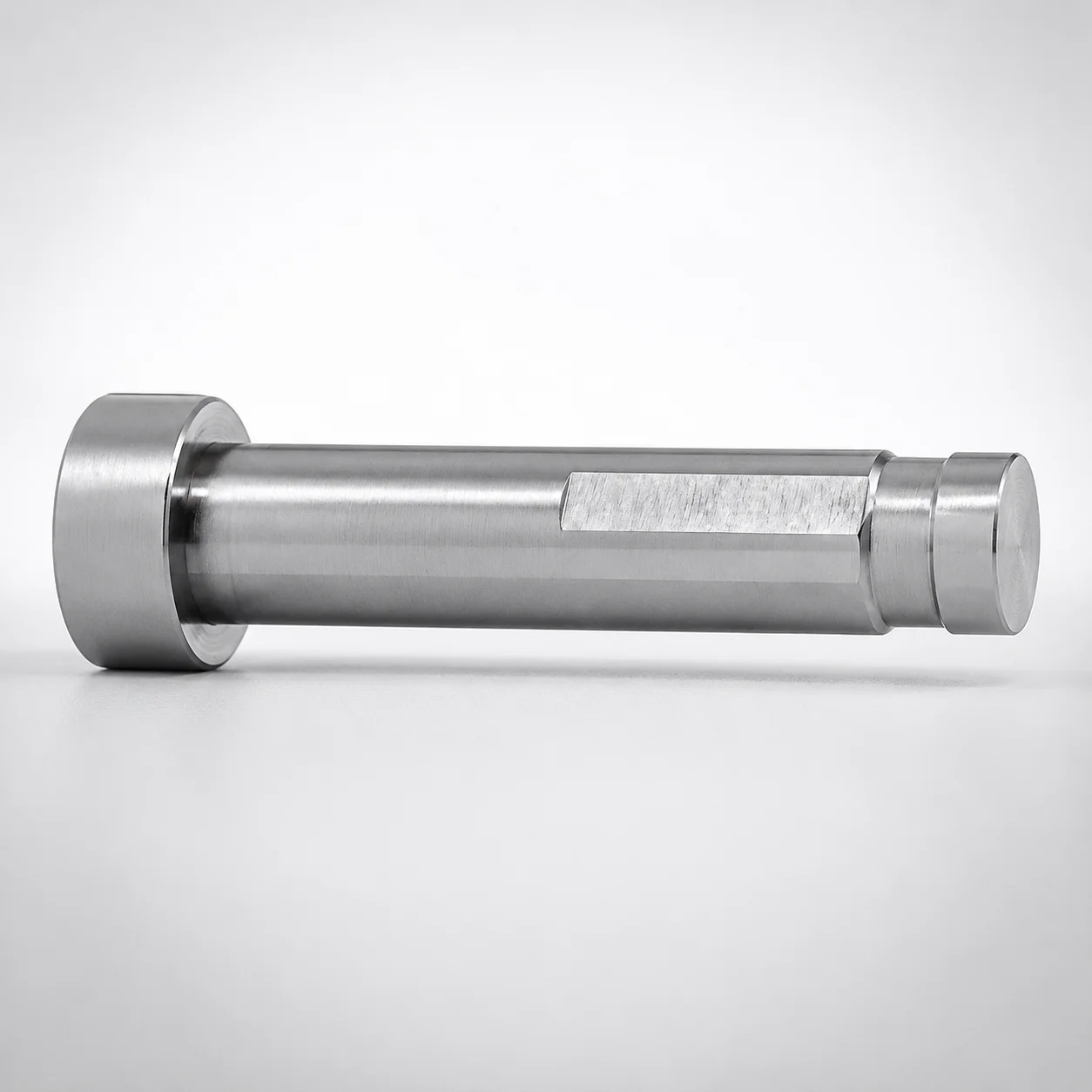
JIS Standard SKH51 Steel Gas Release Straight Core Pins Flat-SVC
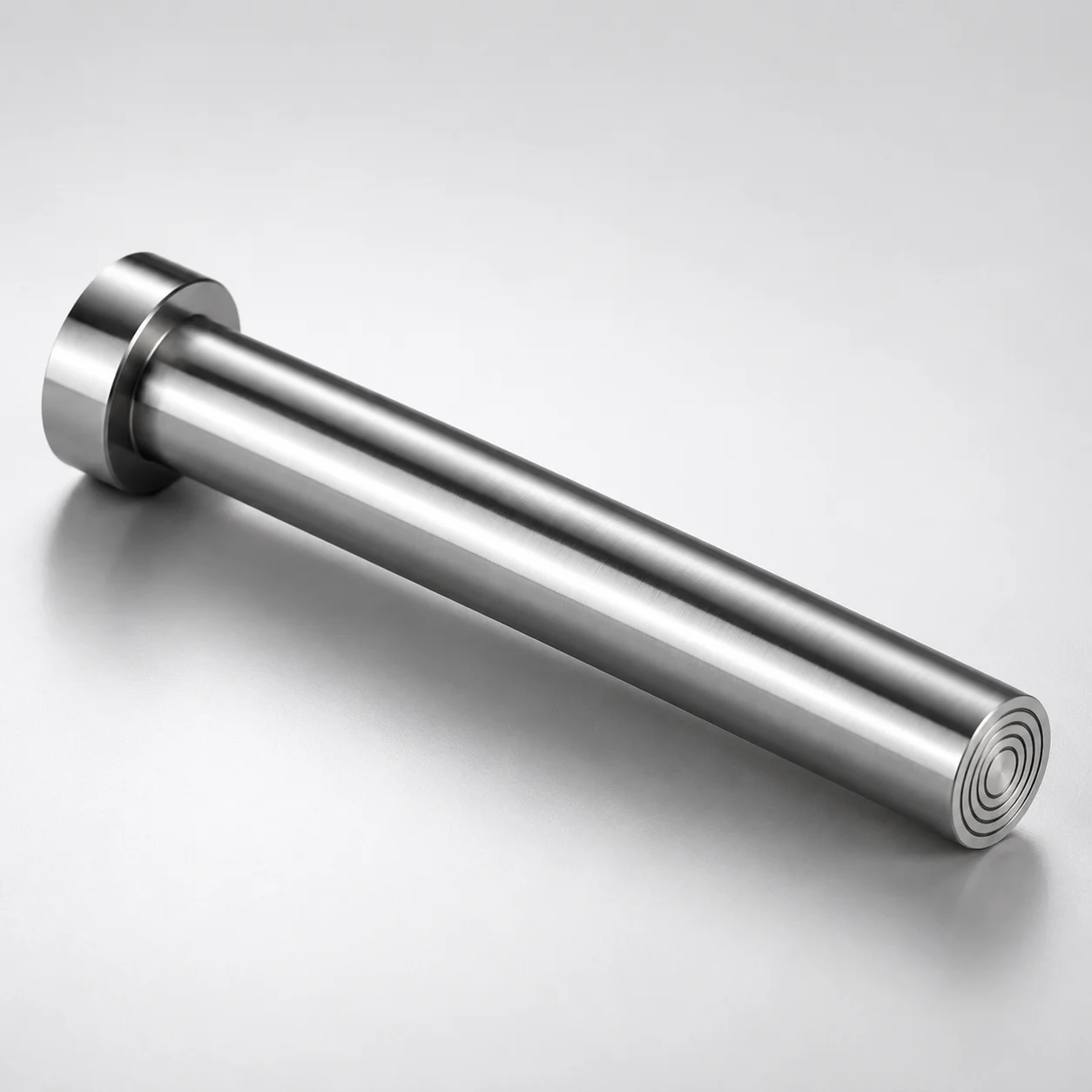
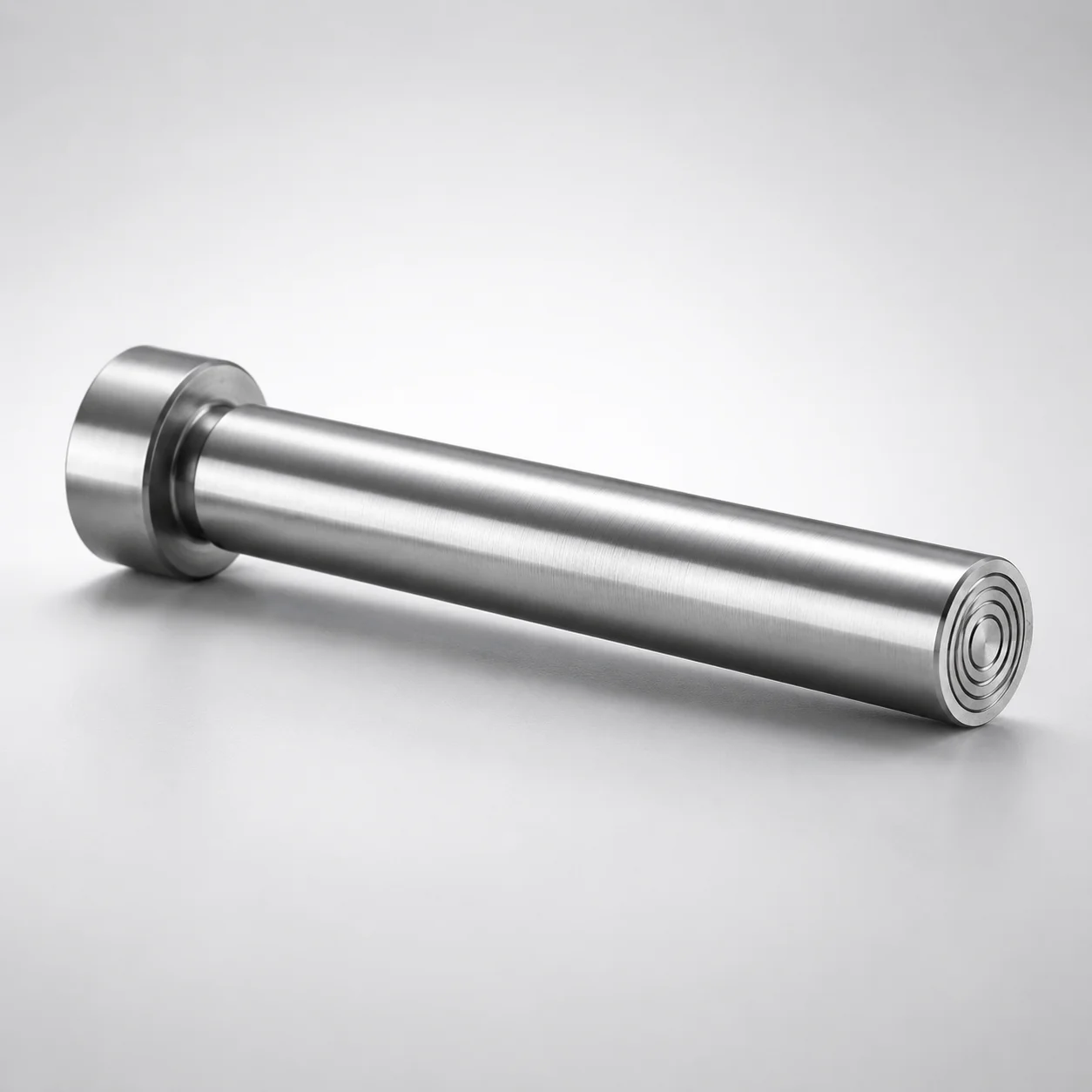
Gas Release Straight Core Pins (SKH51 steel) are built with a Flat-SVC extended flat section to the bottom, supporting consistent mold venting and stable core alignment. Extra precision construction helps maintain predictable ejection performance.
- Gas-release straight pin with Flat-SVC to the bottom for controlled exhaust during molding
- Quenched hardening steel for strong wear resistance under repeated production cycles
- Designed for tight assembly control with L dimension tolerance (+0.01/0)
- Suitable for core pin applications requiring reliable gas venting and repeatable positioning
Specifications
132 configurations available
| D/P (Shaft diameter) (mm) | No. (Nominal diameter) (mm) | L (L dimension) (mm) | DC (Gas release section diameter) (mm) | Extend the flat section SV to the bottom | N (Tip diameter length) (mm) | PC (Gas release section diameter) (mm) | SV (Gas release facet cutting length) (mm) | When DC = D, DCX is applied | When PC=P, PCX is applied | type |
|---|---|---|---|---|---|---|---|---|---|---|
| 0.5 | - | 15 ~ 60 | 0.42 ~ 0.5 | - | 0.3 ~ 10 | - | 2 ~ 50 | - | - | - |
| 0.5 | - | 15 ~ 60 | 0.42 ~ 0.5 | SVC | 0.3 ~ 10 | - | - | - | - | - |
| 0.5 | - | 15 ~ 60 | - | - | 0.3 ~ 10 | - | 2 ~ 50 | DCX | - | - |
| 0.5 | - | 15 ~ 60 | - | SVC | 0.3 ~ 10 | - | - | DCX | - | - |
| 0.6 | - | 15 ~ 100 | 0.52 ~ 0.6 | - | 0.3 ~ 10 | - | 2 ~ 50 | - | - | - |
| 0.6 | - | 15 ~ 100 | 0.52 ~ 0.6 | SVC | 0.3 ~ 10 | - | - | - | - | - |
| 0.6 | - | 15 ~ 100 | - | - | 0.3 ~ 10 | - | 2 ~ 50 | DCX | - | - |
| 0.6 | - | 15 ~ 100 | - | SVC | 0.3 ~ 10 | - | - | DCX | - | - |
| 0.8 | - | 15 ~ 100 | 0.72 ~ 0.8 | - | 0.3 ~ 10 | - | 2 ~ 50 | - | - | - |
| 0.8 | - | 15 ~ 100 | 0.72 ~ 0.8 | SVC | 0.3 ~ 10 | - | - | - | - | - |
| 0.8 | - | 15 ~ 100 | - | - | 0.3 ~ 10 | - | 2 ~ 50 | DCX | - | - |
| 0.8 | - | 15 ~ 100 | - | SVC | 0.3 ~ 10 | - | - | DCX | - | - |
| 1 | - | 15 ~ 100 | 0.92 ~ 1 | - | 0.3 ~ 10 | - | 2 ~ 50 | - | - | - |
| 1 | - | 15 ~ 100 | 0.92 ~ 1 | SVC | 0.3 ~ 10 | - | - | - | - | - |
| 1 | - | 15 ~ 100 | - | - | 0.3 ~ 10 | - | 2 ~ 50 | DCX | - | - |
| 1 | - | 15 ~ 100 | - | SVC | 0.3 ~ 10 | - | - | DCX | - | - |
| 1.2 | - | 15 ~ 100 | 1.12 ~ 1.2 | - | 0.3 ~ 10 | - | 2 ~ 50 | - | - | - |
| 1.2 | - | 15 ~ 100 | 1.12 ~ 1.2 | SVC | 0.3 ~ 10 | - | - | - | - | - |
| 1.2 | - | 15 ~ 100 | - | - | 0.3 ~ 10 | - | 2 ~ 50 | DCX | - | - |
| 1.2 | - | 15 ~ 100 | - | SVC | 0.3 ~ 10 | - | - | DCX | - | - |
| 1.5 | - | 15 ~ 100 | 1.42 ~ 1.5 | - | 0.3 ~ 10 | - | 2 ~ 50 | - | - | - |
| 1.5 | - | 15 ~ 100 | 1.42 ~ 1.5 | SVC | 0.3 ~ 10 | - | - | - | - | - |
| 1.5 | - | 15 ~ 100 | - | - | 0.3 ~ 10 | - | 2 ~ 50 | DCX | - | - |
| 1.5 | - | 15 ~ 100 | - | SVC | 0.3 ~ 10 | - | - | DCX | - | - |
| 2 | - | 15 ~ 100 | 1.92 ~ 2 | - | 0.3 ~ 10 | - | 2 ~ 50 | - | - | - |
| 2 | - | 15 ~ 100 | 1.92 ~ 2 | SVC | 0.3 ~ 10 | - | - | - | - | - |
| 2 | - | 15 ~ 100 | - | - | 0.3 ~ 10 | - | 2 ~ 50 | DCX | - | - |
| 2 | - | 15 ~ 100 | - | SVC | 0.3 ~ 10 | - | - | DCX | - | - |
| 2.5 | - | 15 ~ 100 | 2.42 ~ 2.5 | - | 0.3 ~ 10 | - | 2 ~ 50 | - | - | - |
| 2.5 | - | 15 ~ 100 | 2.42 ~ 2.5 | SVC | 0.3 ~ 10 | - | - | - | - | - |
| 2.5 | - | 15 ~ 100 | - | - | 0.3 ~ 10 | - | 2 ~ 50 | DCX | - | - |
| 2.5 | - | 15 ~ 100 | - | SVC | 0.3 ~ 10 | - | - | DCX | - | - |
| 3 | - | 15 ~ 100 | 2.92 ~ 3 | - | 0.3 ~ 10 | - | 2 ~ 50 | - | - | - |
| 3 | - | 15 ~ 100 | 2.92 ~ 3 | SVC | 0.3 ~ 10 | - | - | - | - | - |
| 3 | - | 15 ~ 100 | - | - | 0.3 ~ 10 | - | 2 ~ 50 | DCX | - | - |
| 3 | - | 15 ~ 100 | - | SVC | 0.3 ~ 10 | - | - | DCX | - | - |
| 3.5 | - | 15 ~ 100 | 3.42 ~ 3.5 | - | 0.5 ~ 15 | - | 2 ~ 60 | - | - | - |
| 3.5 | - | 15 ~ 100 | 3.42 ~ 3.5 | SVC | 0.5 ~ 15 | - | - | - | - | - |
| 3.5 | - | 15 ~ 100 | - | - | 0.5 ~ 15 | - | 2 ~ 60 | DCX | - | - |
| 3.5 | - | 15 ~ 100 | - | SVC | 0.5 ~ 15 | - | - | DCX | - | - |
| 4 | - | 15 ~ 100 | 3.92 ~ 4 | - | 0.5 ~ 15 | - | 2 ~ 60 | - | - | - |
| 4 | - | 15 ~ 100 | 3.92 ~ 4 | SVC | 0.5 ~ 15 | - | - | - | - | - |
| 4 | - | 15 ~ 100 | - | - | 0.5 ~ 15 | - | 2 ~ 60 | DCX | - | - |
| 4 | - | 15 ~ 100 | - | SVC | 0.5 ~ 15 | - | - | DCX | - | - |
| 4.5 | - | 15 ~ 100 | 4.42 ~ 4.5 | - | 0.5 ~ 15 | - | 2 ~ 60 | - | - | - |
| 4.5 | - | 15 ~ 100 | 4.42 ~ 4.5 | SVC | 0.5 ~ 15 | - | - | - | - | - |
| 4.5 | - | 15 ~ 100 | - | - | 0.5 ~ 15 | - | 2 ~ 60 | DCX | - | - |
| 4.5 | - | 15 ~ 100 | - | SVC | 0.5 ~ 15 | - | - | DCX | - | - |
| 5 | - | 15 ~ 100 | 4.92 ~ 5 | - | 0.5 ~ 15 | - | 2 ~ 60 | - | - | - |
| 5 | - | 15 ~ 100 | 4.92 ~ 5 | SVC | 0.5 ~ 15 | - | - | - | - | - |
Product Guide
Application Scenarios+
This straight gas-release core pin is used in precision injection mold tooling where trapped air must be vented without disturbing core alignment. In automotive and consumer parts, it supports controlled exhaust during filling and packing, helping reduce gas marks while maintaining stable ejection timing.
The Flat-SVC feature extends to the bottom of the pin, making it suited for configurations that require predictable venting at the core’s deepest working area. The quenched-hardening steel accuracy also helps preserve repeatable positioning in high-cycle connector and housing molds where tolerances directly affect assembly control and vent consistency.
It is also appropriate for small-to-medium medical or electronics housings that demand consistent surface finish. Engineers typically select this variant when the part geometry creates localized gas pockets and when the venting channel needs to remain aligned with the core pin over long production runs.
- Use in molds requiring reliable gas venting during molding
- Select when the bottom venting facet is critical for consistent exhaust
- Prefer for applications emphasizing precision core positioning
Material & Process Details+
JIS Standard SKH51 quenched hardening steel is an air-hardening high-speed steel grade commonly referenced as an AISI M2-equivalent performance level for wear-resistant tooling applications. For this core pin, the design emphasis is on maintaining surface integrity and dimensional stability under repeated motion and contact during ejection and venting cycles.
- Hardness: tuned for quenched hardening (typical high-speed-steel hardness targets in the ~60–64 HRC range)
- Wear resistance: strong resistance to abrasion and edge wear at the gas-release facet
- Toughness trade-off: higher hardness improves wear life but can reduce impact toughness if the pin is exposed to shock loading
Compared with lower-alloy tool steels, SKH51’s higher hardness supports longer facet life for controlled exhaust edges; compared with more specialized nitriding grades, it relies on quench hardening rather than surface hardening alone.
Sizing & Selection Guide+
Select the core pin by matching the shaft diameter (D/P), nominal diameter (No.), and the L (length) to the core bushing and working depth in the mold. The available D/P range is 0.5–13 mm and No. range is 0.6–13 mm, while L is 15–60 mm or 15–100 mm depending on the configuration.
- Match D/P and No. to the core pin housing bore and the required fit with the guiding surfaces.
- Verify L provides the required engagement length so the Flat-SVC gas-release facet reaches the targeted venting zone.
- Confirm gas-release geometry: DC 0.42–12.92 mm, PC 0.42–9.92 mm, and SV 2–50 mm or 2–60 mm.
When DC = D, the DCX variant applies; when PC = P, the PCX variant applies. This pin is specified with a tight L dimension tolerance (+0.01/0), so set working depth accordingly and account for assembly stack-up to ensure consistent vent positioning.
Frequently Asked Questions
Which gas-release dimensions should I verify for controlled exhaust—DC/DCX, PC/PCX, and SV?+
What tolerance constraint is provided for the L dimension, and how does it impact core pin placement?+
How do I choose between L ranges (15–60 vs 15–100) for the required venting depth?+
When should I consider the pin tip diameter length (N) in addition to the shaft diameter (D/P)?+
Is SKH51 suitable for high-cycle molds where the vent facet experiences abrasion?+
Related Products
Need Custom Specifications?
Our engineering team can help with custom configurations, material selection, and volume pricing.