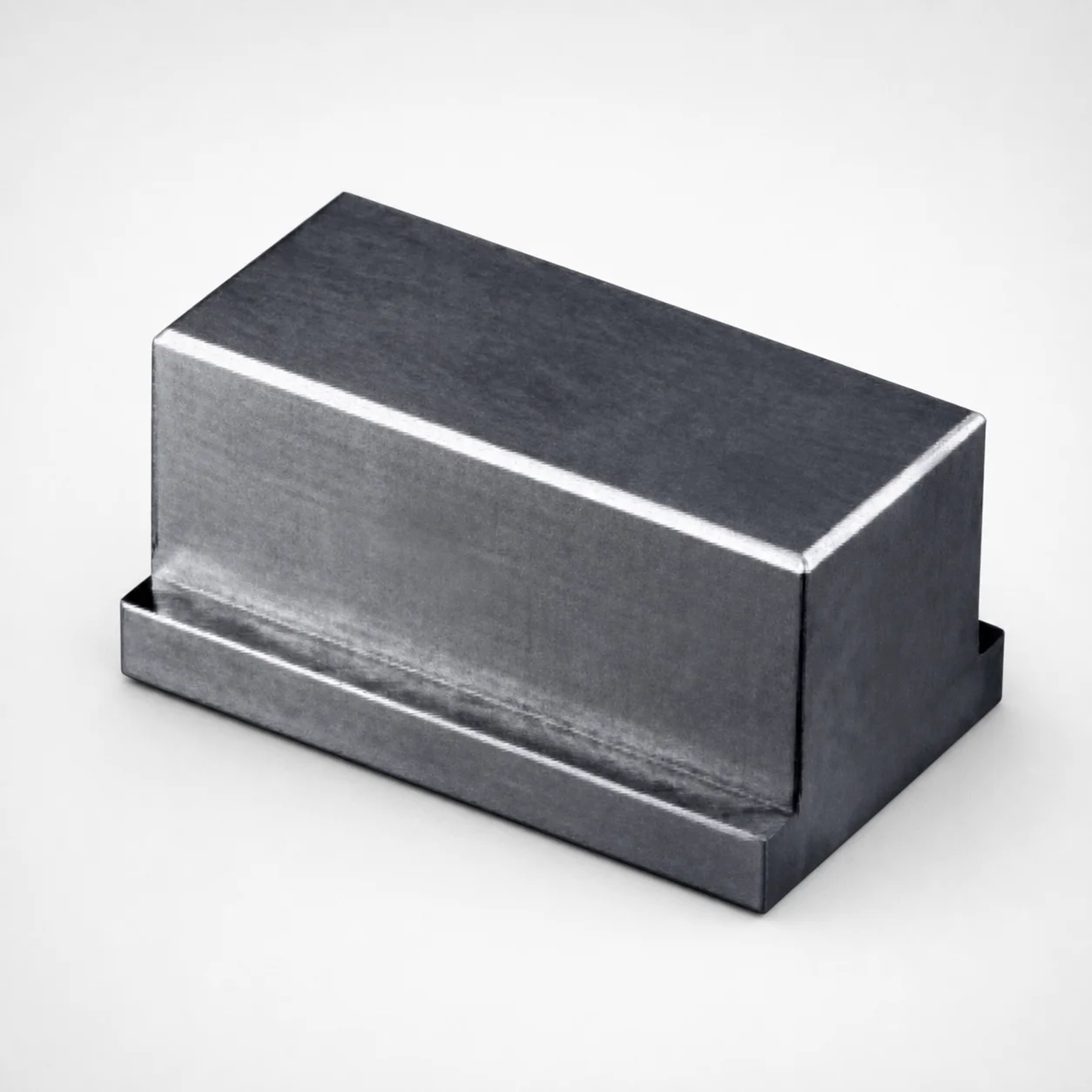
Inch T-Slide Option for GIB Assembly DANLY IEM Steel Slide Adjustment Rails
Inch T-Slide Option for GIB Assembly (DANLY IEM steel) provides rigid slide adjustment rails with a grooved heel design to maintain accurate alignment during machine operation.
- Heel with two side grooves supports precise positioning under load.
- Steel construction with a dedicated non-oil groove helps manage wear.
- Optimized slide plate geometry enables smooth movement and longer service life.
- Built for GIB assemblies in industrial guide rail systems.
Specifications
4 configurations available
| Rail thickness (in) | Rail width (in) | Heel height (in) | Heel width (in) |
|---|---|---|---|
| 0.308 | 1.493 | 1.25 | 1.110 |
| 0.371 | 1.617 | 1.25 | 1.110 |
| 0.496 | 2.367 | 1.38 | 1.610 |
| 0.746 | 2.617 | 1.75 | 1.610 |
Product Guide
Application Scenarios+
This inch T-slide option is used in GIB assembly guide rail systems within precision injection mold bases where stable slider alignment is required. The heel design with two side grooves helps support repeatable positioning under load, which is beneficial during opening/closing cycles and during high-friction operations.
- Automotive connector and insert molds: Supports smooth travel for slide or shut-off functions where tight alignment reduces flash and parting line variation. The rail thickness and width options (0.308–0.746 in thickness; 1.493–2.617 in width) allow engineers to match existing mold frame geometry.
- Packaging and housings (multi-cavity tooling): Helps maintain consistent guide performance across long runs; the non-oil groove supports controlled wear management in lubrication-dependent environments.
- Robotic handling/automation molds: Reduces adjustment drift by providing a rigid adjustment-rail interface for GIB slide plates, improving stability between maintenance intervals.
Material & Process Details+
The component is manufactured from DANLY IEM steel, selected for stiffness and wear behavior in guide-rail and GIB sliding interfaces. The design emphasis (heel grooves and a dedicated non-oil groove) supports controlled contact conditions that influence wear over time.
Heat treatment details (e.g., quench & temper, nitriding) and exact target hardness (HRC) are not provided in the available data, so hardness and toughness trade-offs should be confirmed against the supplier’s steel/process specification for this series. In general for guide-rail elements, adequate hardness improves wear resistance, while maintaining toughness helps resist chipping or deformation under shock loads.
- Recommended comparison: If alternative rail materials are offered, select based on the required hardness (HRC), expected lubrication conditions, and load/speed profile for the mold axis.
Sizing & Selection Guide+
Select the T-slide rail geometry to match the mold base guide rail pocket and the corresponding GIB assembly interface. Use the provided ranges to align both load-carrying and locating surfaces: rail thickness can be 0.308, 0.371, 0.496, or 0.746 in; rail width can be 1.493, 1.617, 2.367, or 2.617 in.
Then size the heel features to fit the GIB heel groove region: heel height is 1.25, 1.38, or 1.75 in, while heel width is 1.110 or 1.610 in. For accurate guidance, ensure the heel grooves and mating interface surfaces engage consistently across the stroke length, minimizing side-load that can shift alignment.
- Tolerance/fit: The dataset does not list tolerances; confirm machining clearances and fit requirements in your GIB assembly drawing to prevent binding or excessive play.
- Fixed vs. configurable: Thickness, width, heel height, and heel width are fixed selectable variants within the listed values.
Frequently Asked Questions
Which rail thickness and width variants are available for this inch T-slide option for GIB assemblies?+
How do the heel grooves and non-oil groove features influence guide rail wear and alignment?+
What heel height and heel width options should be matched to the GIB heel region in the mold?+
Are tolerances provided for rail thickness/width and heel dimensions, and how should I handle fit?+
What material and heat-treatment details (HRC, quench/temper, nitriding) are specified for DANLY IEM?+
Related Products
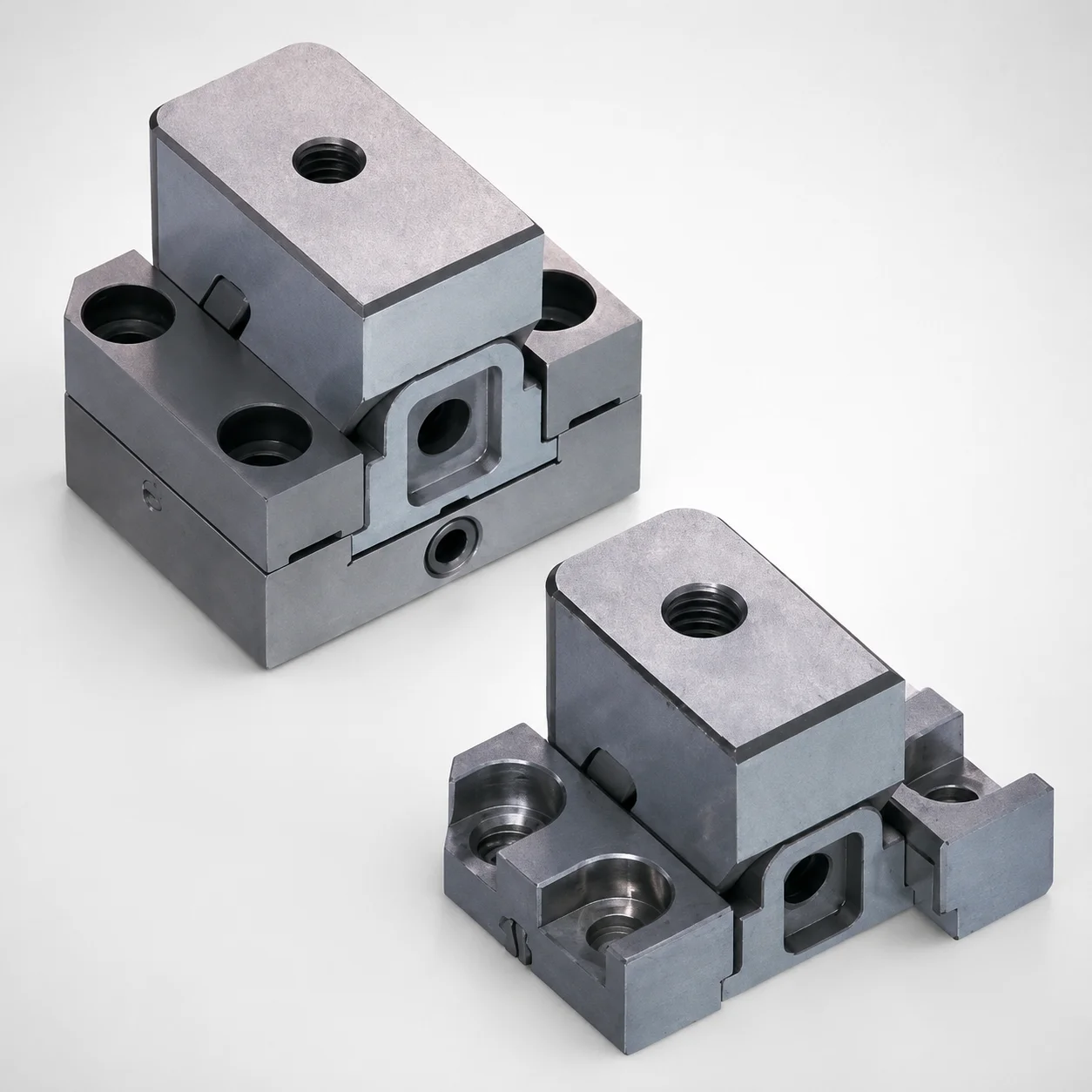
Standard Type Mini Slide Core Units
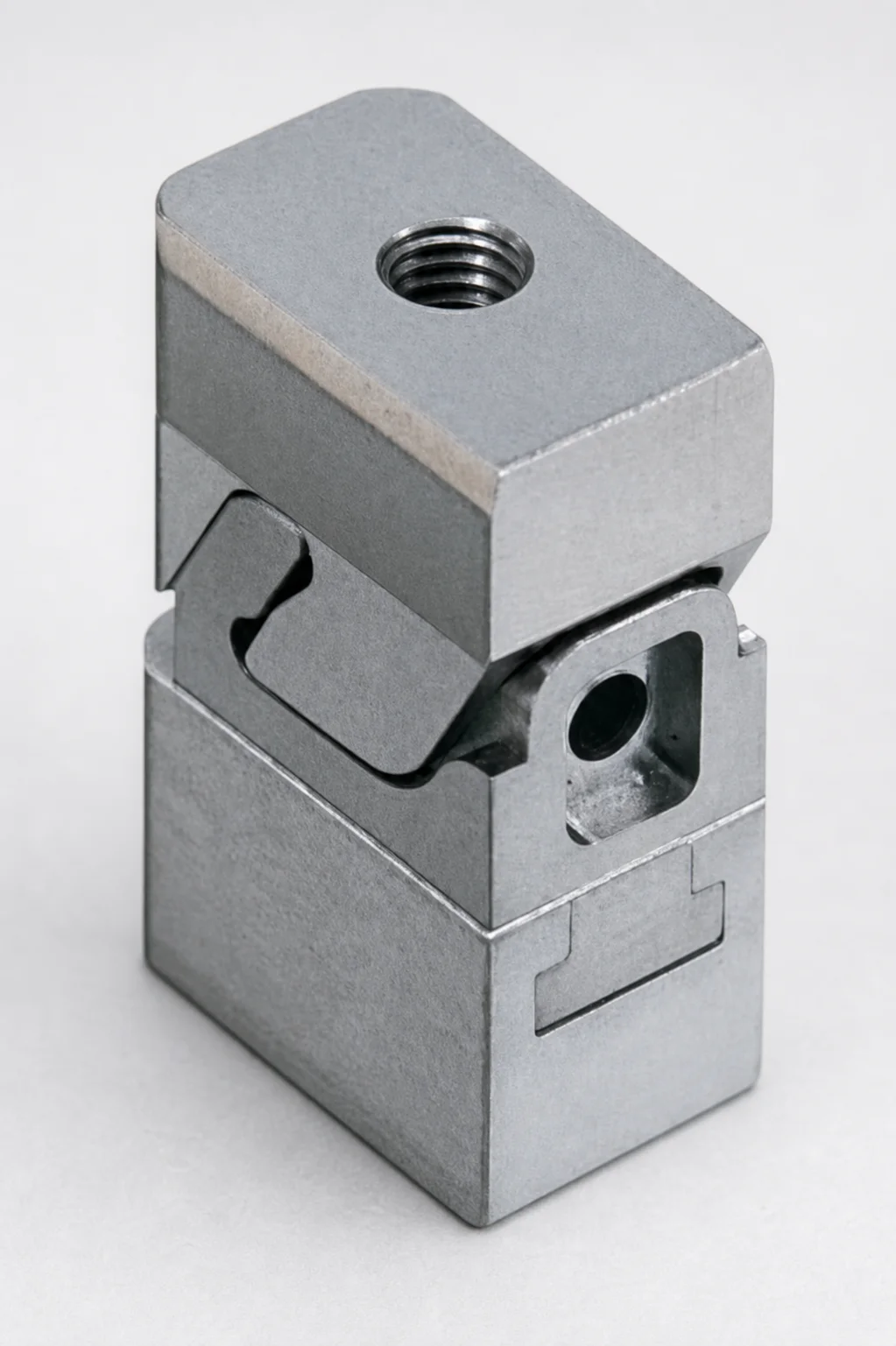
Mini Slide Core Units Slim Type (3 mm Stroke) for Inlay Tapped MSCS-Type
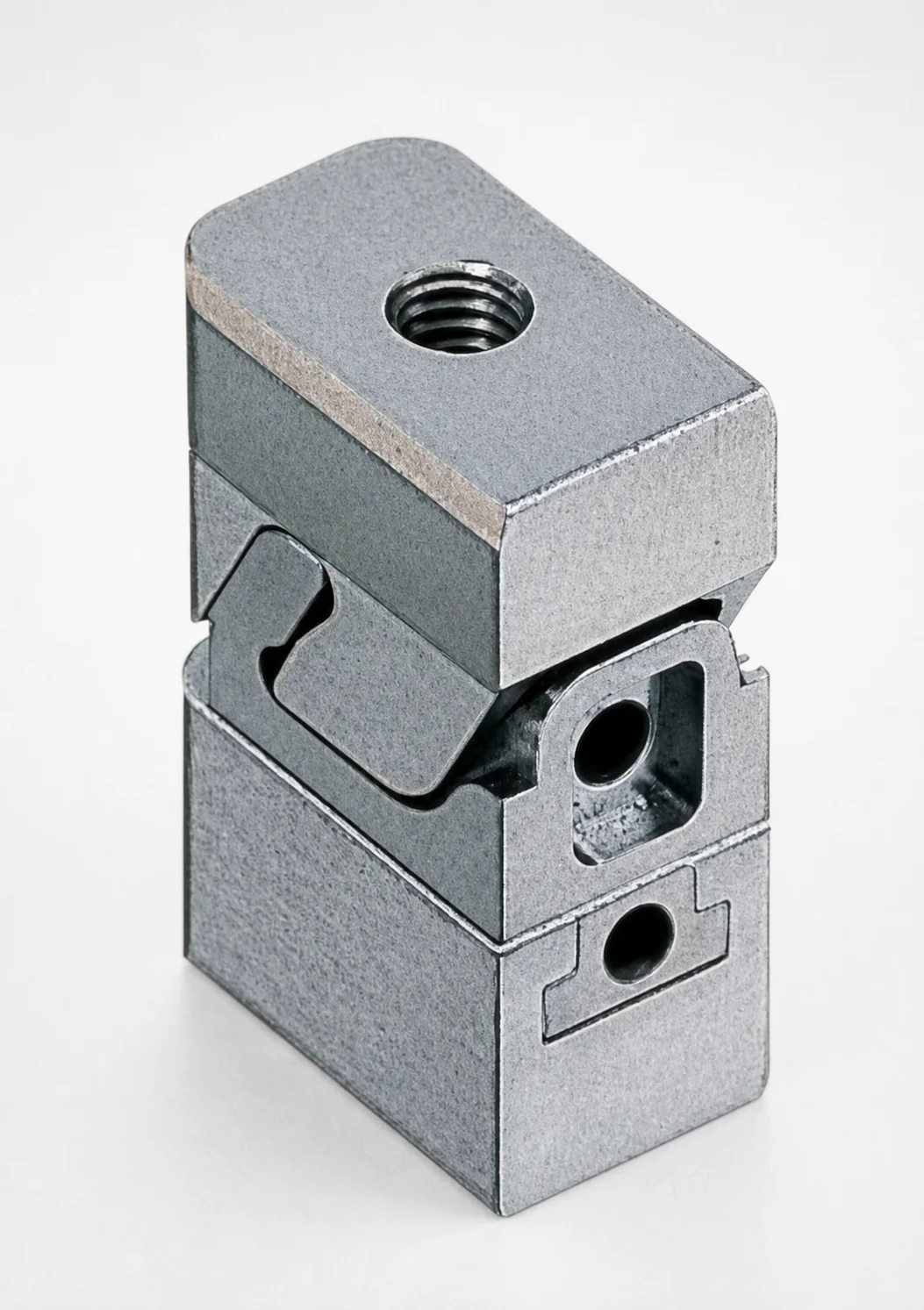
Mini Slide Core Units Slim Slide Stroke 3 mm Retractor Mechanism
Mini Slide Core Units Slim Slide Stroke 10 mm Retracting Mechanism
Mini Slide Core Units Slim Slide Core Retractor 6 mm Stroke
SCTM Two-Color Slide Core Units
Need Custom Specifications?
Our engineering team can help with custom configurations, material selection, and volume pricing.