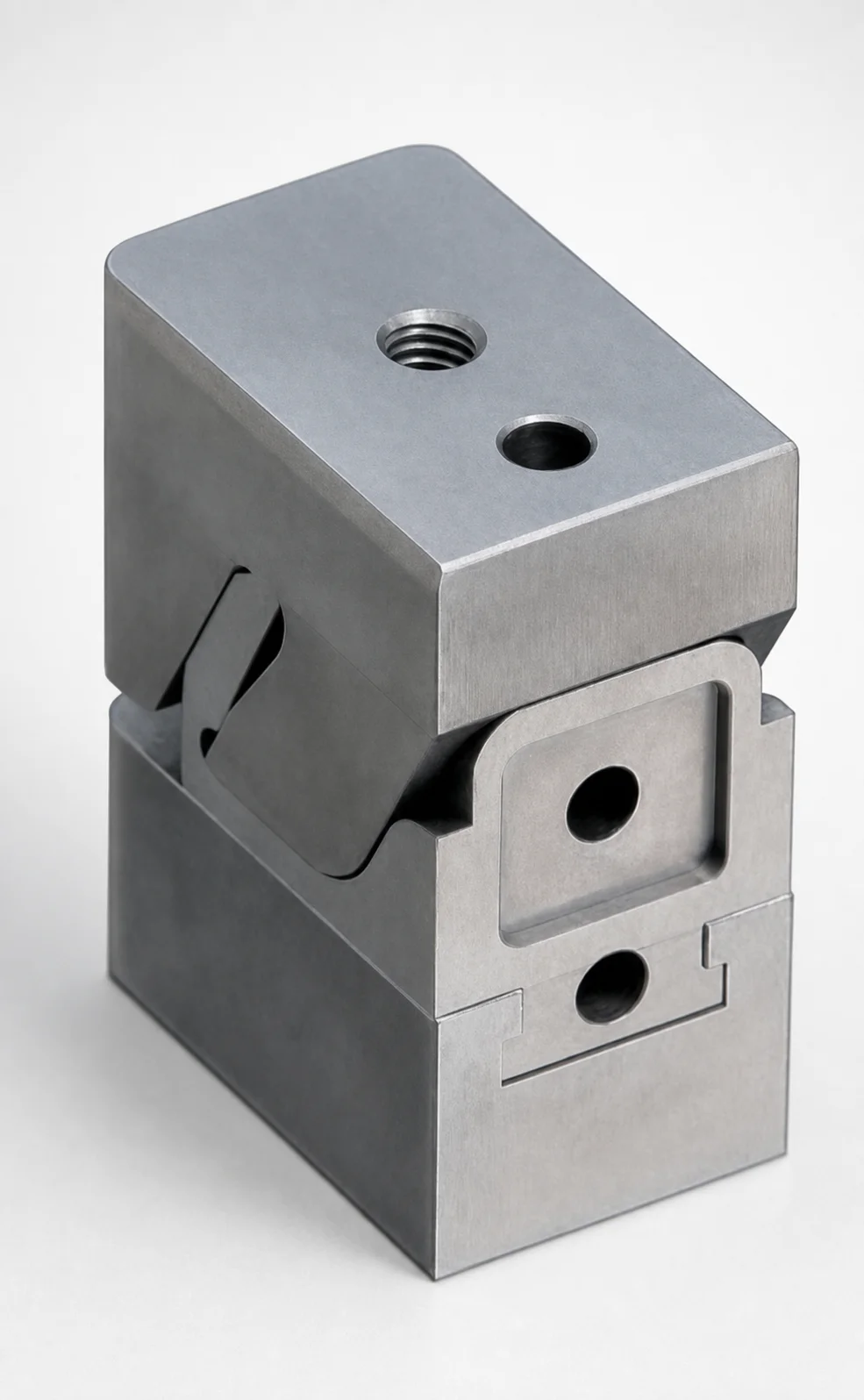
Mini Slide Core Units Slim Slide Stroke 10 mm Retracting Mechanism
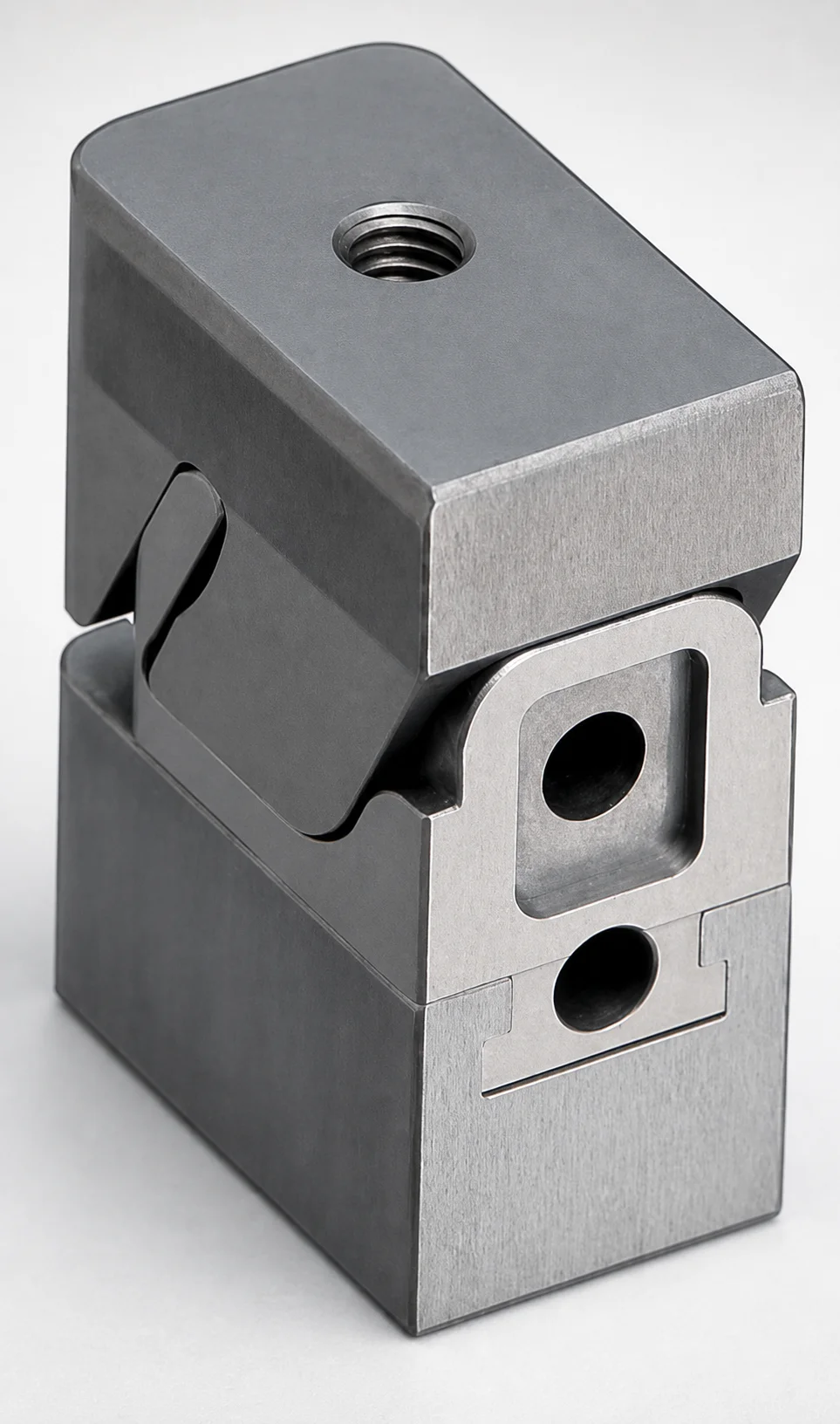
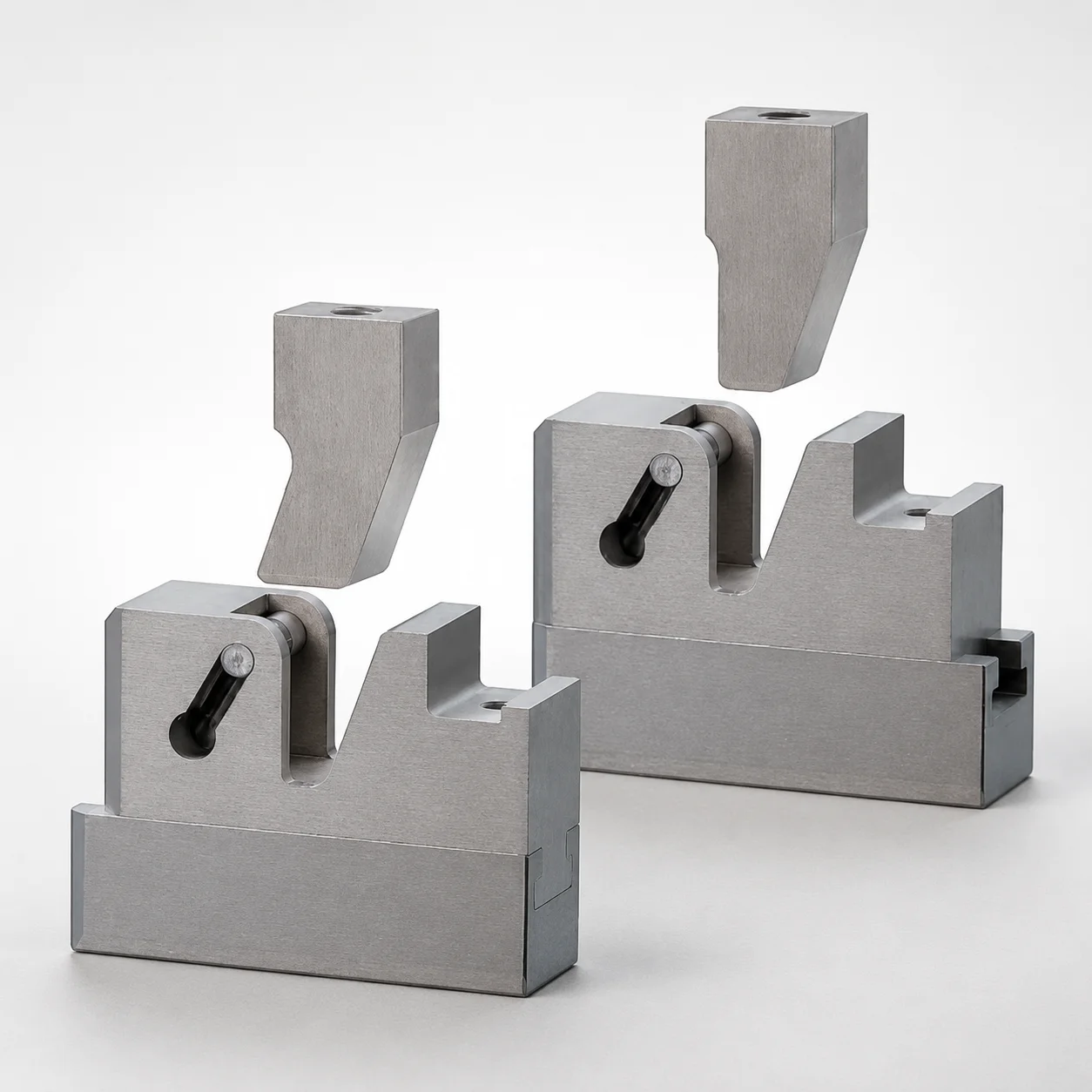
Mini Slide Core Units Slim Slide Stroke 10 mm Retracting Mechanism provide compact slide-core retraction for clean, repeatable motion inside small mold assemblies. The combined guide rail design supports stable travel during cycling.
- Slim type layout with combined guide rail improves alignment and reduces play
- Built-in retracting mechanism supports dependable slide-core return per cycle
- Supports 10 mm stroke for applications needing short, controlled movement
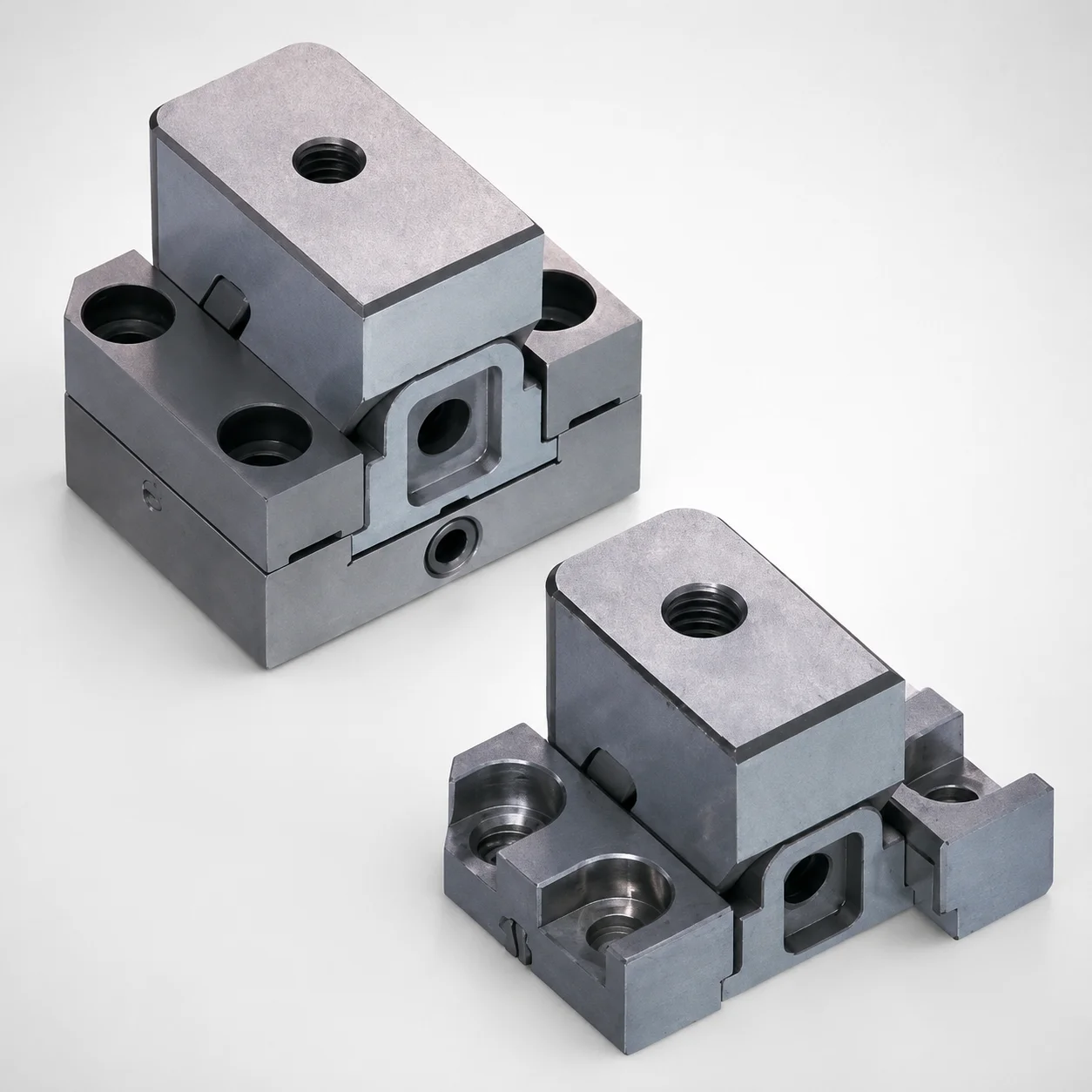
- Configured for inlay part processed and tapped slide-core integration
Specifications
2 configurations available
| Slide Core | type |
|---|---|
| Inlay part processed | - |
| Tapped | - |
Product Guide
Application Scenarios+
This compact slide-core retraction unit is used when an injection mold needs an undercut release with a short, repeatable slide movement. The built-in retractor helps return the slide core consistently each cycle, supporting stable ejection timing inside a tight mold envelope.
In consumer electronics and small housings, it’s suited for mechanisms that must clear ribs, snap features, or localized undercuts without adding large moving parts. The slim layout and combined guide rail design help maintain alignment and reduce play during high-frequency cycling.
For connector and small module molds, the 10 mm slim stroke supports short controlled motion where gate/runner layouts restrict travel length. The inlay part processed and tapped configuration supports straightforward integration into inlay features and fastener-based assembly.
- Short undercut release where limited stroke space is available
- Stable cycling with combined guide rail travel alignment
- Tapped inlay integration for compact core assembly
Material & Process Details+
The provided product data specifies the slide core integration type (Inlay part processed, Tapped) but does not include a steel grade, heat treatment state, or hardness (HRC). Because no material properties are supplied in the specifications, material-related claims (e.g., wear resistance, toughness, or heat treatment such as nitriding/quenching & tempering) cannot be stated accurately.
When selecting a steel for compact slide-core units, engineers typically balance wear resistance at the contact surfaces with toughness to prevent chipping under cyclic loads. If you require guidance on equivalent steel grades or recommended heat treatment for slide mechanisms, share the drawing requirements (cavity/core material, expected shot count, and operating temperatures).
- Material grade: not specified in the input data
- Heat treatment: not specified in the input data
- Hardness / HRC: not specified in the input data
Sizing & Selection Guide+
Use this unit for applications requiring a slim slide stroke of 10 mm. Selection is driven by the available space along the guide direction inside the mold base and by the undercut clearance needed during opening.
Confirm compatibility with the intended slide-core mounting style: this variant is specified for inlay part processed and a tapped configuration. Match the inlay feature in your core/cavity layout to the unit’s integration method so the slide core can be secured and positioned repeatably.
- Stroke match: design for 10 mm travel to clear the undercut while staying within mold envelope limits
- Integration match: ensure your inlay is processed and that the tapped interface aligns with your assembly plan
- Tolerance/fit: use standard mold assembly practices for alignment and play control along the combined guide rail travel path
If you have the mold’s drawing dimensions (installation position, guide rail alignment, and tapped interface geometry), you can verify fit before final machining.
Frequently Asked Questions
Is this mini slide core unit suitable for inlay-processed slide-core integration?+
Yes. The specification indicates Inlay part processed for the slide core, meaning it is intended to be integrated into an inlay feature rather than a standalone external mounting style.
Verify that your mold’s inlay pocket geometry and assembly sequence accommodate the unit’s slim retraction layout.
What stroke is available for releasing undercuts with this retractor mechanism?+
This slim slide core unit provides a 10 mm slide stroke. Use this value as the primary motion requirement when designing for undercut clearance and ensuring the return cycle timing is compatible with mold opening speed.
Does the unit support a tapped mounting interface?+
Yes. The slide core specification includes Tapped, indicating the design is compatible with a tapped interface approach for fastening and positioning.
When planning fit, ensure the tapped feature alignment supports stable travel and consistent contact during cycling.
How does the combined guide rail design affect alignment in compact molds?+
The description states that the slim type layout uses a combined guide rail to improve alignment and reduce play.
In applications with limited space, this helps maintain stable motion during repeated actuation, which is critical for reliable undercut release.
What material grade or hardness does this product use for the slide mechanism?+
The provided product data does not include a steel grade, heat treatment state, or hardness value (HRC).
To select the right material for wear and toughness under your load and shot count, share your operating conditions or request the steel specification from your supplier.
Related Products
Need Custom Specifications?
Our engineering team can help with custom configurations, material selection, and volume pricing.