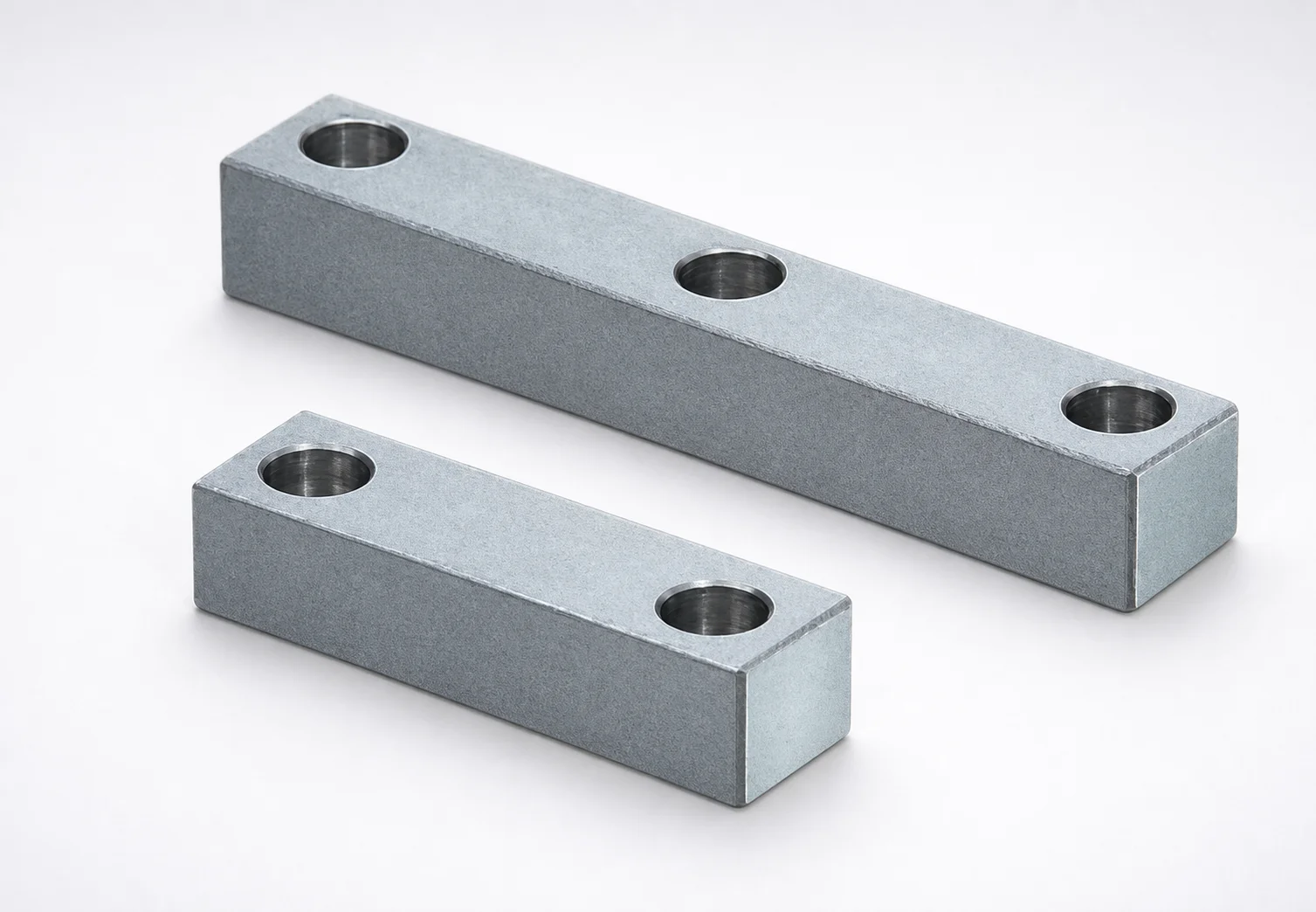
Steel Plain Guide Rails - Flat Heel
Plain guide rails (flat heel) are designed for stable, low-friction linear guidance in machine tool and automation slides. The flat-heel construction helps maintain alignment while supporting controlled movement.
- Flat-heel rail design with no groove on the heel for consistent seating and guidance
- Selectable oil groove option supports lubrication strategy during operation
- Tool steel guidance rails in SKS3 or HPM2T offer wear resistance for industrial use
- Suitable for plain guide rail assemblies using common rail thickness and width ranges
Specifications
813 configurations available
| Material | Oil Groove | Rail Thickness T (mm) | Rail Width W (mm) | Rail Length L (mm) | type |
|---|---|---|---|---|---|
| HPM2T | Non-oil groove | 10 | 10 | 35 | - |
| HPM2T | Non-oil groove | 10 | 10 | 40 | - |
| HPM2T | Non-oil groove | 10 | 10 | 50 | - |
| HPM2T | Non-oil groove | 10 | 10 | 60 | - |
| HPM2T | Non-oil groove | 10 | 10 | 70 | - |
| HPM2T | Non-oil groove | 10 | 10 | 80 | - |
| HPM2T | Non-oil groove | 10 | 10 | 90 | - |
| HPM2T | Non-oil groove | 10 | 10 | 100 | - |
| HPM2T | Non-oil groove | 15 | 10 | 35 | - |
| HPM2T | Non-oil groove | 15 | 10 | 40 | - |
| HPM2T | Non-oil groove | 15 | 10 | 50 | - |
| HPM2T | Non-oil groove | 15 | 10 | 60 | - |
| HPM2T | Non-oil groove | 15 | 10 | 70 | - |
| HPM2T | Non-oil groove | 15 | 10 | 80 | - |
| HPM2T | Non-oil groove | 15 | 10 | 90 | - |
| HPM2T | Non-oil groove | 15 | 10 | 100 | - |
| HPM2T | Non-oil groove | 10 | 12.5 | 35 | - |
| HPM2T | Non-oil groove | 10 | 12.5 | 40 | - |
| HPM2T | Non-oil groove | 10 | 12.5 | 50 | - |
| HPM2T | Non-oil groove | 10 | 12.5 | 60 | - |
| HPM2T | Non-oil groove | 10 | 12.5 | 70 | - |
| HPM2T | Non-oil groove | 10 | 12.5 | 80 | - |
| HPM2T | Non-oil groove | 10 | 12.5 | 90 | - |
| HPM2T | Non-oil groove | 10 | 12.5 | 100 | - |
| HPM2T | Non-oil groove | 15 | 12.5 | 40 | - |
| HPM2T | Non-oil groove | 15 | 12.5 | 50 | - |
| HPM2T | Non-oil groove | 15 | 12.5 | 60 | - |
| HPM2T | Non-oil groove | 15 | 12.5 | 70 | - |
| HPM2T | Non-oil groove | 15 | 12.5 | 80 | - |
| HPM2T | Non-oil groove | 15 | 12.5 | 90 | - |
| HPM2T | Non-oil groove | 15 | 12.5 | 100 | - |
| HPM2T | Non-oil groove | 20 | 12.5 | 40 | - |
| HPM2T | Non-oil groove | 20 | 12.5 | 50 | - |
| HPM2T | Non-oil groove | 20 | 12.5 | 60 | - |
| HPM2T | Non-oil groove | 20 | 12.5 | 70 | - |
| HPM2T | Non-oil groove | 20 | 12.5 | 80 | - |
| HPM2T | Non-oil groove | 20 | 12.5 | 90 | - |
| HPM2T | Non-oil groove | 20 | 12.5 | 100 | - |
| HPM2T | Non-oil groove | 10 | 15 | 40 | - |
| HPM2T | Non-oil groove | 10 | 15 | 50 | - |
| HPM2T | Non-oil groove | 10 | 15 | 60 | - |
| HPM2T | Non-oil groove | 10 | 15 | 70 | - |
| HPM2T | Non-oil groove | 10 | 15 | 80 | - |
| HPM2T | Non-oil groove | 10 | 15 | 90 | - |
| HPM2T | Non-oil groove | 10 | 15 | 100 | - |
| HPM2T | Non-oil groove | 10 | 15 | 110 | - |
| HPM2T | Non-oil groove | 10 | 15 | 120 | - |
| HPM2T | Non-oil groove | 10 | 15 | 130 | - |
| HPM2T | Non-oil groove | 10 | 15 | 140 | - |
| HPM2T | Non-oil groove | 10 | 15 | 150 | - |
Product Guide
Application Scenarios+
This flat-heel plain guide rail is used to provide stable, low-friction linear guidance inside injection mold tooling and other precision automation frames. Its flat-heel seating maintains consistent alignment under repeated slide motion, making it suitable for slide-and-plate mechanisms where guidance stiffness directly affects cycle repeatability.
- Automotive connector / multi-part molds: In cam-driven or spring-return slide assemblies, the rail’s flat heel supports smooth movement with predictable load distribution, helping reduce wear-related changes in part geometry.
- Medical device housings with moving inserts: Where sliding components must stay straight during ejection and retraction, selecting the oil groove option supports a lubrication strategy that can extend service intervals.
- General automation mold bases: For non-highly contaminated environments, the non-oil groove variant offers consistent contact conditions for long-running guide systems.
Because the rail is available in SKS3 or HPM2T and supports both groove and non-groove lubrication layouts, it can be matched to the duty cycle and maintenance preferences of the tooling design.
Material & Process Details+
These plain guide rails are offered in either SKS3 or HPM2T tool steels, giving designers flexibility between cost-effective wear performance and improved durability under sliding loads. Both choices are suitable for guidance applications where abrasion resistance and dimensional stability matter.
- SKS3: Typically selected for guidance components requiring balanced toughness and wear resistance in standard industrial service.
- HPM2T: Chosen when higher sliding wear resistance and longer guidance life are priorities, especially where lubrication conditions are maintained.
Manufacturing & heat treatment: As steel guide rails intended for sliding service, they are produced from tool steel stock and then machined to final rail geometry. The rails are commonly supplied in a heat-treated condition appropriate for sliding wear performance (pre-hardened or quenched & tempered, depending on the supplier’s processing route), followed by precision finishing to ensure smooth motion.
Trade-off: Higher wear resistance grades generally require careful control of toughness and finish to avoid surface damage under intermittent shock loads.
Sizing & Selection Guide+
To select the correct flat-heel plain guide rail, match the rail’s thickness (T), width (W), and length (L) to the slide plate and guide housing features in your mold base design. This rail style is intended for plain guide rail assemblies where the seating and alignment depend on correct flat-heel contact.
- Rail Thickness T: choose from 5 to 35 mm to match the mounting rail spacing and the slide plate thickness allowance.
- Rail Width W: select one of 10, 12.5, 15, 20, 25, or 30 mm to fit the guide block/gib contact width.
- Rail Length L: select 30 to 200 mm so the guided stroke area is fully supported with appropriate lead-in.
Oil groove consideration: when using an oil groove lubrication strategy, pick the oil groove option; otherwise use non-oil groove for consistent contact conditions. For fit, maintain the intended clearance between rail and mating slide elements; select the nearest rail size in the specified ranges to achieve stable seating on the flat heel.
Frequently Asked Questions
Which material—SKS3 or HPM2T—should I choose for guide rails in frequent slide cycles?+
When should I select the oil groove rail versus the non-oil groove (flat heel) version?+
How do I size the flat-heel guide rail to match my mold slide plate geometry?+
Can I replace an existing plain guide rail with the same flat-heel form factor using different lengths?+
What tolerance or fit approach should I use between the guide rail and slide assembly?+
Related Products
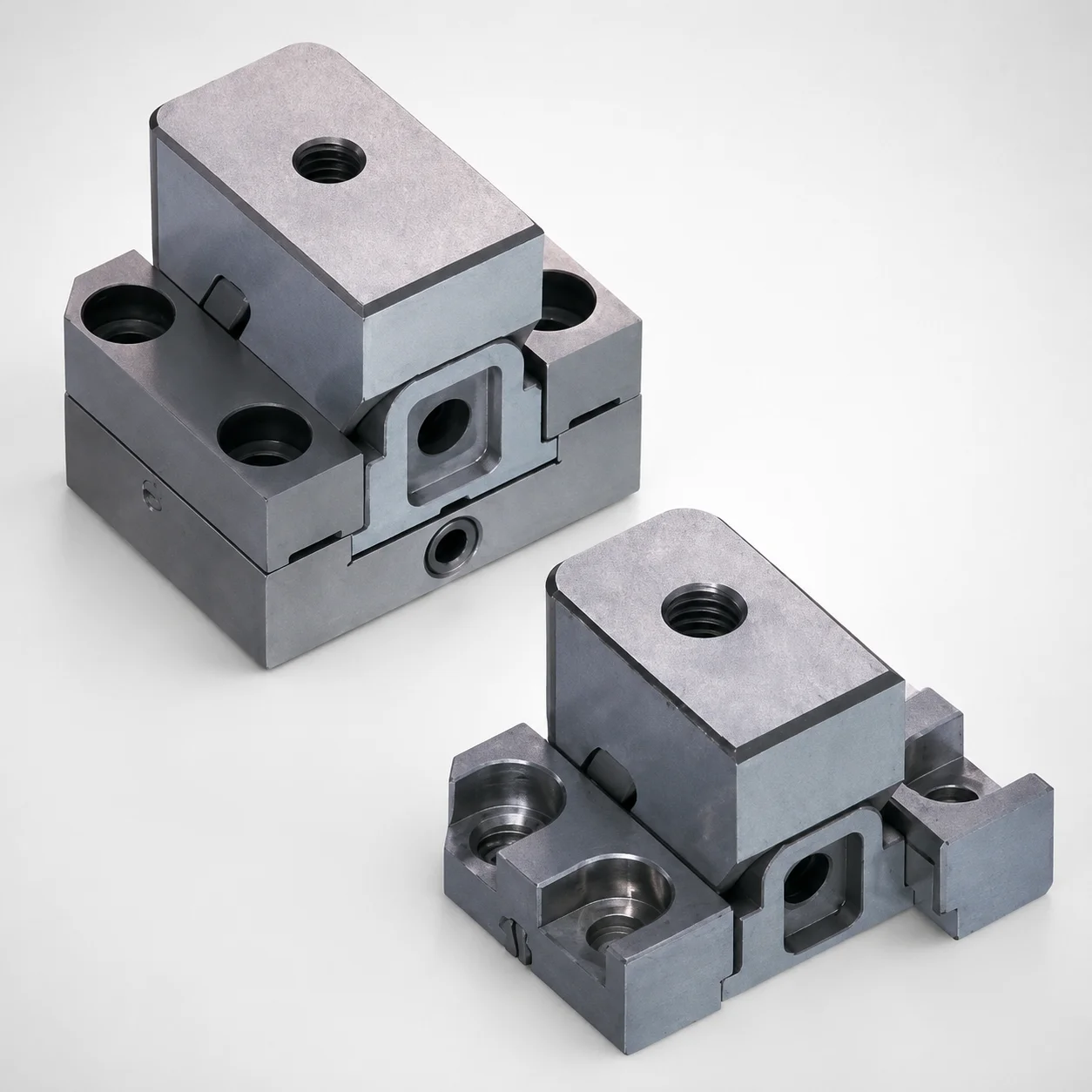
Standard Type Mini Slide Core Units
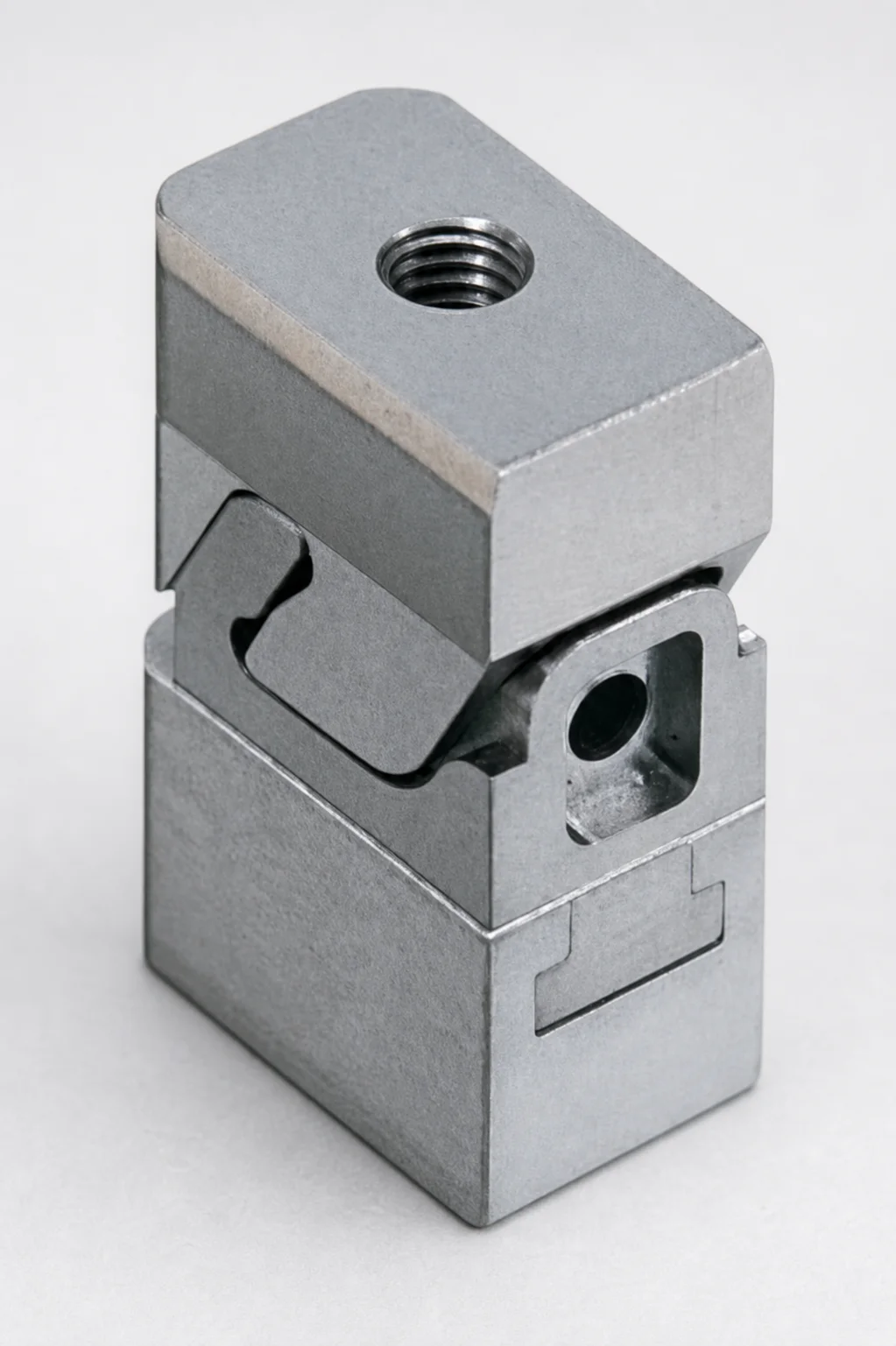
Mini Slide Core Units Slim Type (3 mm Stroke) for Inlay Tapped MSCS-Type
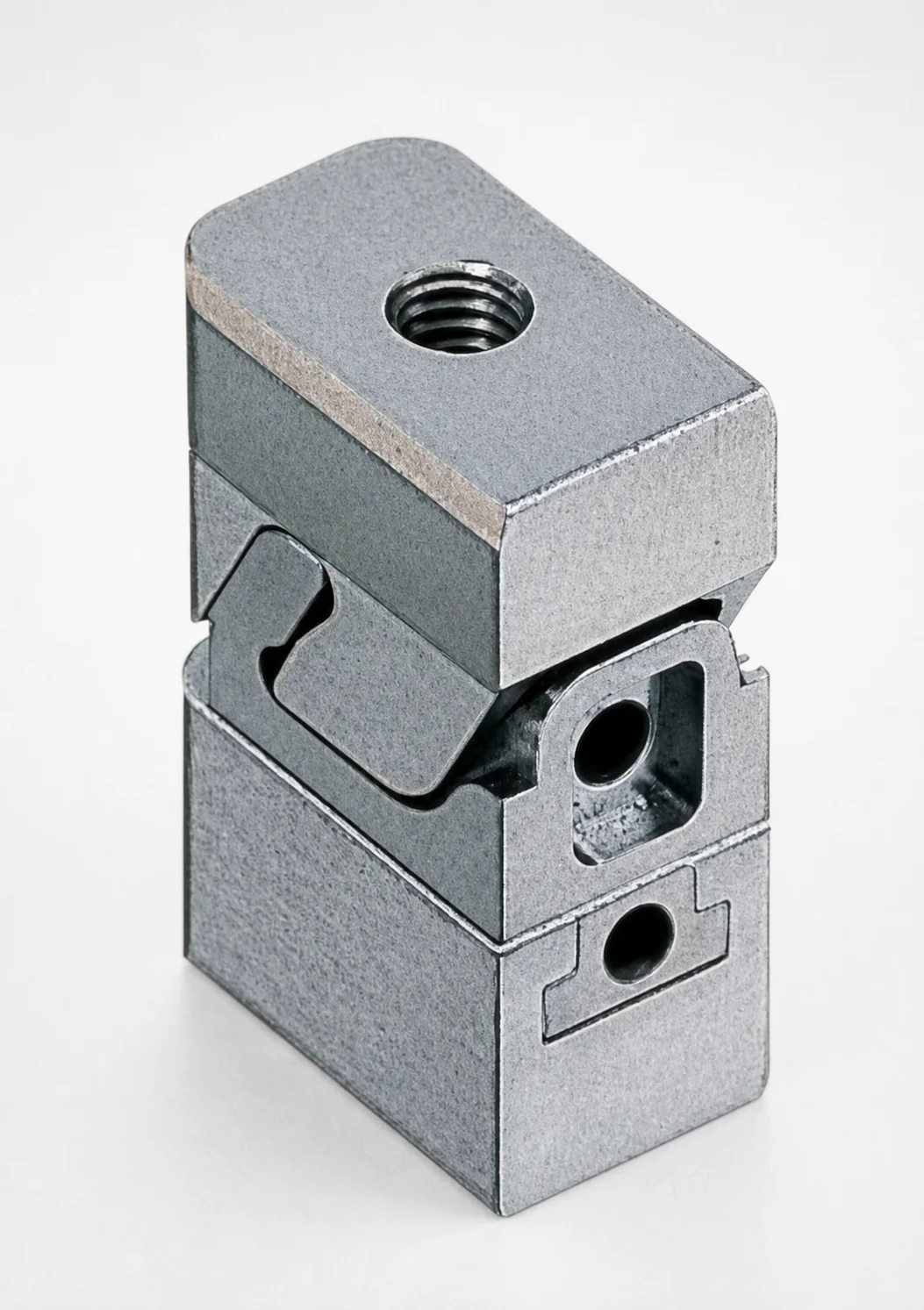
Mini Slide Core Units Slim Slide Stroke 3 mm Retractor Mechanism
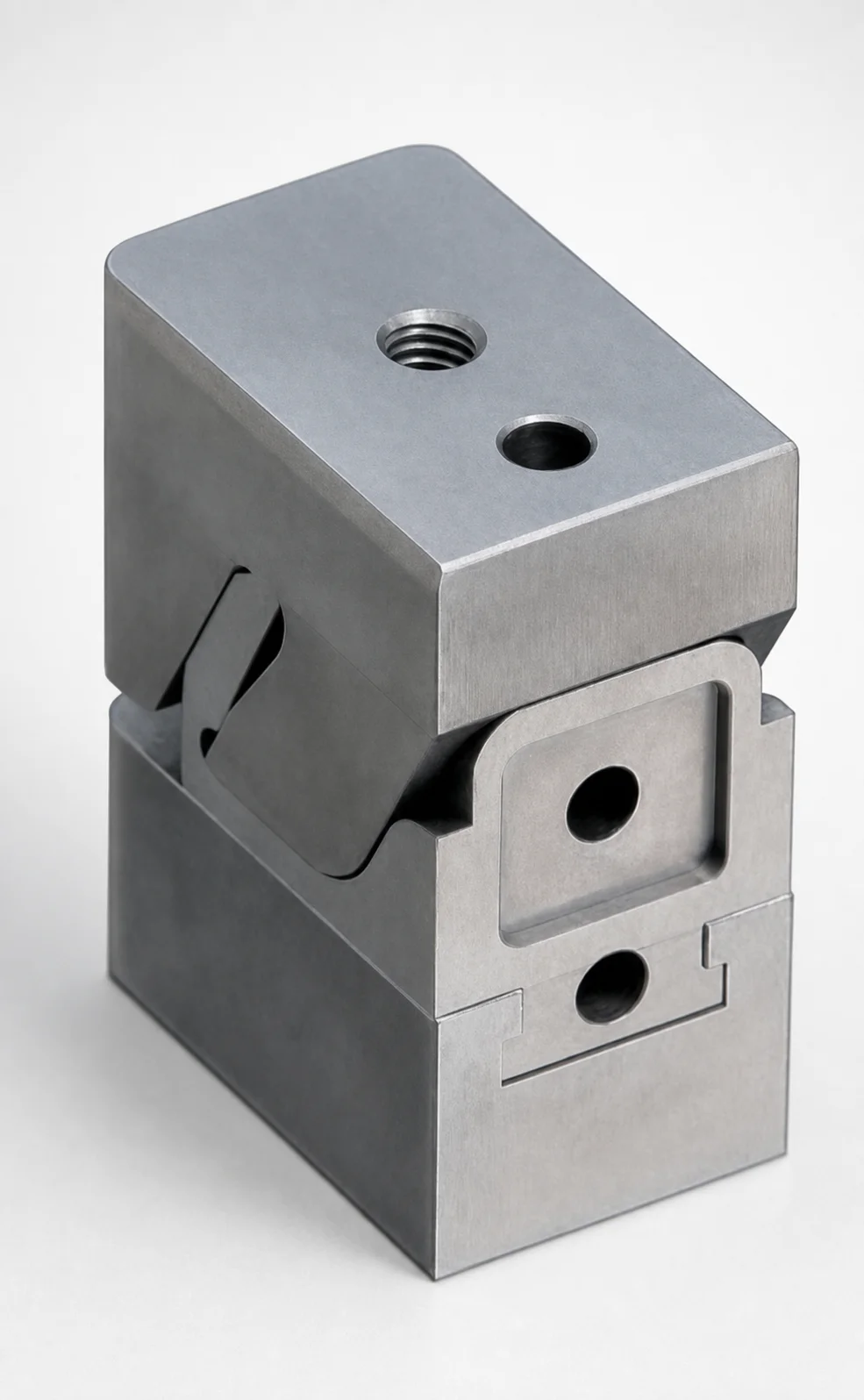
Mini Slide Core Units Slim Slide Stroke 10 mm Retracting Mechanism
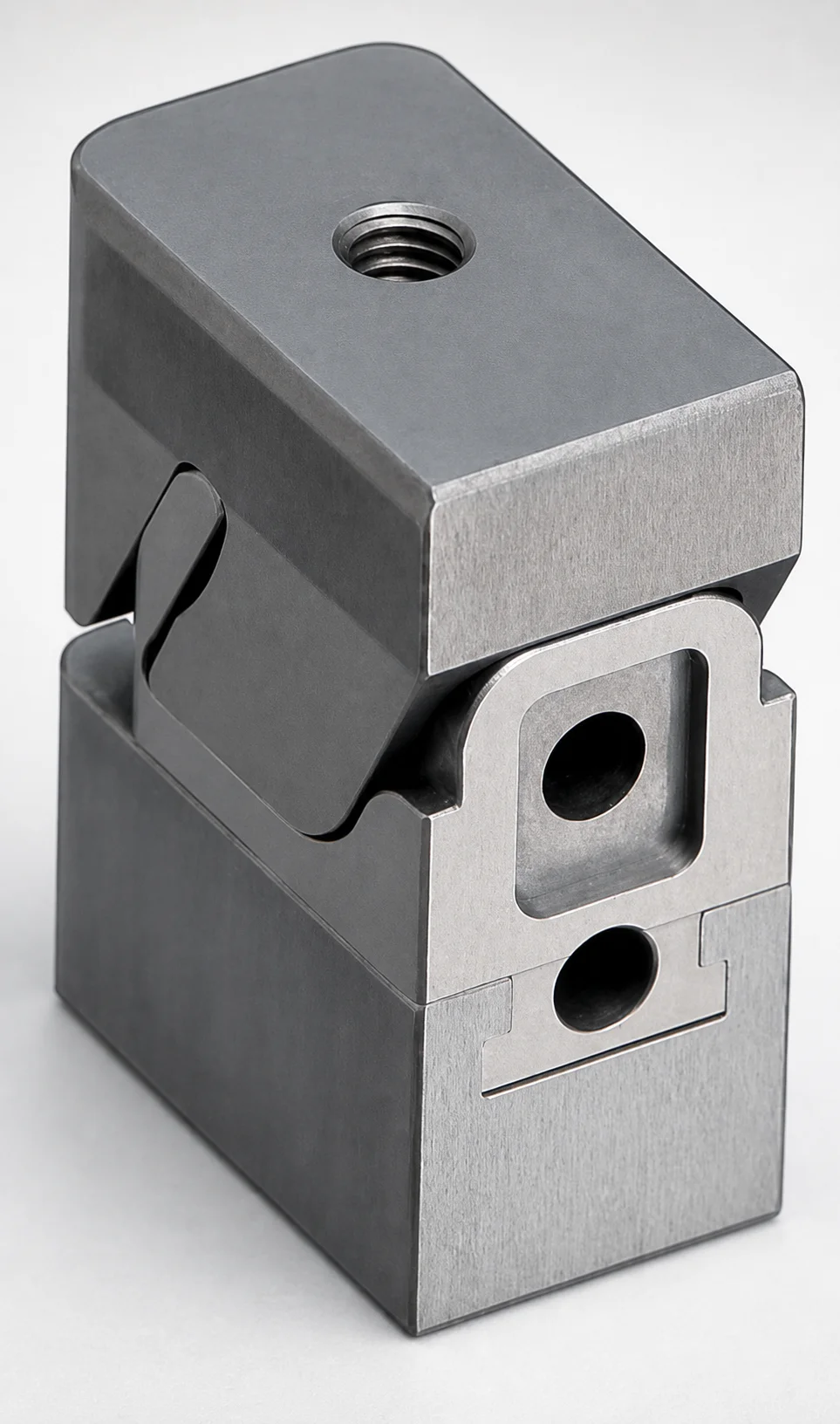
Mini Slide Core Units Slim Slide Core Retractor 6 mm Stroke
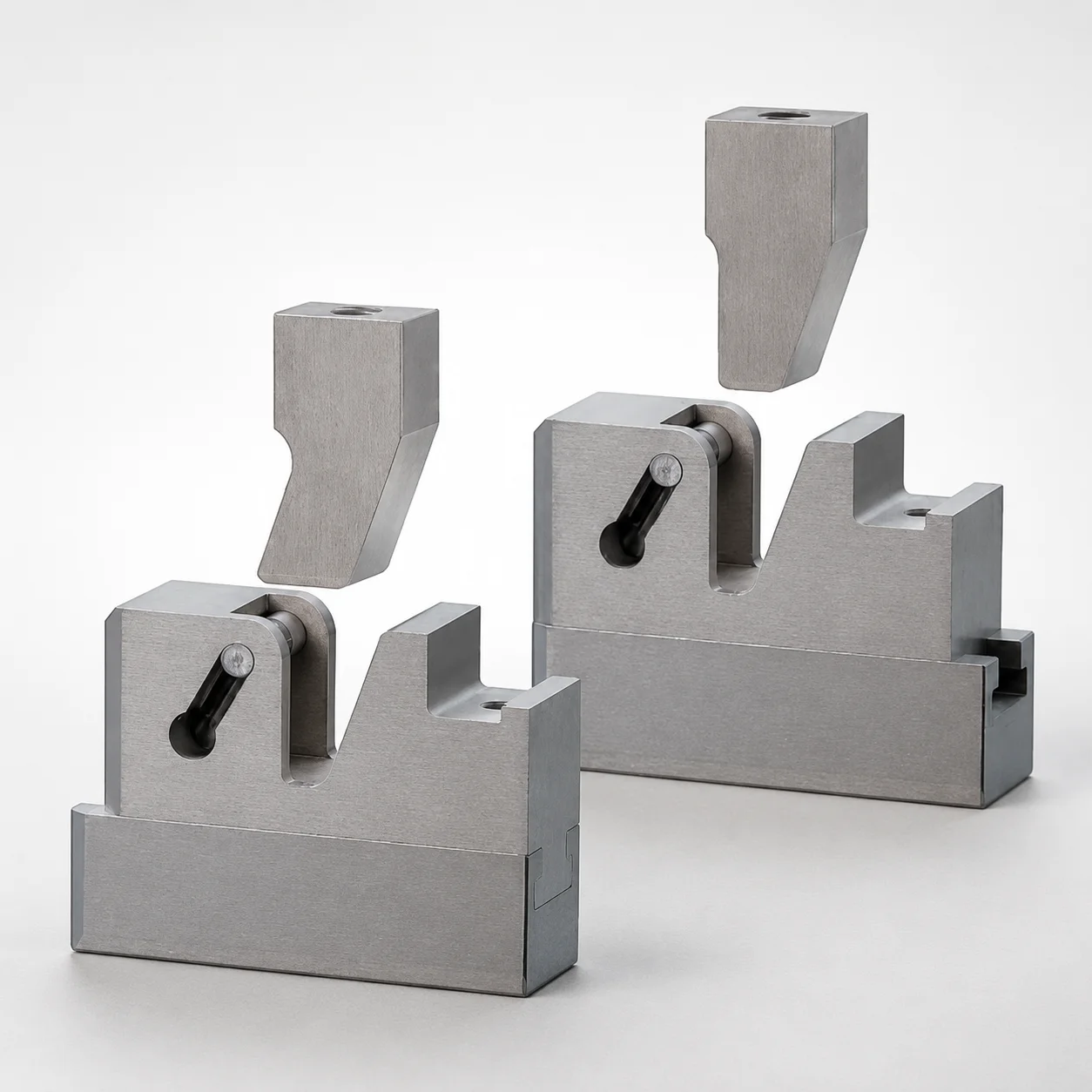
SCTM Two-Color Slide Core Units
Need Custom Specifications?
Our engineering team can help with custom configurations, material selection, and volume pricing.