Guide Rails & Slide Plates
Wear-resistant guidance components ensuring smooth and precise lateral slide movements.
Product Categories
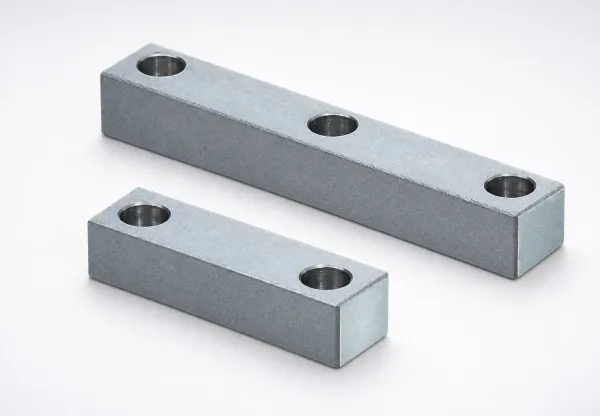
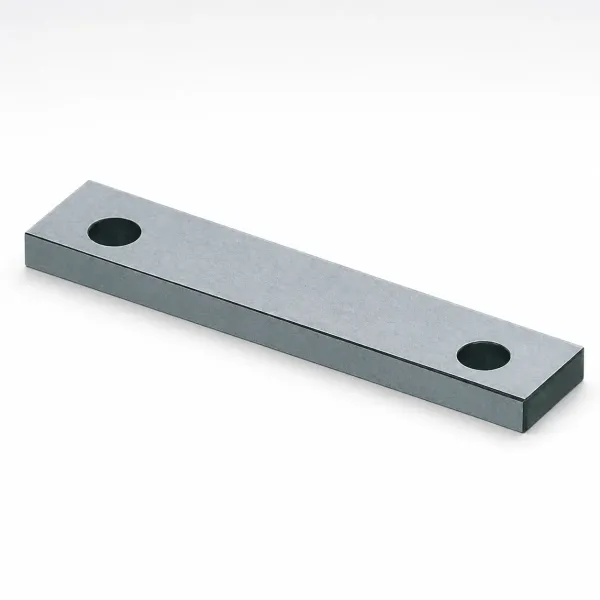
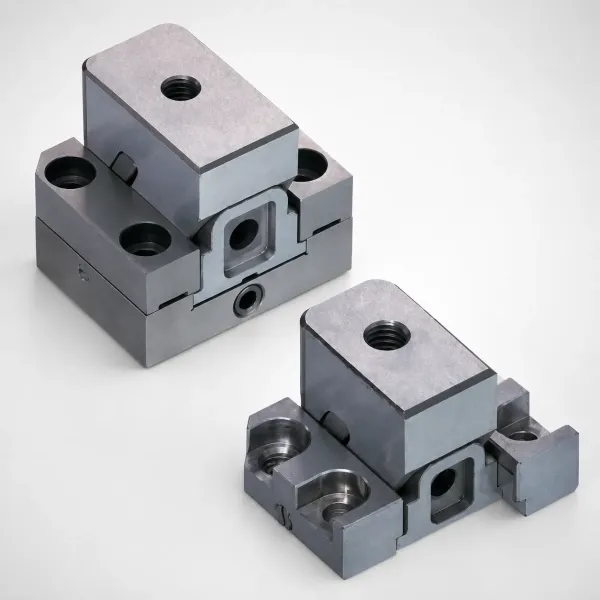
Steel vs Plate vs Oilless Guide Rails
Material selection for guide elements dictates maintenance intervals and operating conditions. Hardened steel offers maximum rigidity, while oilless alloys eliminate the need for grease.
| Dimension | Standard Steel Rails | Hardened Plate Rails | Oilless Copper Alloy Rails |
|---|---|---|---|
| Material | S50C / 1045 Carbon Steel | SKS3 / D2 Tool Steel | High-Tensile Brass + Graphite |
| Hardness | HRC 45-50 (Induction Hardened) | HRC 58-62 | HB 210-250 (Self-Lubricating) |
| Friction Coefficient | 0.15 - 0.20 (With Oil) | 0.10 - 0.15 (With Oil) | 0.08 - 0.12 (Dry) |
| Max Temperature | 150°C | 200°C | 300°C+ (No grease to burn off) |
| Maintenance Interval | Weekly greasing required | Bi-weekly greasing | Virtually zero maintenance |
| Cost Class | $ (Economical) | $$ (Mid-range) | $$$ (Premium) |
| Best For | Low-volume molds, standard slides. | High-volume, heavy sliding loads. | Cleanrooms, medical molds, hard-to-reach slides. |
Guide Rail + Slide Plate Pairing Matrix
Proper assembly of guide rails and plates requires precise alignment and appropriate material pairing to prevent galling during the mold opening sequence.
| Slide Base Material | Recommended Bottom Plate | Recommended Side Rails | Lubrication Requirement |
|---|---|---|---|
| Pre-Hardened Steel (NAK80) | Oilless Copper Alloy | SKS3 Hardened Steel | Dry on bottom, light oil on sides |
| Soft Steel (S50C) | Hardened SKS3 Plate (with grease grooves) | Hardened SKS3 Rails | Heavy grease required on all surfaces |
| Tool Steel (H13) | Oilless Copper Alloy | Oilless Copper Alloy | Completely dry (Cleanroom ready) |
| Aluminum (Proto-molds) | Hardened Steel Plate | Oilless Copper Alloy | Light grease |
How Guide Rail Material Affects Slide Life
Tribology—the science of wear, friction, and lubrication—plays a massive role in slide lifespan. Understanding wear mechanisms helps in specifying the correct guide elements.
Wear Mechanisms & Galling
Galling occurs when two metal surfaces in sliding contact undergo microscopic cold welding. When the weld breaks, it tears metal from one surface, leading to rapid failure. This is why material hardness differentials are critical. Hardened SKS3 steel rails (HRC 58+) paired with a softer base (HRC 40) restrict wear to the softer component, which acts as a sacrificial layer. Oilless alloys bypass this entirely by using dissimilar metals that cannot cold weld to steel.
Friction Dynamics
Static friction is always higher than dynamic friction. When a slide initiates movement, the breakaway force can cause a "stick-slip" phenomenon, leading to chatter and uneven wear. Oilless copper plates with embedded graphite plugs mitigate this because the solid lubricant provides a continuous, extremely low friction film (μ = 0.08) that smooths the transition from static to dynamic movement, even under massive injection pressure loads.
Thermal Behavior
Injection molds run hot. Liquid lubricants thin out and eventually burn off at high temperatures, leaving steel rails unprotected. As steel heats, it expands; if clearances are tight, this leads to binding. Oilless copper alloys dissipate heat faster than steel and rely on solid graphite plugs that do not degrade or evaporate at molding temperatures, making them the superior choice for high-temperature engineered resins.
Frequently Asked Questions
When should I choose oilless slide plates?+
How do you prevent galling between guide rails and slides?+
What is the standard tolerance for guide rails?+
Need a Custom Quote?
Send your specifications and receive a quote. MOQ: 1 piece. Custom dimensions available.