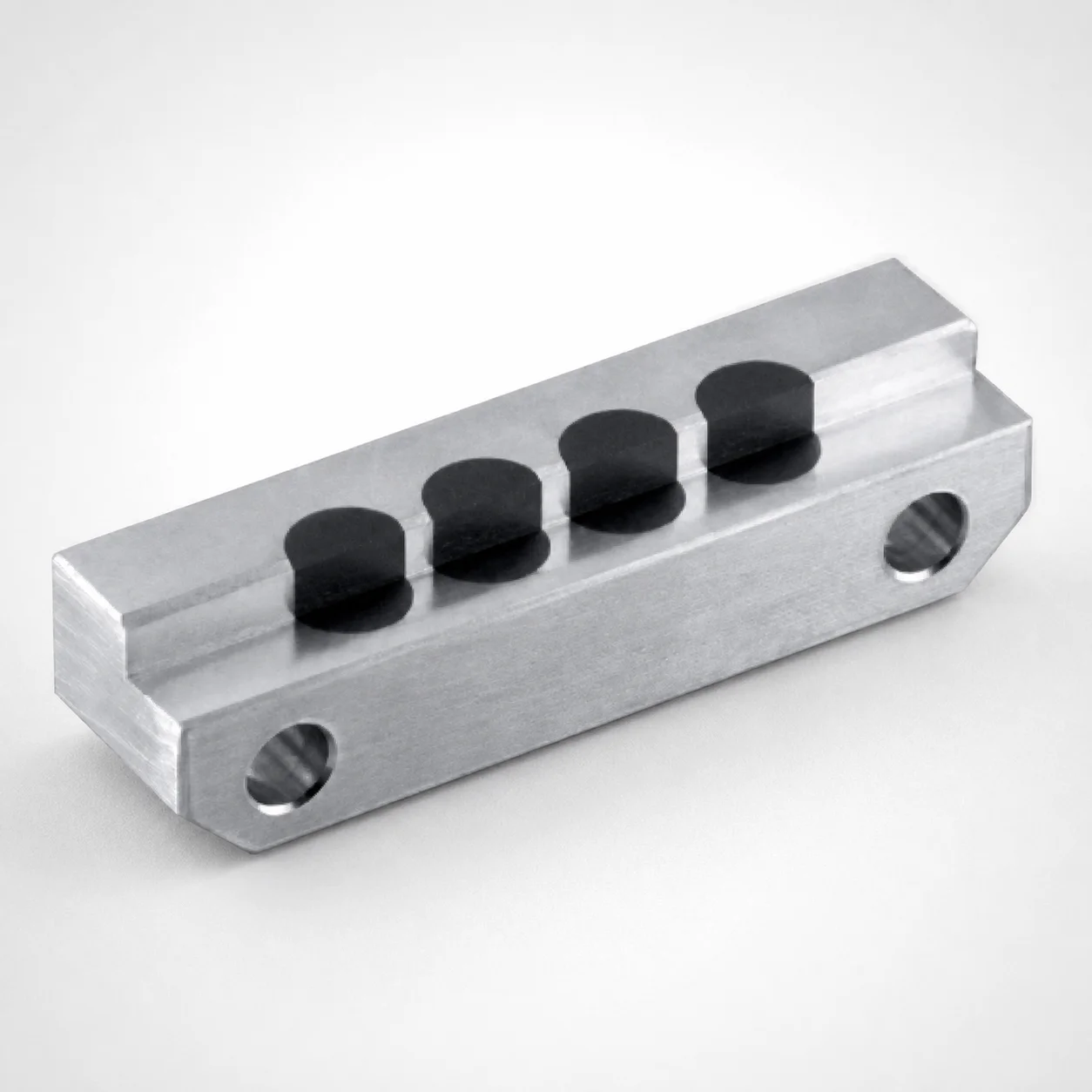
Inch Self-Lubricating L-Gibs for Gib Assembly
Inch self-lubricating L-gibs for gib assembly from DANLY IEM (copper alloy) provide reliable motion guidance with a non-oil groove design that reduces friction and wear in precision machinery.
- One-side groove heel supports stable alignment in gib assemblies
- Non-oil groove, oil-free design helps minimize maintenance and downtime
- Copper alloy guide rail construction improves wear resistance under load
- Designed for demanding industrial environments needing smooth, controlled travel
Specifications
13 configurations available
| Rail width (in) | Rail length (in) | Mounting hole qty. |
|---|---|---|
| 0.75 | 2.00 | 2 |
| 0.75 | 3.00 | 2 |
| 0.75 | 4.00 | 3 |
| 1 | 3.00 | 2 |
| 1 | 4.00 | 3 |
| 1 | 5.00 | 3 |
| 1.255 | 3.00 | 2 |
| 1.255 | 4.00 | 3 |
| 1.255 | 5.00 | 3 |
| 1.255 | 6.00 | 4 |
| 1.5 | 4.00 | 3 |
| 1.5 | 5.00 | 3 |
| 1.5 | 6.00 | 4 |
Product Guide
Application Scenarios+
These inch self-lubricating L-gibs are used as sliding guide components in mold gib assembly systems where controlled undercut and side motion guidance is required. In production molds, they help maintain stable alignment between moving plates and the corresponding gib support surfaces while minimizing stick-slip during repeated strokes.
In automotive connector and housing molds, the non-oil groove, oil-free design supports consistent slide behavior and reduces servicing needs between maintenance intervals, which is valuable for high-cycle molding. The copper alloy construction provides dependable wear performance under sustained, guided load.
They are also suitable for packaging and consumer product tooling that experiences frequent plate movement during part ejection or core actuation. Engineers typically select this variant when they want smooth, low-maintenance travel and reliable alignment support—especially where lubrication management is difficult.
- Non-oil groove design supports low-maintenance motion
- Rail width options (0.75–1.5 in) match common gib assembly geometries
- Mounting hole configurations (2–4 holes) support practical installation on guide plates
Material & Process Details+
The component is specified as a copper alloy construction for the guide rail. Copper alloys are selected in L-gib applications to provide good wear resistance and stable sliding behavior under load, supporting long service life in guided motion interfaces.
This variant is built with a non-oil groove and oil-free design, meaning it is intended to reduce reliance on external lubrication in the sliding contact region. That design choice can lower downtime related to grease/oil handling while helping maintain smoother motion over time.
- Wear resistance: copper alloy improves durability at sliding interfaces.
- Toughness vs. hardness: copper alloys generally balance wear capability with adequate toughness for guide applications (specific HRC is not provided in the given specs).
- Heat treatment: no heat treatment state (e.g., quenched & tempered, nitrided) or hardness (HRC) is specified in the provided data, so selection should rely on documented supplier test reports when required.
Sizing & Selection Guide+
Select dimensions by matching the rail geometry to the gib assembly guide plate and the mating L-gib pocket. The available rail width options are 0.75, 1.0, 1.255, and 1.5 in, so choose the width that matches the groove/seat width in your moving or fixed plate.
Then match the rail length to the required travel coverage in the mold. Available lengths are 2.00, 3.00, 4.00, 5.00, and 6.00 in; use the length that fully spans the effective sliding/contact travel zone to reduce edge loading.
- Mounting hole qty.: choose 2, 3, or 4 holes to match your gib/slide plate bolt pattern.
- Fit & tolerance: confirm clearance for the sliding interface and fastener alignment with the mating gib assembly drawing; the provided data does not specify tolerances, so use your mold standard tolerancing for the guide track.
- Fixed vs. configurable: rail width and length are fixed within the listed discrete options; you select among predefined configurations rather than custom dimensions.
Frequently Asked Questions
Which rail width should I select for an L-gib gib assembly with a given guide track?+
Choose from the available rail width options: 0.75, 1.0, 1.255, or 1.5 in. Match the width to the seating/gib pocket width in your guide plate to ensure stable alignment during sliding. If your drawing allows multiple widths, verify clearance and contact area before final selection.
How do I determine the correct rail length for the sliding contact travel in the mold?+
Select the rail length from 2.00, 3.00, 4.00, 5.00, or 6.00 in. Use the length that covers the full effective motion zone where contact occurs to avoid edge loading at stroke extremes. Confirm that the length aligns with the moving plate overlap throughout the cycle.
Is the oil-free/non-oil groove design compatible with my current lubrication strategy?+
This variant is specified with a non-oil groove and oil-free design, which is intended to reduce dependence on external oil in the sliding region. If your current mold uses centralized lubrication, you can typically reduce or simplify application on this interface, but you should still validate performance against your duty cycle. Lubrication compatibility depends on the mating surfaces and maintenance plan.
What mounting hole count options are available, and how should they be matched to the slide plate?+
The component offers 2, 3, or 4 mounting hole quantity options. Match the hole count to the bolt pattern on your gib assembly/guide rail slide plate. Because the provided data does not include hole spacing dimensions, use your plate drawing to confirm alignment and fastener placement.
Do you provide hardness (HRC) or heat treatment information for this copper alloy L-gib?+
The provided specifications indicate copper alloy construction with a non-oil groove oil-free design, but they do not list a heat treatment state or hardness (HRC). If your design requires a specific hardness target or surface condition, request the detailed material certificate and processing/heat treatment documentation from the supplier. Base selection on the documented test data for wear and compatibility with your mating guide surfaces.
Related Products
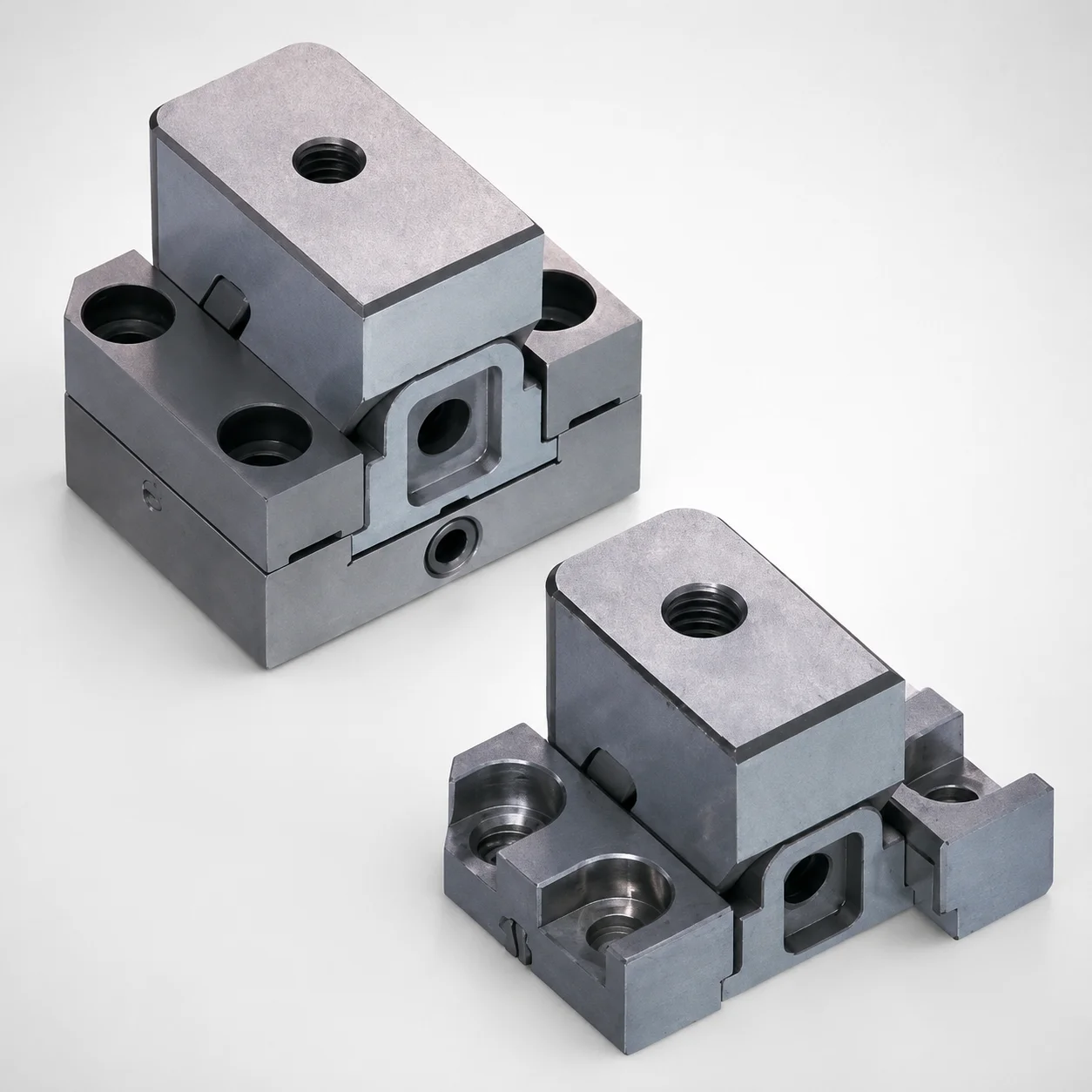
Standard Type Mini Slide Core Units
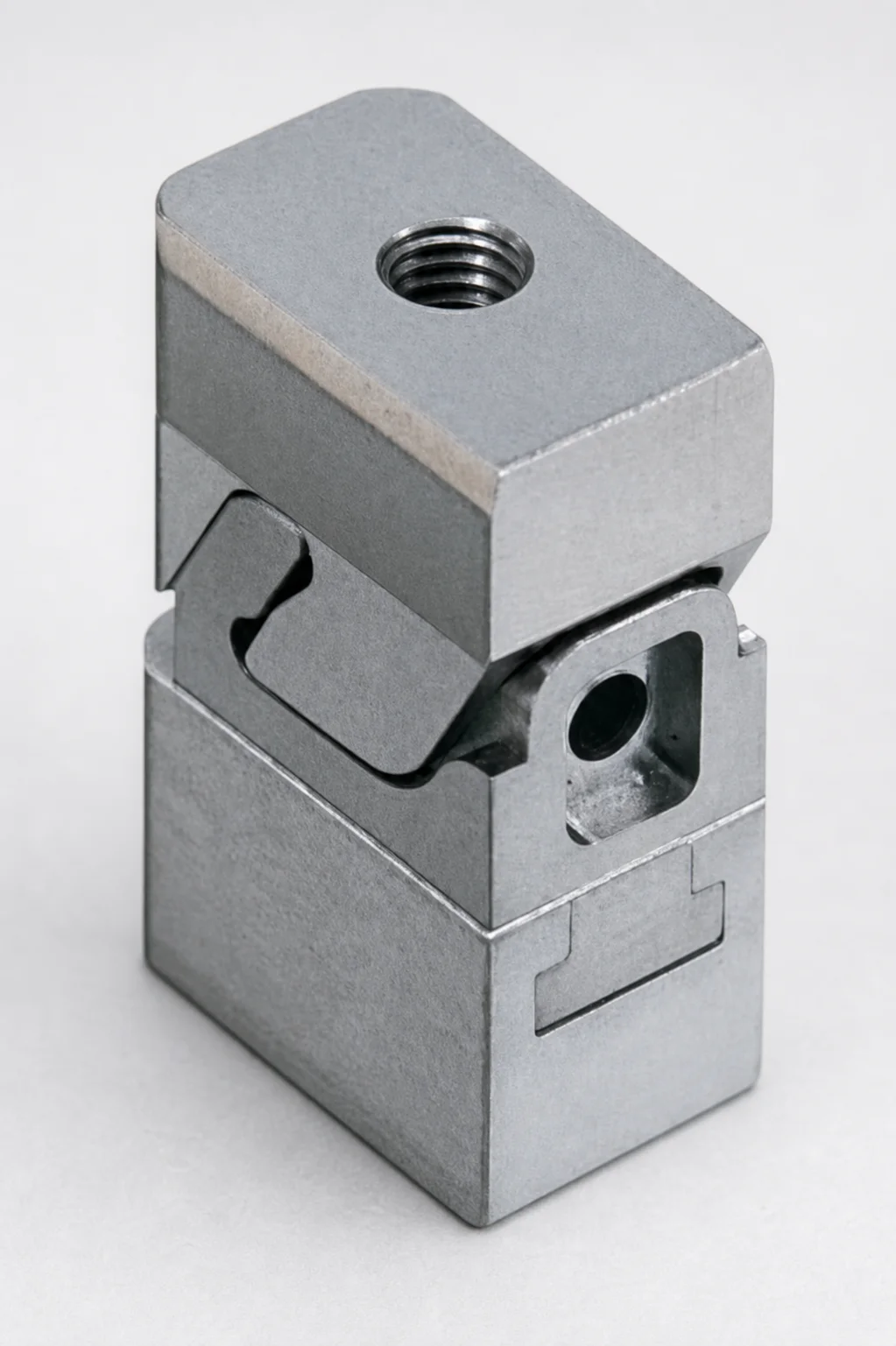
Mini Slide Core Units Slim Type (3 mm Stroke) for Inlay Tapped MSCS-Type
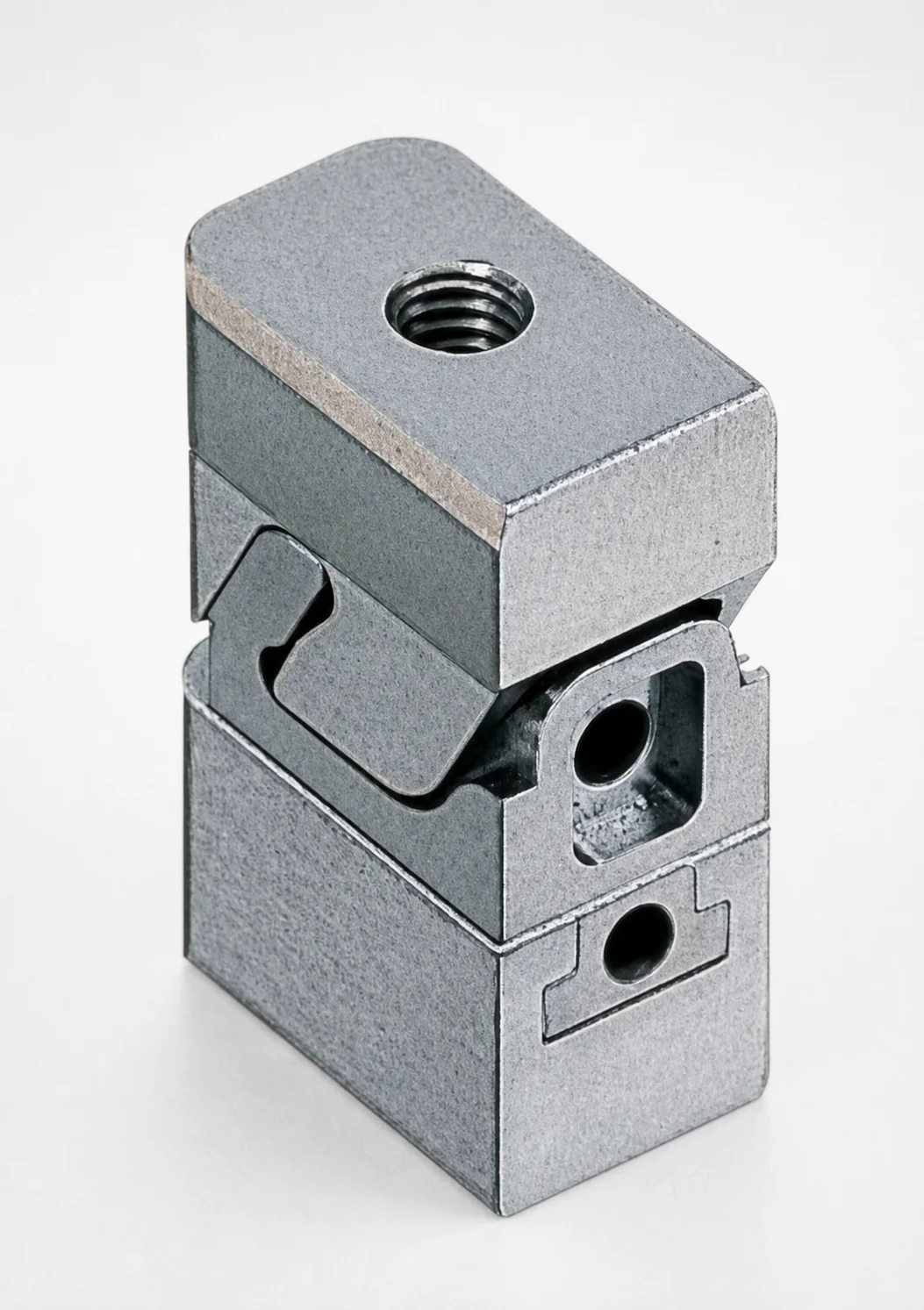
Mini Slide Core Units Slim Slide Stroke 3 mm Retractor Mechanism
Mini Slide Core Units Slim Slide Stroke 10 mm Retracting Mechanism
Mini Slide Core Units Slim Slide Core Retractor 6 mm Stroke
SCTM Two-Color Slide Core Units
Need Custom Specifications?
Our engineering team can help with custom configurations, material selection, and volume pricing.