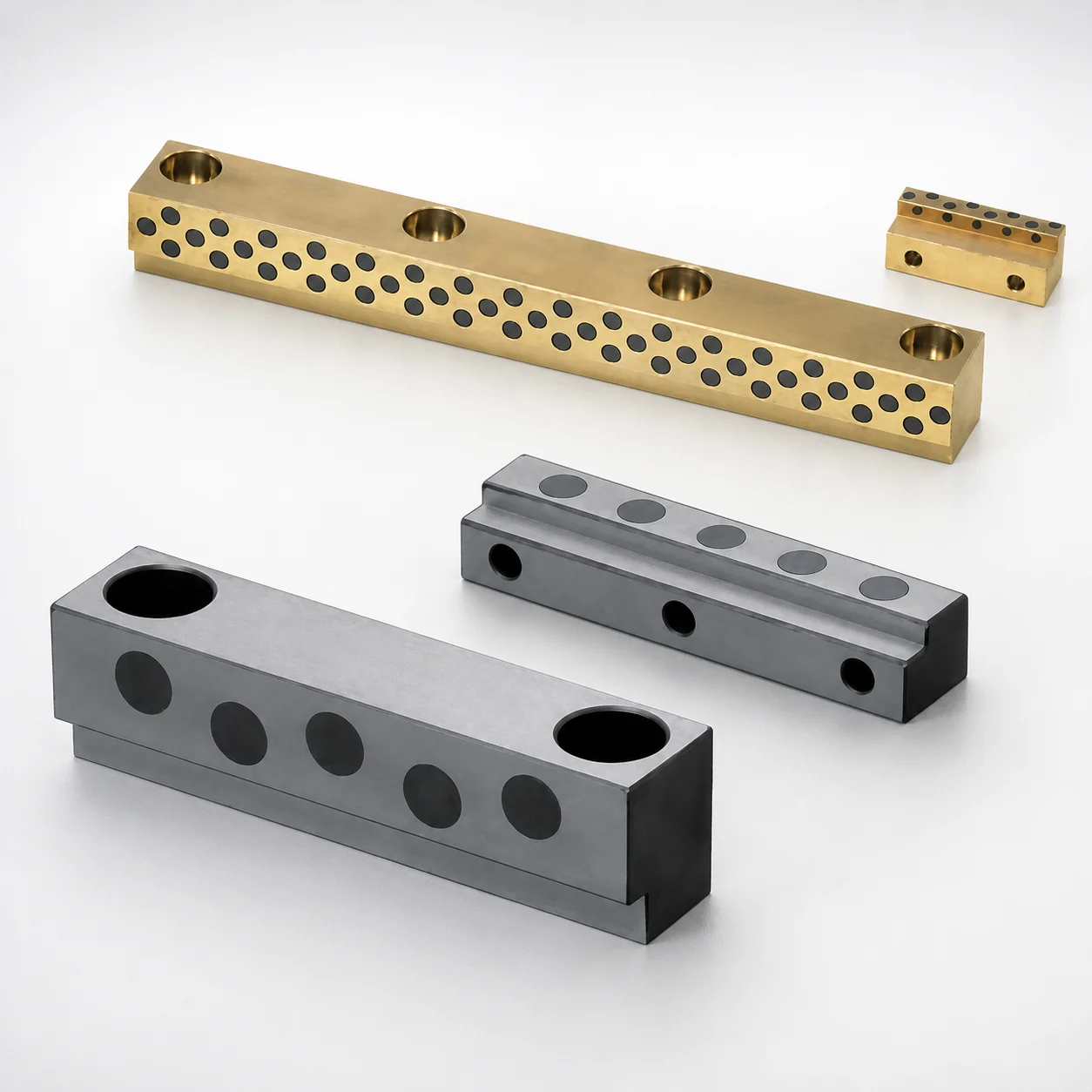
SKS3 Steel Oil-Free Heel Guide Rails (No Groove) - 8 mm Heel
Oil-free heel guide rails (SKS3 steel) deliver controlled, clean linear motion with a no groove heel design and 8 mm heel height to suit oil-sensitive machine layouts.
- No-groove heel minimizes oil-related contamination while keeping rail alignment stable
- SKS3 tool steel construction supports durable wear performance in guide applications
- Compatibility with common mounting hole configurations for practical retrofit and installation
- Typical use: CNC slides, tooling systems, and self-lubricating linear guidance assemblies
Specifications
134 configurations available
| Material | Rail Thickness T (mm) | Rail Width W (mm) | Rail Length L (mm) | No. of mounting holes (pieces) | type |
|---|---|---|---|---|---|
| SKS3 | 20 ~ 25 | 15 | 40 ~ 130 | - | - |
| SKS3 | 20 ~ 30 | 20 | 60 ~ 130 | - | - |
| Copper alloy | 15 | 12.5 | 40 | 2 | - |
| Copper alloy | 15 | 12.5 | 50 | 3 | - |
| Copper alloy | 15 | 12.5 | 60 | 3 | - |
| Copper alloy | 15 | 12.5 | 70 | 3 | - |
| Copper alloy | 15 | 12.5 | 80 | 4 | - |
| Copper alloy | 15 | 12.5 | 90 | 4 | - |
| Copper alloy | 15 | 12.5 | 100 | 4 | - |
| Copper alloy | 20 | 12.5 | 40 | 2 | - |
| Copper alloy | 20 | 12.5 | 50 | 3 | - |
| Copper alloy | 20 | 12.5 | 60 | 3 | - |
| Copper alloy | 20 | 12.5 | 70 | 3 | - |
| Copper alloy | 20 | 12.5 | 80 | 4 | - |
| Copper alloy | 20 | 12.5 | 90 | 4 | - |
| Copper alloy | 20 | 12.5 | 100 | 4 | - |
| Copper alloy | 15 | 15 | 40 | 2 | - |
| Copper alloy | 15 | 15 | 50 | 2 | - |
| Copper alloy | 15 | 15 | 60 | 2 | - |
| Copper alloy | 15 | 15 | 70 | 3 | - |
| Copper alloy | 15 | 15 | 80 | 3 | - |
| Copper alloy | 15 | 15 | 90 | 3 | - |
| Copper alloy | 15 | 15 | 100 | 3 | - |
| Copper alloy | 15 | 15 | 110 | 3 | - |
| Copper alloy | 15 | 15 | 120 | 4 | - |
| Copper alloy | 15 | 15 | 130 | 4 | - |
| Copper alloy | 15 | 15 | 140 | 4 | - |
| Copper alloy | 15 | 15 | 150 | 4 | - |
| Copper alloy | 20 | 15 | 40 | 2 | - |
| Copper alloy | 20 | 15 | 50 | 2 | - |
| Copper alloy | 20 | 15 | 60 | 2 | - |
| Copper alloy | 20 | 15 | 70 | 3 | - |
| Copper alloy | 20 | 15 | 80 | 3 | - |
| Copper alloy | 20 | 15 | 90 | 3 | - |
| Copper alloy | 20 | 15 | 100 | 3 | - |
| Copper alloy | 20 | 15 | 110 | 3 | - |
| Copper alloy | 20 | 15 | 120 | 4 | - |
| Copper alloy | 20 | 15 | 130 | 4 | - |
| Copper alloy | 20 | 15 | 140 | 4 | - |
| Copper alloy | 20 | 15 | 150 | 4 | - |
| Copper alloy | 25 | 15 | 40 | 2 | - |
| Copper alloy | 25 | 15 | 50 | 2 | - |
| Copper alloy | 25 | 15 | 60 | 2 | - |
| Copper alloy | 25 | 15 | 70 | 3 | - |
| Copper alloy | 25 | 15 | 80 | 3 | - |
| Copper alloy | 25 | 15 | 90 | 3 | - |
| Copper alloy | 25 | 15 | 100 | 3 | - |
| Copper alloy | 25 | 15 | 110 | 3 | - |
| Copper alloy | 25 | 15 | 120 | 4 | - |
| Copper alloy | 25 | 15 | 130 | 4 | - |
Product Guide
Application Scenarios+
This oil-free heel guide rail is used inside injection mold slide and undercut tooling to provide stable, clean linear guidance when contact contamination must be minimized. The no-groove heel design helps reduce oil carryover while maintaining consistent alignment through repeated cycling.
Typical scenarios include automotive connector and bracket molds where guide rails operate near appearance-critical surfaces and residue control is important. The 8 mm heel height supports controlled engagement with corresponding slide components for predictable motion.
It is also suited for electronics and optical housing tooling where compact, reliable motion guidance helps prevent debris migration into fine features. In addition, for maintenance-friendly retrofit assemblies, the available mounting hole counts (2, 3, 4) and the range of rail thickness and length simplify integration into existing guide-plate layouts.
- Oil-sensitive machine layouts: reduced contamination risk via no-groove heel
- Durable slide guidance: tool-steel construction supports long service in guide applications
- Practical mounting options: multiple hole configurations for installation flexibility
Material & Process Details+
The standard variant uses SKS3 steel, a tool steel selected for slide and guide applications requiring good wear performance under repeated sliding contact. For alternative configurations, the product is also available in a copper alloy option, which can be chosen when the application benefits from copper-alloy tribological characteristics.
Since the specification list specifies material choices but does not provide hardness or heat-treatment data, the exact HRC and heat-treatment state (e.g., quenched & tempered or nitrided) must be confirmed for the specific SKU you select. In general design trade-offs are:
- SKS3 steel: typically prioritized for wear resistance and dimensional stability in guide rails
- Copper alloy: may be considered where sliding behavior and compatibility are critical, but wear/toughness balance differs from tool steels
Confirm the selected grade’s hardness and treatment in your quotation for final wear and toughness expectations.
Sizing & Selection Guide+
Select rail dimensions by matching the thickness (T), width (W), and length (L) to the mating guide-plate / slide pocket geometry and the required stroke travel. This rail supports T = 15 ~ 35 mm, W = 15, 20, 12.5, or 25 mm, and L = 40 ~ 200 mm, so choose the closest match to minimize gaps and uneven load distribution.
For positioning, align the mounting hole count (2, 3, or 4 pieces) with your mold base or slide bracket pattern. When retrofitting, ensure the hole pattern corresponds to the existing fastener layout to avoid re-machining.
- Match T to the guide slot depth to maintain proper heel engagement
- Match W to the bearing surface width to control contact pressure
- Match L to cover the functional travel zone without overhang that can interfere with nearby components
Tolerance and fit requirements are application-specific; base alignment and fastener clearance should be verified against your guide-plate machining tolerances and the intended mounting method.
Frequently Asked Questions
Which material option (SKS3 steel vs copper alloy) is better for oil-free guide performance in injection mold slides?+
The specification lists two material variants: SKS3 and a copper alloy option. SKS3 steel is selected for tool-like wear and dimensional stability in guide rails, while copper alloy may be chosen for its tribological compatibility in sliding contacts. Since hardness and heat-treatment state are not provided in the available data, confirm the treated condition and target HRC for your expected load and cycling.
How do I choose the correct rail thickness T for a given guide-plate pocket depth?+
Use the available thickness range T = 15 ~ 35 mm to match your guide pocket depth and maintain proper heel engagement. Select the value that provides full contact on the intended bearing surfaces without creating excessive clearance. Re-check mounting geometry and the corresponding heel height relationship in your slide assembly.
What rail width options are available, and how does rail width affect contact pressure on mating slide components?+
The listed rail width options are W = 15, 20, 12.5, or 25 mm. Wider rails generally increase bearing area and can reduce localized contact pressure, but they must fit within the available slide/guide envelope. Choose the width that balances space constraints with the desired load distribution for your mold mechanism.
How should I select rail length L to match stroke travel without interference?+
Rail length is specified as L = 40 ~ 200 mm. Size the rail to cover the functional portion of the slide travel where guidance is required, and avoid excessive overhang that could interfere with nearby components at end-of-stroke. Validate clearance against the full motion envelope of the slide and any adjacent undercut tooling.
How do I ensure compatibility with my existing mounting hole pattern when using this oil-free heel guide rail?+
This rail is offered with 2, 3, or 4 mounting hole counts. Select the hole count that matches your current bracket or guide-plate layout; otherwise you may need additional machining. Before final assembly, verify that hole positions align with your fasteners and that the rail seats correctly in the guide area.
Related Products
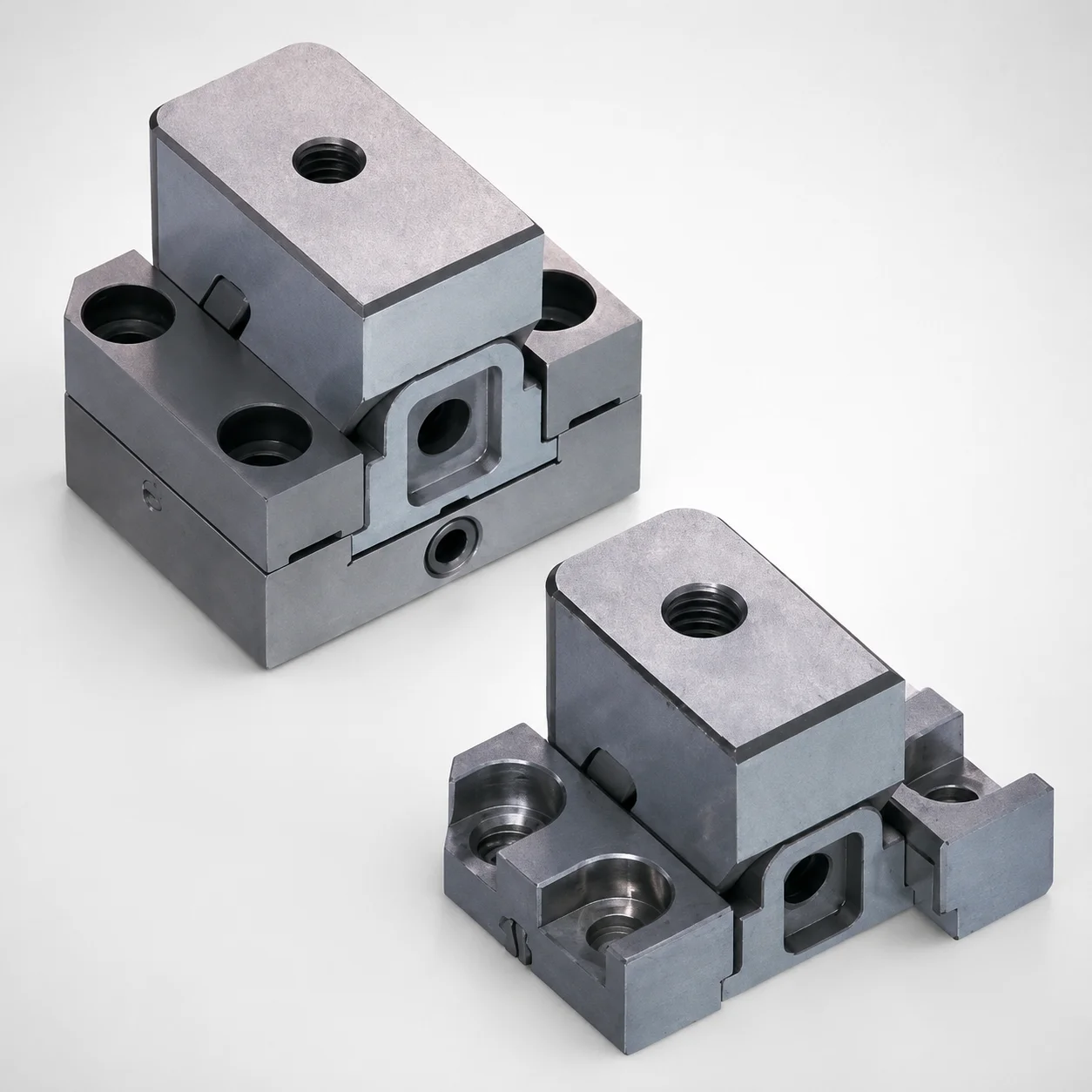
Standard Type Mini Slide Core Units
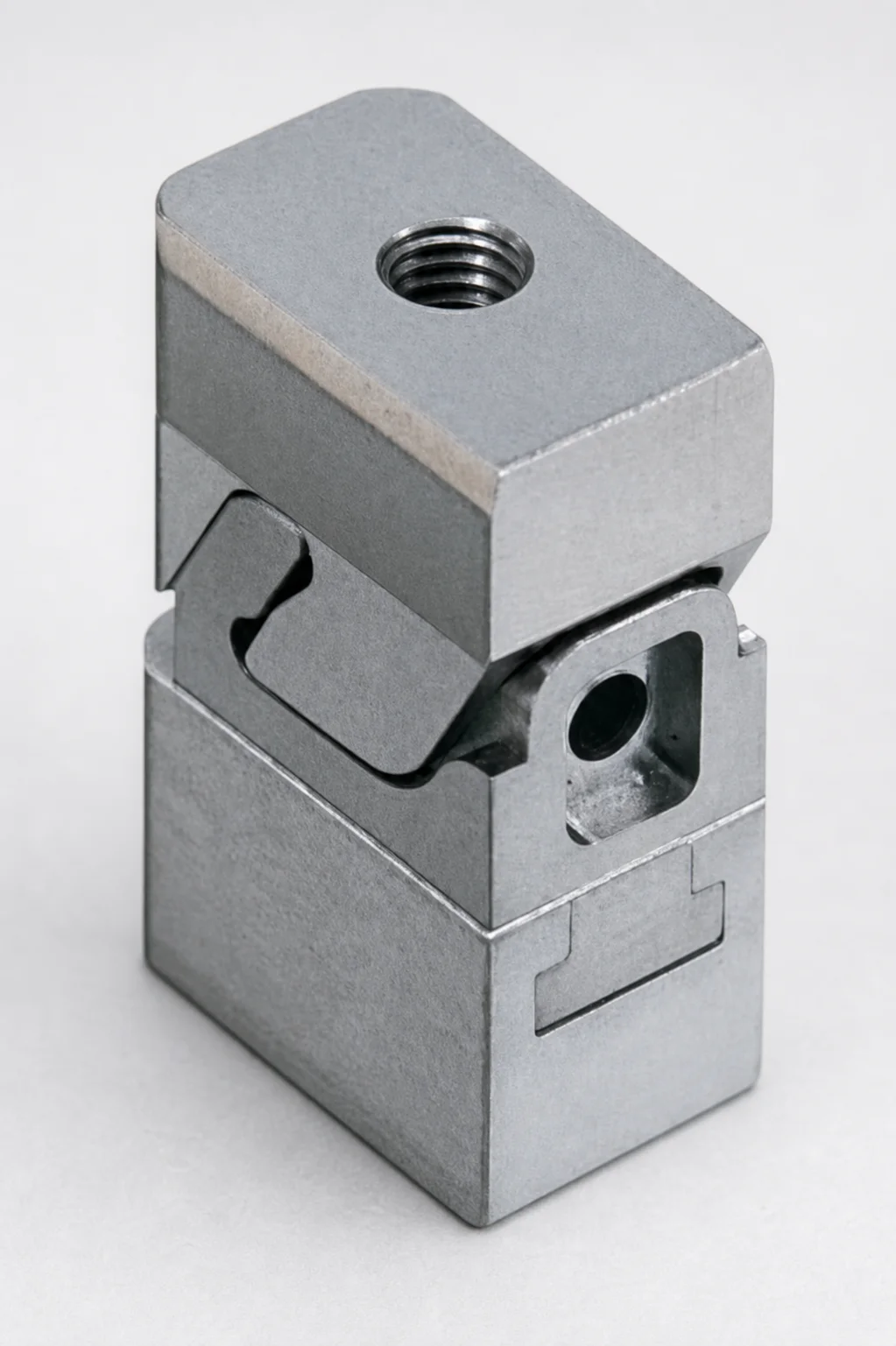
Mini Slide Core Units Slim Type (3 mm Stroke) for Inlay Tapped MSCS-Type
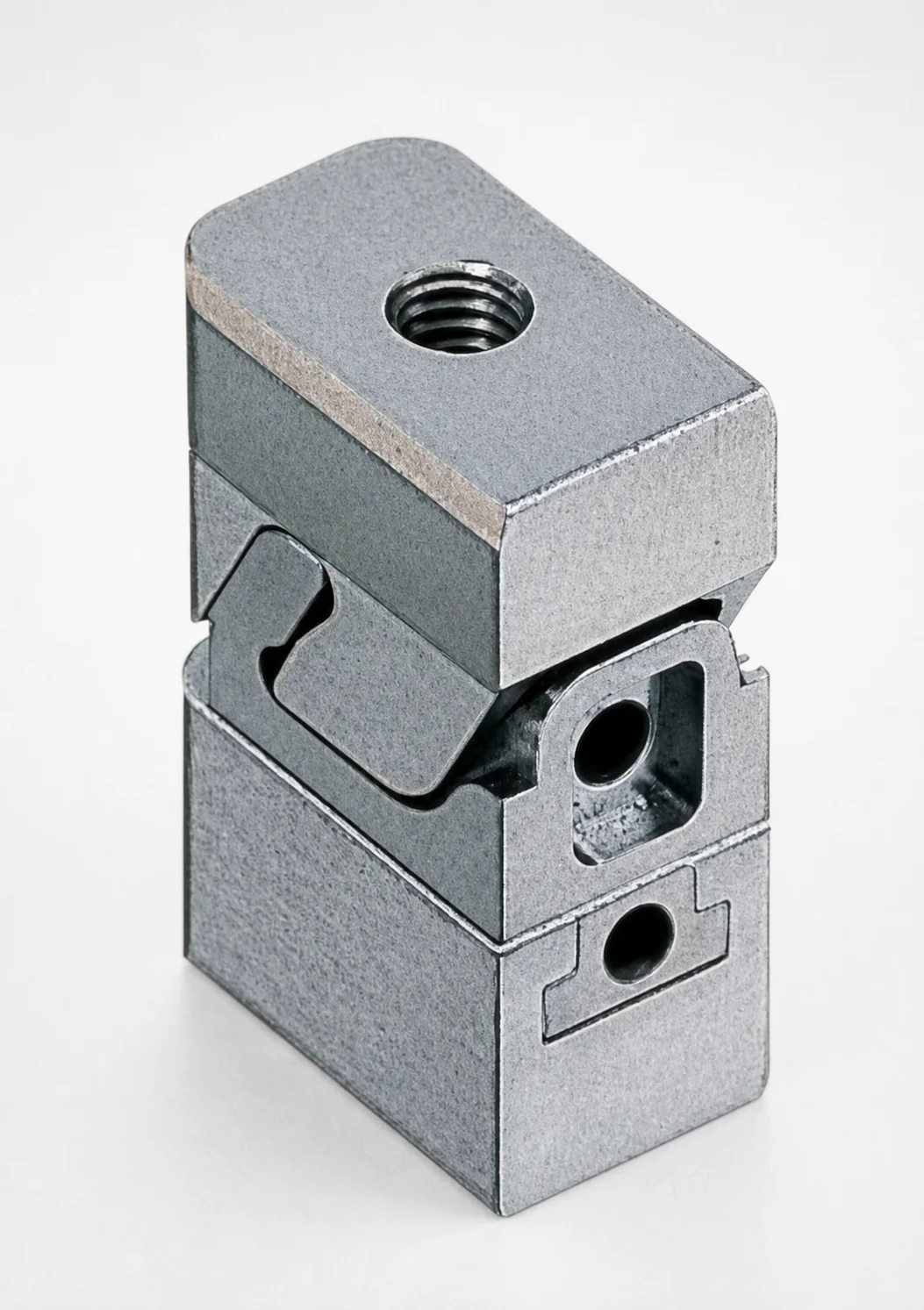
Mini Slide Core Units Slim Slide Stroke 3 mm Retractor Mechanism
Mini Slide Core Units Slim Slide Stroke 10 mm Retracting Mechanism
Mini Slide Core Units Slim Slide Core Retractor 6 mm Stroke
SCTM Two-Color Slide Core Units
Need Custom Specifications?
Our engineering team can help with custom configurations, material selection, and volume pricing.