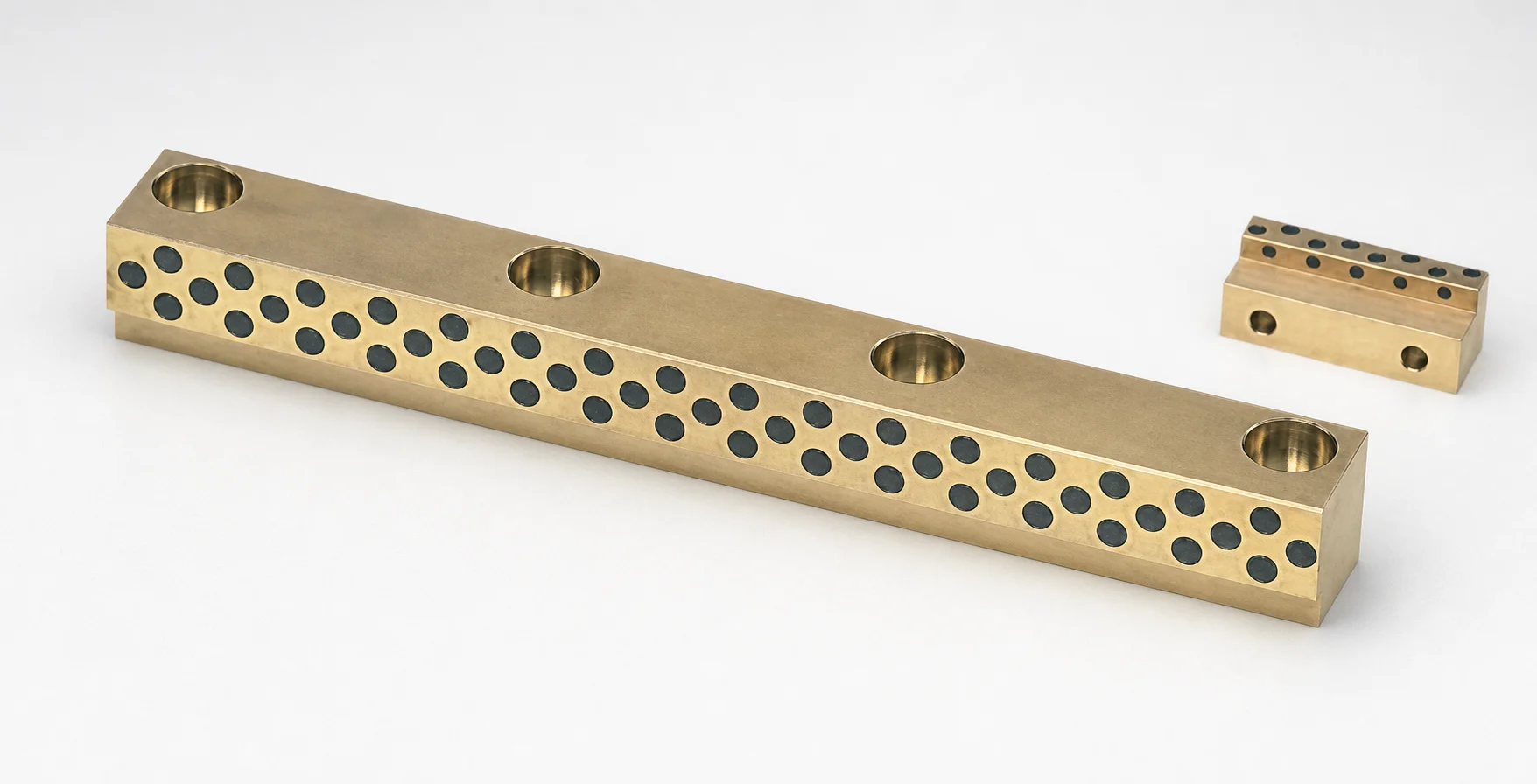
Oil-Free Heel Guide Rails Flat Heel Copper Alloy
Oil-Free Heel Guide Rails (copper alloy) use a flat, no-groove heel design to support smooth, low-maintenance sliding. Built for reliable positioning when oil lubrication is undesired in the equipment.
- Flat heel, no groove rail profile helps maintain stable guidance and alignment
- Copper alloy construction provides good wear behavior under repetitive sliding conditions
- Configurable bolt-hole pitch supports easier installation and consistent mounting layout
- Typical fit for compact guide rail assemblies in machine tool and industrial slide mechanisms
Specifications
16 configurations available
| Rail Width W (mm) | No. of mounting holes (pieces) | type |
|---|---|---|
| 12.5 | 2 | - |
| 15 | 2 | - |
| 20 | 2 | - |
| 25 | - | - |
| 12.5 | 3 | - |
| 15 | 3 | - |
| 15 | 3 | - |
| 20 | 3 | - |
| 20 | 3 | - |
| 25 | - | - |
| 25 | - | - |
| 12.5 | 4 | - |
| 15 | 4 | - |
| 15 | 4 | - |
| 20 | 4 | - |
| 25 | - | - |
Product Guide
Application Scenarios+
These oil-free heel guide rails are used in injection mold tooling wherever a compact sliding support is required and lubricant contamination must be minimized. The flat, no-groove heel geometry promotes stable guidance and consistent alignment along the slide path, helping reduce stick-slip behavior during repeated actuation.
Automotive connector and bracket molds: In mechanisms that position small runner gates or small moving inserts, oil-free operation helps keep parts and mold cavities cleaner, especially when fine texture or tight surface appearance is required.
Medical device housing molds: For molds used on tight-cleanliness production lines, the copper-alloy rail supports smooth, low-maintenance sliding without relying on oil reservoirs that can spread contaminants.
Industrial machine tool slide assemblies: The rails’ configurable bolt-hole pitch supports easier integration into existing mounting patterns, improving repeatability of installation in precision slide mechanisms.
Overall, the copper alloy build is suited to repetitive sliding wear conditions while maintaining reliable positioning when oil lubrication is undesired.
Material & Process Details+
This guide rail uses a copper alloy build, selected for its favorable wear behavior during repetitive sliding and for stable performance in oil-free guidance applications. In these rail systems, copper-alloy surfaces can better tolerate boundary lubrication conditions or dry operation where conventional oil films are not desired.
Wear vs. toughness: Copper alloys typically emphasize tribological performance (lower friction behavior and good sliding wear) rather than maximum impact toughness; designs that avoid shock loading benefit the most.
Heat treatment: The provided data does not specify a particular heat treatment state (e.g., quench & temper, nitriding). When your application involves high contact stress or temperature extremes, confirm the supplier’s exact material condition for the specific SKU.
Because no hardness (HRC) or steel-grade equivalency is listed, hardness and HRC-based selection should be validated against the intended contact pressure and duty cycle for the guide system.
Sizing & Selection Guide+
Select rail size by matching the rail width W and the number of mounting holes to your mold slide/guide-plate design. The available rail widths are 12.5, 15, 20, and 25 mm, which should be chosen to align with the heel support area and clearance constraints in your moving component.
Choose W (mm): Use the rail width that best fits the guide interface width in your slide plate or undercut support area.
Choose mounting holes: The rails are offered in 2, 3, or 4 mounting holes to match your mounting layout and to maintain proper fastening stiffness.
Pitch and alignment: The design supports configurable bolt-hole pitch, so match the hole spacing to your existing mounting pattern to ensure correct alignment and reduce rework during assembly.
Tolerance and fit requirements are not provided in the input data; therefore, verify clearances and fastening tolerances in your CAD for your specific guide rail system to ensure smooth motion without binding.
Frequently Asked Questions
Which rail width (W) should I use for my guide-rail slide plate interface?+
How do the available mounting hole counts (2/3/4) affect alignment in a mold slide mechanism?+
Is this rail suitable for oil-free operation in molds requiring cleanliness control?+
Does the product provide groove-free (no-groove) contact to improve stability during sliding?+
What material condition, hardness (HRC), or heat treatment should I assume for wear calculations?+
Related Products
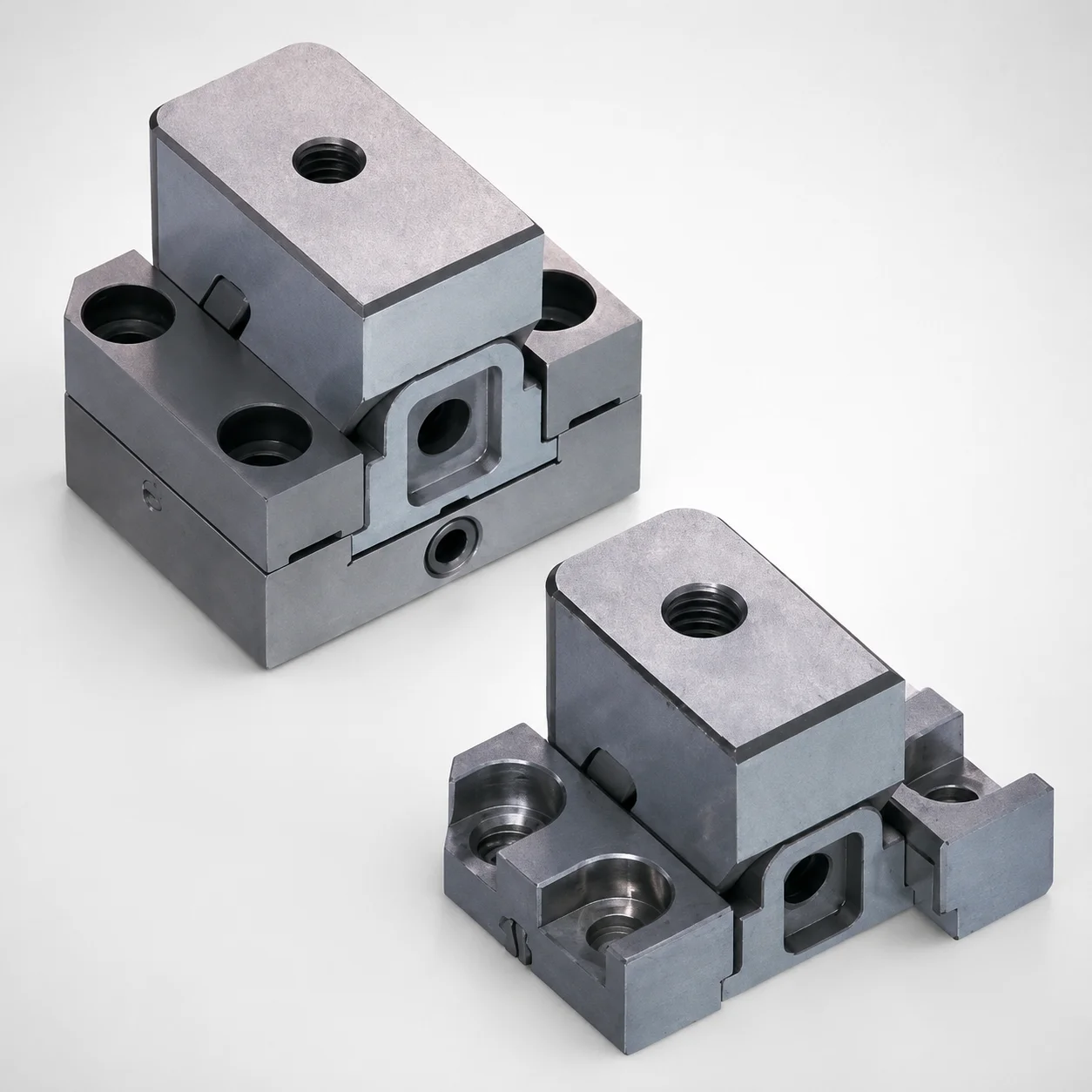
Standard Type Mini Slide Core Units
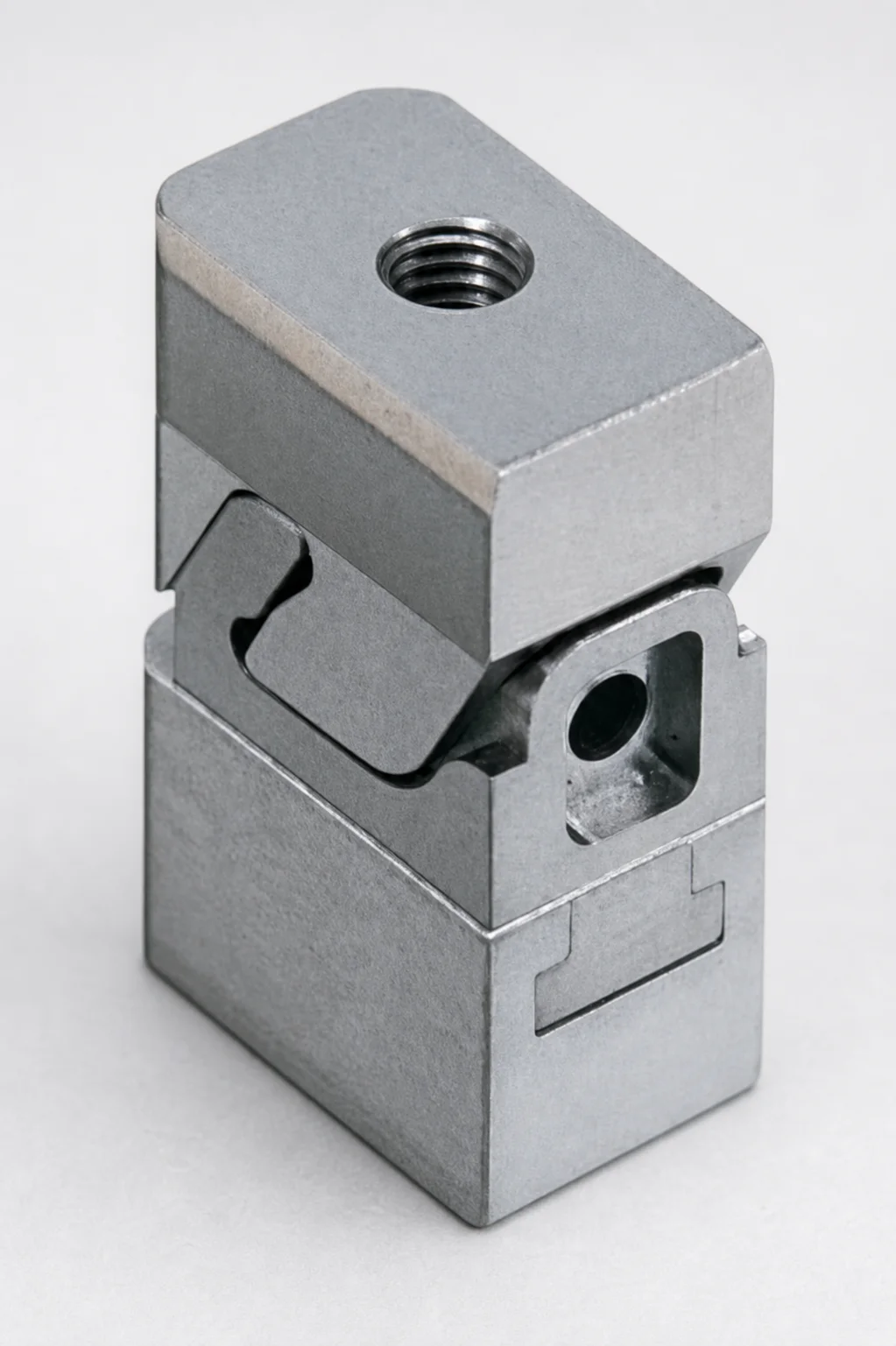
Mini Slide Core Units Slim Type (3 mm Stroke) for Inlay Tapped MSCS-Type
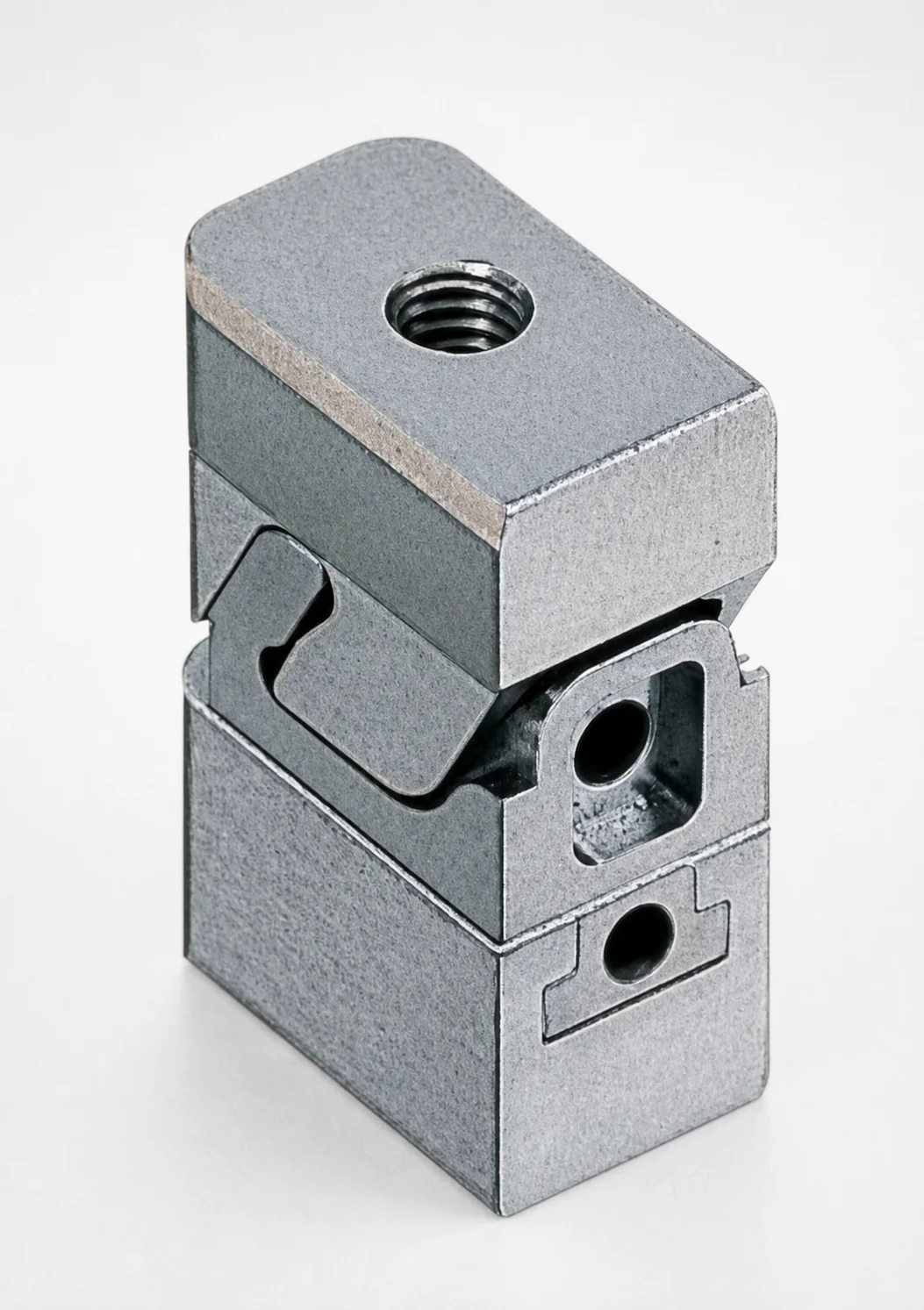
Mini Slide Core Units Slim Slide Stroke 3 mm Retractor Mechanism
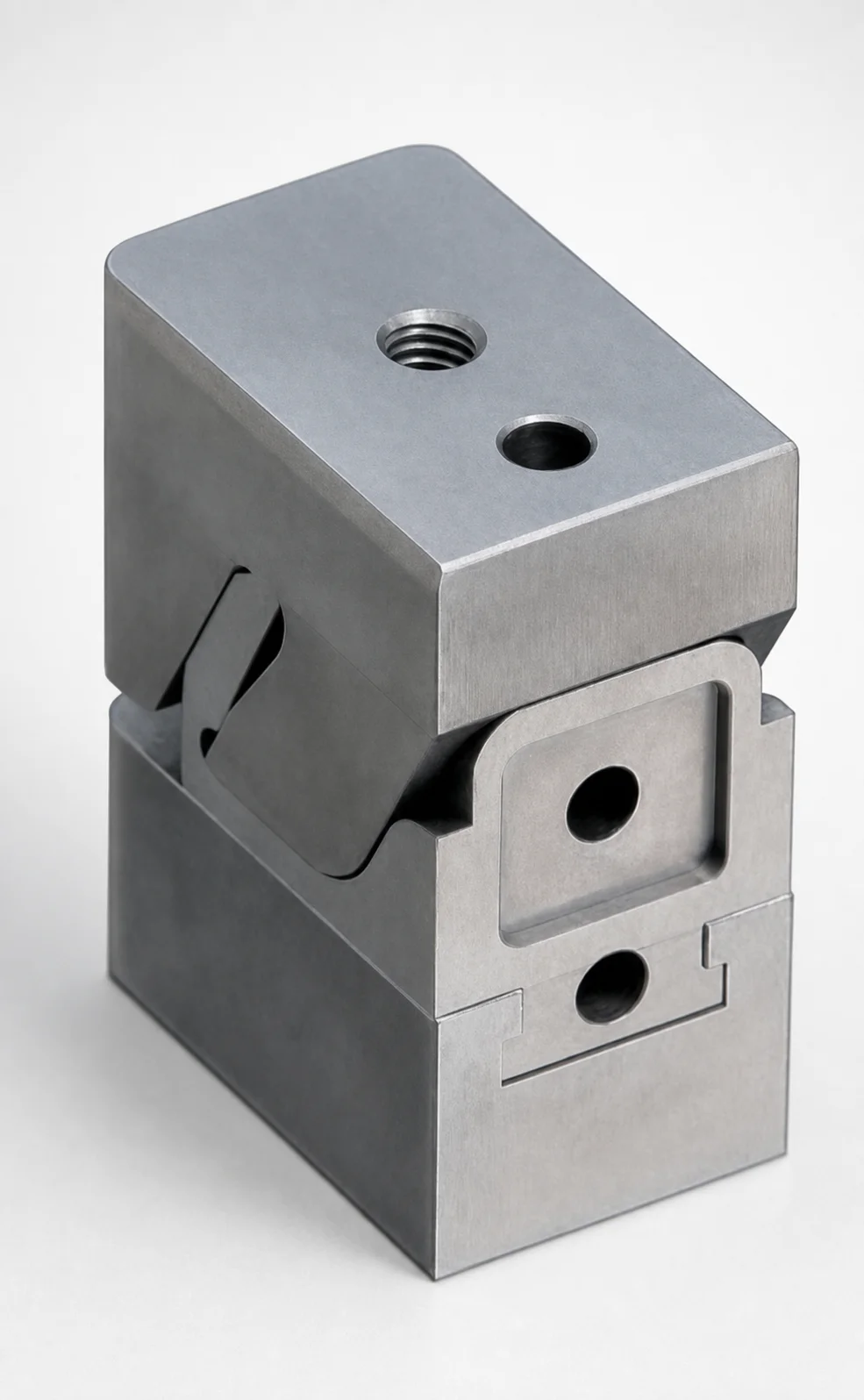
Mini Slide Core Units Slim Slide Stroke 10 mm Retracting Mechanism
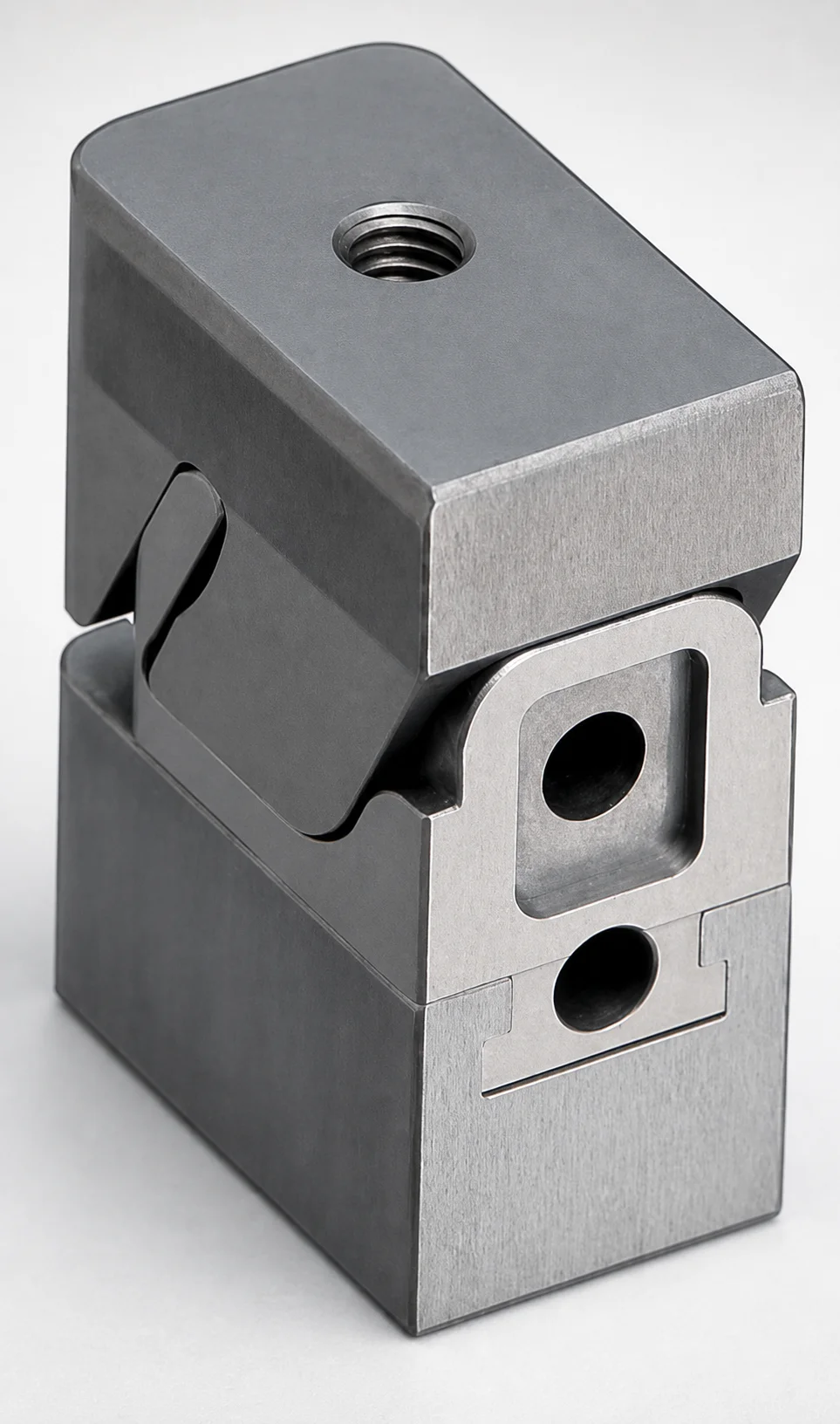
Mini Slide Core Units Slim Slide Core Retractor 6 mm Stroke
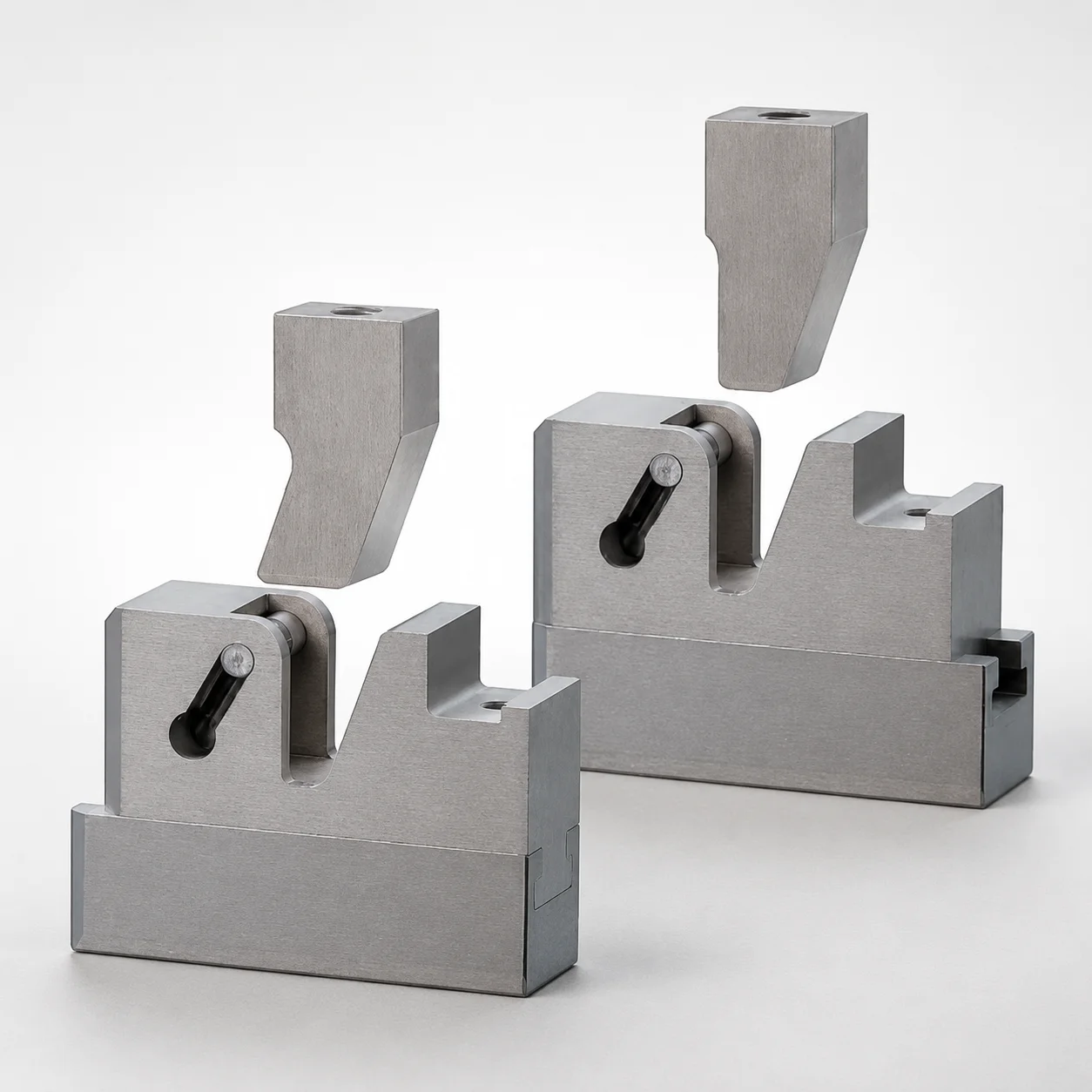
SCTM Two-Color Slide Core Units
Need Custom Specifications?
Our engineering team can help with custom configurations, material selection, and volume pricing.