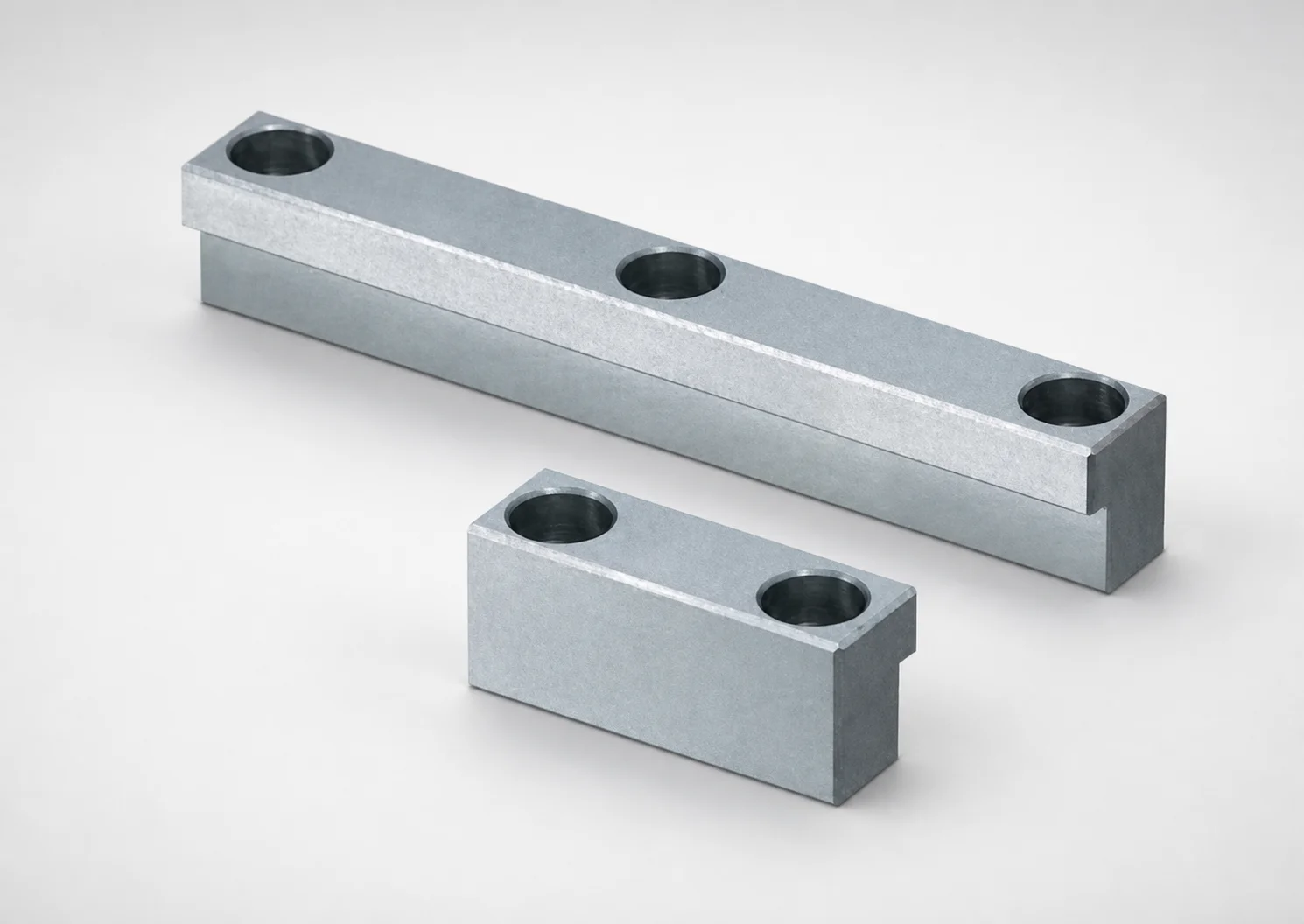
Heel Guide Rails Flat Heel No Groove
Heel Guide Rails feature a flat heel design with no groove, delivering consistent guidance for machining assembly applications. The non-oil groove option supports clean, controlled sliding during operation.
- Flat heel, no groove geometry helps maintain stable rail seating in guides
- Oil groove: non-oil groove configuration supports cleaner slide motion
- SKS3 or HPM2T steel options for durable performance in machine tool use
- Designed for reliable alignment in guide-rail and gib assembly setups
Specifications
8 configurations available
| Material | Rail Thickness T (mm) | Rail Width W (mm) | Rail Length L (mm) | Heel height (mm) | type |
|---|---|---|---|---|---|
| HPM2T | 12.5 ~ 20 | 12.5 | 40 ~ 80 | 5 | - |
| HPM2T | 15 ~ 25 | 15 | 40 ~ 100 | 5 | - |
| SKS3 | 12.5 ~ 20 | 12.5 | 40 ~ 80 | 5 | - |
| SKS3 | 15 ~ 25 | 15 | 40 ~ 100 | 5 | - |
| HPM2T | 15 ~ 25 | 15 | 40 ~ 100 | 8 | - |
| HPM2T | 20 ~ 30 | 20 | 60 ~ 120 | 8 | - |
| SKS3 | 15 ~ 25 | 15 | 40 ~ 100 | 8 | - |
| SKS3 | 20 ~ 30 | 20 | 60 ~ 120 | 8 | - |
Product Guide
Application Scenarios+
Heel guide rails with a flat heel and no groove are used to provide stable, low-maintenance sliding guidance inside precision mold tooling assemblies. In machining/slider or guide-plate systems, the flat heel improves rail seating consistency, helping maintain alignment between rails and associated gibs during reciprocating motion.
- Automotive and electronics housings: used in mold slide or undercut guide setups where smooth, repeatable motion reduces wear-related misalignment.
- Machine tool and precision fixture assemblies: suited for “oil-free” style operation because the no-groove configuration supports cleaner sliding paths.
- Long-cycle molding: the rail geometry supports stable retention in undercuts-plates/guide-rails-slide-plates layouts, minimizing seat rocking under load.
Choose the steel option (HPM2T or SKS3) based on required durability and tool-life targets; this variant’s no-groove heel helps keep guidance surfaces cleaner for consistent performance.
Material & Process Details+
This heel guide rail is offered in HPM2T and SKS3 tool-steel options. Both are used for precision guidance where dimensional stability and wear resistance are important in sliding contact.
- HPM2T: typically selected for improved wear resistance and toughness balance for guide components; heat treatment is commonly quenched and tempered to achieve service hardness.
- SKS3: commonly used where moderate toughness and stable machining/finishing are priorities; it is also generally provided in a hardened (quenched & tempered) condition for sliding wear performance.
In sliding rails, the trade-off is usually hardness vs. toughness: higher hardness increases abrasion resistance, while lower toughness can risk micro-chipping under shock or misalignment. Specific HRC values and heat-treatment cycles are not provided in the current data, so hardness verification should be confirmed via the supplied material cert.
Sizing & Selection Guide+
Select dimensions to match the mold’s guide-rail seating features and the counterpart gib/guide surfaces. This series provides rail thickness T options of 12.5–20 mm, 15–25 mm, or 20–30 mm; rail width W of 12.5, 15, or 20 mm; and rail length L of 40–80 mm, 40–100 mm, or 60–120 mm.
- Match thickness T to the pocket/slot depth so the heel seats flat without rocking.
- Match width W to the guiding surface width of the mating plate/gib to maintain contact without overconstraint.
- Match length L to the required stroke coverage, ensuring full guidance through the full travel range.
- Heel height is available at 5 or 8 mm; choose based on the required seating step and clearance to surrounding components.
Because guidance parts operate with sliding contact, confirm the intended fit clearance in the mold assembly drawings; small seating variances can affect motion smoothness and wear rate.
Frequently Asked Questions
Which heel height (5 mm or 8 mm) should be selected for stable rail seating in a guide/gib assembly?+
Use 5 mm heel height when the mold pocket and mating gib/guide geometry require a smaller seating step. Select 8 mm when the design needs more vertical positioning for stable flat contact. Verify the required clearance to surrounding plates to prevent overconstraint during sliding.
How do I choose rail thickness T and width W to avoid rocking in undercuts-plates/guide-rails-slide-plates applications?+
Pick rail thickness T from the offered ranges (12.5–20, 15–25, or 20–30 mm) so the heel seats fully in the guide pocket. Then choose rail width W (12.5, 15, or 20 mm) to match the mating guide surface width. If the seat is slightly oversized, rocking can increase wear; if undersized, contact can become uneven.
What is the practical advantage of the flat heel with no groove configuration versus an oil-groove rail?+
The flat heel, no groove variant supports an “oil-free” style sliding path, which helps maintain cleaner guidance surfaces during operation. It also improves consistent rail seating because the heel geometry does not include groove features. This can reduce the variability in sliding behavior that may come from contaminant accumulation in groove areas.
When should I select HPM2T instead of SKS3 for heel guide rails?+
Choose HPM2T when you prioritize improved wear resistance and a robust performance balance for sliding contact. Select SKS3 when moderate toughness and standard precision tool-steel behavior are acceptable for the expected cycle life. Final selection should consider the mold’s contact load, lubrication strategy, and the required service hardness.
How should I size rail length L to cover full mold slide travel without losing guidance?+
Use one of the provided rail length L ranges (40–80, 40–100, or 60–120 mm) to ensure guidance throughout the full stroke. Ensure that, at both ends of travel, the heel remains properly seated on the guide pocket so motion stays stable. Confirm fit clearance in the assembly drawings to prevent interference while maintaining consistent contact.
Related Products
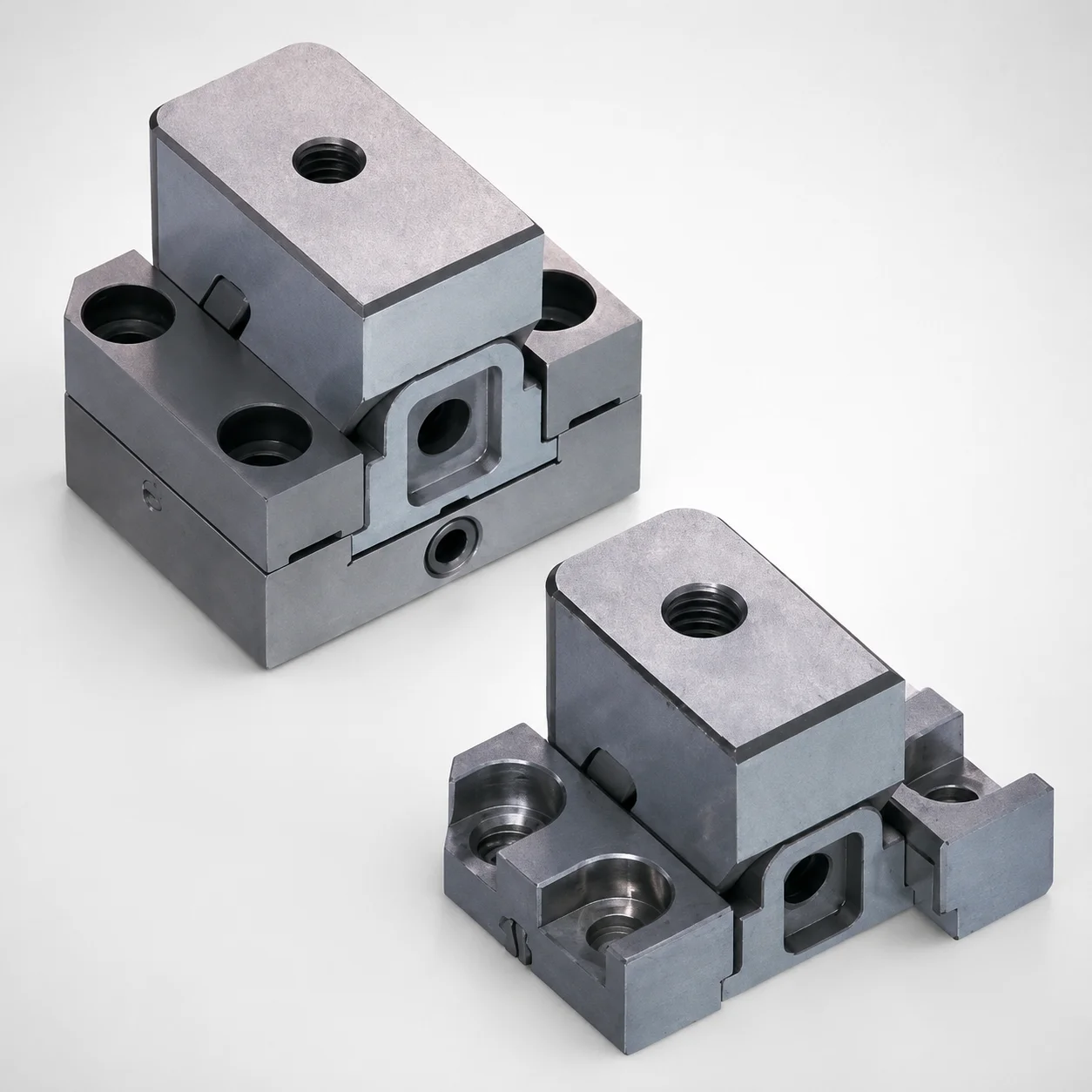
Standard Type Mini Slide Core Units
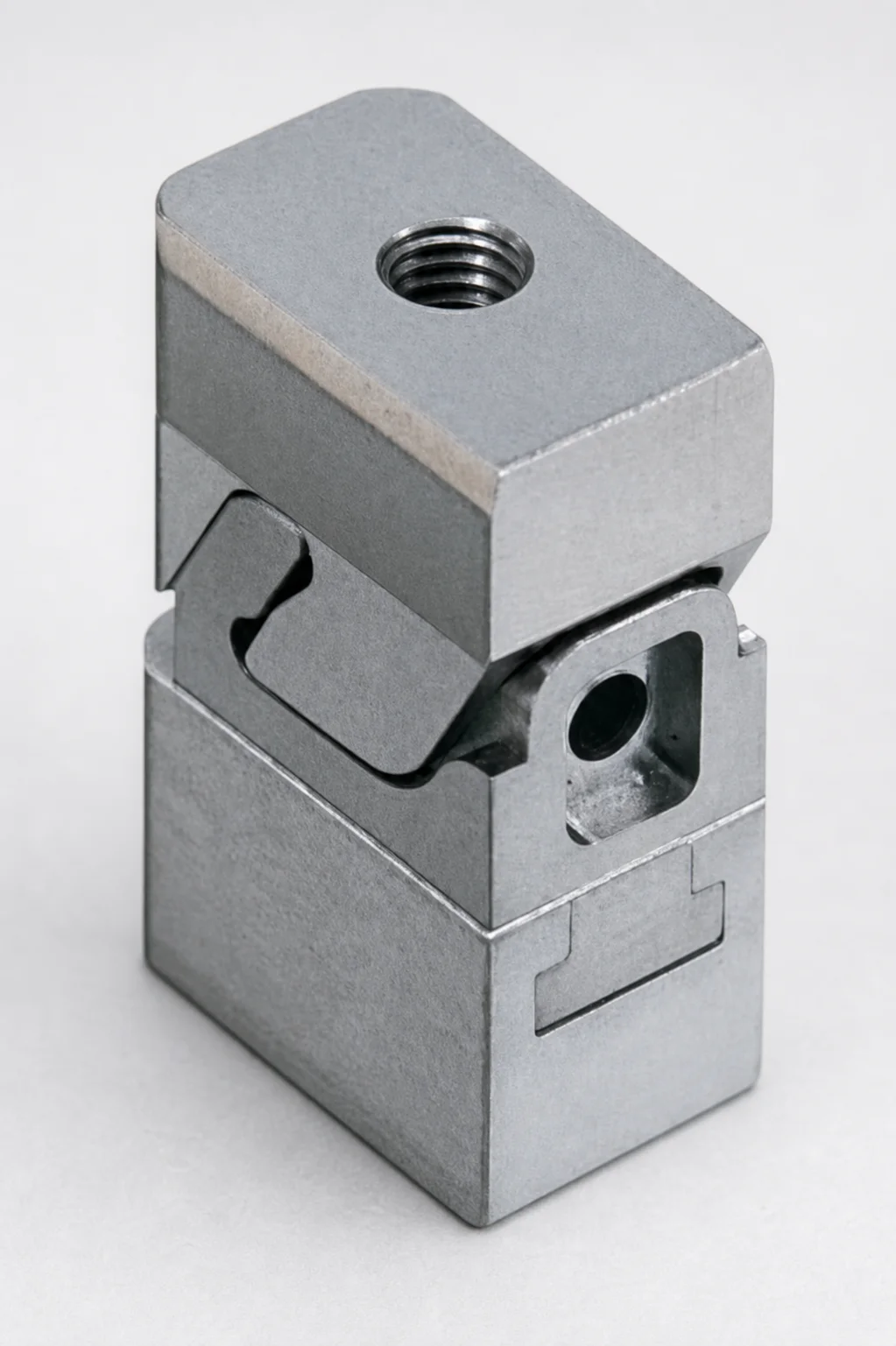
Mini Slide Core Units Slim Type (3 mm Stroke) for Inlay Tapped MSCS-Type
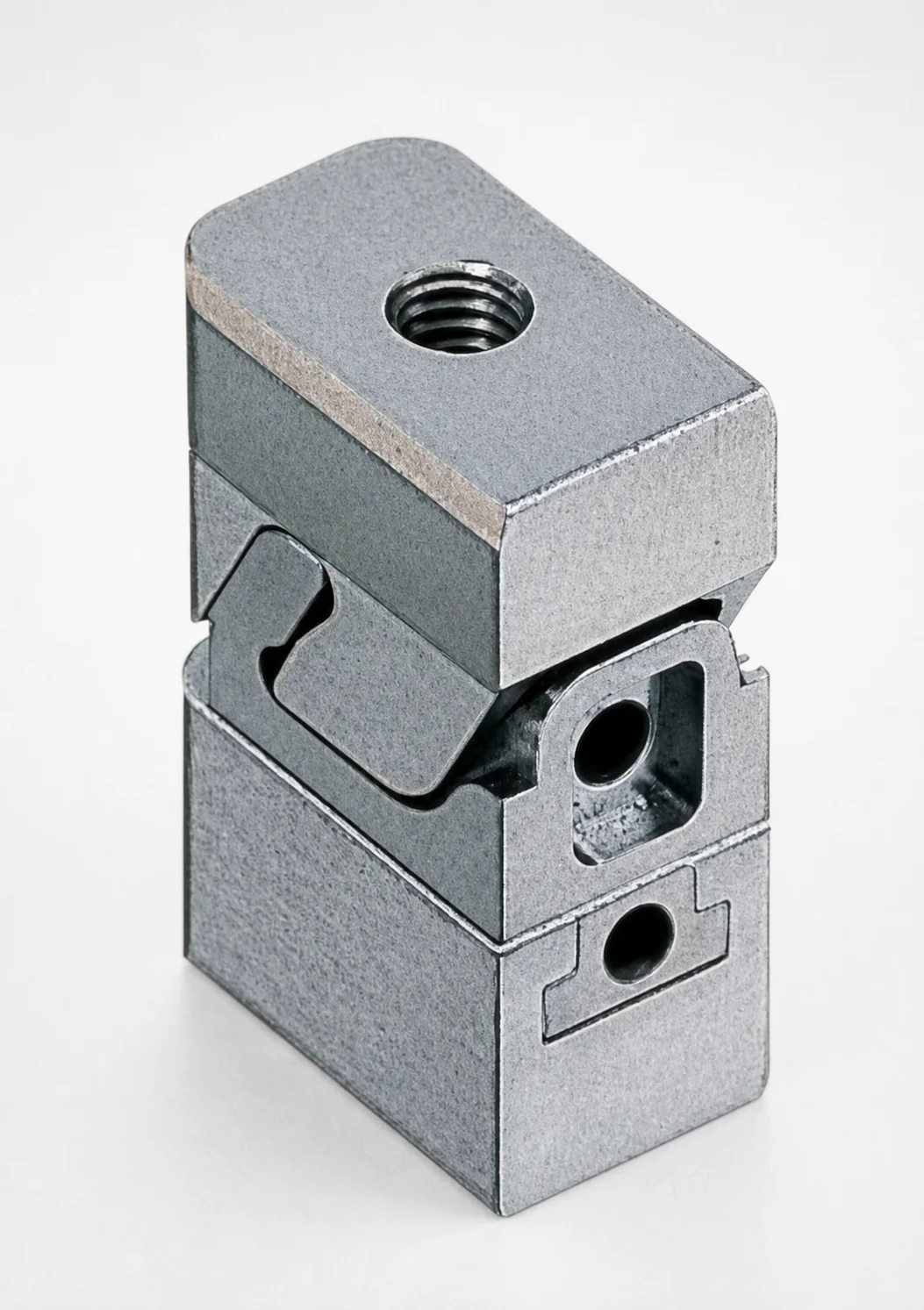
Mini Slide Core Units Slim Slide Stroke 3 mm Retractor Mechanism
Mini Slide Core Units Slim Slide Stroke 10 mm Retracting Mechanism
Mini Slide Core Units Slim Slide Core Retractor 6 mm Stroke
SCTM Two-Color Slide Core Units
Need Custom Specifications?
Our engineering team can help with custom configurations, material selection, and volume pricing.