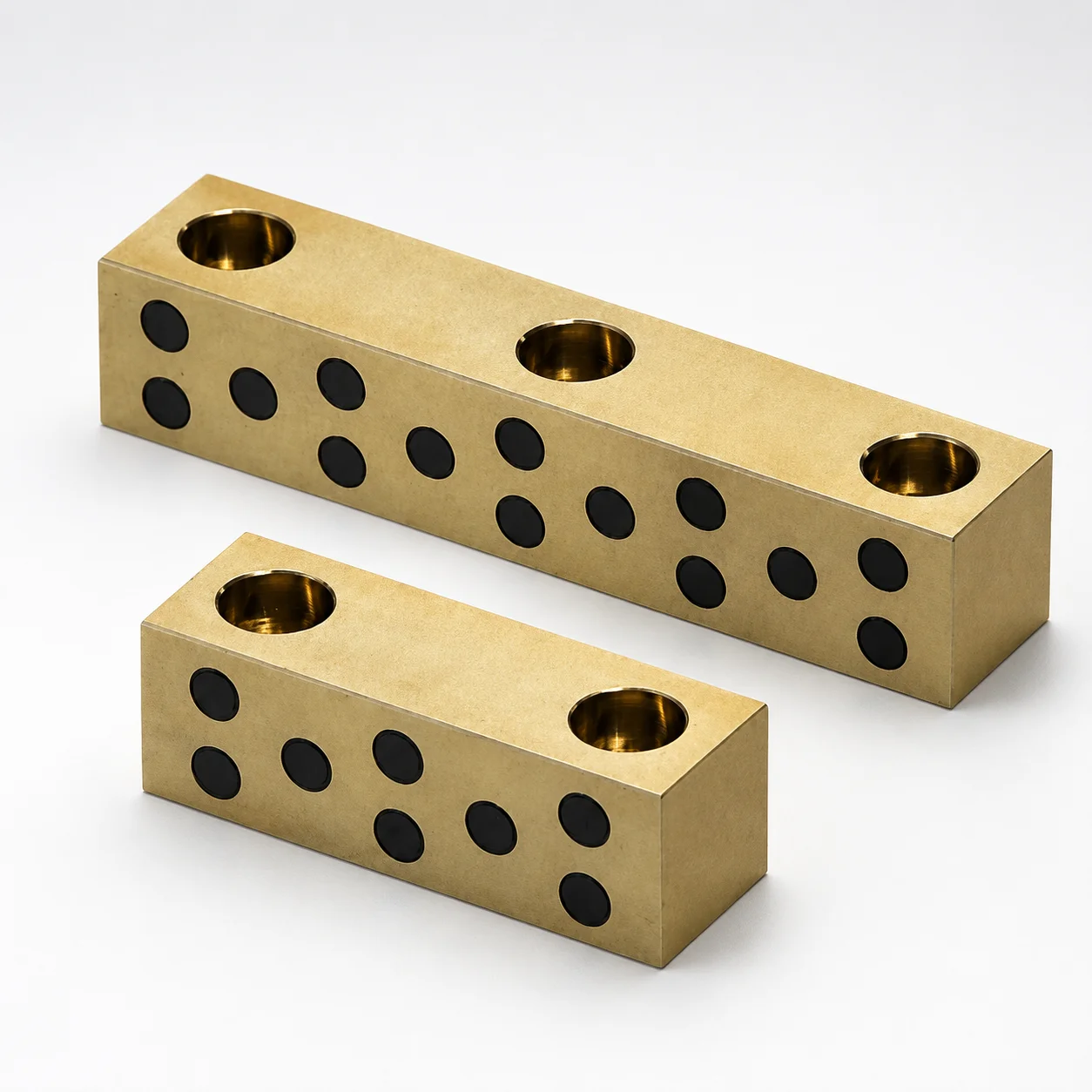
CGZ Oil-Free Center Rails - Copper Alloy No Groove
CGZ oil-free center rails (copper alloy) with a no groove heel design provide steady linear guidance without internal oil grooves, supporting cleaner machine operation. This rail type is built to reduce lubrication demands while maintaining reliable alignment in guiding applications.
- No-groove heel keeps the rail interface clean and simplifies assembly and inspection.
- Copper alloy construction supports smooth sliding and stable wear behavior in guide systems.
- Optimized CGZ rail type for consistent alignment when used with compatible center rail hardware.
- Commonly used in linear guiding setups where oil-free operation improves maintenance workflow.
Specifications
19 configurations available
| Rail Thickness T (mm) | Rail Width W (mm) | Rail Length L (mm) | type |
|---|---|---|---|
| 15 | 15 | 40 | - |
| 15 | 15 | 50 | - |
| 15 | 15 | 60 | - |
| 15 | 15 | 70 | - |
| 15 | 15 | 80 | - |
| 15 | 15 | 90 | - |
| 15 | 15 | 100 | - |
| 15 | 20 | 40 | - |
| 15 | 20 | 50 | - |
| 15 | 20 | 60 | - |
| 15 | 20 | 70 | - |
| 15 | 20 | 80 | - |
| 15 | 20 | 90 | - |
| 15 | 20 | 100 | - |
| 15 | 20 | 110 | - |
| 20 | 20 | 120 | - |
| 20 | 20 | 130 | - |
| 20 | 20 | 140 | - |
| 20 | 20 | 150 | - |
Product Guide
Application Scenarios+
This oil-free center rail is used inside injection mold tooling where stable linear guidance is required while minimizing lubrication and contamination risk. The copper-alloy, no-groove heel design helps keep the interface clean, which supports consistent alignment over repeated mold cycles.
- Automation/undercut mechanisms: Ideal for guide systems that drive slides or moving components with frequent strokes, where an oil-free approach reduces maintenance time and prevents residue transfer.
- Clean-room or inspection-sensitive molds: Suitable when lubricants are undesirable around the molding area, helping maintain a clearer rail/heel contact condition for easier inspection.
- Long-cycle alignment in guide-rail assemblies: The rail thickness options (T = 15 or 20 mm) and available lengths (L = 40 to 150 mm) allow matching the guidance span for reliable positioning under typical wear loads.
Choose this variant when you want reduced lubrication demands and simplified upkeep without sacrificing alignment stability in guided motion applications.
Material & Process Details+
This series uses a copper alloy rail for smooth sliding behavior and stable wear performance in center-rail guide assemblies. The no-groove heel configuration is specifically intended to avoid internal oil channels, supporting cleaner motion and lowering maintenance associated with oil groove debris management.
- Heat treatment state: Not specified in the provided data. Select a supplier documentation review if your design requires details such as quench/temper, nitriding, or surface hardening.
- Hardness & trade-offs: Specific HRC hardness is not provided. In general, copper-alloy guide members emphasize low-friction sliding and wear resistance, trading off the high hardness typical of tool steels.
- Material comparison: Compared with hardened tool-steel rails, this copper alloy approach is usually favored where cleanliness and reduced lubrication are priorities rather than maximum metal hardness.
For final selection, confirm the exact grade, target hardness, and surface condition from the series datasheet if part of your qualification process.
Sizing & Selection Guide+
Select dimensions by matching the center-rail envelope to the guide-rail/slide-plate interface in your mold assembly. This product is offered with T = 15 or 20 mm (rail thickness) and W = 15 or 20 mm (rail width), with L = 40 to 150 mm available.
- Step 1: Choose thickness (T): Match the rail thickness to the mounting land or pocket depth in the slide/plate so the heel seats properly without interference.
- Step 2: Choose width (W): Verify side clearance against mating hardware to ensure consistent guidance while preventing lateral rubbing.
- Step 3: Choose length (L): Use L to cover the needed guidance span for stable travel, balancing longer engagement for alignment vs. space constraints.
Tolerance/fit: No tolerance values are provided in the input data. In practice, confirm the rail/heel fit with the compatible center-rail hardware and assembly drawings; ensure clearance for thermal expansion and wear allowance if your mechanism cycles under heat.
Frequently Asked Questions
How does the no-groove heel design affect wear debris and maintenance in injection mold guide rails?+
Which dimensions should I match to the mold’s slide/plate guide pocket for this center rail?+
What material and wear behavior should I expect from the copper alloy oil-free center rail compared with steel guide rails?+
Is this rail suitable for applications where lubricants must be minimized near the molding cavity?+
Do I need specific heat treatment or hardness data (HRC) for design qualification?+
Related Products
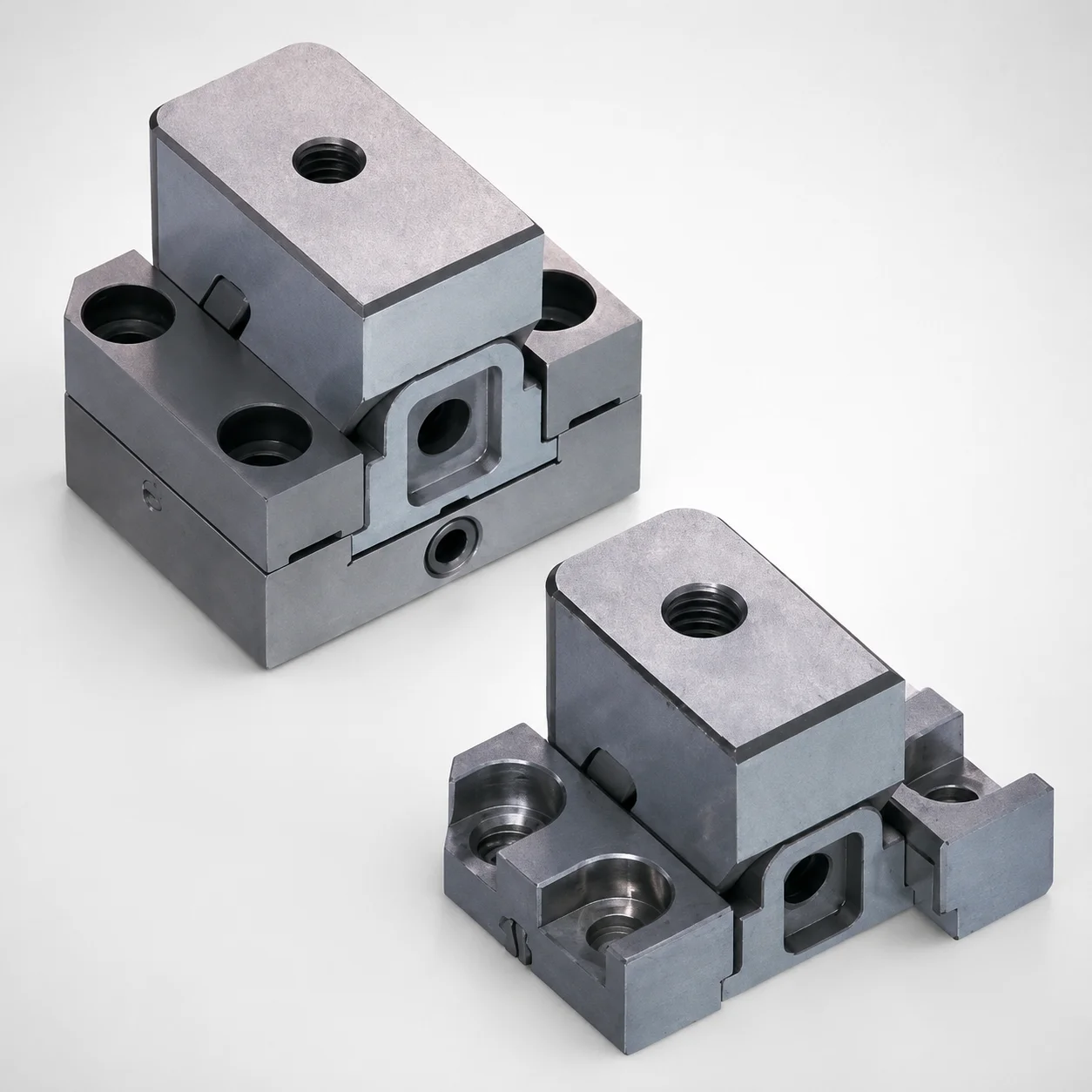
Standard Type Mini Slide Core Units
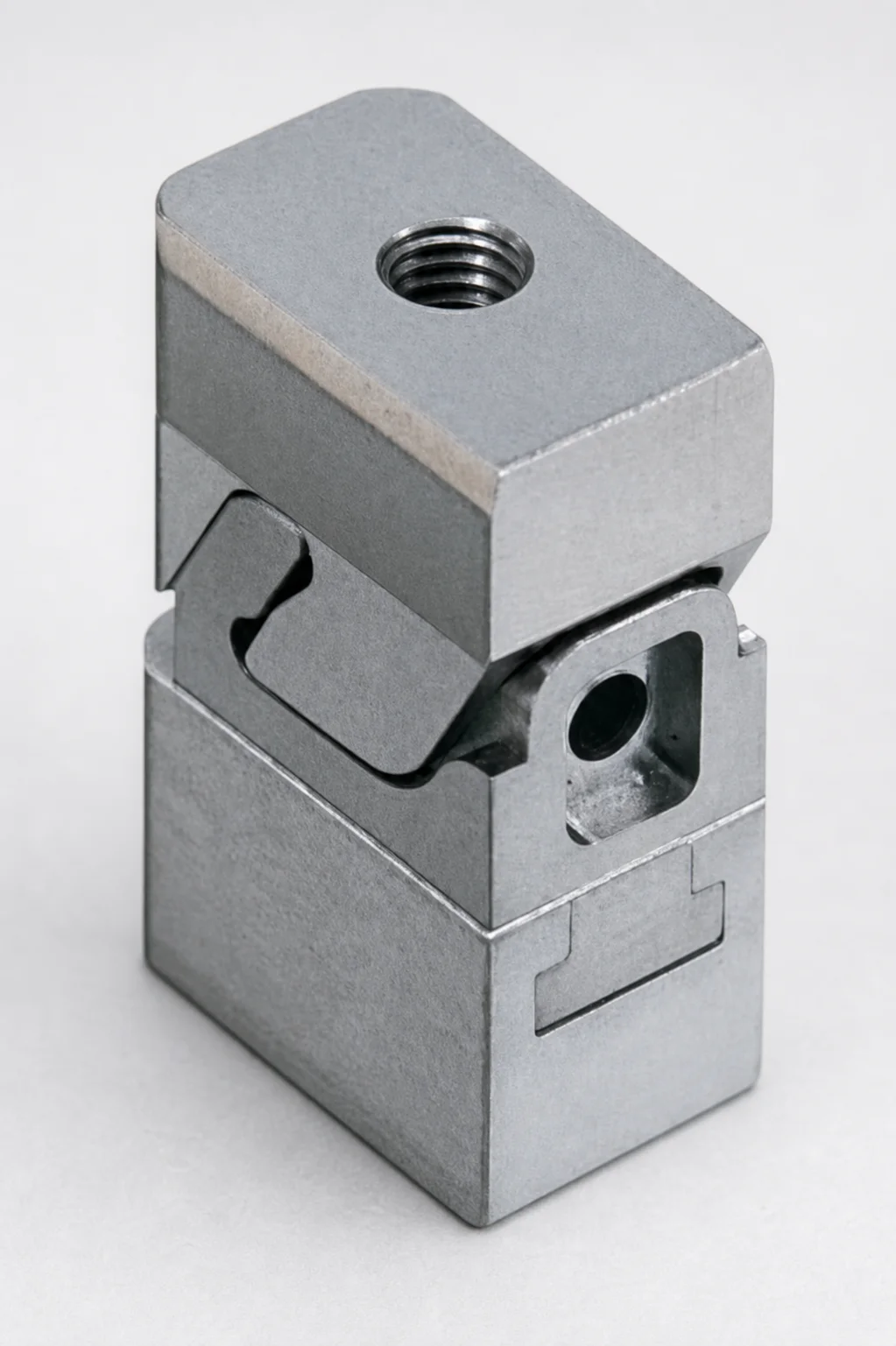
Mini Slide Core Units Slim Type (3 mm Stroke) for Inlay Tapped MSCS-Type
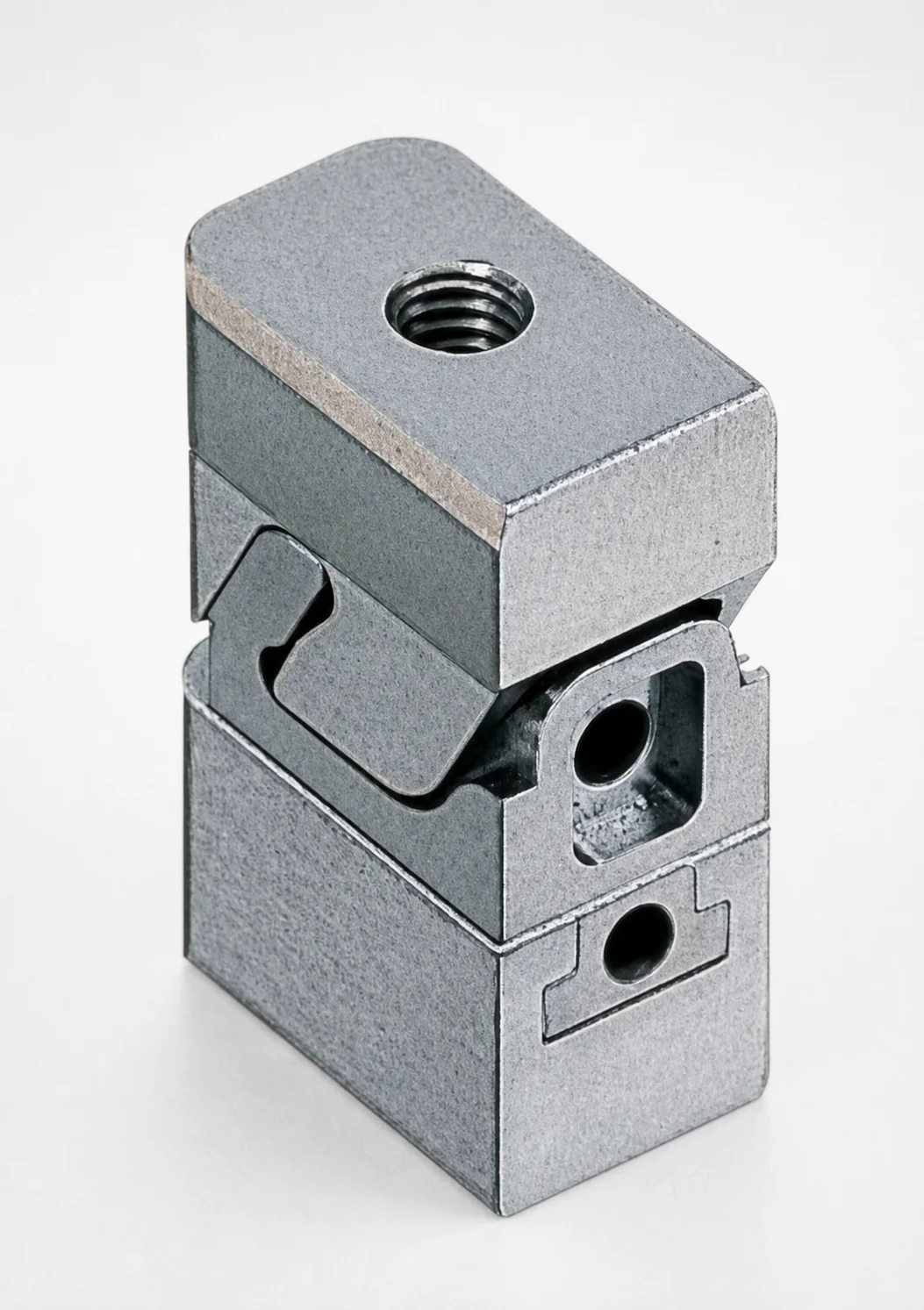
Mini Slide Core Units Slim Slide Stroke 3 mm Retractor Mechanism
Mini Slide Core Units Slim Slide Stroke 10 mm Retracting Mechanism
Mini Slide Core Units Slim Slide Core Retractor 6 mm Stroke
SCTM Two-Color Slide Core Units
Need Custom Specifications?
Our engineering team can help with custom configurations, material selection, and volume pricing.