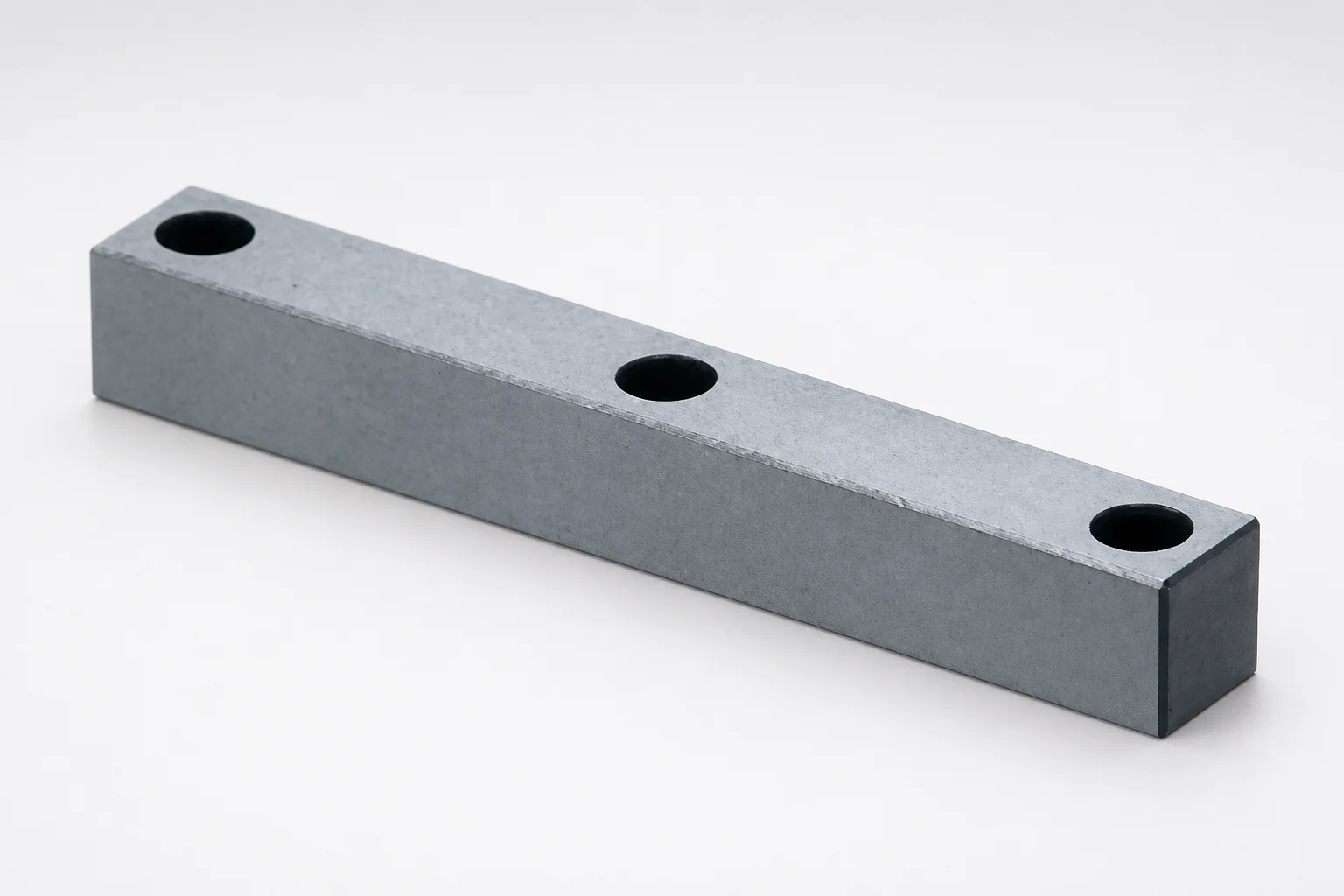
Center Rails - Heel No Groove
Center Rails - Heel No Groove are designed for precise sliding guidance in machine tools and jig assemblies, with a heel that has no oil groove. This structure helps maintain consistent contact while supporting smooth rail movement.
- Heel configuration with no groove for controlled lubricant management
- Tool steel options: SKS3 or HPM2T for reliable wear performance
- Choice of oil groove or non-oil groove rails to match operating conditions
- Used with center rail assemblies where stable rail positioning is required
Specifications
12 configurations available
| Material | Oil Groove | Rail Thickness T (mm) | Rail Width W (mm) | Rail Length L (mm) | type |
|---|---|---|---|---|---|
| HPM2T | Non-oil groove | 10 | 12 | 40 ~ 100 | - |
| HPM2T | Non-oil groove | 15 | 15 | 40 ~ 100 | - |
| HPM2T | Non-oil groove | 15 | 20 | 50 ~ 110 | - |
| HPM2T | Non-oil groove | 20 | 20 | 120 ~ 150 | - |
| SKS3 | Non-oil groove | 10 | 12 | 40 ~ 100 | - |
| SKS3 | Non-oil groove | 15 | 15 | 40 ~ 100 | - |
| SKS3 | Non-oil groove | 15 | 20 | 50 ~ 110 | - |
| SKS3 | Non-oil groove | 20 | 20 | 120 ~ 150 | - |
| SKS3 | Oil groove | 10 | 12 | 40 ~ 100 | - |
| SKS3 | Oil groove | 15 | 15 | 40 ~ 100 | - |
| SKS3 | Oil groove | 15 | 20 | 50 ~ 110 | - |
| SKS3 | Oil groove | 20 | 20 | 120 ~ 150 | - |
Product Guide
Application Scenarios+
This center rail component is used in injection mold tooling where the moving guide must maintain stable, repeatable alignment during cyclic motion. The “heel no groove” configuration supports consistent contact at the heel while limiting lubricant migration, which helps reduce variability in sliding behavior under production loads.
In automotive connector and terminal housing molds, it can be applied in sliding plate or undercut plate systems to keep core/cavity actuation stable and prevent misalignment artifacts that can affect part fit and appearance.
For appliance and consumer electronics housings, the fixed heel geometry is well suited to guided ejection or lifter mechanisms, especially when operators want predictable lubrication management. The availability of oil groove vs. non-oil groove rails allows the design to match lubrication strategy and contamination risk.
- Heel configuration without an oil groove supports controlled lubricant management and consistent contact
- Material variants (SKS3 or HPM2T) support reliable wear performance for guide interfaces
- Rail thickness/width/length options match different slide plate sizes and stroke layouts
Material & Process Details+
This guide rail is offered in two tool steel options: SKS3 and HPM2T. SKS3 is selected for its balance of toughness and wear resistance in sliding guide applications, while HPM2T is typically chosen when higher hardness and longer wear life are prioritized for guide surfaces.
Both options are intended for hardened tool steel service at the rail interface, where sliding contact demands resistance to abrasion and dimensional stability. The component should be heat treated to the manufacturer’s intended condition for guide rails (commonly quenched and tempered for toughness, or production-hardened states depending on the steel grade).
- SKS3: practical toughness-to-wear balance for guided motion
- HPM2T: supports improved wear resistance with trade-offs in toughness depending on the final hardness
- Oil groove vs. non-oil groove affects lubrication film formation and wear behavior
Sizing & Selection Guide+
To select the correct center rail dimensions, match the rail thickness (T), width (W), and length (L) to the mating slide plate or guide pocket geometry. This product supports T = 10, 15, or 20 mm and W = 12, 15, or 20 mm.
Choose the rail length based on the required guidance travel and contact overlap. Available length ranges are 40–100 mm, 50–110 mm, and 120–150 mm; select the range that provides sufficient engagement across the full stroke.
- Use T to match slot depth and avoid interference with the heel seating area
- Use W to control bearing surface width and stiffness at the guide interface
- Use L to cover the full sliding path while maintaining stable contact
Consider clearance and fit in the guide plate: rail seating typically requires controlled tolerance so the heel makes consistent contact, especially for no-oil-groove variants where lubrication distribution relies more on contact behavior than groove feeding.
Frequently Asked Questions
Which steel option (SKS3 or HPM2T) is better for center rail sliding guidance under abrasive wear?+
How does the “heel no groove” design affect lubrication management and wear compared with oil-groove rails?+
What rail thickness and width should I choose for a guide plate system using this component?+
How do I determine the correct rail length L from the available ranges for a mold sliding mechanism?+
Can this component be used in both oil-groove and non-oil-groove lubrication strategies?+
Related Products
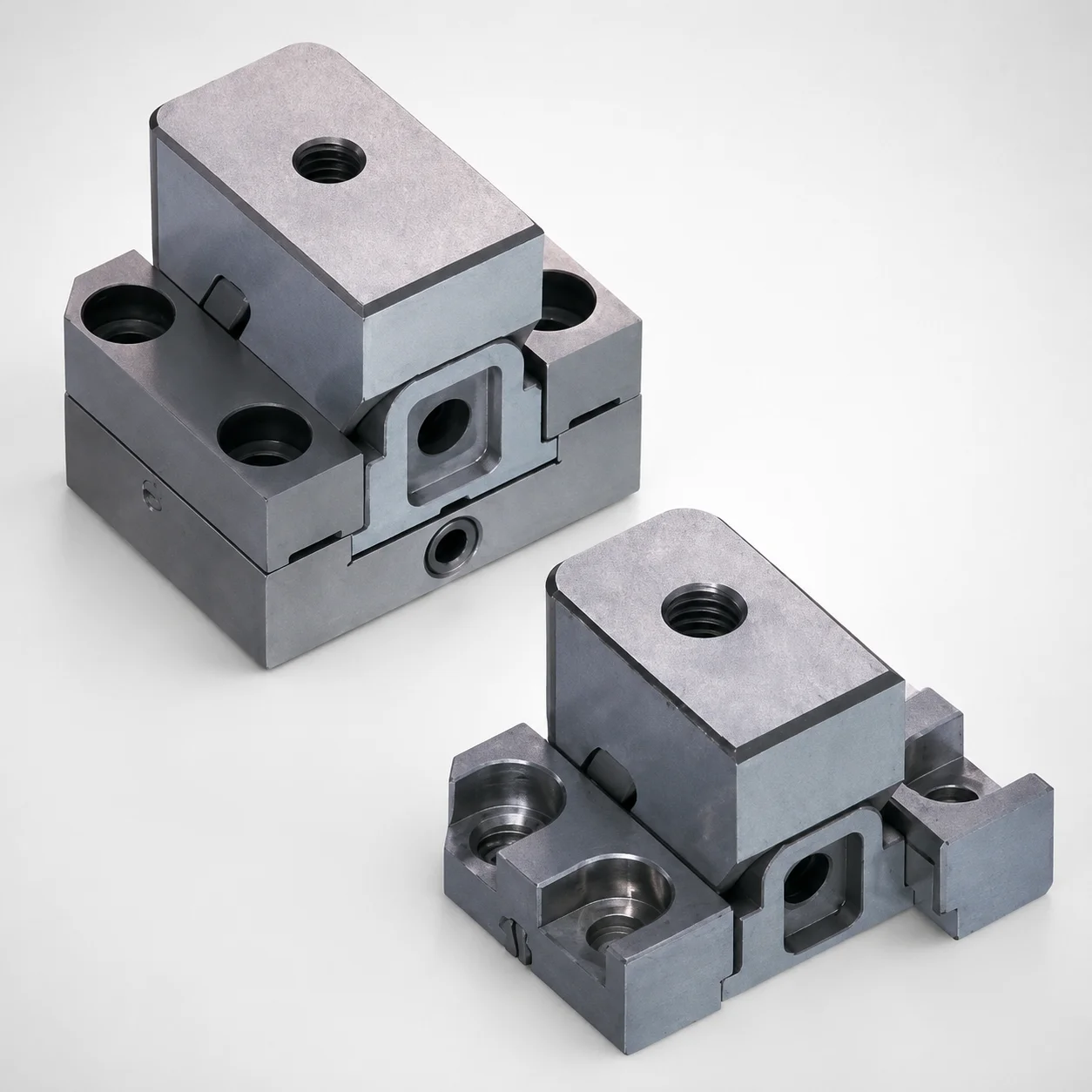
Standard Type Mini Slide Core Units
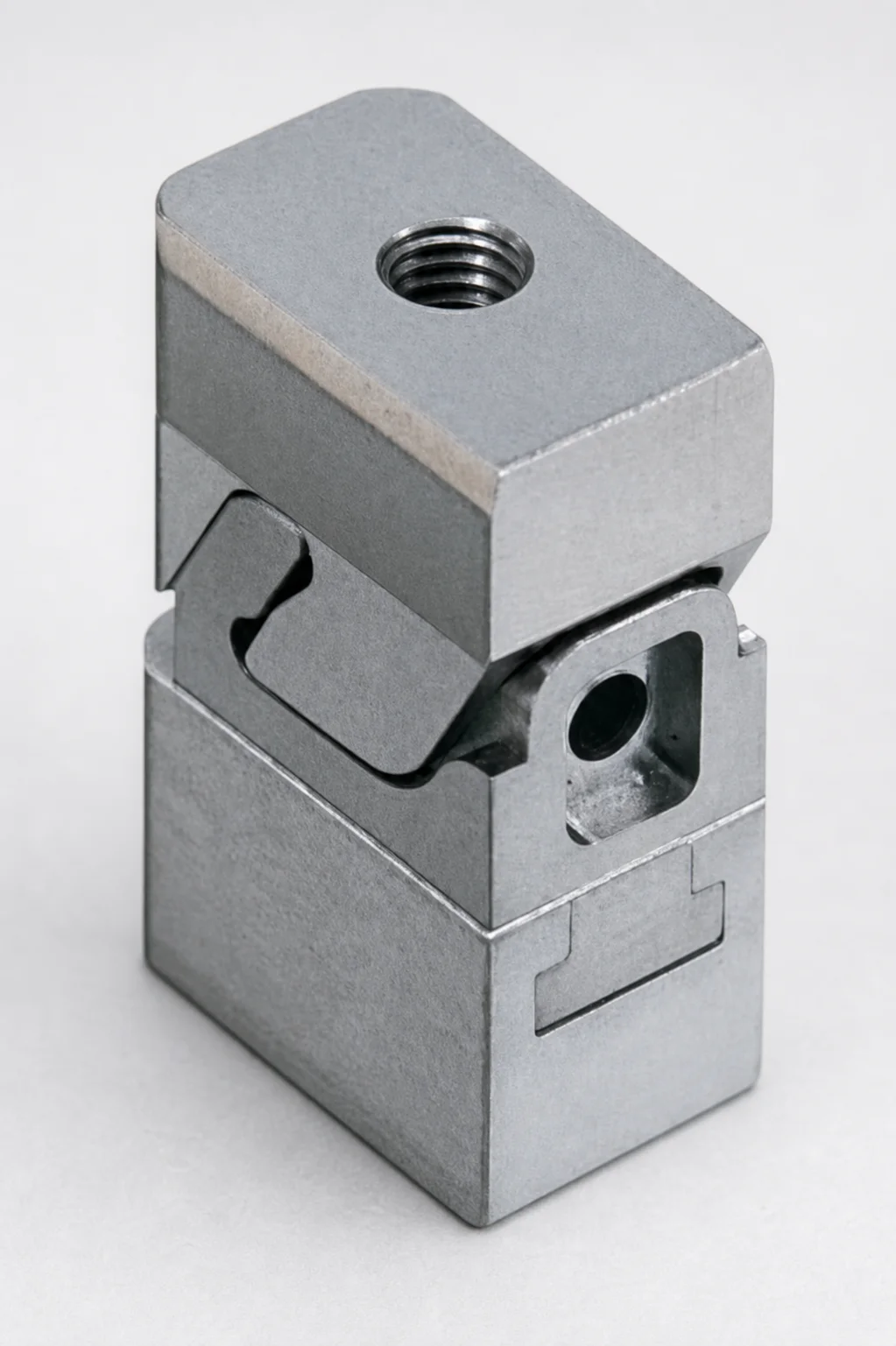
Mini Slide Core Units Slim Type (3 mm Stroke) for Inlay Tapped MSCS-Type
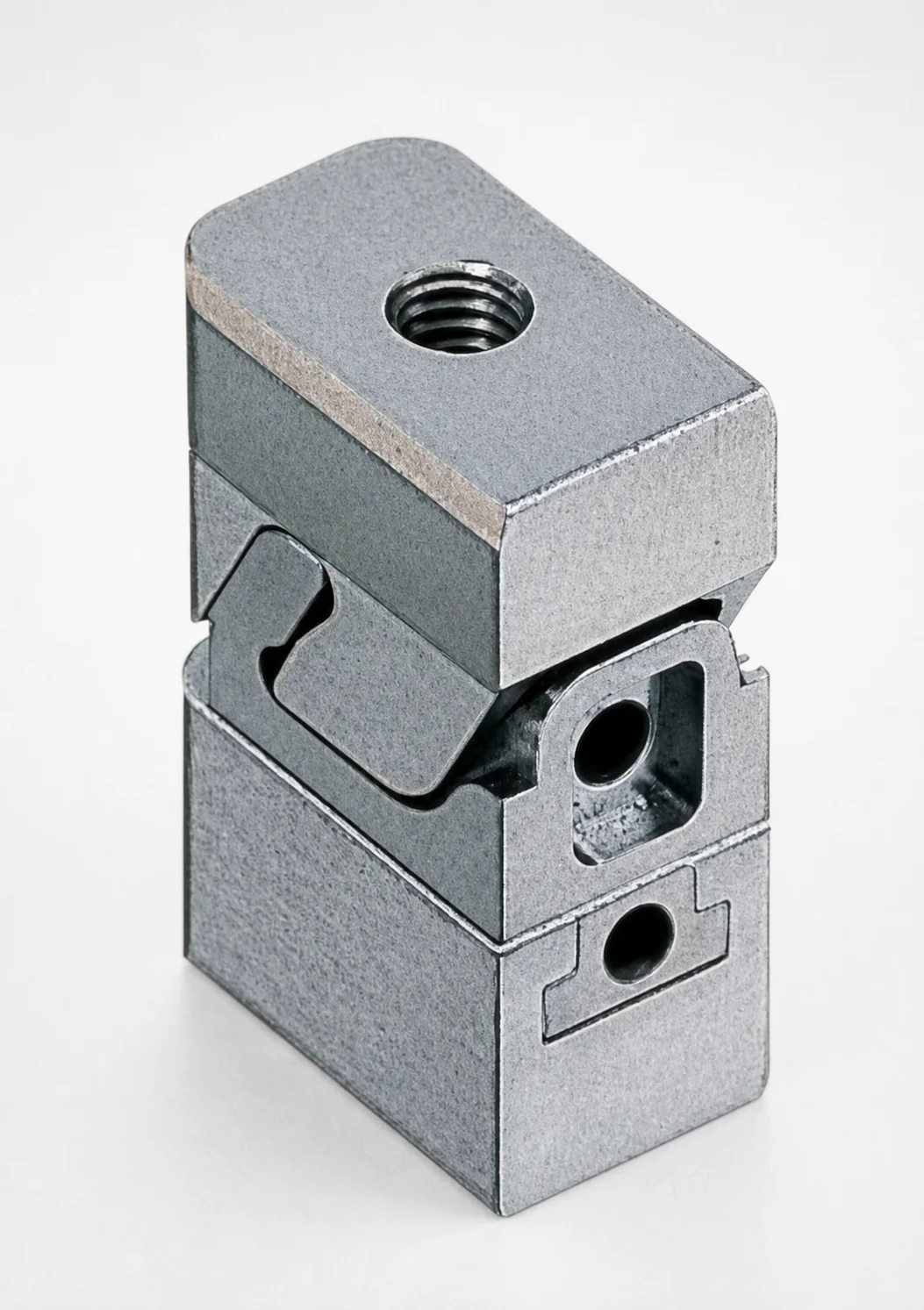
Mini Slide Core Units Slim Slide Stroke 3 mm Retractor Mechanism
Mini Slide Core Units Slim Slide Stroke 10 mm Retracting Mechanism
Mini Slide Core Units Slim Slide Core Retractor 6 mm Stroke
SCTM Two-Color Slide Core Units
Need Custom Specifications?
Our engineering team can help with custom configurations, material selection, and volume pricing.