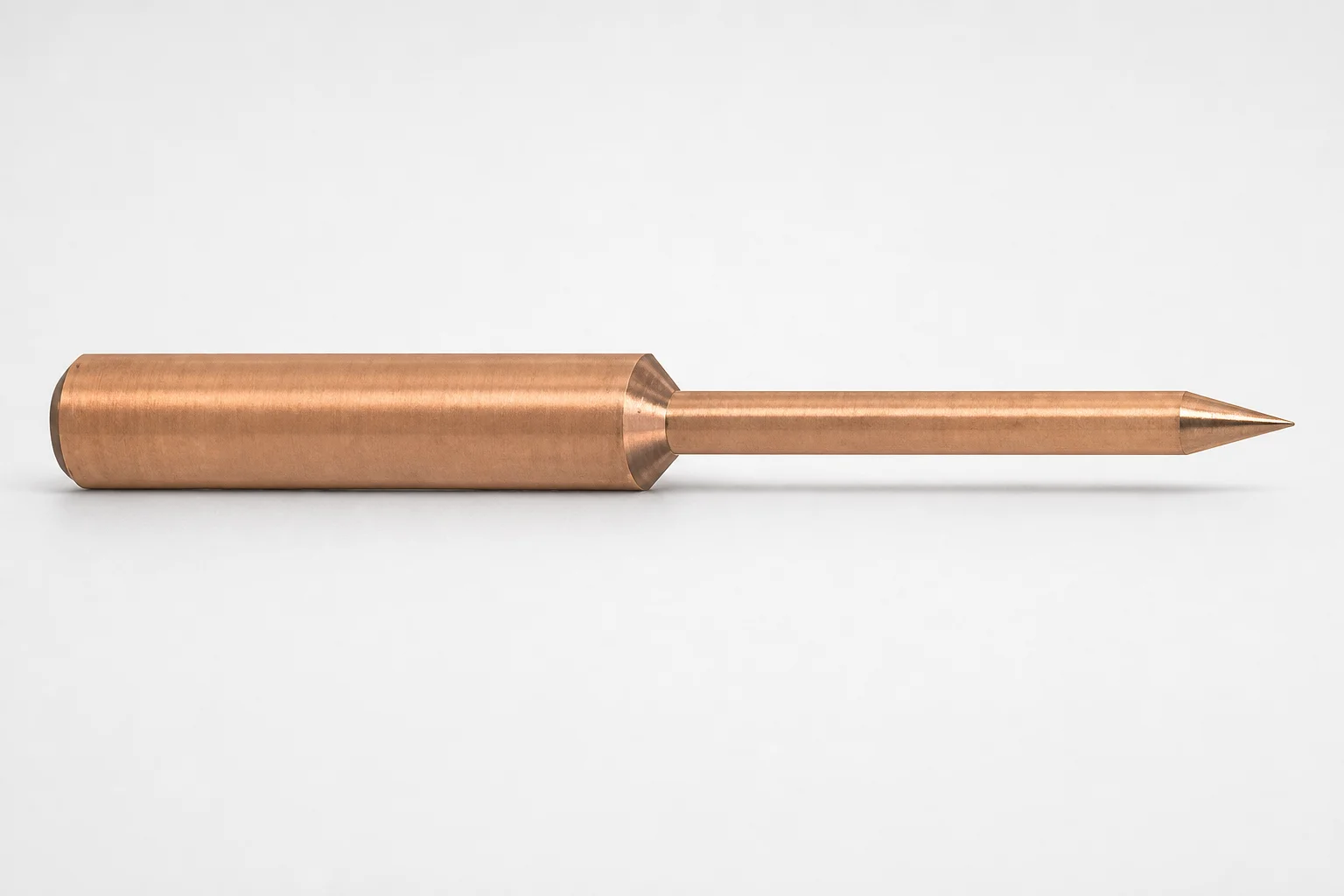
EMSG Type Oxygen-Free Copper Submarine Gate Electrodes
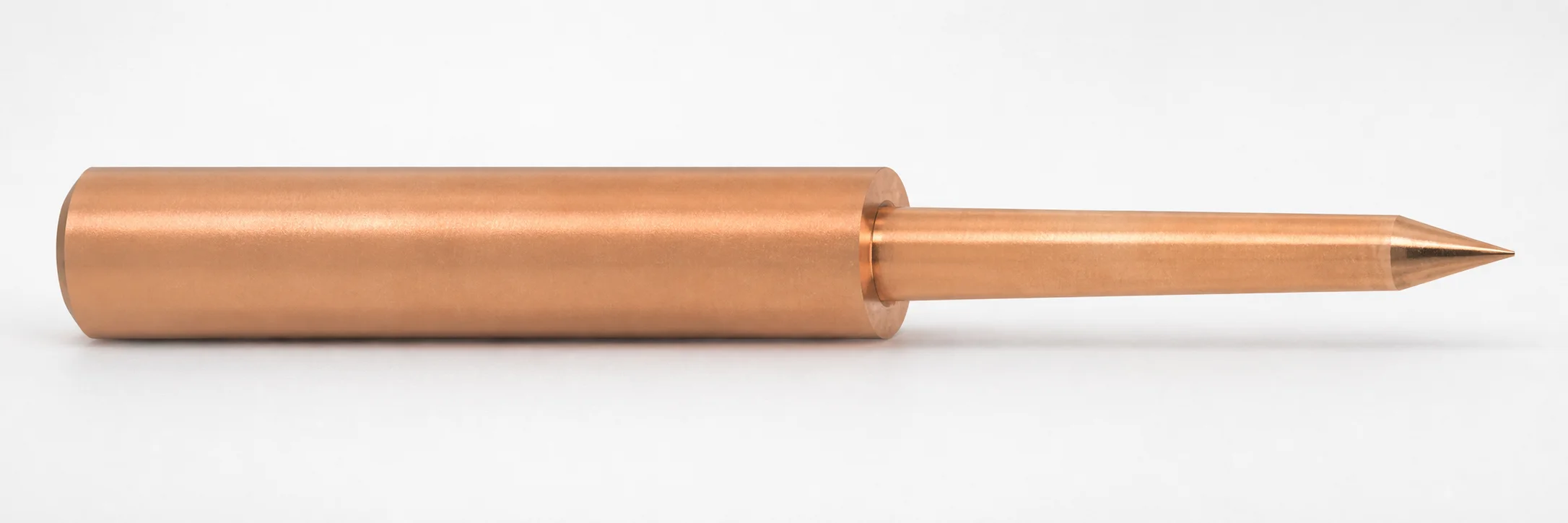
EMSG Type oxygen-free copper submarine gate electrodes are designed for consistent submerged gate machining, helping maintain stable electrical contact during production. They support repeatable gate processing for tooling and manufacturing workflows.
- Submarine gate electrode geometry for controlled submerged gate processing
- Oxygen-free copper for stable conductivity and reliable contact
- Engineered EMSG type design to match expected electrode setups
- Suitable for gate operations using electro-discharge/submerged gate technology
Specifications
46 configurations available
| P (Tip diameter) (mm) | L (L dimension) (mm) | A (Taper angle) (°) | type |
|---|---|---|---|
| 1.5 | 60 | 20 | - |
| 2 | 60 | 10 | - |
| 2 | 60 | 15 | - |
| 2 | 60 | 20 | - |
| 2 | 60 | 30 | - |
| 2 | 70 | 10 | - |
| 2 | 70 | 15 | - |
| 2 | 70 | 20 | - |
| 2 | 70 | 30 | - |
| 2.5 | 60 | 10 | - |
| 2.5 | 60 | 15 | - |
| 2.5 | 60 | 20 | - |
| 2.5 | 60 | 30 | - |
| 2.5 | 70 | 10 | - |
| 2.5 | 70 | 15 | - |
| 2.5 | 70 | 20 | - |
| 2.5 | 70 | 30 | - |
| 3 | 60 | 10 | - |
| 3 | 60 | 15 | - |
| 3 | 60 | 20 | - |
| 3 | 60 | 30 | - |
| 3 | 70 | 10 | - |
| 3 | 70 | 15 | - |
| 3 | 70 | 20 | - |
| 3 | 70 | 30 | - |
| 3 | 90 | 20 | - |
| 3 | 90 | 30 | - |
| 4 | 60 | 10 | - |
| 4 | 60 | 15 | - |
| 4 | 60 | 20 | - |
| 4 | 60 | 30 | - |
| 4 | 70 | 10 | - |
| 4 | 70 | 15 | - |
| 4 | 70 | 20 | - |
| 4 | 70 | 30 | - |
| 4 | 90 | 20 | - |
| 5 | 60 | 20 | - |
| 5 | 60 | 30 | - |
| 5 | 70 | 20 | - |
| 5 | 70 | 30 | - |
| 5 | 90 | 20 | - |
| 6 | 60 | 20 | - |
| 6 | 60 | 30 | - |
| 6 | 70 | 20 | - |
| 6 | 70 | 30 | - |
| 6 | 90 | 20 | - |
Product Guide
Application Scenarios+
This EMSG-type oxygen-free copper submarine gate electrode is used in injection mold tooling where a submerged (subgate) gate is machined and repeatedly processed for consistent gate formation. In practice, it serves as the electrode contact component in EDM/submerged-gate processing setups, helping keep electrical contact stable during machining cycles.
- Automotive connector and housing molds: used to produce precise submerged gate features that support consistent filling and part-to-part repeatability across production runs.
- Industrial electronics enclosure molds: supports controlled submerged gate machining where electrical discharge conditions must be maintained to achieve predictable gate geometry.
- Precision plastic components: the availability of multiple tip diameters and taper angles helps match electrode requirements to specific gate location and tooling accessibility.
The oxygen-free copper variant is suited for these applications because it provides reliable conductivity and durable contact behavior, supporting stable submerged gate processing workflows.
Material & Process Details+
This product uses oxygen-free copper to support stable electrical conductivity at the electrode interface. In submerged gate/EDM-style machining, the electrode’s electrical performance directly influences contact stability and processing consistency.
- Material properties: high conductivity for dependable current transfer; good suitability for repeated electrode contact conditions.
- Heat treatment state: the provided data does not specify a quench-and-temper, nitriding, or other heat-treatment step; selection should be based on the supplier’s supplied copper condition for your tooling process.
- Hardness & trade-offs: copper materials typically prioritize conductivity and contact stability over extreme wear resistance compared with tool steels; for wear-heavy abrasive conditions, process parameters and electrode sizing become especially important.
If you require higher wear resistance or higher mechanical stiffness, consider tool-steel electrode alternatives—but this specific copper design is intended for stable submerged gate electrical contact.
Sizing & Selection Guide+
To select the correct electrode, match the three key dimensions from your processing setup to the electrode specification: P (tip diameter, 1.5–6 mm), L (length, 60/70/90 mm), and A (taper angle, 10/15/20/30°).
- Tip diameter (P): choose the smallest diameter that still meets your submerged gate feature requirements and machining accessibility constraints.
- Length (L): select 60, 70, or 90 mm based on the electrode reach needed to access the gate location without overstressing the setup.
- Taper angle (A): select 10, 15, 20, or 30° to align with the electrode geometry expected for the submerged gate processing path.
Confirm any stack-up constraints in your electrode holder and machine electrode travel. The input data does not list tolerance values; therefore, rely on your machine’s electrode clamping and alignment tolerances to ensure correct fit and stable electrical contact during machining.
Frequently Asked Questions
Which dimension controls submerged gate machining geometry most strongly for these EMSG electrodes?+
The three controlling dimensions provided are P (tip diameter 1.5–6 mm), L (length: 60/70/90 mm), and A (taper angle: 10/15/20/30°). In most submerged gate setups, P determines the local electrode contact footprint, while A influences the machined gate profile. L is selected to ensure correct reach and stability in the electrode position.
How do I choose the correct taper angle (A = 10/15/20/30°) for a target gate profile?+
Select A based on the expected electrode geometry for your submerged gate processing routine. Common choices include 10°, 15°, 20°, and 30° as listed in the specification range. If the gate area requires tighter profile control, the taper setting should be matched to the gate design and electrode path requirements used in your tooling workflow.
Does the oxygen-free copper material imply a specific hardness or wear resistance level for gate machining?+
The provided specs indicate oxygen-free copper for stable conductivity and reliable contact, but do not give a hardness (HRC) value. Compared with tool steels, copper prioritizes electrical performance over high wear resistance. For repeated operations, manage wear through correct sizing (P and L) and by aligning process parameters to your EDM/submerged gate conditions.
What electrode length (L = 60/70/90 mm) should I use if the gate is deep in the mold?+
Choose L from 60, 70, or 90 mm to match the reach needed for your gate depth and electrode access. If the application requires longer reach, select 70 or 90 mm rather than 60 mm to avoid insufficient insertion depth or unstable positioning. Verify compatibility with your electrode holder travel limits to maintain stable contact during machining.
Are these electrodes meant for submerged gate/EDM processing specifically, or general machining?+
These are specified for submerged gate processing under an EMSG type electrode design workflow, including electro-discharge/submerged gate technology setups. Their oxygen-free copper construction supports stable electrical contact during production machining cycles. For non-submerged or purely mechanical machining applications, the EMSG geometry and electrode contact needs may not be aligned with your process.
Related Products
Need Custom Specifications?
Our engineering team can help with custom configurations, material selection, and volume pricing.