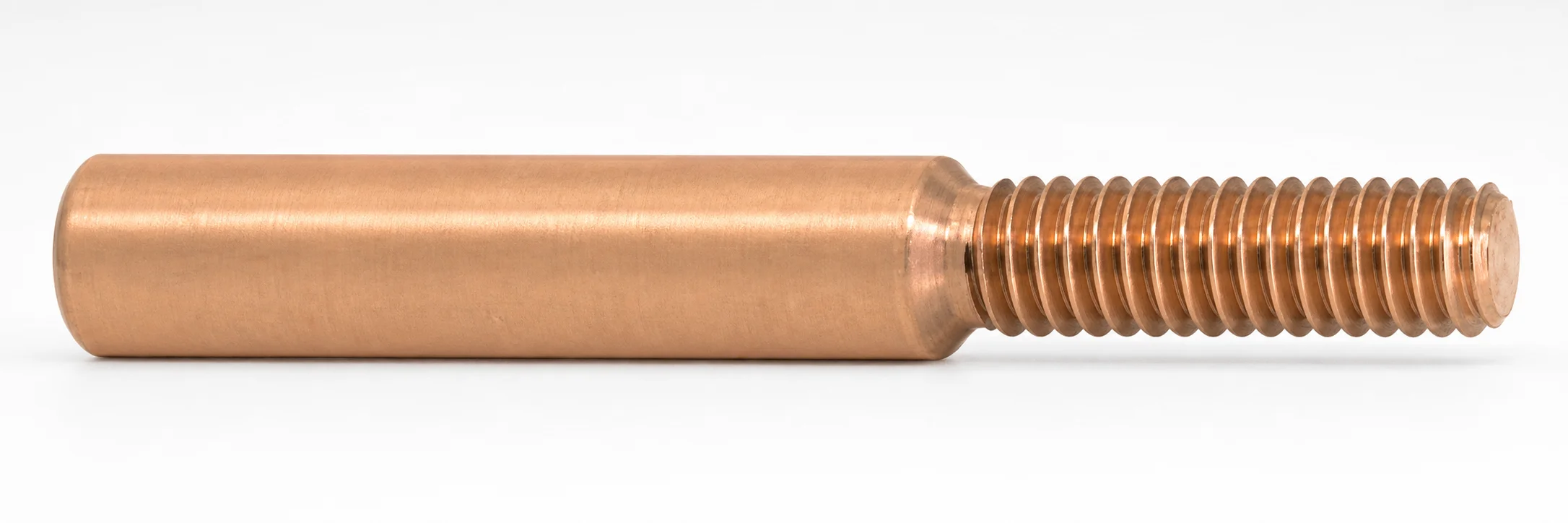
Undersized Tapping Electrodes - Copper, Tungsten-Copper
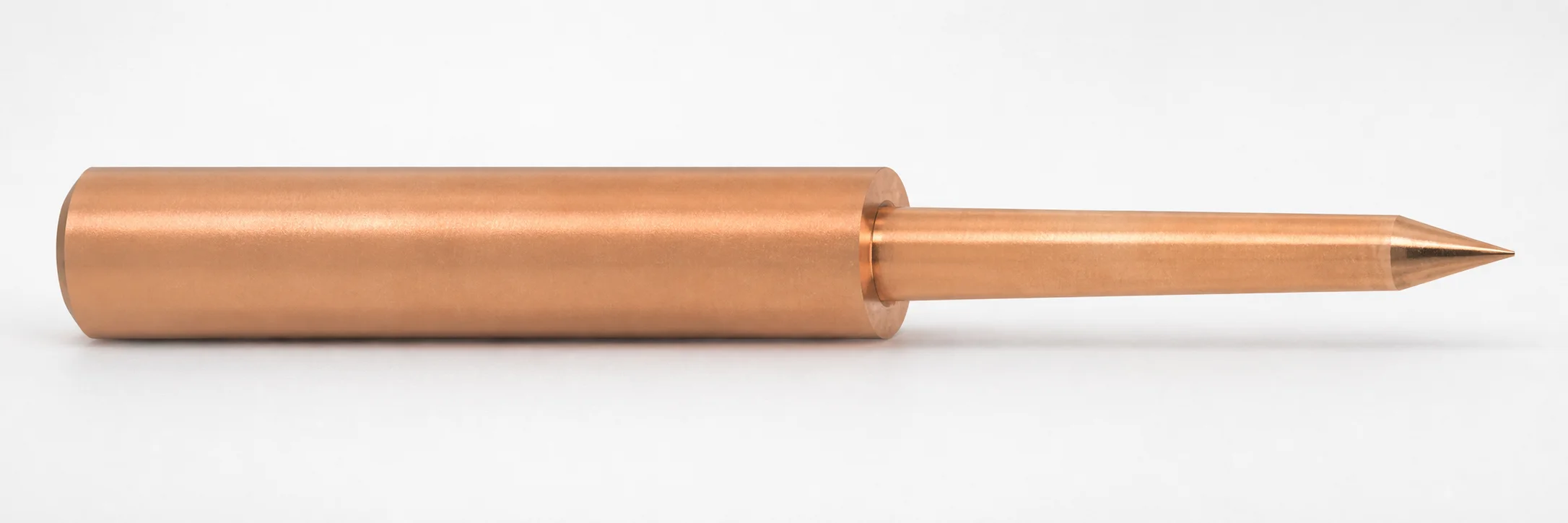
Undersized tapping electrodes - Copper, Tungsten-copper deliver reliable, precision tapping by supporting stable thread formation across a wide range of work materials. They help improve tapping efficiency while protecting tooling and downstream equipment during production.
- Optimized undersized geometry supports consistent thread formation
- Durable construction in tough pitch copper or tungsten-copper
- Reduces cutting-tool wear to help extend equipment service life
- Available for through hole configurations to match tapping setups
Specifications
25 configurations available
| Material | M (Screw diameter) (mm) | Through hole type | type |
|---|---|---|---|
| Tough pitch copper | 3 | No | - |
| Tough pitch copper | 4 | No | - |
| Tough pitch copper | 5 | No | - |
| Tough pitch copper | 6 | No | - |
| Tough pitch copper | 8 | No | - |
| Tough pitch copper | 10 | No | - |
| Tough pitch copper | 12 | No | - |
| Tough pitch copper | 16 | No | - |
| Tough pitch copper | 20 | No | - |
| Tough pitch copper | 3 | Yes | - |
| Tough pitch copper | 4 | Yes | - |
| Tough pitch copper | 5 | Yes | - |
| Tough pitch copper | 6 | Yes | - |
| Tough pitch copper | 8 | Yes | - |
| Tough pitch copper | 10 | Yes | - |
| Tough pitch copper | 12 | Yes | - |
| Tough pitch copper | 16 | Yes | - |
| Tough pitch copper | 20 | Yes | - |
| Tungsten-copper | 3 | No | - |
| Tungsten-copper | 4 | No | - |
| Tungsten-copper | 5 | No | - |
| Tungsten-copper | 6 | No | - |
| Tungsten-copper | 8 | No | - |
| Tungsten-copper | 10 | No | - |
| Tungsten-copper | 12 | No | - |
Product Guide
Application Scenarios+
These undersized tapping electrodes are used in injection mold and mold-accessory tooling where post-processing or precision thread formation is required for fasteners, inserts, or alignment features. In an automotive connector mold, they support stable screw-thread creation in sprue-adjacent or gating-related components, helping maintain repeatable assembly and reducing rework caused by inconsistent thread geometry.
For medical device housings and precision enclosures, through-hole electrode setups help match the tapping layout to the required mounting pattern. The copper and tungsten-copper variants are suited for such applications because they promote reliable tapping contact and help limit cutting wear, which is critical when producing high volumes with tight dimensional control.
- Through-hole configurations align electrode access with the tapping setup.
- Undersized geometry supports consistent thread formation for reliable assembly.
Material & Process Details+
The electrode materials are offered as tough pitch copper or tungsten-copper. Tough pitch copper provides good electrical and thermal conductivity for stable process behavior during tapping-related EDM/electrode operations, supporting consistent thread generation.
Tungsten-copper is a composite designed for improved performance under wear conditions. Compared with copper, tungsten-copper typically offers higher wear resistance but with different thermal/mechanical behavior, so it is selected when tooling protection and service life are primary concerns.
- Tough pitch copper: chosen for stable thread formation and process conductivity.
- Tungsten-copper: chosen for better wear resistance to help reduce tool wear and downtime.
Heat treatment and exact hardness (HRC) are not provided in the supplied specifications; final selection should be confirmed with your process window and expected duty cycle.
Sizing & Selection Guide+
Selection is primarily driven by the screw diameter parameter M (Screw diameter): 3 ~ 20 mm. Choose an electrode whose undersized tapping geometry is intended to produce the target thread size for your tapping operation.
Next, confirm the through hole type requirement: set No for setups that do not require through-hole access, or Yes when the electrode must pass through for your tapping access path and fixture design.
- Match cavity/core features: align the electrode’s M range to the expected tap’s nominal diameter and ensure adequate clearance for tool engagement.
- Tolerance/fit: because the product is undersized by design to achieve stable thread formation, verify your tapping allowance (tap drill size, thread class, and assembly requirements) with a trial cut to confirm final fit.
- Configuration: material (tough pitch copper vs. tungsten-copper) is the main adjustable choice; dimensioning is constrained by the M range and through-hole selection.
Frequently Asked Questions
How do I choose between tough pitch copper and tungsten-copper for tapping electrodes?+
Select tough pitch copper when you prioritize stable process behavior and consistent thread formation across your tapping materials. Choose tungsten-copper when wear reduction and longer tool/electrode service life are critical, since the tungsten-copper construction is intended to improve durability compared to copper.
What screw diameter range (M) is supported by these undersized tapping electrodes?+
The electrodes are specified for M (Screw diameter) = 3 ~ 20 mm. When designing the tapping operation, ensure your nominal screw/tap diameter falls within this range to maintain the intended undersized geometry and thread formation behavior.
Do I need the through-hole type (Yes) for my mold tapping setup?+
Use Through hole type: Yes when your tapping configuration requires through access for electrode/equipment alignment. Use No when your setup does not require a through-hole access path, such as certain localized tapping fixtures or non-through electrode access designs.
Are these electrodes suitable for achieving stable thread formation in different work materials?+
Yes—this series is designed for precise, stable thread formation using undersized tapping geometry. The material options (tough pitch copper or tungsten-copper) support reliable tapping results while aiming to protect tooling from excessive wear, which is especially important during production runs.
What tolerance considerations should I account for when using undersized tapping electrodes?+
Because the electrodes are undersized by design, the final thread fit depends on your tap drill size/allowance and target thread class. Plan a verification trial to confirm the assembly fit, particularly when switching materials (copper vs. tungsten-copper) or changing the through-hole configuration.
Related Products
Need Custom Specifications?
Our engineering team can help with custom configurations, material selection, and volume pricing.