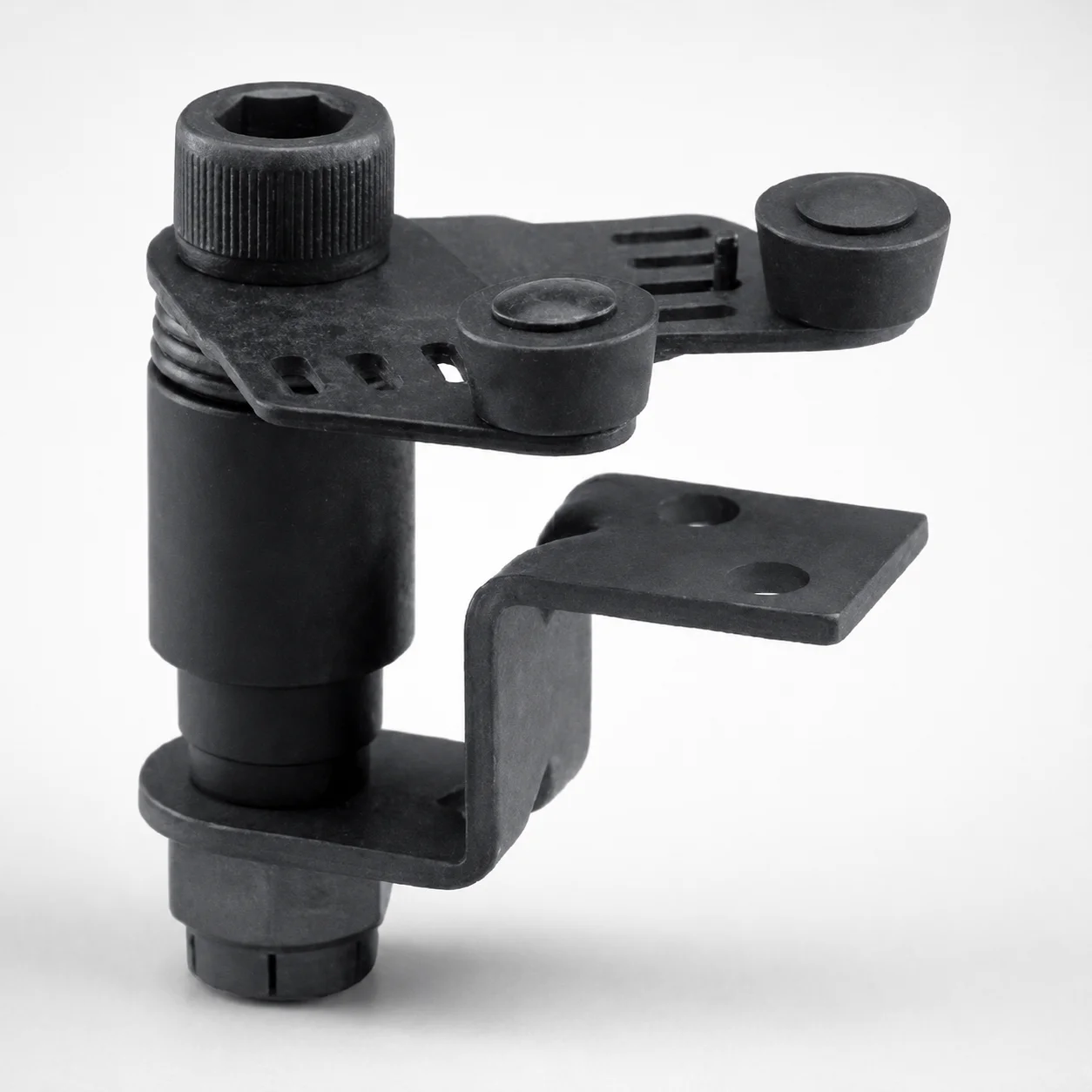
Inch Roller Stock Guides for Spring
Inch Roller Stock Guides for Spring (DANLY IEM) are designed to support and align spring-assisted material movement with robust steel construction. They help reduce friction and wear for stable positioning in demanding industrial setups.
- Stable guide design for consistent alignment during material handling
- Built with durable steel to minimize friction and wear
- Helps maintain smooth motion for dependable part positioning
- Typical use with spring units in heavy-duty die and feed systems
Specifications
2 configurations available
| D (Outer diameter) (in) | L (Guide length) (in) |
|---|---|
| 1-3/8" | 1-1/16" |
| 2" | 1-15/32" |
Product Guide
Application Scenarios+
In injection mold tooling, these inch roller stock guides are used to maintain smooth, repeatable alignment of spring-assisted material movement in auxiliary feed and die-handling systems. They’re particularly suited for heavy-duty coil-spring and spring-related components handling, where consistent positioning helps prevent binding and reduces long-term wear on contact surfaces.
- Automated die/feeder stations: Install the guides to stabilize stock travel driven by spring units, improving runout control and keeping moving parts centered under cyclic loading.
- Progressive stamping and component insertion support: Use them to reduce friction during controlled transfers, supporting stable part location for downstream forming or molding steps.
- High-cycle industrial alignment: The robust steel construction supports low-friction guidance for dependable motion during continuous production.
The provided variant targets alignment-critical setups by offering a compact outer diameter (D = 1-3/8 in or 2 in) and short guide lengths (L = 1-1/16 in or 1-15/32 in) that fit common spring-related guide footprints.
Material & Process Details+
These roller stock guides are built with durable steel for reliable support and alignment in spring-influenced material handling. While no specific steel grade is provided in the available data, the intent of a steel guide is to balance wear resistance (for sliding/rolling contact durability) with sufficient toughness to survive repetitive loading without chipping or deformation.
- Heat treatment (specified state not provided): Select the appropriate heat-treatment condition based on your operating conditions (contact stress, shock loading, and duty cycle). Typical practice for steel guides is using quenched & tempered or surface-hardened conditions when higher wear resistance is required.
- Hardness/tribology trade-off: Higher hardness generally improves wear resistance but can reduce toughness. For long-running feed systems, aim for an optimal balance so the guide resists surface wear while maintaining impact durability.
If your application involves higher abrasive contamination or heavy shock, request the exact material condition from the supplier to confirm hardness (HRC) and surface treatment compatibility.
Sizing & Selection Guide+
To select the correct roller stock guide dimensions, match the guide’s outer diameter (D) and guide length (L) to the mechanical envelope and support length defined by your mold tooling or feed mechanism.
- Outer diameter (D): Choose D = 1-3/8 in or D = 2 in based on the available bore/retainer clearance and the contact/rolling interface size in your design.
- Guide length (L): Select L = 1-1/16 in or L = 1-15/32 in to cover the required guidance zone where alignment must be maintained.
For best alignment, ensure the guide’s effective support length equals or slightly exceeds the expected travel path requiring stable centering. Because tolerance details are not provided in the available specifications, confirm your critical fit in the mating feature (retainer/bearing seat) to avoid binding or excessive clearance that can worsen wear.
The listed dimensions are the available fixed options; if your system needs an intermediate size, verify with the supplier on availability or customization.
Frequently Asked Questions
Which outer diameter (D) option should I use for compact spring-guide assemblies?+
This roller stock guide is offered in two outer diameter sizes: D = 1-3/8 in and D = 2 in. Choose D based on your available clearance in the retainer/bearing seat and the required rolling interface size. If you have tight packaging, the 1-3/8 in option typically fits smaller guide footprints.
How do I select the correct guide length (L) to maintain alignment during spring-driven motion?+
Guide length is available as L = 1-1/16 in or L = 1-15/32 in. Select L to cover the guidance zone where stock alignment must remain stable throughout the travel. If alignment loss occurs near the ends of travel, use the longer option or adjust the mounting position to extend effective support.
What steel hardness or heat treatment should I expect for these roller stock guides?+
The provided product data states the guides are made of steel, but it does not include a specific steel grade, hardness (HRC), or heat-treatment condition. Since wear resistance and toughness depend strongly on heat treatment, request the exact material condition for your duty cycle. Use hardness (HRC) and surface treatment details to confirm suitability for cyclic loading and any abrasive exposure.
Are these roller stock guides intended for low-friction spring feed systems in mold tooling?+
Yes. The design intent is to support and align spring-assisted material movement while reducing friction and wear, which is consistent with use in feed/die-handling systems. Use them where stable positioning under cyclic spring motion is critical, such as component transfer or progressive feed support adjacent to molding or forming operations.
Do I need special tolerance or fit guidance for mating features since tolerances aren’t listed?+
The specification provided includes D (1-3/8 in or 2 in) and L (1-1/16 in or 1-15/32 in) but does not list tolerance values. Because fit directly affects friction and wear, validate clearances in your retainer/bore and lock the design to your internal tolerance scheme. If binding risk exists, confirm minimum/maximum fit during design review with the supplier.
Related Products
Need Custom Specifications?
Our engineering team can help with custom configurations, material selection, and volume pricing.