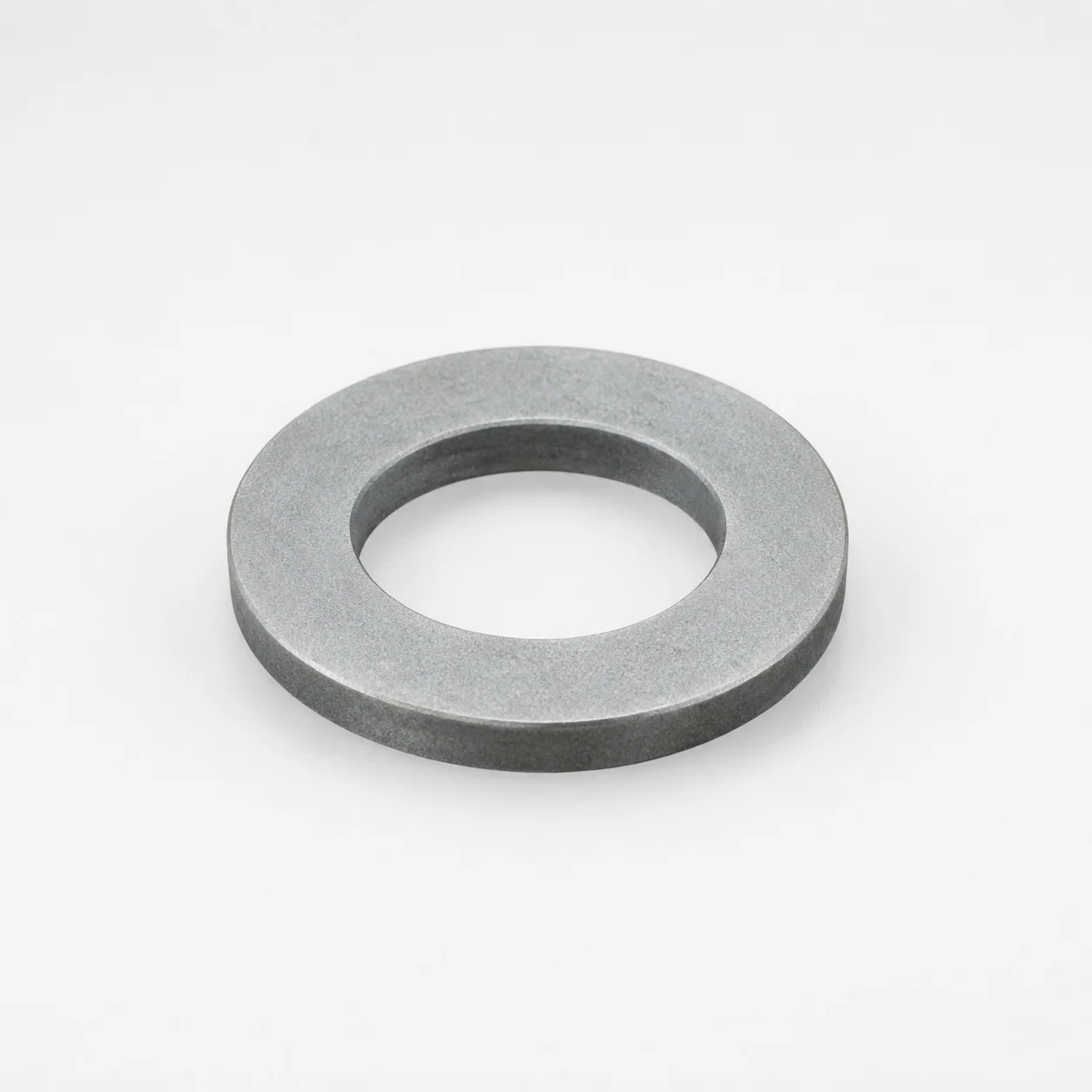
SSWA Series 1018 Carbon Steel Coil Spring Washers
SSWA Series 1018 carbon steel coil spring washers are designed for stable spring support in tooling and spring unit assemblies. Use the type SSWA washer to maintain correct seating under repetitive loads.
- Washer type SSWA fits coil spring applications with consistent spring positioning
- Built from 1018 carbon steel for dependable strength and manufacturable durability
- Outer diameter range supports flexible fit across 5 to 39 mm assemblies
- Height options 1.0–5.0 mm help select the right stackup for secure seating
Specifications
70 configurations available
| D (Outer diameter) (mm) | t (Height) (mm) | type |
|---|---|---|
| 5 | 1.0 | - |
| 5 | 2.0 | - |
| 5 | 3.0 | - |
| 5 | 4.0 | - |
| 5 | 5.0 | - |
| 7 | 1.0 | - |
| 7 | 2.0 | - |
| 7 | 3.0 | - |
| 7 | 4.0 | - |
| 7 | 5.0 | - |
| 9 | 1.0 | - |
| 9 | 2.0 | - |
| 9 | 3.0 | - |
| 9 | 4.0 | - |
| 9 | 5.0 | - |
| 11.5 | 1.0 | - |
| 11.5 | 2.0 | - |
| 11.5 | 3.0 | - |
| 11.5 | 4.0 | - |
| 11.5 | 5.0 | - |
| 13 | 1.0 | - |
| 13 | 2.0 | - |
| 13 | 3.0 | - |
| 13 | 4.0 | - |
| 13 | 5.0 | - |
| 15 | 1.0 | - |
| 15 | 2.0 | - |
| 15 | 3.0 | - |
| 15 | 4.0 | - |
| 15 | 5.0 | - |
| 17 | 1.0 | - |
| 17 | 2.0 | - |
| 17 | 3.0 | - |
| 17 | 4.0 | - |
| 17 | 5.0 | - |
| 19 | 1.0 | - |
| 19 | 2.0 | - |
| 19 | 3.0 | - |
| 19 | 4.0 | - |
| 19 | 5.0 | - |
| 21 | 1.0 | - |
| 21 | 2.0 | - |
| 21 | 3.0 | - |
| 21 | 4.0 | - |
| 21 | 5.0 | - |
| 24 | 1.0 | - |
| 24 | 2.0 | - |
| 24 | 3.0 | - |
| 24 | 4.0 | - |
| 24 | 5.0 | - |
Product Guide
Application Scenarios+
Where it’s used: These coil spring washers are specified in injection mold tooling when springs must maintain stable seating during repeated clamp, ejector-actuation, or spring-return cycles.
- Spring unit assemblies for ejector return: Use the type variant to keep the spring centered and prevent rocking, improving repeatability under cyclic load.
- Automotive and general industrial connector tooling: In compact spring stacks, choose the available height options to achieve correct preload and consistent support across parts with varying spring free-length and load ratings.
- Fixture and wear-compensation mechanisms: When tolerances stack up across the spring stack-up, selecting an appropriate outer diameter within the 5–39 mm range helps ensure proper contact area.
Why this variant suits these uses: Manufactured from 1018 carbon steel, it provides dependable support for spring seating and is available in 1.0–5.0 mm heights, enabling precise stackup control for stable performance in spring-related components.
Material & Process Details+
Steel grade (1018): The washer is made from 1018 carbon steel, a low-carbon steel typically used for parts that require good formability and reliable mechanical strength without the brittleness of higher-hardness tool steels.
Heat treatment state: Based on the provided data, the specification is for 1018 carbon steel washers; heat-treatment details (e.g., quenched & tempered or nitrided) are not specified. In practice, such washers are commonly used in a supplied condition optimized for manufacturability and assembly fit.
- Hardness / wear vs. toughness: Low-carbon steels generally prioritize toughness and dimensional stability over extreme wear resistance; expect moderate wear resistance compared with hardened spring steels.
- Trade-off: Suitable for supporting springs and maintaining seating, while high-abrasion environments may require hardened or coated alternatives (not provided in this dataset).
For applications demanding higher surface durability, verify whether your project can use a hardened washer material in the same dimensional envelope.
Sizing & Selection Guide+
Step 1: Match outer diameter (D): Select a washer with outer diameter D = 5 to 39 mm so the washer covers the intended support area around the spring seat. Use the cavity/core or support plate contact geometry to determine the required OD clearance.
Step 2: Choose height (t) for stackup/preload: Pick the appropriate thickness/height from the available options: t = 1.0, 2.0, 3.0, 4.0, or 5.0 mm. The correct height ensures the spring seats squarely and achieves the intended stack height in the assembly.
- Step 3: Tolerance & fit checks: Confirm that the chosen OD and height allow for machining tolerances in the spring pocket and any counterbore/bearing surface. If the assembly relies on centering, verify concentricity requirements and avoid undersupport caused by a washer OD that is too small.
- Fixed vs. configurable dimensions: Dimensions are fixed by the selected size (D within 5–39 mm, and t selected from the listed discrete values).
Frequently Asked Questions
How do I select the correct outer diameter (D) for SSWA coil spring washer support in a spring unit?+
Which height (t) options are available for the SSWA washer, and how does height affect preload and seating?+
What material is used for SSWA washers, and is there a specified heat treatment or hardness value?+
Is the SSWA washer intended to center the coil spring, and what design checks should I perform?+
Can I use SSWA washers across different spring stackups by swapping only height t?+
Related Products
Need Custom Specifications?
Our engineering team can help with custom configurations, material selection, and volume pricing.