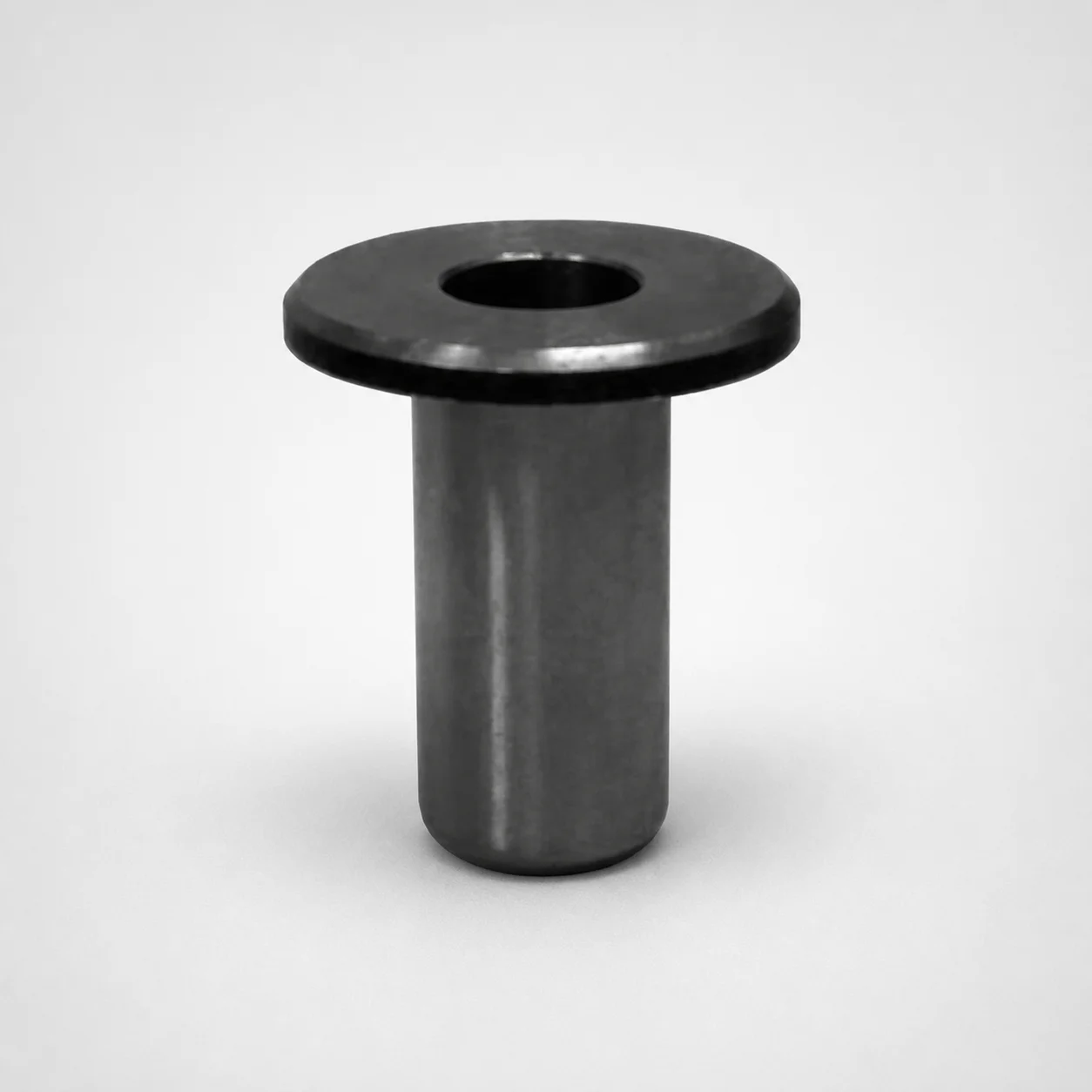
JIS Metric Steel Spring Retainers
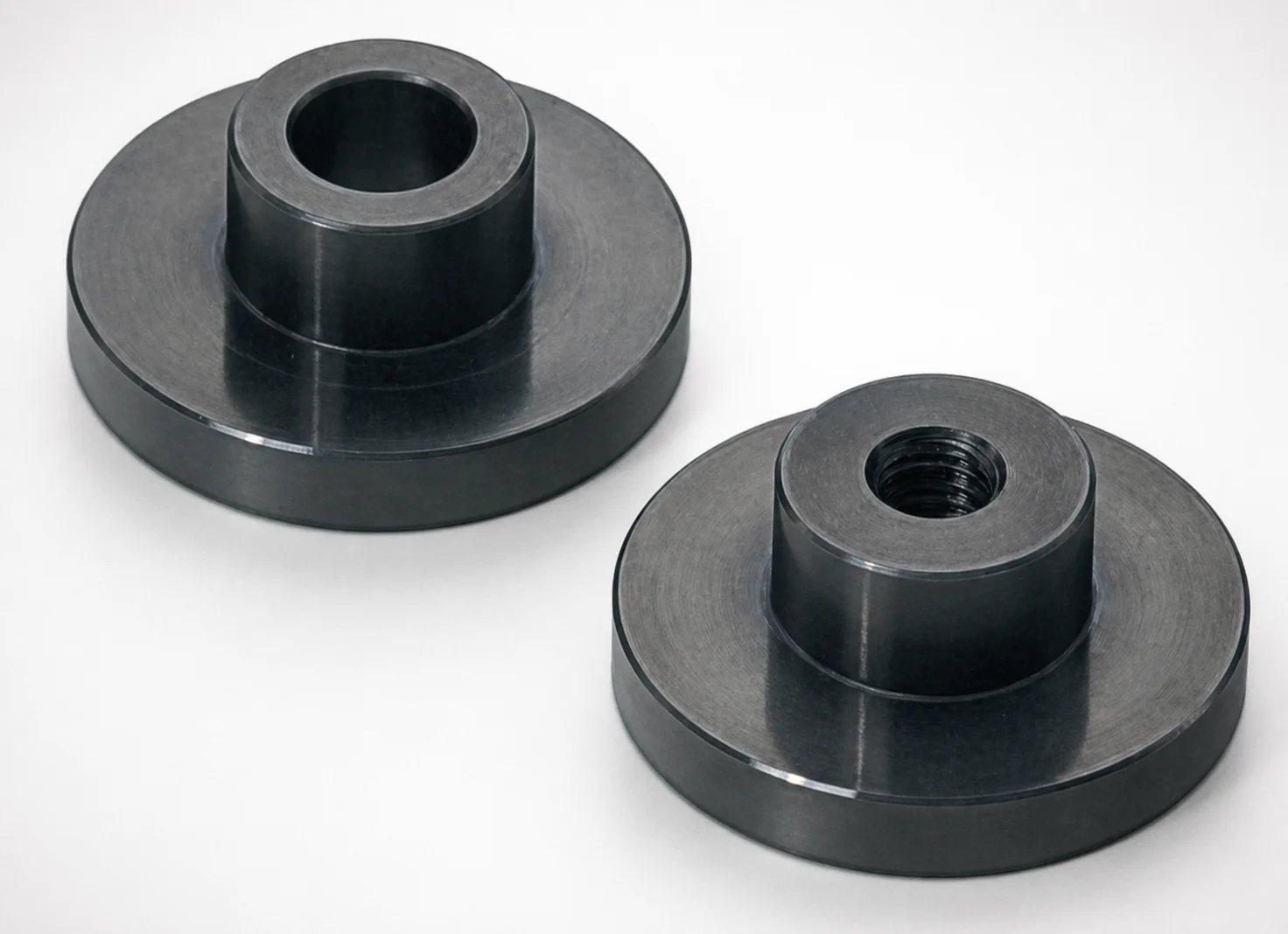
JIS Metric steel spring retainers from DANLY IEM provide secure spring support and dependable retention. They help maintain consistent tension in press and machinery assemblies while reducing wear during repeated cycles.
- Spring retention design supports stable positioning of coil springs
- JIS steel construction provides durable load holding
- Optimized fit for spring assemblies to help maintain consistent tension
- Used in automotive, aerospace, and industrial mechanical equipment
Specifications
3 configurations available
| D (Outer diameter) (mm) | Spring Diameter (mm) | D Dimension (mm) |
|---|---|---|
| 37 | 40 | 44 |
| 49 | 50 | 44 |
| 49 | 50 | 70 |
Product Guide
Application Scenarios+
These JIS metric spring retainers are used inside injection mold tooling and molded-product assemblies wherever a coil spring must be held precisely under repeated cycling. In precision die cushioning and ejector systems, the retainer supports the spring’s seating location so the spring maintains consistent load transfer across many open/close cycles.
For hot-runner and heated component interfaces, the retainer helps stabilize coil spring alignment around the spring diameter range specified for the application, supporting predictable force delivery during thermal expansion cycles.
In automotive or industrial actuator mechanisms built into tooling inserts, the JIS steel build and retention geometry reduce micro-movement at the spring interface, which can otherwise accelerate wear and change force over time. This makes the correct outer diameter and spring-diameter pairing essential for reliable retention.
- Use when you need stable coil spring positioning for repeatable tension
- Select size by matching outer diameter and spring diameter to the spring assembly
- Employ to reduce wear from repeated loading
Material & Process Details+
The retainers are specified as JIS steel, selected for consistent load holding and durable wear resistance in spring support applications. While specific grade and hardness values are not provided in the current dataset, the JIS steel selection is intended to balance toughness (resisting cracking or deformation under cyclic forces) with wear resistance at the spring seating interface.
- Heat treatment (typical for spring retainers): often supplied in a hardened/tempered condition to improve wear resistance and dimensional stability under load.
- Hardness trade-off: higher hardness generally improves abrasion resistance but can reduce impact toughness if over-processed.
If you are comparing alternatives, aim for materials with similar toughness/ductility to the chosen JIS steel to avoid premature damage under shock loads in press or tooling mechanisms.
Sizing & Selection Guide+
Proper sizing is determined by matching the retainer’s outer diameter and the spring diameter it must capture. From the provided specifications, the outer diameter (D) is available at 37 mm and 49 mm. The compatible spring diameter is listed as 40 mm and 50 mm, so select the retainer size that corresponds to the spring you are retaining.
Also confirm the D dimension values—44 mm and 70 mm—which should align with the surrounding housing feature or tooling pocket where the retainer seats.
- Match D (outer diameter) to the spring retainer seat geometry
- Match Spring Diameter to the actual coil spring outer diameter
- Validate D dimension against the molded/tooling counterbore or clearance space
Tolerance and fit are critical for retention. Ensure you design the housing pocket and mating features to control clearance so the spring remains seated without excessive play, while avoiding interference that could hinder assembly.
Frequently Asked Questions
Which retainer size should I select for a coil spring with a 50 mm diameter?+
What dimensions define the interface between the spring retainer and the tooling pocket?+
Is the JIS steel construction suitable for wear reduction in cyclic spring support applications?+
What happens if I mix the wrong outer diameter (D) retainer with a spring diameter outside the listed options?+
Do these retainers come as fixed dimensions, or can key sizes be configured?+
Related Products
Need Custom Specifications?
Our engineering team can help with custom configurations, material selection, and volume pricing.