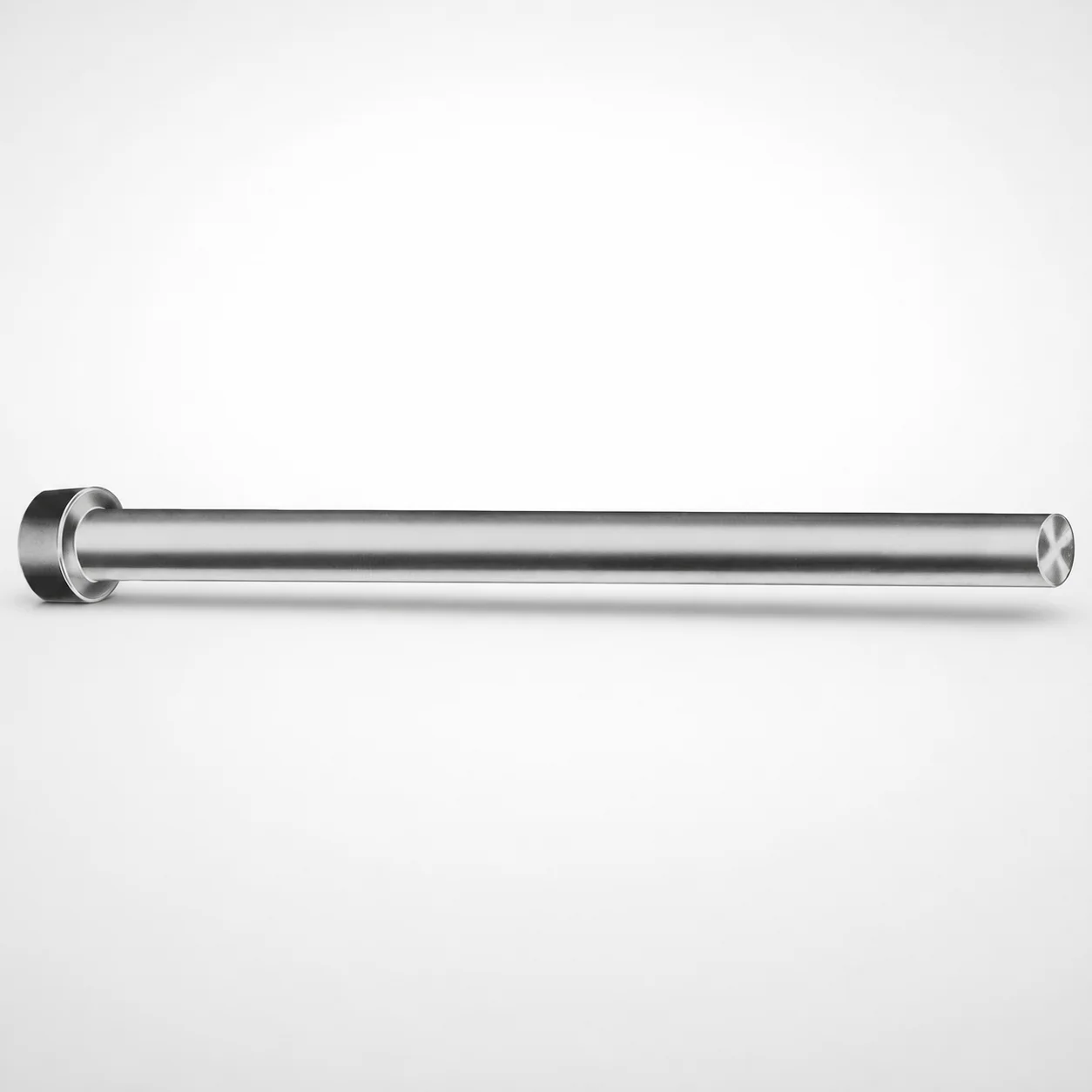
Close Space Punch Blanks - Metric XNP Coating
Close space punch blanks - metric XNP coating are designed for compact die layouts where punch clearance is limited. The XNP coating supports wear resistance during repeated forming cycles for consistent production output.
- Compact close-space punch blank geometry for efficient die packaging
- Protective XNP coating helps reduce wear in high cycle use
- Metric shank and blank configurations support assembly compatibility
- Built to Dayton LAMINA standardized part numbering for traceability
Specifications
6 configurations available
| D (Shank dia.) (mm) | L (Length) (mm) |
|---|---|
| 02 | 40 ~ 100 |
| 03 | 40 ~ 100 |
| 04 | 40 ~ 100 |
| 05 | 40 ~ 100 |
| 06 | 40 ~ 100 |
| 07 | 40 ~ 100 |
Product Guide
Application Scenarios+
Close-space punch blanks are used in progressive and fine blanking die sets where punch-to-matrix clearance is tightly controlled to maintain part accuracy. The compact blank geometry supports efficient die packaging, making it suitable for high-density tooling in automotive terminals and connector components.
In high-cycle forming operations, the XNP coating is selected to help reduce surface wear and maintain stable punch performance over repeated strokes. This makes the variant a strong fit for appliance and electronics enclosures where dimensional consistency is required across long production runs.
- Automotive connector and terminal dies: limited clearance benefits from the close-space geometry and metric configurations.
- High-cycle sheet metal forming: XNP coating supports improved wear resistance for consistent output.
- Compact die layouts: fixed length range simplifies integration into existing die blocks and tooling stacks.
Material & Process Details+
The provided specification set confirms a metric close-space punch blank with an XNP coating, but does not state the base steel grade or heat-treatment condition (e.g., quench & temper, nitriding, or pre-hardened state). As a result, the exact hardness in HRC and the base-material toughness/wear trade-off cannot be verified from the supplied data.
Practically, XNP coatings are selected to improve wear resistance at the working surface and to resist degradation under repeated forming cycles. Coating performance typically shifts the tool’s wear behavior toward longer service life, while the underlying steel primarily governs toughness and resistance to cracking under load.
- Coating: XNP (wear-focused surface protection for stable high-cycle use)
- Heat treatment: Not specified in the input data
- Hardness (HRC): Not specified in the input data
Sizing & Selection Guide+
Selection starts with the shank diameter D and the fixed punch length L. Available shank diameter options are D = 02, 03, 04, 05, 06, 07 mm, while the punch length is fixed to L = 40 to 100 mm.
To match your mold or die, choose D to fit the guide bushing or retention bore that supports the punch shank. Then set L so the punch engagement length and protrusion meet the required forming depth while maintaining clearance for the die stack.
- Match D to the guide/support diameter for stable alignment.
- Match L to the required stroke working height and die block thickness.
- Tolerance/fit: verify that your receiving bore clearance accounts for manufacturing tolerances and any coating thickness where relevant.
- Configurable vs. fixed: D is selectable from the provided discrete options; L is available across 40–100 mm.
Frequently Asked Questions
Which shank diameters (D) are available for this close-space punch blank, and how do I choose the right one for my die guide?+
What length range (L) can I select, and how should L be matched to die stack height?+
What does the XNP coating contribute for high-cycle forming, and does the provided data specify base-steel hardness?+
Is this suited for compact die layouts with limited punch clearance, and what design feature enables that?+
How does the series code relate to tooling traceability for punch blanks in a die build?+
Related Products
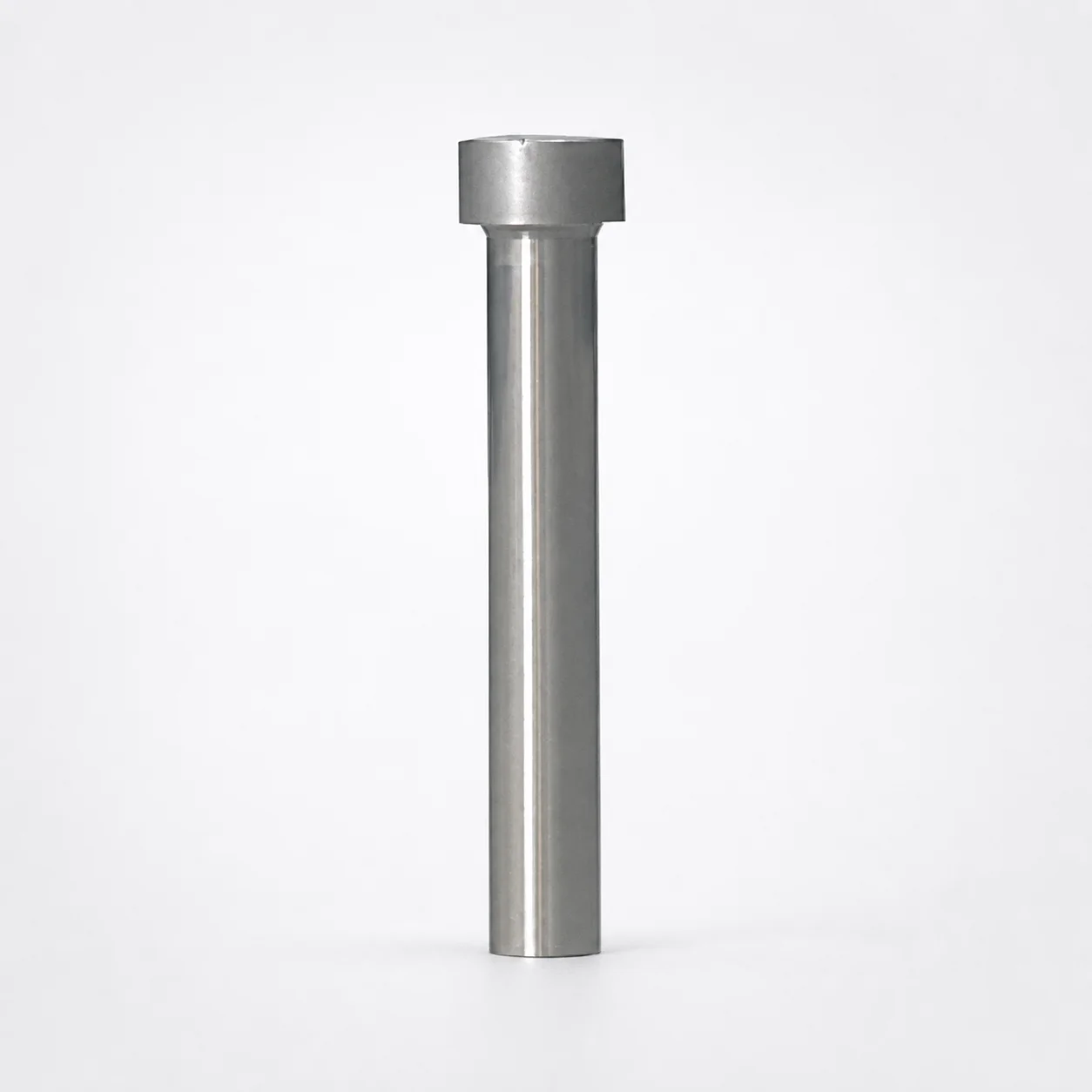
Ejector Punch Blanks (Blank, Standard)
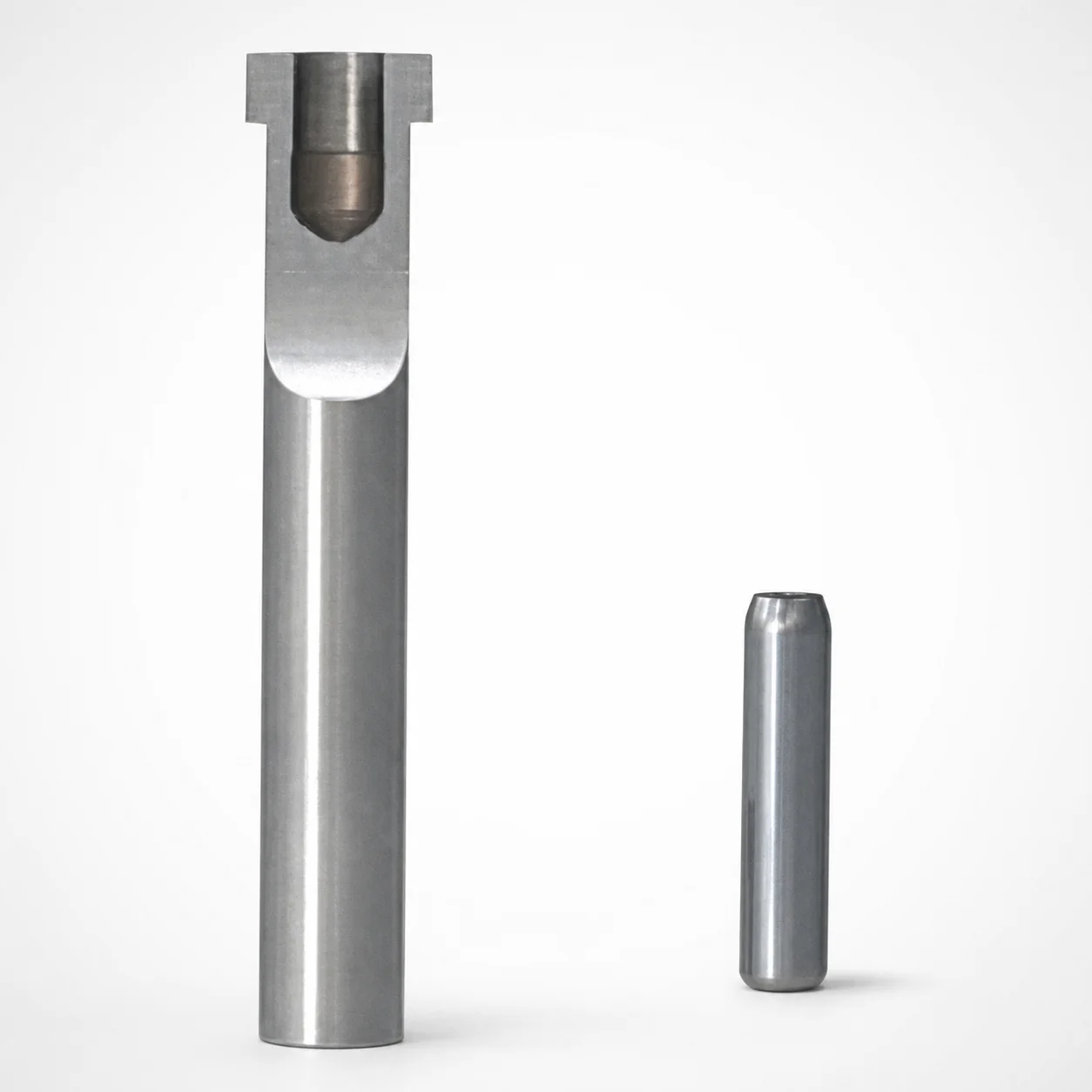
SKD11 Equivalent Steel Ejector Punch Blanks with Locating Dowel Hole
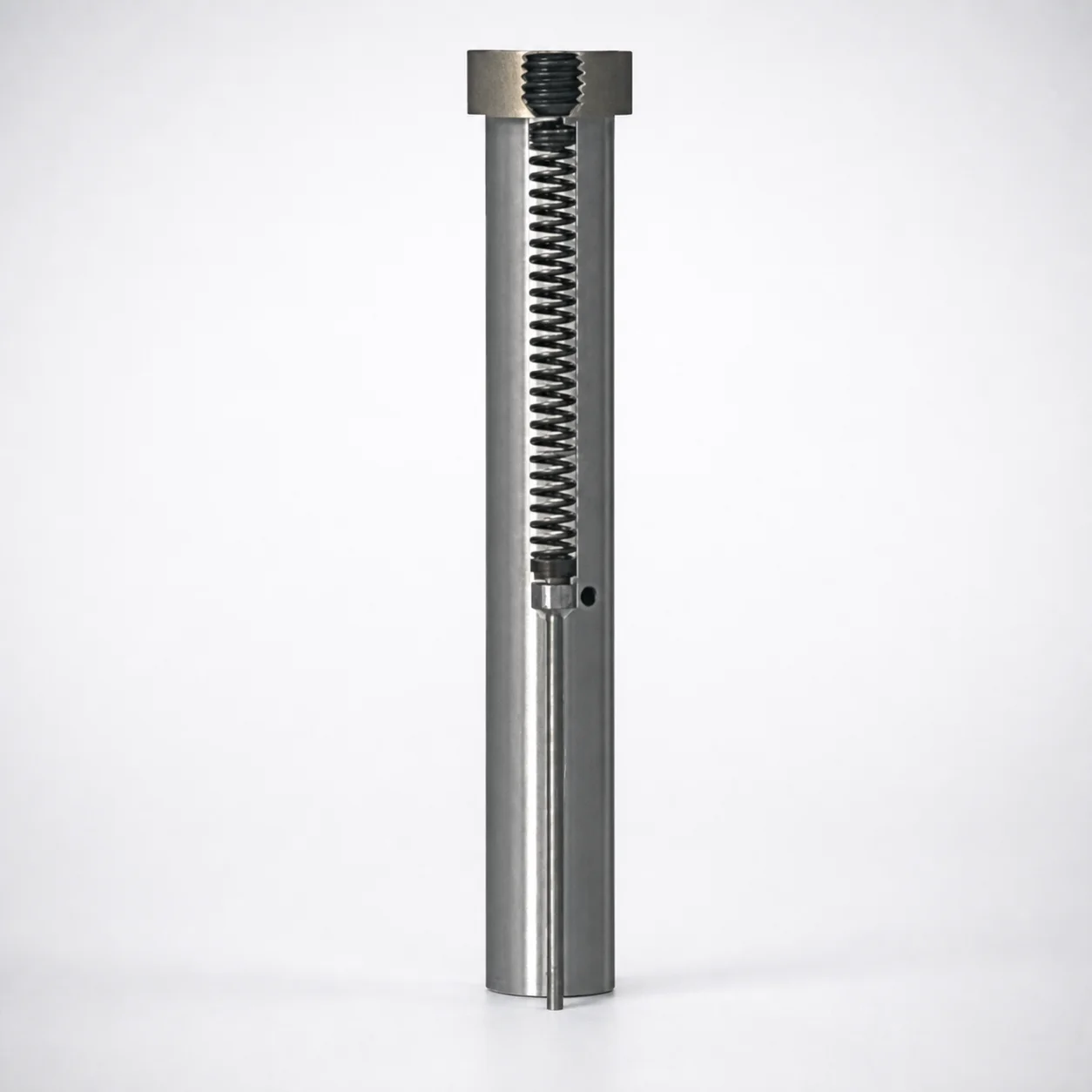
Large-Diameter Pin Type Ejector Punch Blanks
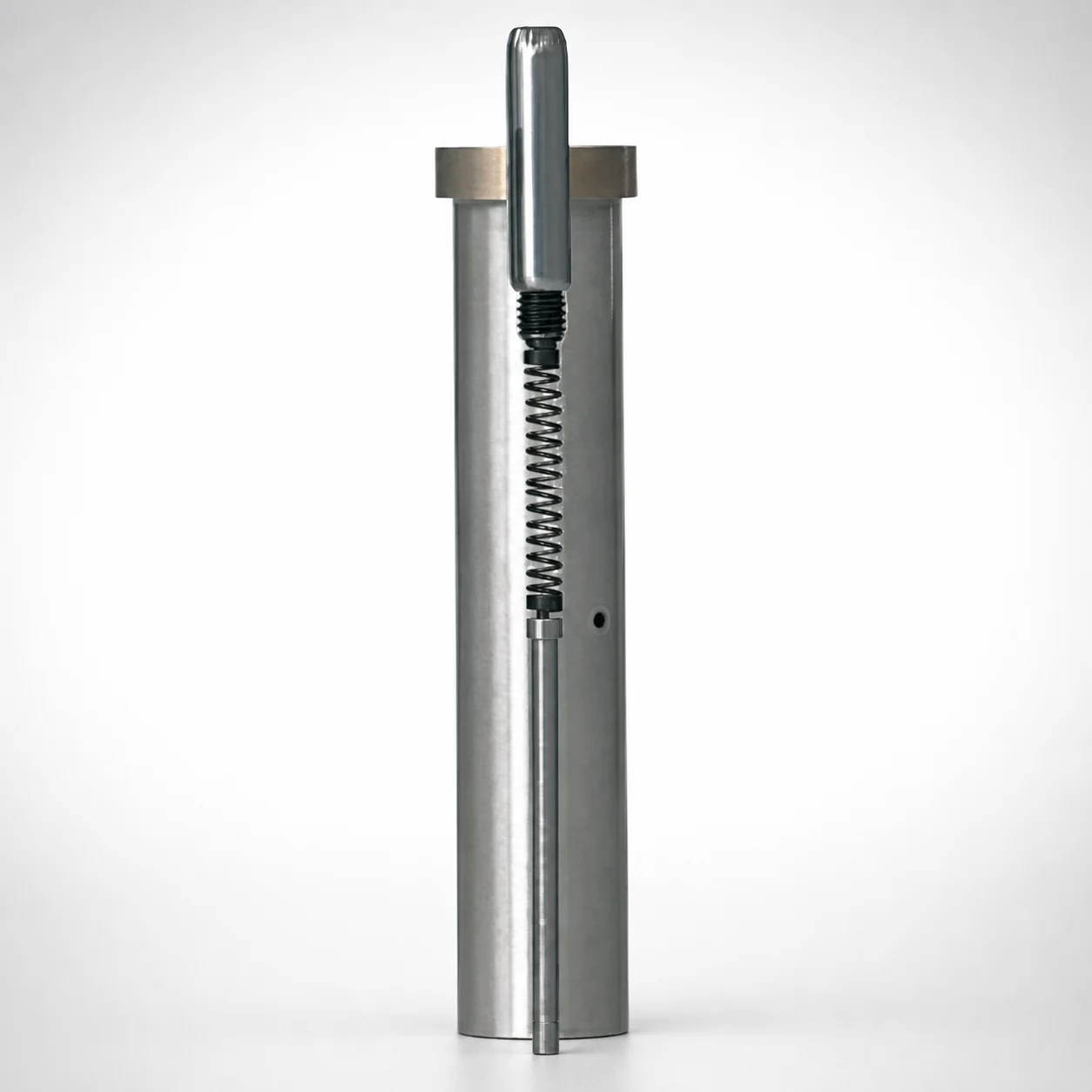
SKD11 Steel Ejector Punch Blank with Locating Dowel Hole (D2 Equivalent)
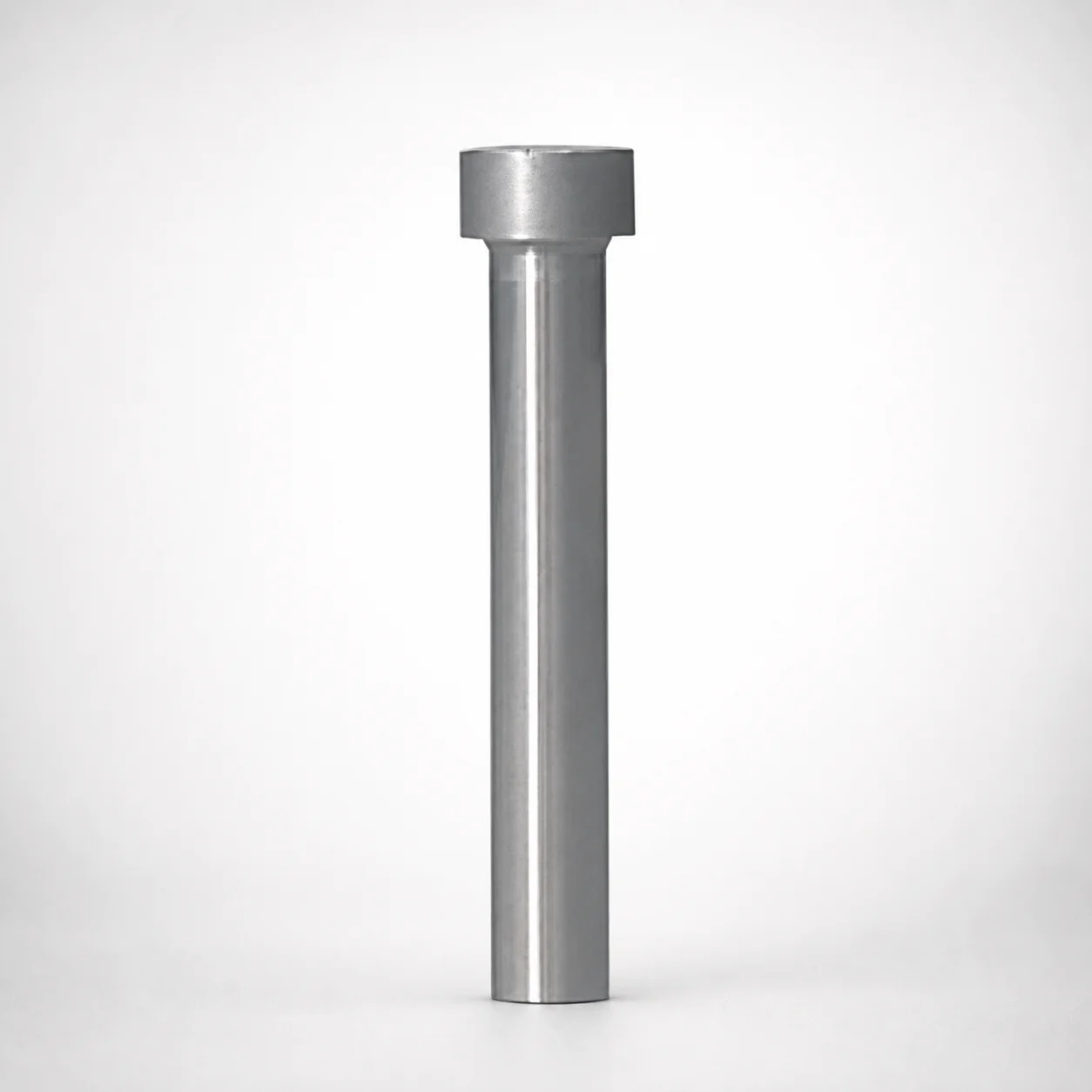
Heavy Load Punch Blanks - Metric (Diameters 10-25 mm)
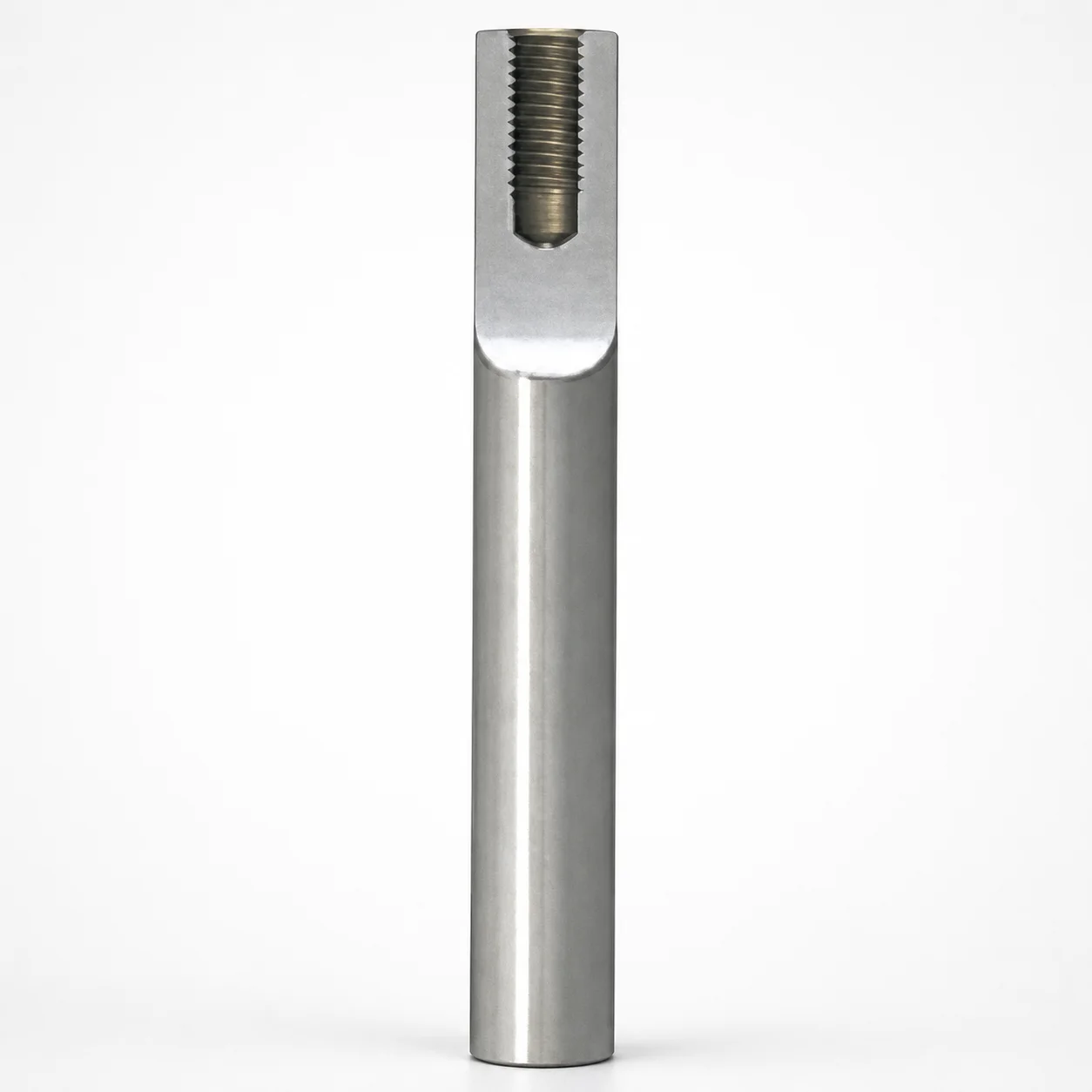
Metric Tapped Punch Blanks for Bolt-Fixed Punches
Need Custom Specifications?
Our engineering team can help with custom configurations, material selection, and volume pricing.