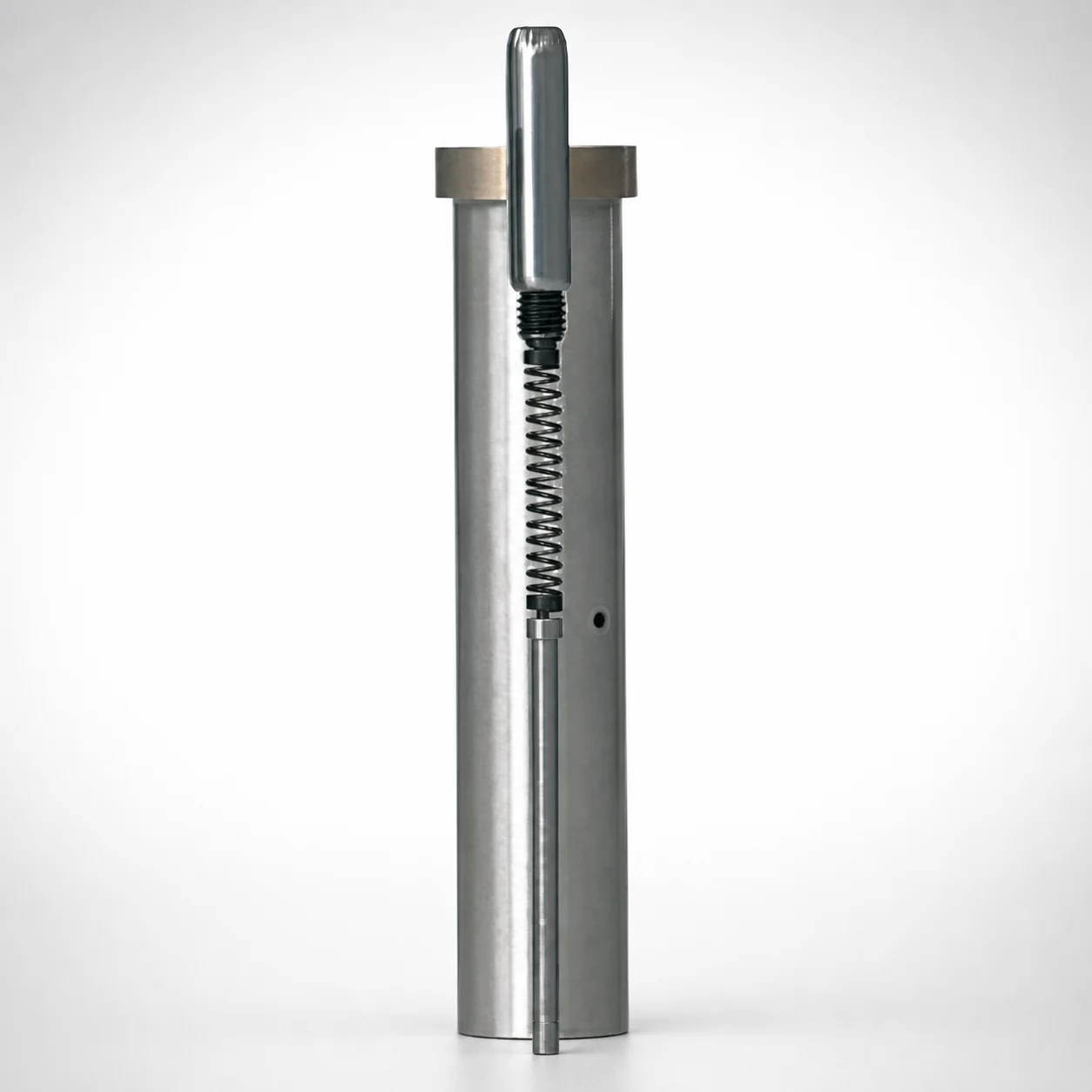
SKD11 Steel Ejector Punch Blank with Locating Dowel Hole (D2 Equivalent)
SKD11 Steel Ejector Punch Blank with Locating Dowel Hole (D2 Equivalent) is a heavy-duty die component blank designed to provide accurate punch centering. The locating dowel hole supports repeatable alignment during press operation and improves build consistency.
- Blank shank with locating dowel hole for stable center positioning
- SKD11 (D2 equivalent) steel construction offers high wear resistance
- Shank diameter tolerance reference m5 supports consistent fit-up
- Suitable for standard or spring reinforced ejector punch blank applications
Specifications
52 configurations available
| Ejector | D (Shank diameter) (mm) | L (L dimension) (mm) | S dimension (mm) | LC (Full length alteration) (mm) | type |
|---|---|---|---|---|---|
| Standard type | 10 | 60 ~ 120 | 28 | - | - |
| Standard type | 10 | - | 28 | 40 ~ 119.9 | - |
| Standard type | 13 | 60 ~ 120 | 28 | - | - |
| Standard type | 13 | - | 28 | 40 ~ 119.9 | - |
| Standard type | 16 | 60 ~ 120 | 36 | - | - |
| Standard type | 16 | - | 36 | 40 ~ 119.9 | - |
| Standard type | 20 | 60 ~ 120 | 36 | - | - |
| Standard type | 20 | - | 36 | 40 ~ 119.9 | - |
| Standard type | 25 | 60 ~ 120 | 36 | - | - |
| Standard type | 25 | - | 36 | 40 ~ 119.9 | - |
| Standard type | 32 | 60 ~ 120 | 36 | - | - |
| Standard type | 32 | - | 36 | 40 ~ 119.9 | - |
| Standard type | 38 | 60 ~ 120 | 37 | - | - |
| Standard type | 38 | - | 37 | 40 ~ 119.9 | - |
| Standard type | 45 | 60 ~ 120 | 37 | - | - |
| Standard type | 45 | - | 37 | 40 ~ 119.9 | - |
| Spring reinforced type | 10 | 60 ~ 120 | 28 | - | - |
| Spring reinforced type | 10 | - | 28 | 40 ~ 119.9 | - |
| Spring reinforced type | 13 | 60 ~ 120 | 28 | - | - |
| Spring reinforced type | 13 | - | 28 | 40 ~ 119.9 | - |
| Spring reinforced type | 16 | 60 ~ 120 | 36 | - | - |
| Spring reinforced type | 16 | - | 36 | 40 ~ 119.9 | - |
| Spring reinforced type | 20 | 60 ~ 120 | 36 | - | - |
| Spring reinforced type | 20 | - | 36 | 40 ~ 119.9 | - |
| Spring reinforced type | 25 | 60 ~ 120 | 36 | - | - |
| Spring reinforced type | 25 | - | 36 | 40 ~ 119.9 | - |
| Spring reinforced type | 32 | 60 ~ 120 | 36 | - | - |
| Spring reinforced type | 32 | - | 36 | 40 ~ 119.9 | - |
| Standard type | 10 | 100 ~ 120 | 40 | - | - |
| Standard type | 10 | - | 40 | 90 ~ 119.9 | - |
| Standard type | 13 | 100 ~ 120 | 40 | - | - |
| Standard type | 13 | - | 40 | 90 ~ 119.9 | - |
| Standard type | 16 | 100 ~ 120 | 50 | - | - |
| Standard type | 16 | - | 50 | 90 ~ 119.9 | - |
| Standard type | 20 | 100 ~ 120 | 50 | - | - |
| Standard type | 20 | - | 50 | 90 ~ 119.9 | - |
| Standard type | 25 | 100 ~ 120 | 50 | - | - |
| Standard type | 25 | - | 50 | 90 ~ 119.9 | - |
| Standard type | 32 | 100 ~ 120 | 50 | - | - |
| Standard type | 32 | - | 50 | 90 ~ 119.9 | - |
| Spring reinforced type | 10 | 100 ~ 120 | 40 | - | - |
| Spring reinforced type | 10 | - | 40 | 90 ~ 119.9 | - |
| Spring reinforced type | 13 | 100 ~ 120 | 40 | - | - |
| Spring reinforced type | 13 | - | 40 | 90 ~ 119.9 | - |
| Spring reinforced type | 16 | 100 ~ 120 | 50 | - | - |
| Spring reinforced type | 16 | - | 50 | 90 ~ 119.9 | - |
| Spring reinforced type | 20 | 100 ~ 120 | 50 | - | - |
| Spring reinforced type | 20 | - | 50 | 90 ~ 119.9 | - |
| Spring reinforced type | 25 | 100 ~ 120 | 50 | - | - |
| Spring reinforced type | 25 | - | 50 | 90 ~ 119.9 | - |
Product Guide
Application Scenarios+
This ejector punch blank is used in die and press tooling where reliable punch-to-die alignment is critical. The locating dowel hole enables repeatable centering during assembly, helping prevent drift and uneven wear under cyclic loading.
- Heavy-duty die work: For progressive or transfer tooling, the SKD11/D2-equivalent construction supports stable shank guidance and abrasion resistance when punches strike repeatedly.
- Ejector systems in stamping: Select the standard or spring reinforced type to manage part ejection forces while maintaining punch alignment across press cycles.
- Precision punch stations: The m5-referenced shank diameter tolerance supports consistent fit-up with guide components, improving long-term alignment consistency.
Overall, this variant is suited for applications that require secure centering, predictable ejector behavior, and durable performance in wear-prone die environments.
Material & Process Details+
The blank is made from SKD11 steel, which is commonly treated as a D2-equivalent tool steel for wear-focused punch components. SKD11 provides strong wear resistance for abrasion-prone die edges and guiding surfaces, with a toughness that is suitable for heavy-duty punch operation when properly heat treated.
- Heat treatment (typical for D2-class steels): Usually quenched and tempered to a working hardness target, balancing edge stability with resistance to chipping.
- Hardness & trade-offs: After quench & temper, hardness is typically selected in a mid-to-high HRC range to maximize wear resistance, while acknowledging that higher hardness can reduce impact toughness if not tuned for the application.
- Manufacturing approach: Produced as a ground/formed punch blank, then finished to the required dimensions and prepared for subsequent machining into an ejector punch.
If comparing alternatives, D2-equivalent steels generally prioritize wear over maximum toughness; choose them when alignment stability and surface durability matter most.
Sizing & Selection Guide+
Select the blank dimensions to match the ejector punch shank fit and the required stroke/clearance envelope in the die. Start by choosing the shank diameter D (10 ~ 45 mm) that matches your die’s guiding components and retains the intended m5 fit-up. Use the shank diameter and the locating dowel hole feature to ensure correct centering.
- Length L: Available ranges are 60–120 mm or 100–120 mm depending on the variant; confirm this against your ejector travel and available die shut height.
- S dimension: Choose from 28, 36, 37, 40, 50 mm to align with your punch mounting geometry and spacing requirements.
- LC (full length alteration): Select within 40–119.9 mm or 90–119.9 mm based on your planned finish-machining allowance and final assembly length.
For spring reinforced builds, verify that the selected L and LC still provide adequate clearance under load.
Frequently Asked Questions
Which SKD11 (D2-equivalent) ejector punch blank type should I choose: standard or spring reinforced?+
Use the standard type when ejector forces and alignment loads are relatively stable through the press cycle. Choose the spring reinforced type when you need compliance to better manage ejection force variations while still maintaining guidance.
Both types retain the same centering concept via the locating dowel hole, but the structural behavior under load differs.
How do I select the shank diameter D to achieve the intended m5 fit-up?+
The shank diameter D is specified in the range 10 ~ 45 mm and the product data references an m5 tolerance basis. Match D to the guide/bushing bore sizing used in your die build so the shank achieves the targeted sliding fit and repeatable alignment.
Confirm additional assembly clearances in your CAD to account for machining of the final punch.
What are the available length options (L and LC) for this ejector punch blank, and how do they affect die height?+
The L dimension is offered in ranges of 60–120 mm or 100–120 mm, while LC (full length alteration) is available at 40–119.9 mm or 90–119.9 mm. These choices directly influence how much space the assembled ejector system occupies in the die.
Select a length that provides required stroke/clearance after your machining and finish allowances are applied.
Why is the locating dowel hole important for ejector punch alignment, and how does it interact with S and LC?+
The locating dowel hole supports repeatable centering, which helps maintain punch alignment during press operation and reduces the risk of uneven wear. When configuring the assembly, ensure the chosen S value (28, 36, 37, 40, 50 mm) and LC range provide correct positioning relative to your ejector stack and mounting geometry.
This alignment feature works together with your shank diameter (D) fit to stabilize center positioning.
Is SKD11 adequate for wear resistance in heavy-duty die work compared with other D2-class options?+
This blank uses SKD11, referenced as D2-equivalent, which is selected for strong wear resistance in punch and die components. In D2-class steels, hardness after quench and temper is typically used to optimize wear performance, with a trade-off in toughness if the target hardness is pushed too high.
For wear-dominant operations with stable alignment, SKD11 is generally a suitable choice; tune heat treatment and hardness to your load and impact profile.
Related Products
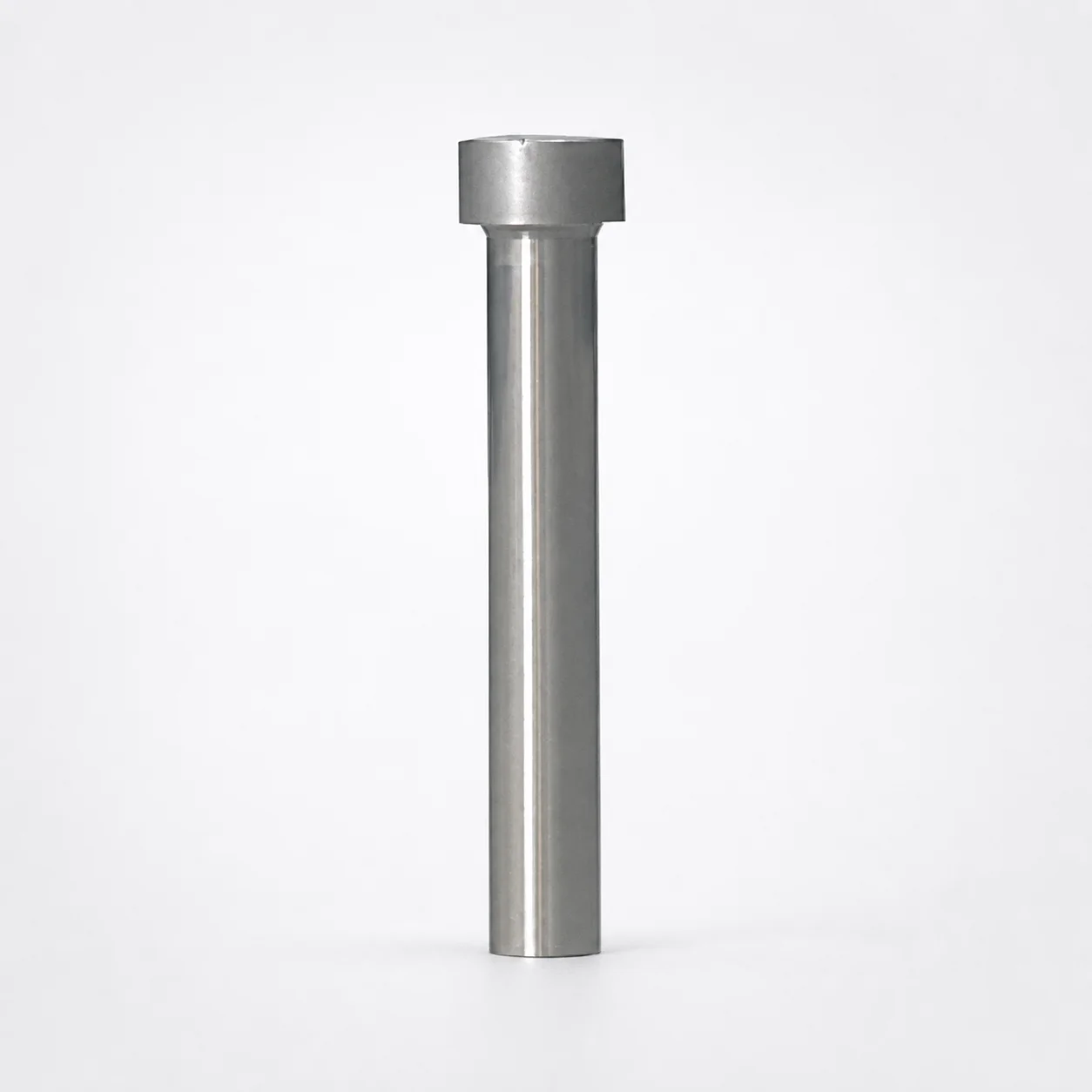
Ejector Punch Blanks (Blank, Standard)
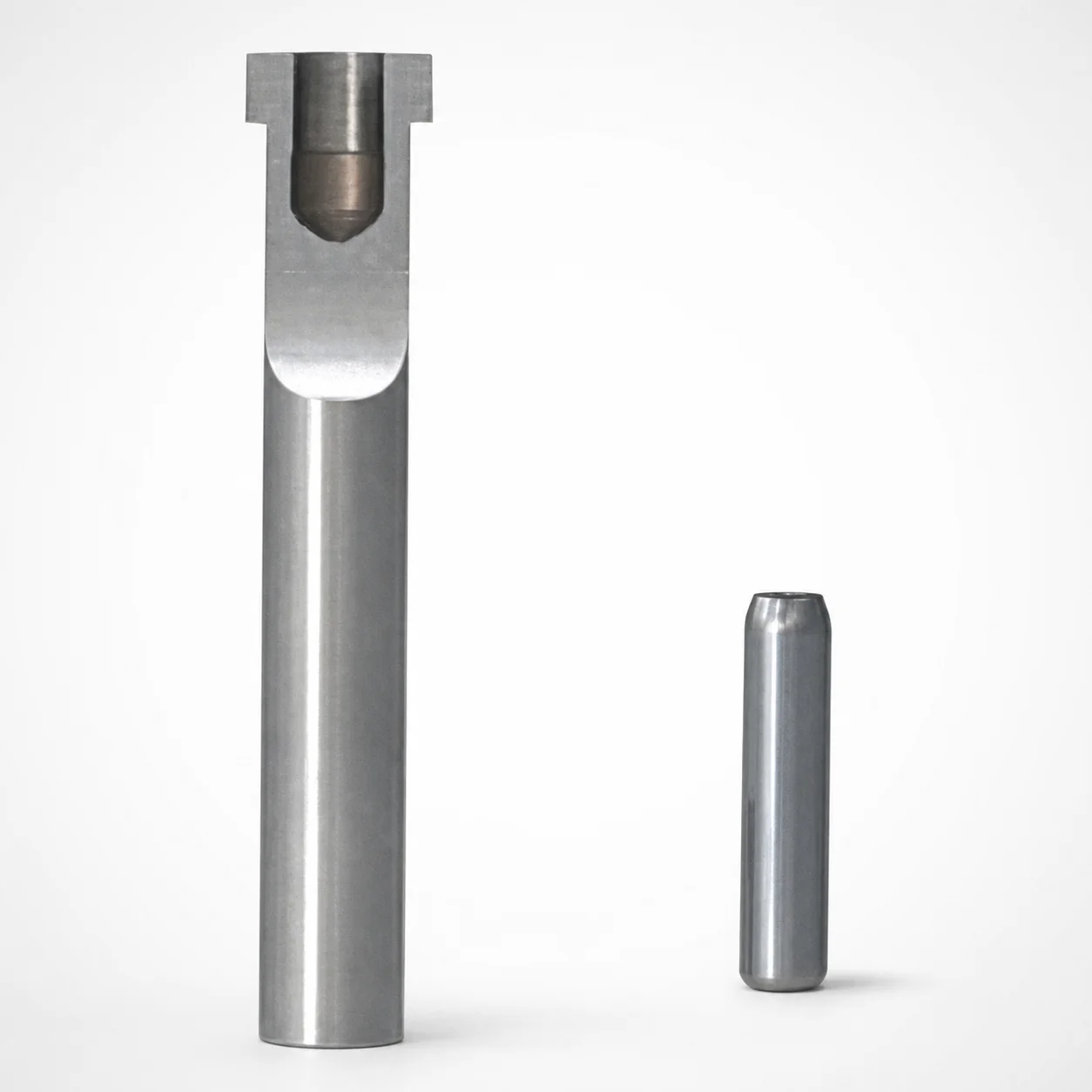
SKD11 Equivalent Steel Ejector Punch Blanks with Locating Dowel Hole
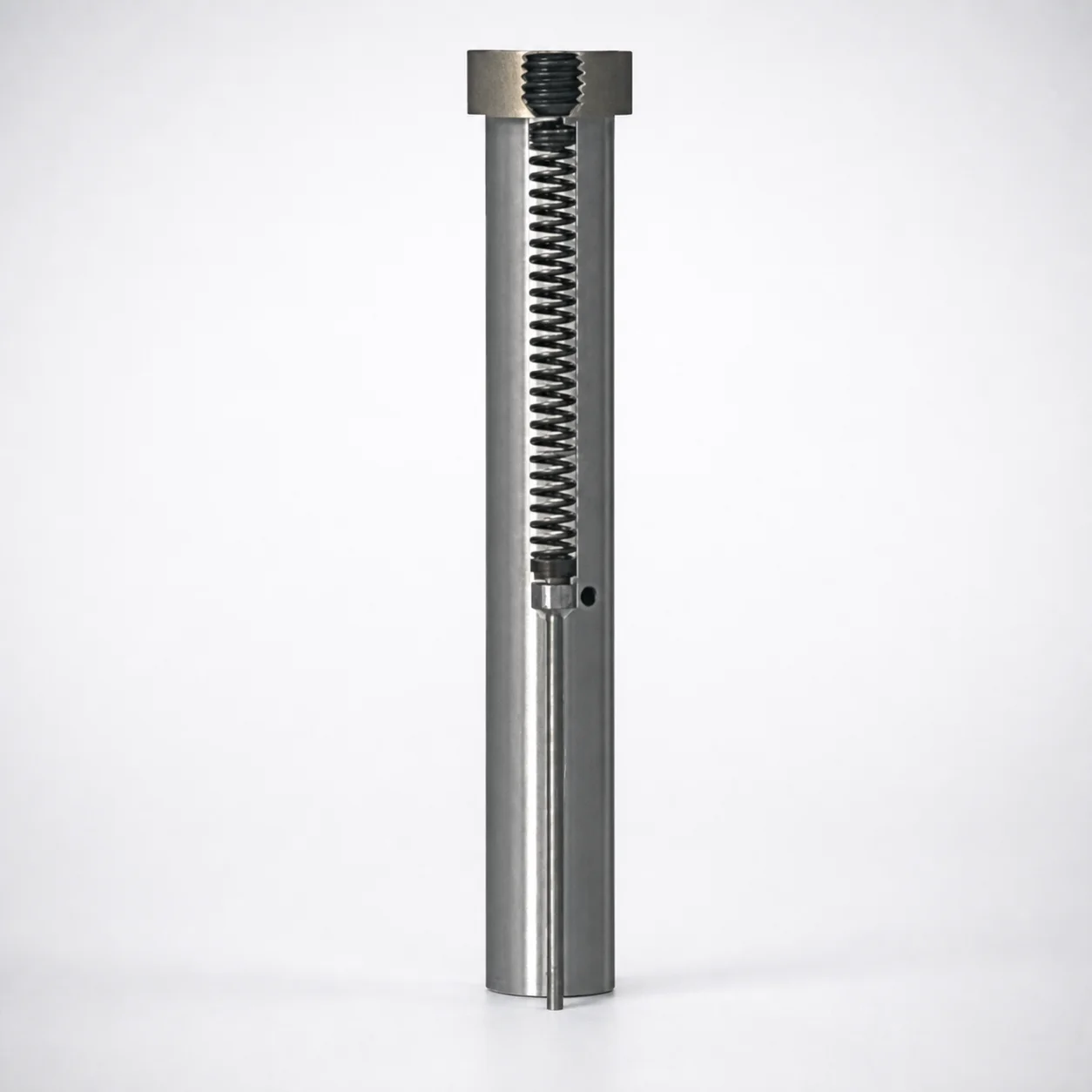
Large-Diameter Pin Type Ejector Punch Blanks
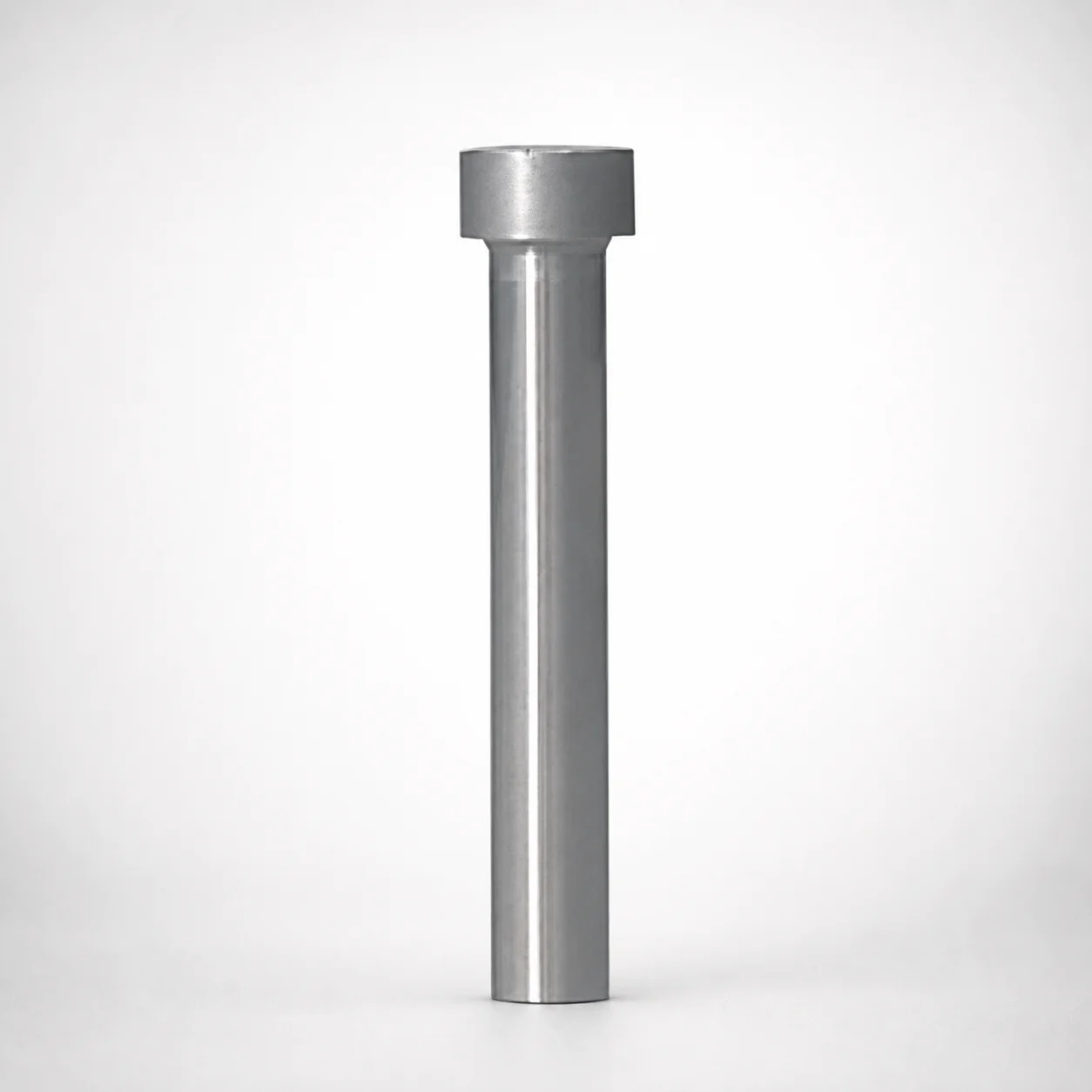
Heavy Load Punch Blanks - Metric (Diameters 10-25 mm)
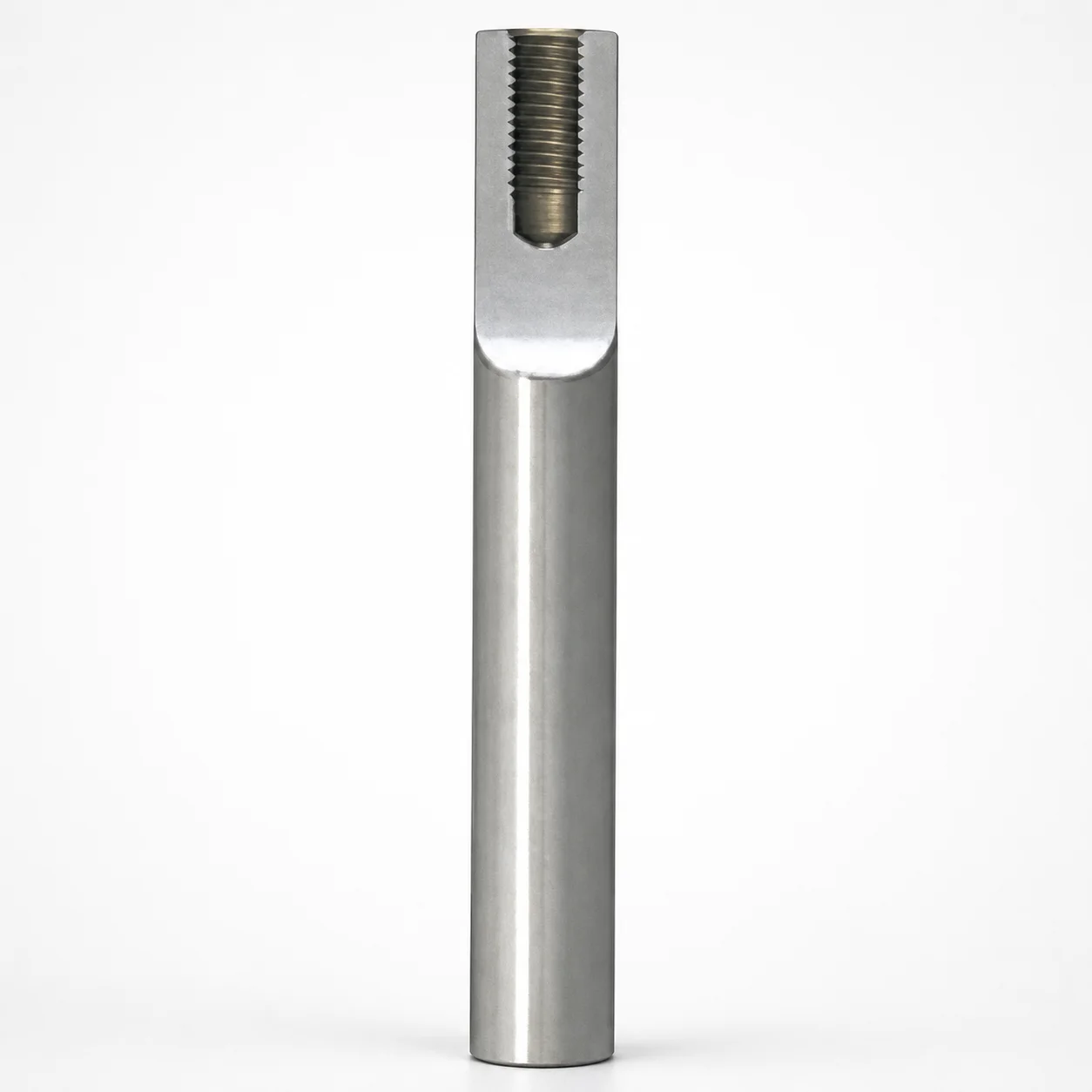
Metric Tapped Punch Blanks for Bolt-Fixed Punches
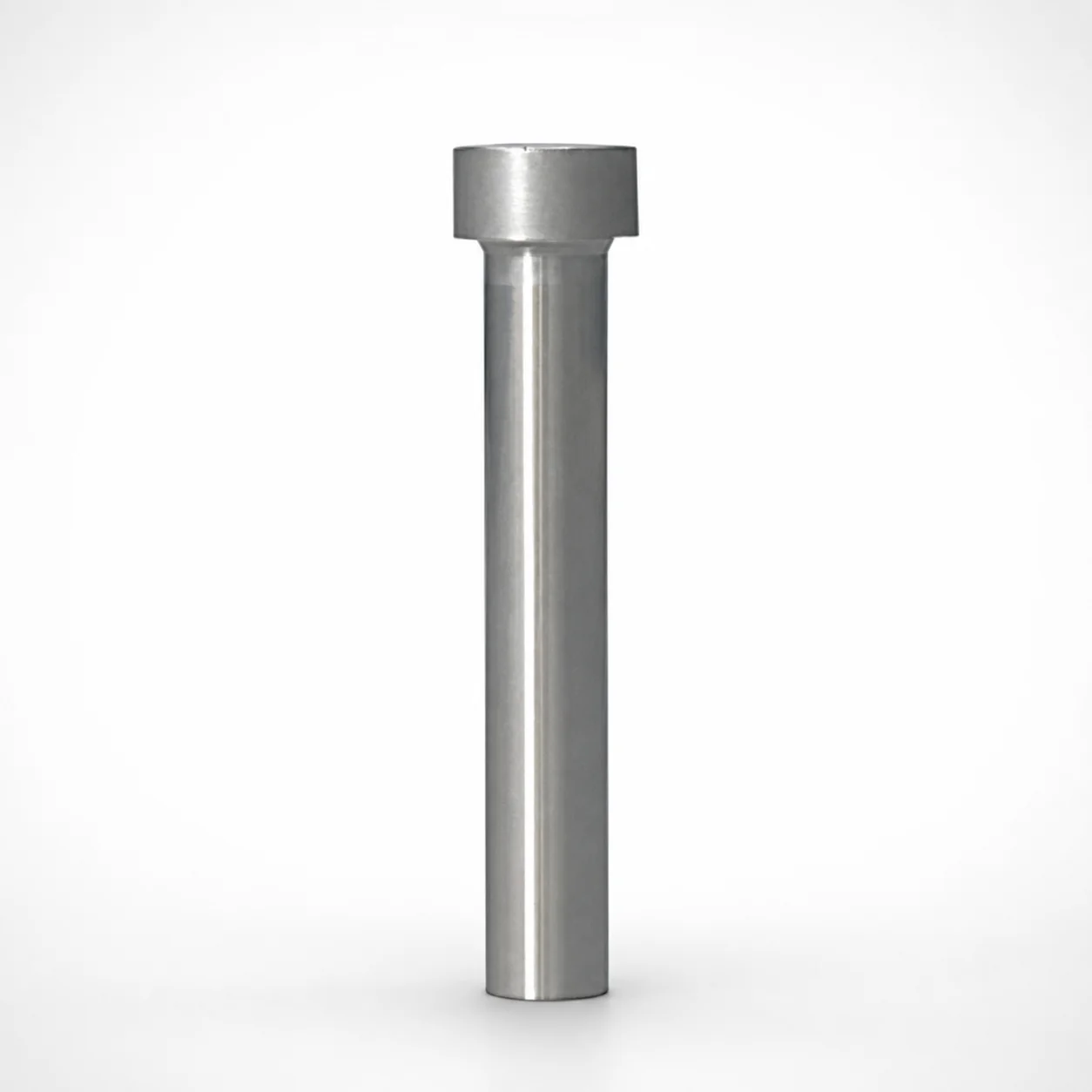
Heavy Load Ejector Punch Blank with Center Dowel Hole
Need Custom Specifications?
Our engineering team can help with custom configurations, material selection, and volume pricing.