Flange Stopper Punches
Flanged Shoulder for Depth-Controlled Stamping. Browse 2 products from MISUMI and DAYTON with configurable dimensions and same-day shipping on standard catalog items.
Flange Stopper Punches (2 Products)
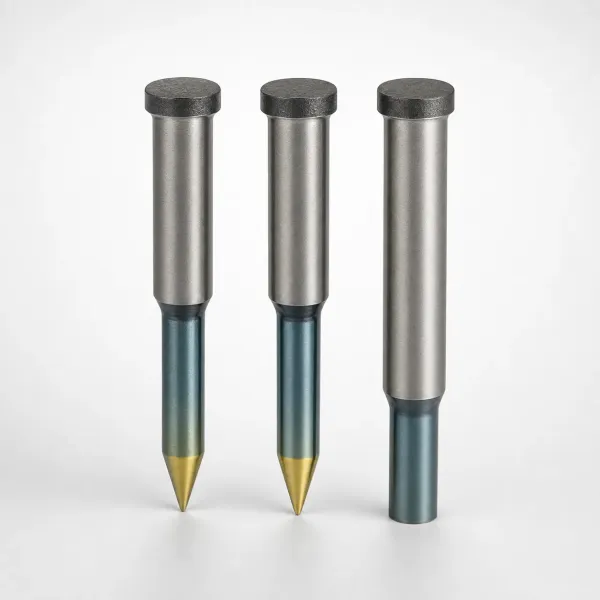
Powdered High-Speed Steel Round Stopper Punches Single-Stepped | DLC WPC Option
Powdered high-speed steel Round Stopper Punches with a single-stepped shank design for repeatable stopping in progressive dies. DLC WPC option available. Request a quote.
View Details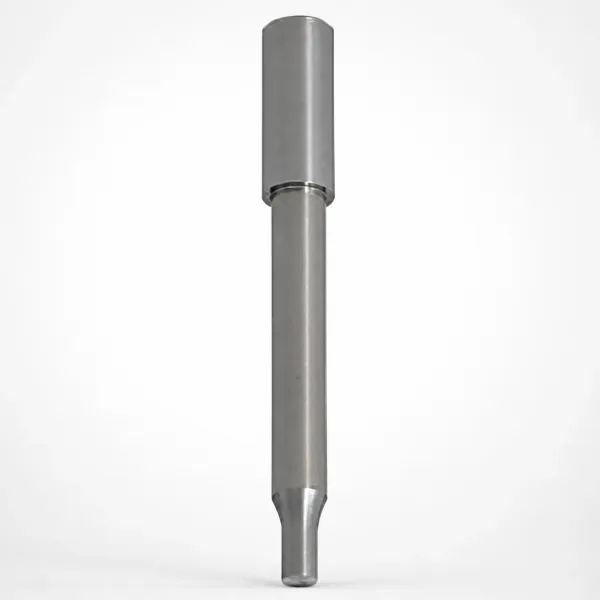
TiCN Option Powder High Speed Steel Round Stopper Punches Single-Stepped | MISUMI Advantage
Round stopper punches single-stepped for clean, repeatable stopping in punching assemblies. Powder high-speed steel with optional TiCN coating for tool life—request a quote.
View DetailsDepth Control Method Selection
Controlling punch penetration depth is critical for forming, coining, and partial-shear operations. Three methods exist: flange (built-in shoulder stop), backing plate shimming, and spring-loaded depth control. Choose based on accuracy requirements and adjustability needs.
Step 1: Do You Need Fixed or Adjustable Depth?
Fixed depth (flange stopper): The punch has a machined flange that seats against the punch plate face, providing a hard mechanical stop. Depth accuracy: +/-0.01mm. Zero adjustment capability - depth is determined at manufacture. Best for: high-volume production where depth is constant across the entire run.
Adjustable depth (shim/spring): Backing plate shims allow depth adjustment in 0.05-0.1mm increments. Springs provide continuous adjustment but with lower repeatability (+/-0.05mm). Best for: prototype tooling, variable-depth operations, and dies serving multiple part numbers.
Step 2: Verify Load Capacity
The flange must support the full stamping force without yielding. Flange contact area must exceed: A = F / sigma_yield, where F is the stamping force and sigma_yield is the punch plate material yield strength (typically 800-1000 MPa for hardened tool steel). For a 10 kN stamping force, minimum flange contact area = 10-12.5 mm squared.
About Flange Stopper Punches
Flange stopper punches incorporate a precision-machined flange (shoulder) that seats against the punch plate face, providing a fixed mechanical depth stop. This eliminates the need for shims or spring-based depth control, delivering +/-0.01mm depth repeatability for coining, embossing, and partial-penetration operations. This compact 2-product range covers standard flange dimensions in SKD11 tool steel (HRC 58-62).
Application Scenarios
Precision Coining & Embossing
Coining operations on connector terminals and battery tabs require depth control within +/-0.01mm to maintain electrical contact resistance specifications.
Why flange stopper punches fit: The machined flange provides a rigid, non-adjustable hard stop that eliminates depth variation from die deflection or press ram inconsistency. No shimming errors.
Counterbore & Countersink Forming
Creating countersunk screw seats in sheet metal requires controlled depth to ensure proper screw head seating without punching through.
Why flange stopper punches fit: The flange stops penetration at the exact counterbore depth, preventing over-penetration that would create a hole instead of a countersink.
Frequently Asked Questions
How does the flange design ensure precise depth positioning in forming?+
Can flange stopper punches be modified for specific stroke lengths?+
What are the typical applications for flanged punches in press dies?+
Engineering Resources
Need a Custom Quote?
Send your specifications and receive a quote. MOQ: 1 piece. Custom dimensions available.