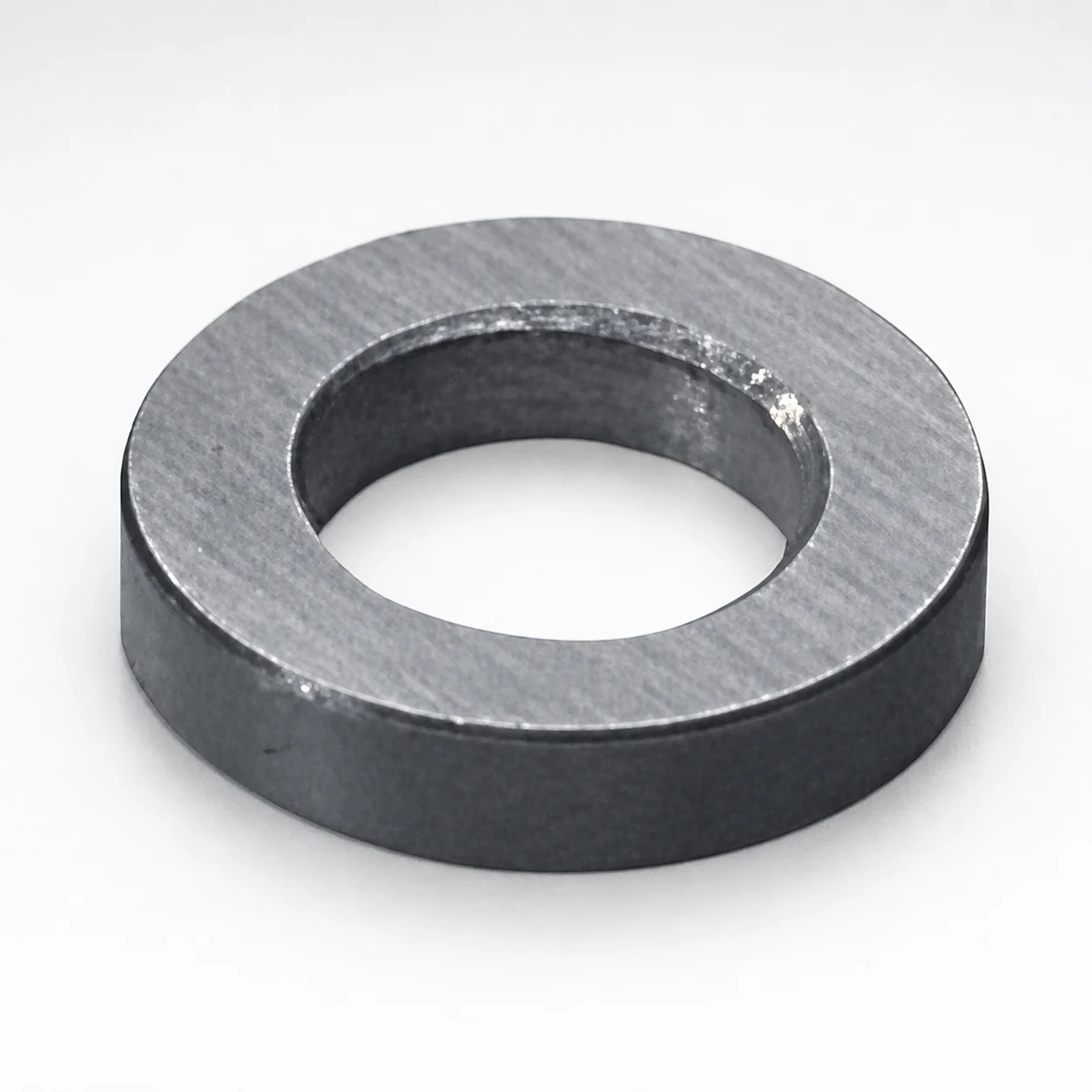
PWC Type Tapped Punch Spacers for Height Adjustment
PWC type tapped punch spacers for height adjustment ensure reliable support and accurate spacing in machining setups. By stabilizing tapped punch positioning, these spacers help reduce vibration effects and maintain consistent assembly height.
- Precision spacing support for tapped punches to maintain accurate fit
- Built with PWC type durable construction for dependable alignment
- Thickness options support controlled height adjustment during machining
- Used with tapped punch tooling to improve stability and reduce component wear
Specifications
8 configurations available
| D (Outer diameter) (mm) | T (Thickness) (mm) | type |
|---|---|---|
| 5 | 0.5 ~ 5 | - |
| 6 | 0.5 ~ 5 | - |
| 8 | 0.5 ~ 5 | - |
| 10 | 0.5 ~ 5 | - |
| 13 | 0.5 ~ 5 | - |
| 16 | 0.5 ~ 5 | - |
| 20 | 1 ~ 5 | - |
| 25 | 1 ~ 5 | - |
Product Guide
Application Scenarios+
In injection mold tooling, these tapped punch spacers are used during punch and die machining and setup to lock in repeatable punch-to-block spacing. They are particularly useful in automotive connector and terminal molds, where multiple tapped features require consistent alignment to avoid flash and ensure proper parting-line control.
- Tapped punch height adjustment: select the thickness option to match the required build height and maintain stable seating.
- Multi-cavity housings: where cavity-to-cavity uniformity matters, they help maintain the same assembly height across stations to reduce variation.
- Reduced vibration during tightening: stable support helps minimize misalignment during assembly, supporting consistent tool performance.
Because the spacers come in an outer diameter range of 5–25 mm and thickness options of 0.5–5 mm (and 1–5 mm), engineers can tune the setup to the tapped punch tooling stack without compromising fit accuracy.
Material & Process Details+
The provided product specifications specify geometric ranges (D: 5–25 mm and T: 0.5–5 mm / 1–5 mm) for PWC type tapped punch spacers, but they do not list a specific steel grade, hardness (HRC), heat treatment, or coating.
As a result, material-property claims such as wear resistance, toughness trade-offs, or whether the spacer is pre-hardened, quenched & tempered, or nitrided cannot be stated from the given data.
- Material selection note: match the spacer material to the tapped punch tooling material/condition used in your shop to maintain consistent thermal and wear behavior during repeated tightening cycles.
- Manufacturing process: verify the spacer’s dimensional control and surface finish at the contacting faces, since alignment accuracy depends on mating flatness and concentricity.
If you share the requested material grade (or the drawing/COC), the material_html can be updated with the exact steel equivalency and hardness target.
Sizing & Selection Guide+
Start sizing by matching the spacer’s outer diameter (D) to the available clearance and support area around the tapped punch tooling. Use D = 5–25 mm to ensure the spacer sits correctly within the machining setup without interference.
Next, select the spacer thickness (T) to achieve the required assembly height (build stack) for the tapped punch. Choose from T = 0.5–5 mm or T = 1–5 mm, depending on how fine your height adjustment needs to be in the punch stack.
- Core/cavity stack-up matching: measure the distance from the mounting/reference surface to the target seating plane, then subtract the existing stack heights of your punch tooling to determine the required spacer thickness.
- Tolerance & fit: maintain consistent seating by keeping the spacer thickness selection aligned with the tooling’s tolerance budget; small thickness changes can translate into noticeable alignment shifts in tapped features.
Dimensional options provided are configurable within the stated ranges; verify the exact D and T values from your selected part variant.
Frequently Asked Questions
What outer diameter (D) range should I choose for a tapped punch spacer height adjustment setup?+
How do I select the correct thickness (T) to reach the required punch seating height?+
Can these spacers be used across different tapped punch assemblies in multi-cavity tooling?+
What alignment benefits should I expect during tapped punch setup and tightening?+
Related Products
Need Custom Specifications?
Our engineering team can help with custom configurations, material selection, and volume pricing.