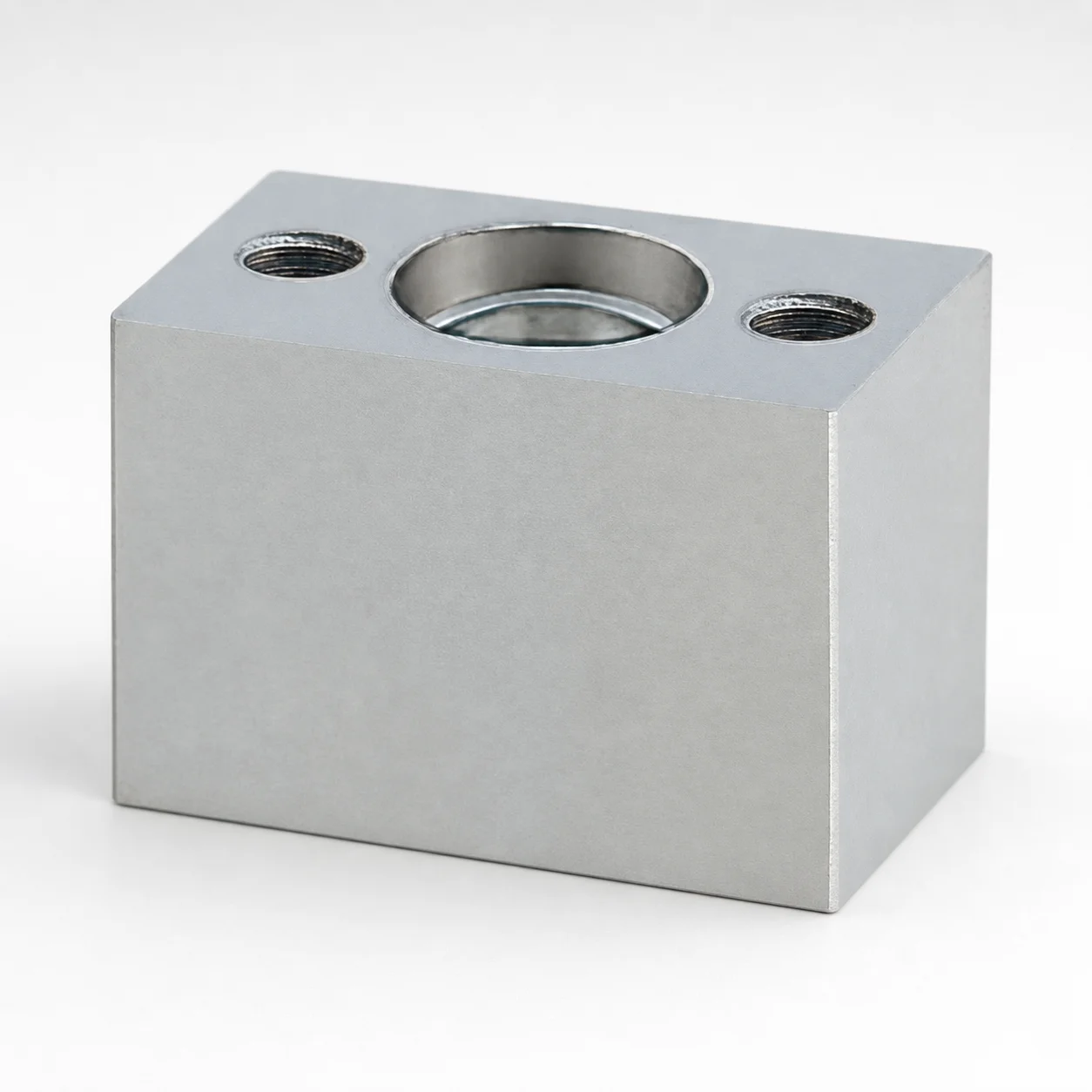
Punch Holders - Double Fixing Bolt
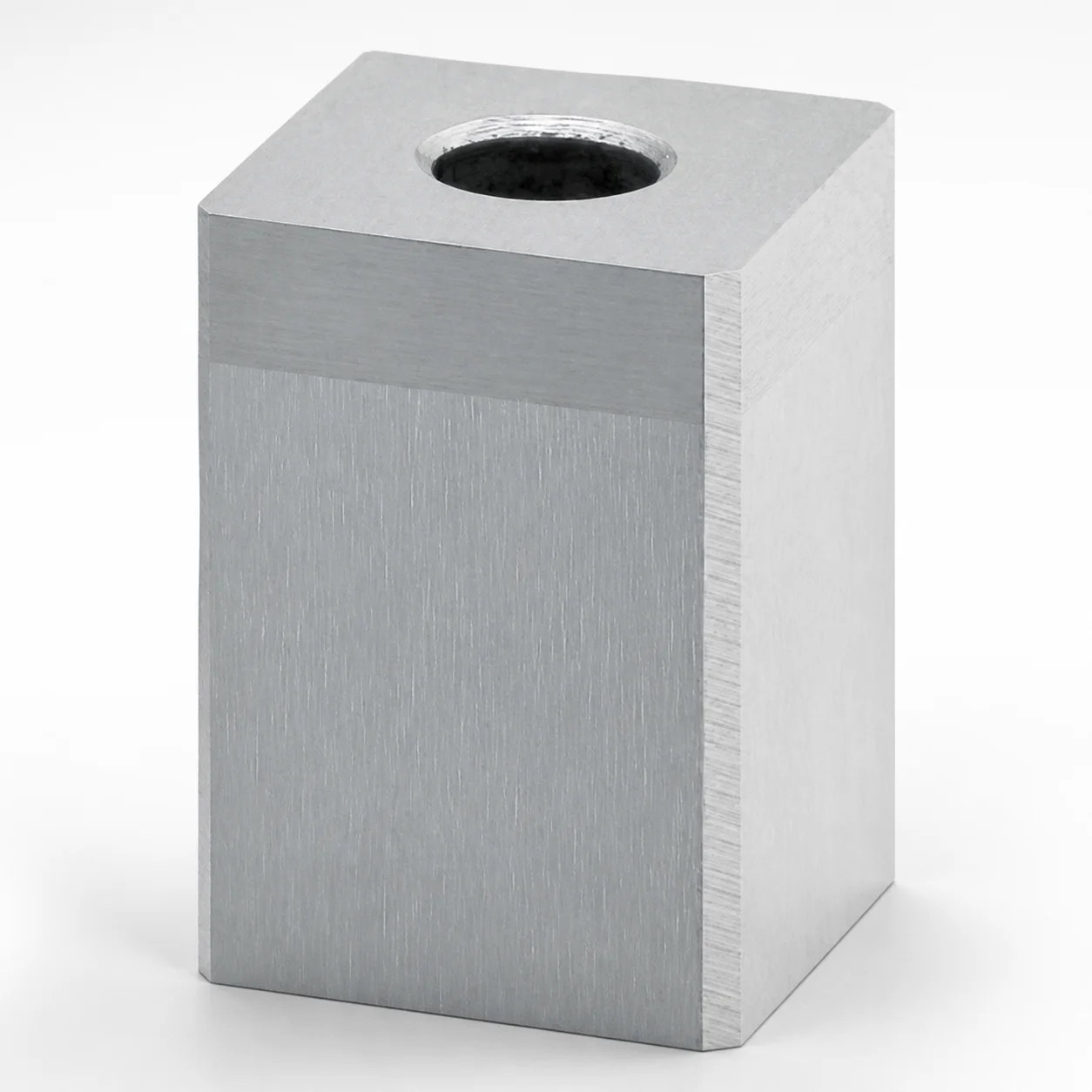
Punch Holders - Double Fixing Bolt provide secure punch tool seating with a double-bolt fixing design, helping improve machining accuracy and reduce misalignment during operation. Built for stable tool retention in demanding production.
- Double fixing bolt arrangement for dependable punch tool stability
- Robust steel construction with precision machining for consistent fit
- Supports controlled alignment to reduce tool wear and protect punches
- Designed for both heavy-load and standard punch applications
Specifications
16 configurations available
| L (L dimension) (mm) | V (Outer shape) (mm) | H (Outer shape) (mm) | Specification | D (Punch diameter) (mm) | LC (Full length alteration) (mm) | type |
|---|---|---|---|---|---|---|
| 25 ~ 30 | 40 | 20 | For standard punch | 8 ~ 10 | - | - |
| - | 40 | 20 | For standard punch | 8 ~ 10 | 15.6 ~ 29.9 | - |
| 25 ~ 30 | 50 | 20 | For standard punch | 10 ~ 13 | - | - |
| - | 50 | 20 | For standard punch | 10 ~ 13 | 11.1 ~ 29.9 | - |
| 25 ~ 30 | 55 | 25 | For standard punch | 10 ~ 16 | - | - |
| - | 55 | 25 | For standard punch | 10 ~ 16 | 13.1 ~ 29.9 | - |
| 25 ~ 30 | 60 | 30 | For standard punch | 13 ~ 20 | - | - |
| - | 60 | 30 | For standard punch | 13 ~ 20 | 13.1 ~ 29.9 | - |
| 25 ~ 30 | 40 | 20 | For heavy-load punches | 8 ~ 10 | - | - |
| - | 40 | 20 | For heavy-load punches | 8 ~ 10 | 18.6 ~ 29.9 | - |
| 25 ~ 30 | 50 | 20 | For heavy-load punches | 10 ~ 13 | - | - |
| - | 50 | 20 | For heavy-load punches | 10 ~ 13 | 11.1 ~ 29.9 | - |
| 25 ~ 30 | 55 | 25 | For heavy-load punches | 10 ~ 16 | - | - |
| - | 55 | 25 | For heavy-load punches | 10 ~ 16 | 13.1 ~ 29.9 | - |
| 25 ~ 30 | 60 | 30 | For heavy-load punches | 13 ~ 20 | - | - |
| - | 60 | 30 | For heavy-load punches | 13 ~ 20 | 13.1 ~ 29.9 | - |
Product Guide
Application Scenarios+
This double-bolt punch holder is used in progressive and transfer die sets where punch tools must remain precisely seated under repeated impact. The double fixing bolt arrangement improves resistance to loosening, which helps maintain punch alignment and reduces the risk of mis-punching in high-cycle production.
Automotive and appliance stamping: When heavy-load punches repeatedly drive through thick materials, the stable tool retention supports consistent stroke accuracy and lowers punch wear by keeping the punch axis properly aligned.
Standard metal-forming dies: For general production punches, it provides controlled seating while still allowing selection of the appropriate outer shape size to match the die layout and tool spacing.
Multi-station progressive tooling: Because alignment must be maintained across stations, precision-machined fit reduces lateral shifting during operation. Choose this variant when you need dependable punch guidance for both standard and heavy-load punch applications.
Material & Process Details+
The punch holder is manufactured from steel and precision-machined to maintain consistent fit and seating accuracy. While the exact steel grade and hardness are not specified in the provided data, the steel construction is intended to offer high rigidity to prevent misalignment under load.
Material performance focus:
- Wear resistance: Steel provides durable bearing and contact behavior for repeated punch tool seating.
- Toughness vs. hardness trade-off: Increasing hardness can improve wear, but excessive brittleness can reduce shock resistance under impact loads—steel holders are selected and processed to balance these demands for stamping tools.
- Heat treatment (expected use): Punch tooling components are commonly supplied either pre-hardened or quenched & tempered to stabilize dimensions; verify the exact heat-treatment state with your supplier if you have a hardness requirement.
If alternative steel grades are available for different load classes, select the harder option for abrasion-dominant service and the tougher option for heavier impact.
Sizing & Selection Guide+
Correct sizing ensures proper punch seating, alignment, and secure retention. Use the specified punch diameter ranges to select the right holder for your tool: D can be 8–10 mm, 10–13 mm, 10–16 mm, or 13–20 mm.
Match the holder geometry to the die/tooling pocket:
- Fixed L (length) is 25–30 mm.
- Outer shape dimensions are selectable as V = 40, 50, 55, 60 mm and H = 20, 25, 30 mm to fit the surrounding die block and clearance requirements.
- LC (full length alteration) is available across 15.6–29.9 mm, 11.1–29.9 mm, 13.1–29.9 mm, or 18.6–29.9 mm depending on the configuration—choose the LC range that matches your punch/tool length stack-up.
Fit and tolerance: Maintain the required seating interface tolerance between punch and holder to minimize lateral play; confirm your press/die tolerances and any guidance features before final lock-up. Select the configuration labeled for standard punch or heavy-load punches based on expected forming force and impact severity.
Frequently Asked Questions
Which D (punch diameter) range should I use for my punch tool?+
How do I choose L and LC for my tool length stack-up?+
What do V and H outer shape dimensions affect in the die design?+
Is this holder intended for standard punches only, or also heavy-load punch tools?+
What alignment benefits does the double-fixing bolt design provide?+
Related Products
Need Custom Specifications?
Our engineering team can help with custom configurations, material selection, and volume pricing.