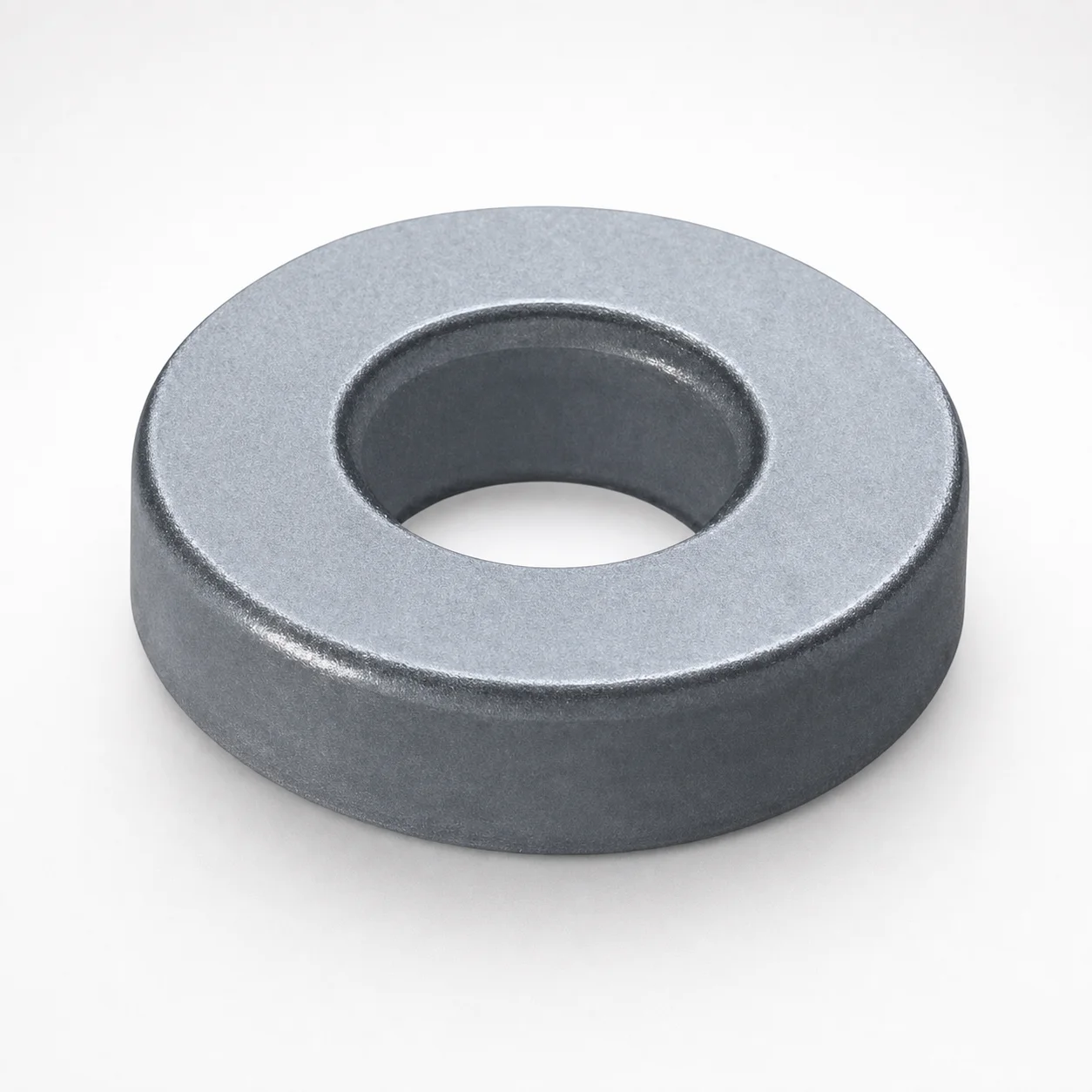
Fixing Keys for Punches with Key Grooves - Round, Through Hole
Fixing Keys for Punches with Key Grooves - Round, Through Hole provide reliable punch positioning by securely locking punches in place. They support precise machining and help protect sensitive components from shock and wear.
- Round fixing key design with through-hole mounting for stable punch alignment
- Secure locking action improves positional repeatability during repeated cycles
- SKS3 or S45C construction supports durable performance under mechanical stress
- Compatible with M4/M5/M6 screw fixing for practical setup in punch tooling
Specifications
12 configurations available
| T (Head thickness/plate thickness) (mm) | Specification | Material | type |
|---|---|---|---|
| 3 | For M4 screws | S45C | - |
| 4.5 | For M4 screws | S45C | - |
| 3 | For M5 screws | S45C | - |
| 4.5 | For M5 screws | S45C | - |
| 3 | For M6 screws | S45C | - |
| 4.5 | For M6 screws | S45C | - |
| 3 | For M4 screws | SKS3 | - |
| 4.5 | For M4 screws | SKS3 | - |
| 3 | For M5 screws | SKS3 | - |
| 4.5 | For M5 screws | SKS3 | - |
| 3 | For M6 screws | SKS3 | - |
| 4.5 | For M6 screws | SKS3 | - |
Product Guide
Application Scenarios+
Round fixing keys with a through-hole mounting style are used in punch-and-die tooling to lock a punch firmly in the holder plate. In practical shop setups, they help maintain punch positional repeatability during repeated press cycles where misalignment can translate into inconsistent part dimensions.
- Precision progressive die machining: Through-hole mounting supports stable punch alignment while the key and screw interface reduce micro-movement, which helps limit wear at the punch seating surface.
- Automotive and connector bracket forming: In high-frequency stamping, secure locking improves cycle-to-cycle consistency and protects sensitive features from shock-induced displacement.
- General industrial forming stations: The M4/M5/M6 screw compatibility simplifies integration across common punch tool plates and reduces downtime during tooling changes.
Choose the S45C or SKS3 construction for balanced strength and wear resistance under mechanical stress, and match the head thickness/plate thickness T (3 or 4.5 mm) to your punch holder geometry for proper clamping.
Material & Process Details+
This component is offered in S45C or SKS3, both steel grades commonly used for punch tooling elements that require dimensional stability under load. The selection is typically driven by the balance between wear resistance and toughness during repeated mechanical cycling.
- S45C: A medium-carbon steel suited for durable mechanical performance after appropriate heat treatment. It is commonly used when you need strong clamping interfaces and good overall toughness.
- SKS3: A higher-performance variant often selected for improved resistance to wear at loaded contact areas, supporting longer service life in precision machining and pressing.
Heat treatment state is not specified in the provided data; in practice these steels are typically supplied or processed in a hardened condition appropriate to punch tooling, where hardness increases wear resistance but can reduce impact toughness if over-hardened.
For maximum life, coordinate material choice with your expected load, lubrication, and press cycle frequency.
Sizing & Selection Guide+
Select the fixing key by matching the screw interface and the plate/head thickness to your punch holder and tool plate. The key is specified for M4, M5, or M6 screw fixing, and the head thickness/plate thickness T is available at 3 mm or 4.5 mm.
- Step 1 (fastener compatibility): Choose the version for your holder screws—use For M4, For M5, or For M6 to ensure correct threading engagement.
- Step 2 (thickness match): Verify that your punch mounting plate/holder thickness corresponds to T = 3 mm or T = 4.5 mm, so the key sits correctly under clamp load.
- Step 3 (fit and alignment): Because this is a locking feature for punch alignment, confirm hole location consistency in your punch/key groove and the holder plate to maintain positional repeatability.
These dimensions (T and screw specification) are fixed per variant; align your mold/tool cavity/core layout to the available key thickness rather than attempting to mix variants.
Frequently Asked Questions
Which fixing key variant should I use for my punch holder screws (M4 vs M5 vs M6)?+
Use the variant explicitly specified for your holder screw size: For M4 screws, For M5 screws, or For M6 screws. This ensures correct thread engagement and clamping force at the punch seating interface.
Confirm your tool plate tapping size before selecting the key to avoid stripping or under-tightening.
What should I match for correct installation: T = 3 mm or T = 4.5 mm?+
Select based on the required head thickness/plate thickness T of your punch holder. The provided options are T = 3 mm and T = 4.5 mm.
Matching T helps ensure the key and through-hole mounting sit correctly under clamp load for stable punch alignment.
How do S45C and SKS3 choices affect wear and durability in punch tooling?+
Both options are steel grades intended for mechanical stress and punch-tooling service: S45C and SKS3.
In typical applications, SKS3 is often selected when improved wear resistance at loaded contact regions is a priority, while S45C is chosen for strong, durable mechanical performance. Choose based on your cycle count, load, and expected wear behavior.
Does the through-hole round design help with alignment stability in repeated pressing cycles?+
Yes. The through-hole mounting design is intended to support stable punch alignment by providing a secure locking interface with the holder plate.
For progressive dies and precision forming stations, this improves positional repeatability and helps reduce micro-movement that can accelerate wear.
Can I use these keys across different punch tooling setups without changing the punch alignment strategy?+
You can often standardize the key choice by selecting the correct M4/M5/M6 and matching T = 3 or 4.5 mm to your tooling plate.
However, confirm your punch key groove and mounting hole locations are consistent, since alignment stability depends on the geometry of the punch seating and through-hole mounting interface.
Related Products
Need Custom Specifications?
Our engineering team can help with custom configurations, material selection, and volume pricing.