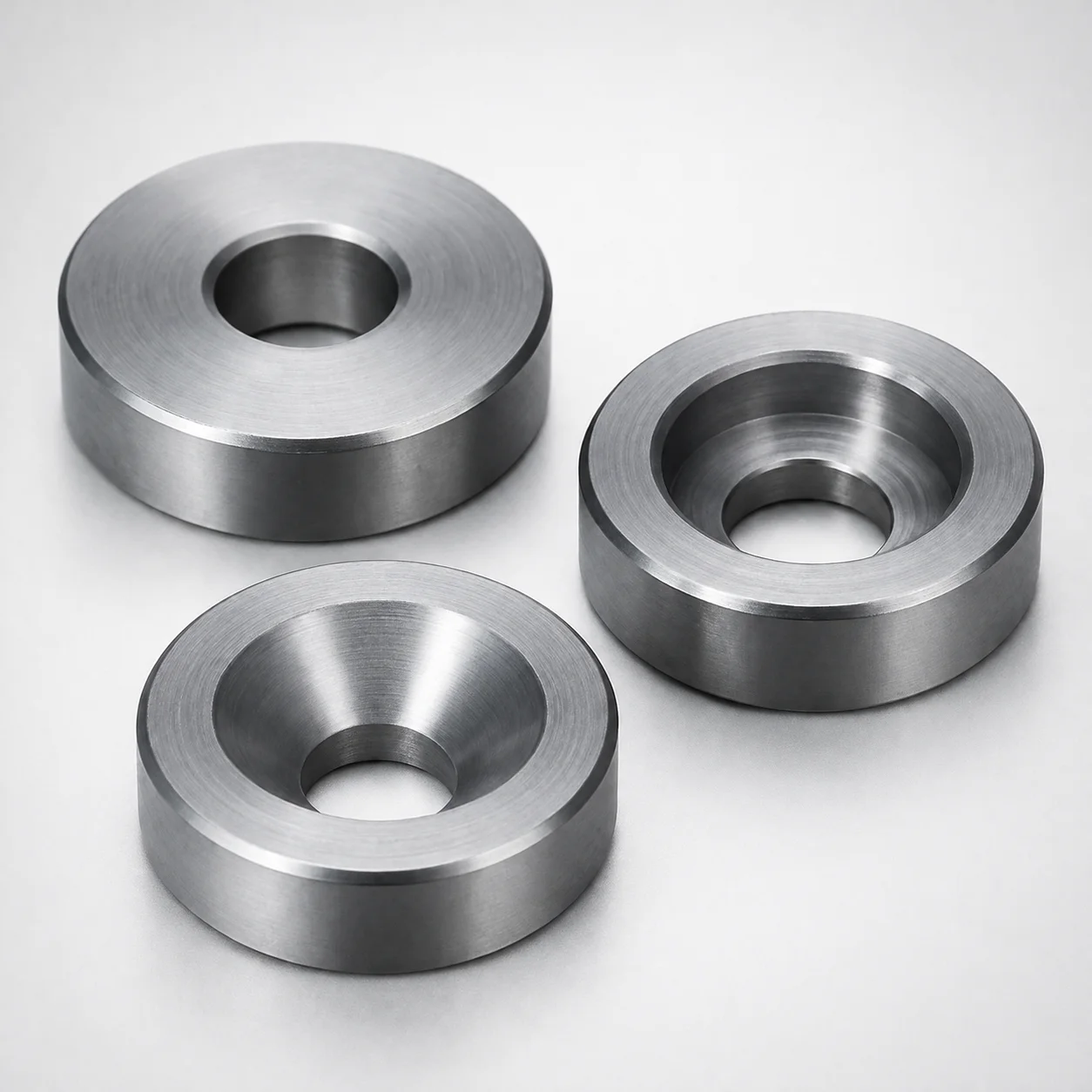
SUS416 Steel Heat Insulation Washers
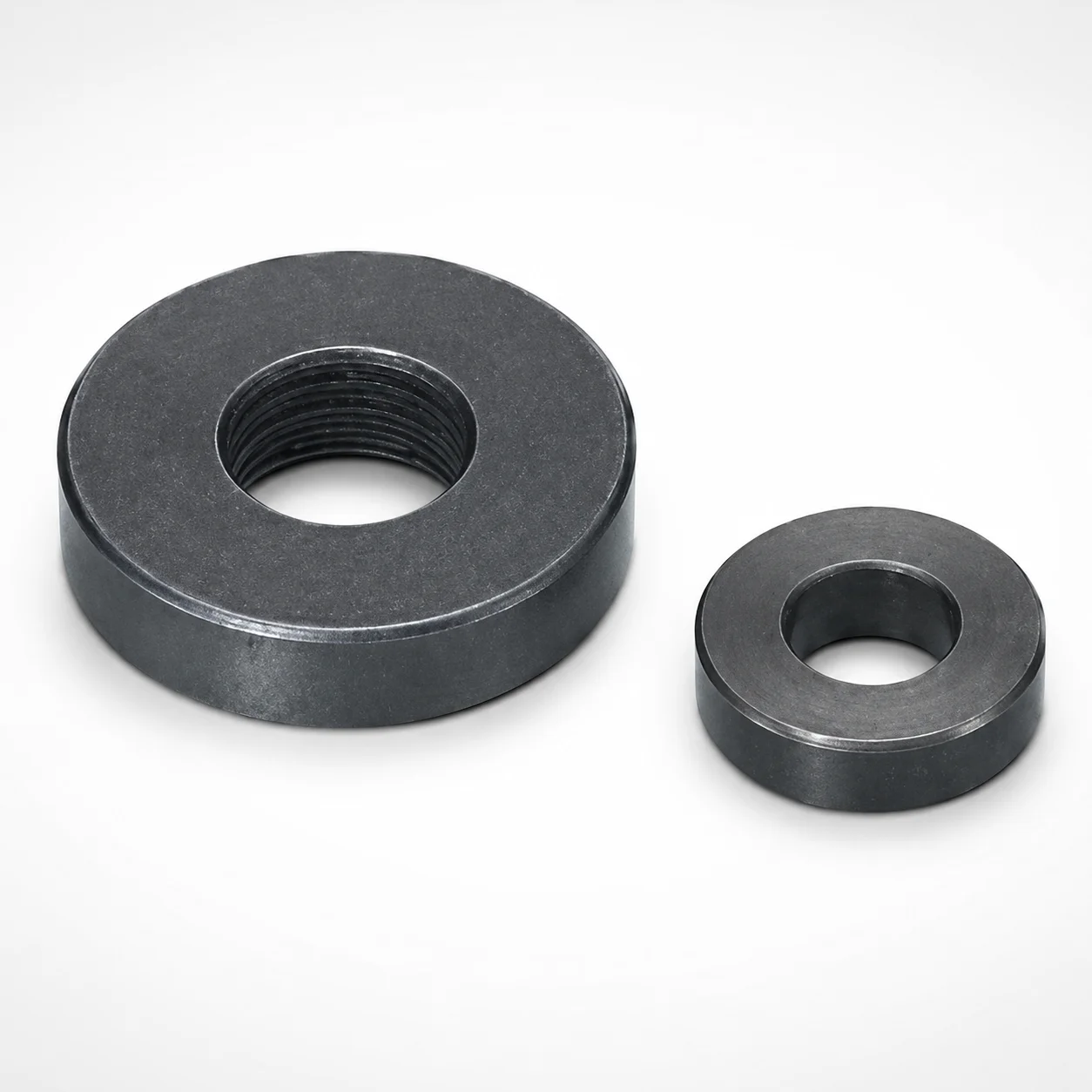
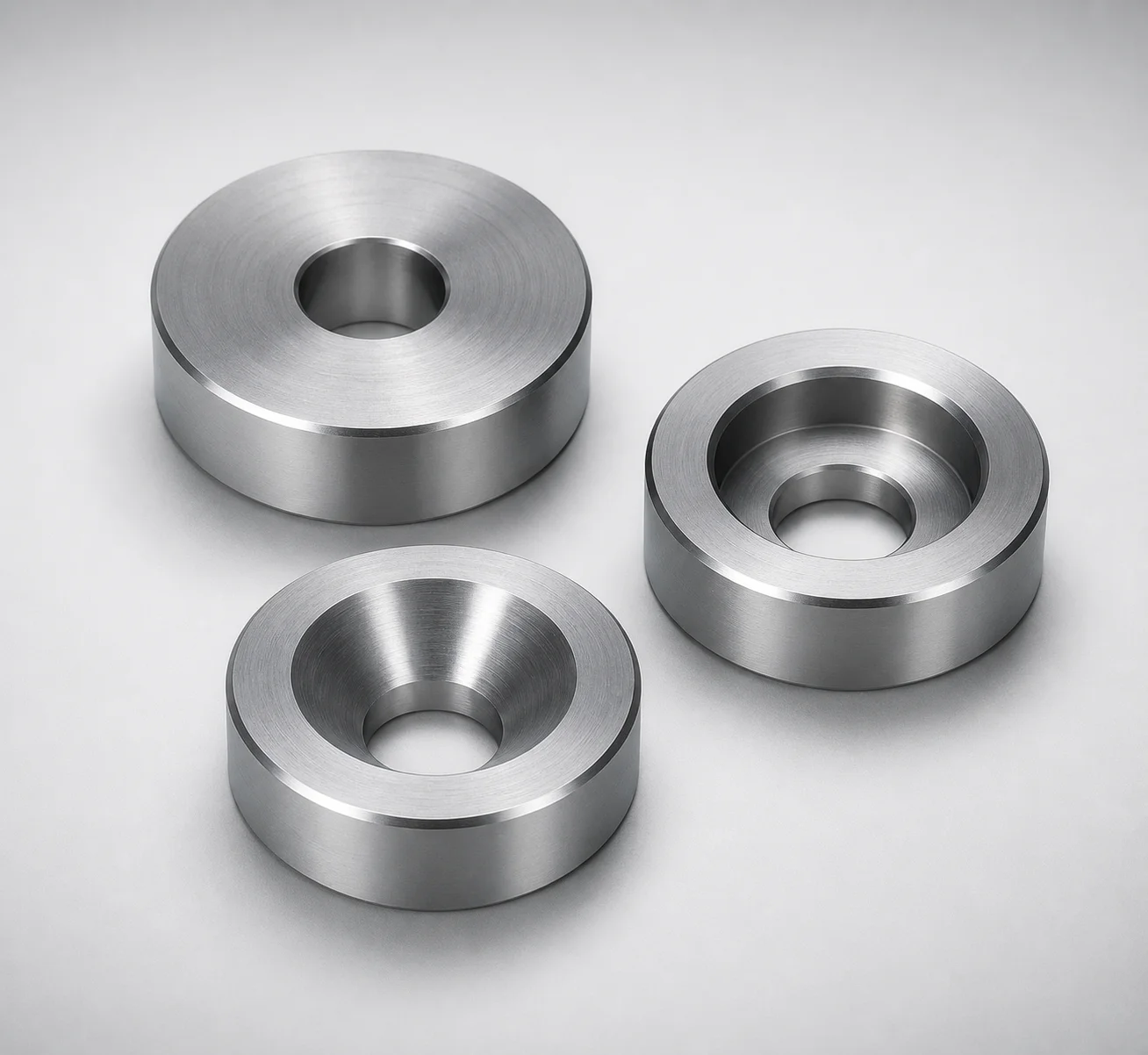
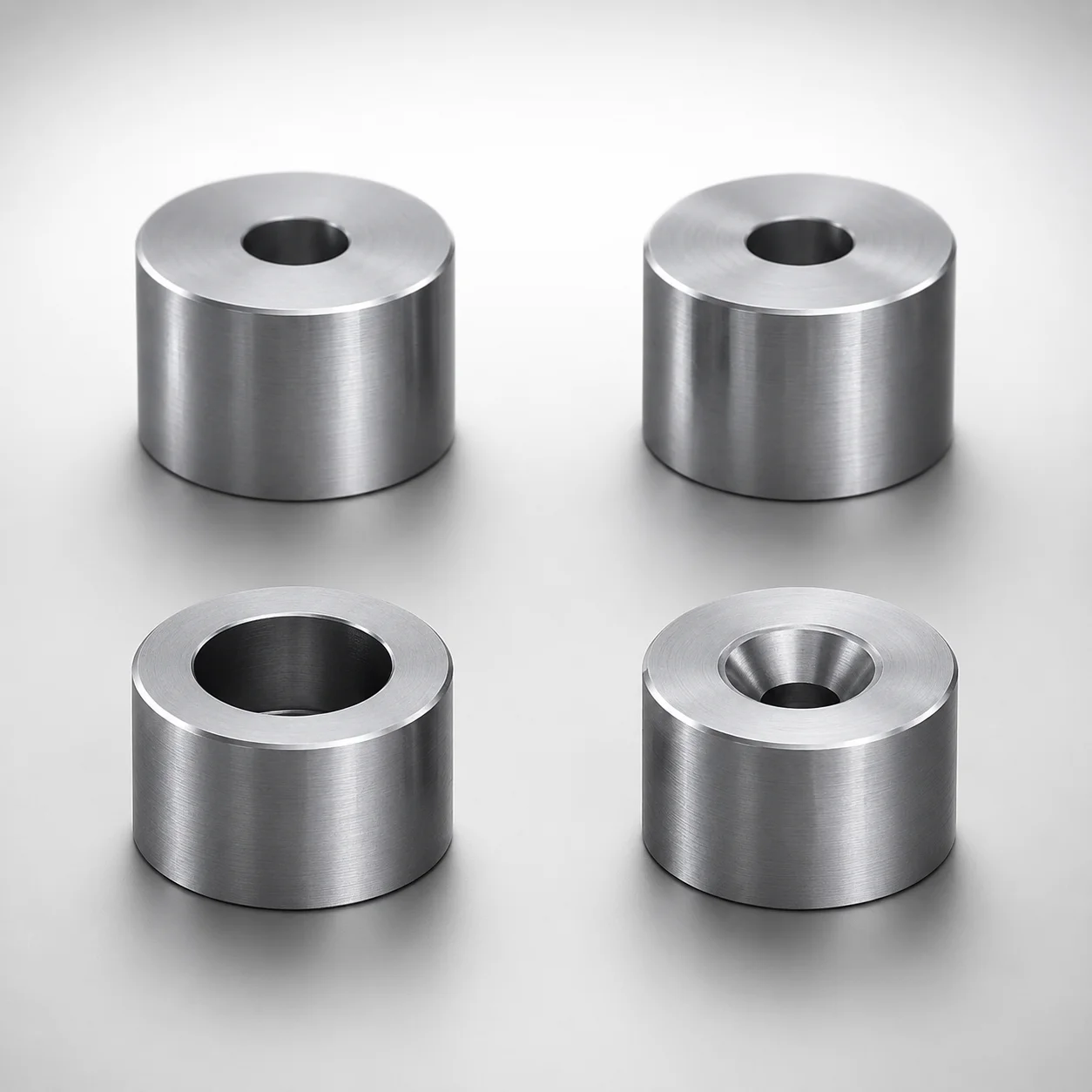
Heat insulation washers (SUS416 steel) are engineered for plastic mold assemblies where stable spacing and reliable alignment are required around insulated zones. Configurable plain, countersunk bolt, and counterbore types support consistent fit in thermal insulation layouts.
- Selectable geometry for plain, countersunk bolt, and counterbore installations
- SUS416 stainless material choice supports corrosion resistance in molding environments
- Washer thickness options help maintain stack stability in heat insulation sections
- Commonly used to support plastic mold heat insulation alignment and bolted connections
Specifications
6 configurations available
| Product Type | Hole Diameter d/P/V (mm) | Outer Diameter D (mm) | Thickness t (mm) | V (Hole diameter・Counterbore diameter) (mm) | H (Gimlet hole length) (mm) | type |
|---|---|---|---|---|---|---|
| For countersunk bolt | - | 5 ~ 20 | 1 ~ 50 | 3 ~ 70 | 0 ~ 49.9 | - |
| For countersunk bolt | - | 20.5 ~ 100 | 1 ~ 50 | 3 ~ 70 | 0 ~ 49.9 | - |
| Plain | - | 5 ~ 20 | 1 ~ 50 | 3 ~ 70 | - | - |
| Plain | - | 20.5 ~ 100 | 1 ~ 50 | 3 ~ 70 | - | - |
| Counterbore | 3 ~ 68 | 10 ~ 20 | 3 ~ 50 | 5 ~ 70 | 1 ~ 48 | - |
| Counterbore | 3 ~ 68 | 20.5 ~ 100 | 3 ~ 50 | 5 ~ 70 | 1 ~ 48 | - |
Product Guide
Application Scenarios+
These SUS416 heat insulation washers are used in injection mold base and sub-plate assemblies to keep consistent spacing and alignment across thermally isolated zones. Their stainless steel construction helps maintain dimensional stability and corrosion resistance in environments exposed to coolant mist, cleaning agents, or condensed moisture.
- Automotive connector and bracket molds: Install the washer stack around insulated sections near hot runner interfaces or localized thermal barriers. The selectable plain, countersunk bolt, and counterbore types allow proper seating for different fastener head profiles, helping prevent shift during clamp cycles.
- Medical device housing molds: Use countersunk or counterbore styles to maintain flatness and repeatability around bolted joints while insulating targeted areas. This supports stable tooling alignment for tight cavity-to-cavity registration.
- General plastic mold heat insulation layouts: Select thickness t and internal hole/V geometry to maintain stack stability under assembly load, reducing play at insulated regions.
Material & Process Details+
This product uses SUS416 stainless steel, selected for its corrosion resistance in molding tool environments while retaining good machinability for precision spacer components. The alloy is commonly used in heat-related and moisture-exposed applications, making it suitable for washer components that remain near insulated or coolant-adjacent areas.
- Heat treatment: The specification provided focuses on dimensional options; hardness and exact heat-treatment state are not listed, so select based on your supplier’s process documentation or incoming material certs.
- Performance trade-offs: SUS416 is typically chosen to balance wear resistance for assembly surfaces with adequate toughness for handling and repeated tightening.
- Comparison (brief): If you require maximum corrosion resistance, higher-alloy stainless options may offer better resistance, while more hardenable tool steels can provide higher wear resistance but with different corrosion behavior.
Confirm hardness (HRC) and heat-treatment condition for your specific part code before final design freeze.
Sizing & Selection Guide+
To select the correct heat insulation washer, match the hole diameter d/P/V, outer diameter D, and thickness t to your mold assembly’s insulated zone and fastener layout. Available values cover d/P/V = 3–68 mm and thickness t = 1–50 mm, enabling fine control of stack height and clamp/load distribution.
- Choose product type: Use Plain when you need a uniform bearing surface, Countersunk bolt when you must accommodate a countersunk fastener head, and Counterbore when you need clearance for head/body diameter.
- Match internal geometry: Select V (hole diameter/counterbore diameter) = 3–70 mm or 5–70 mm to fit the relevant fastener or recess requirement.
- Control alignment height: Pick t = 1–50 mm to achieve the designed insulated stack spacing, and verify H (gimlet hole length) = 0–49.9 mm or 1–48 mm where the recess depth affects seating.
- Tolerance/fit: Ensure the selected d/V clears the fastener with appropriate assembly clearance to prevent binding after thermal cycling; if your assembly uses close tolerances, request measured dimensional tolerances per your drawing standard.
Frequently Asked Questions
Which washer style should I choose for a countersunk bolt connection in an insulated mold section?+
How do I select the correct outer diameter D to avoid contact with nearby insulation or plates?+
What should I use for the washer thickness t when the goal is stable spacing in a heat-insulated layout?+
How do I pick the correct V (hole/counterbore diameter) for clearance around the bolt shank or recess?+
Do I need hardness or heat-treatment data for SUS416 washers, and how can it affect design decisions?+
Related Products
Need Custom Specifications?
Our engineering team can help with custom configurations, material selection, and volume pricing.