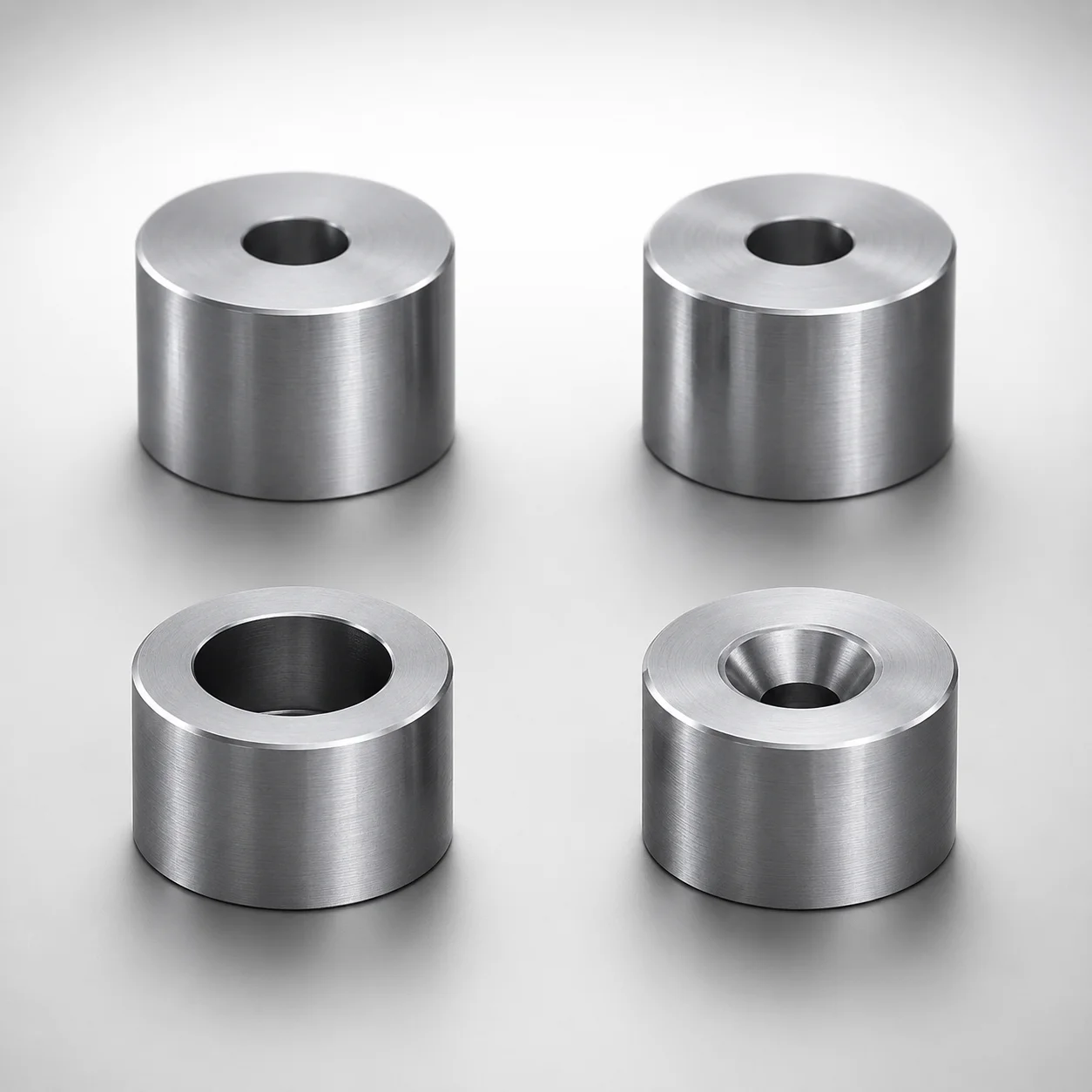
SUS416 Steel Heat Insulation Countersunk Washers for Riser Pads
Heat insulation countersunk washers for riser pads (SUS416 steel) provide reliable thermal protection by minimizing heat transfer between adjacent surfaces. They support heavy-load installations with stable positioning and vibration damping for consistent performance in industrial setups.
- Countersunk bolt fixation design provides secure seating and predictable alignment
- SUS416 steel construction with corrosion-resistant durability for heat-prone environments
- Engineered to maintain stability under load while reducing wear from ongoing vibration
- Used as insulating riser pads in machinery, equipment bases, and high-temperature assemblies
Specifications
11 configurations available
| Product Type | Hole Diameter d/P/V (mm) | Outer Diameter D (mm) | Thickness t (mm) | Type | M (Applicable bolt size) | type |
|---|---|---|---|---|---|---|
| - | - | 25 | 10 ~ 20 | Bolt fixing | 6 ~ 10 | - |
| - | - | 30 | 10 ~ 20 | Bolt fixing | 8 ~ 16 | - |
| - | - | 40 | 10 ~ 20 | Bolt fixing | 8 ~ 16 | - |
| - | 8 ~ 10 | 25 | 10 ~ 20 | Dowel pin | - | - |
| - | 8 ~ 12 | 30 | 10 ~ 20 | Dowel pin | - | - |
| - | 10 ~ 13 | 40 | 10 ~ 20 | Dowel pin | - | - |
| For countersunk bolt | - | 30 | 10 ~ 20 | - | 6 ~ 8 | - |
| For countersunk bolt | - | 40 | 10 ~ 20 | - | 6 ~ 10 | - |
| Counterbore | - | 25 | 10 ~ 20 | - | 6 | - |
| Counterbore | - | 30 | 10 ~ 20 | - | 6 ~ 10 | - |
| Counterbore | - | 40 | 10 ~ 20 | - | 6 ~ 12 | - |
Product Guide
Application Scenarios+
These heat-insulation countersunk washers are used in injection mold base hardware to control thermal bridging at the interface between structural plates and riser pads. In production lines where hot runner assemblies or heated support blocks sit near the mold base, they help reduce heat transfer while still providing secure mechanical seating for the riser pad interface.
Common scenarios include:
- Automotive connector and light structural component molds: Install on riser pads with countersunk bolt fixation to maintain predictable alignment and stable stack-up under machine vibration.
- High-temperature appliance and industrial part molds: Use SUS416 corrosion-resistant construction to better tolerate heat-prone environments while supporting heavy-load hardware.
- Transfer or insert-molding fixtures: Pair with dowel pin or bolt fixing types to improve vibration absorption and reduce micro-motion at the spacer/wear interface.
The variant’s SUS416 base and countersunk design make it suitable where both thermal management and long-term clamping stability are required.
Material & Process Details+
This product is manufactured from SUS416 stainless steel, selected for its corrosion resistance and stable performance in heat-influenced industrial assemblies. SUS416 is an AISI 416 equivalent (free-machining martensitic stainless); it typically offers good hardness for wear resistance, with toughness lower than more ductile stainless grades.
Because this component functions as a thermal barrier washer under clamping load, it is commonly supplied in a hardened/tempered condition suitable for dimensional stability and resistance to fretting. The exact hardness level is not provided in the input data, so hardness should be verified on the certificate for your specific lot.
- Wear resistance: Improved by martensitic structure and post-processing heat treatment.
- Toughness trade-off: Higher hardness can reduce impact resistance compared with tougher stainless steels.
- Heat management: The stainless selection helps limit heat transfer compared with plain carbon hardware at the interface.
Sizing & Selection Guide+
Start by matching the countersunk washer to your riser pad stack-up and clamping hardware using the provided dimensional ranges. Confirm the hole diameter (d/P/V) to match the fixing method: available ranges are 8–10 mm, 8–12 mm, or 10–13 mm depending on the washer option.
Select the outer diameter (D) so the washer fully supports the riser pad area without contacting adjacent mold features: options are 25 mm, 30 mm, or 40 mm.
- Thickness (t): fixed at 10–20 mm; ensure it matches the spacer/riser pad height requirement and does not over-compress the stack.
- Applicable bolt size (M): choose the version compatible with your bolt: 6–10, 8–16, 6–8, 6, or 6–12 (as listed).
- Fixing type: verify whether your design uses bolt fixing or a dowel pin to ensure alignment of the countersunk hole features.
Tolerance and final fit should be confirmed against your mold assembly drawings; use the hole diameter range to avoid play while still allowing proper bolt insertion.
Frequently Asked Questions
Which hole diameter (d/P/V) should I choose for a countersunk bolt riser pad connection?+
How do I select the correct outer diameter (D) for adequate load distribution on riser pads?+
What thickness range (t) is available, and how does it affect clamping height in the mold assembly?+
Which M bolt size versions are compatible with my fastener selection?+
Why is SUS416 used for heat insulation washers in hot-side mold installations?+
Related Products
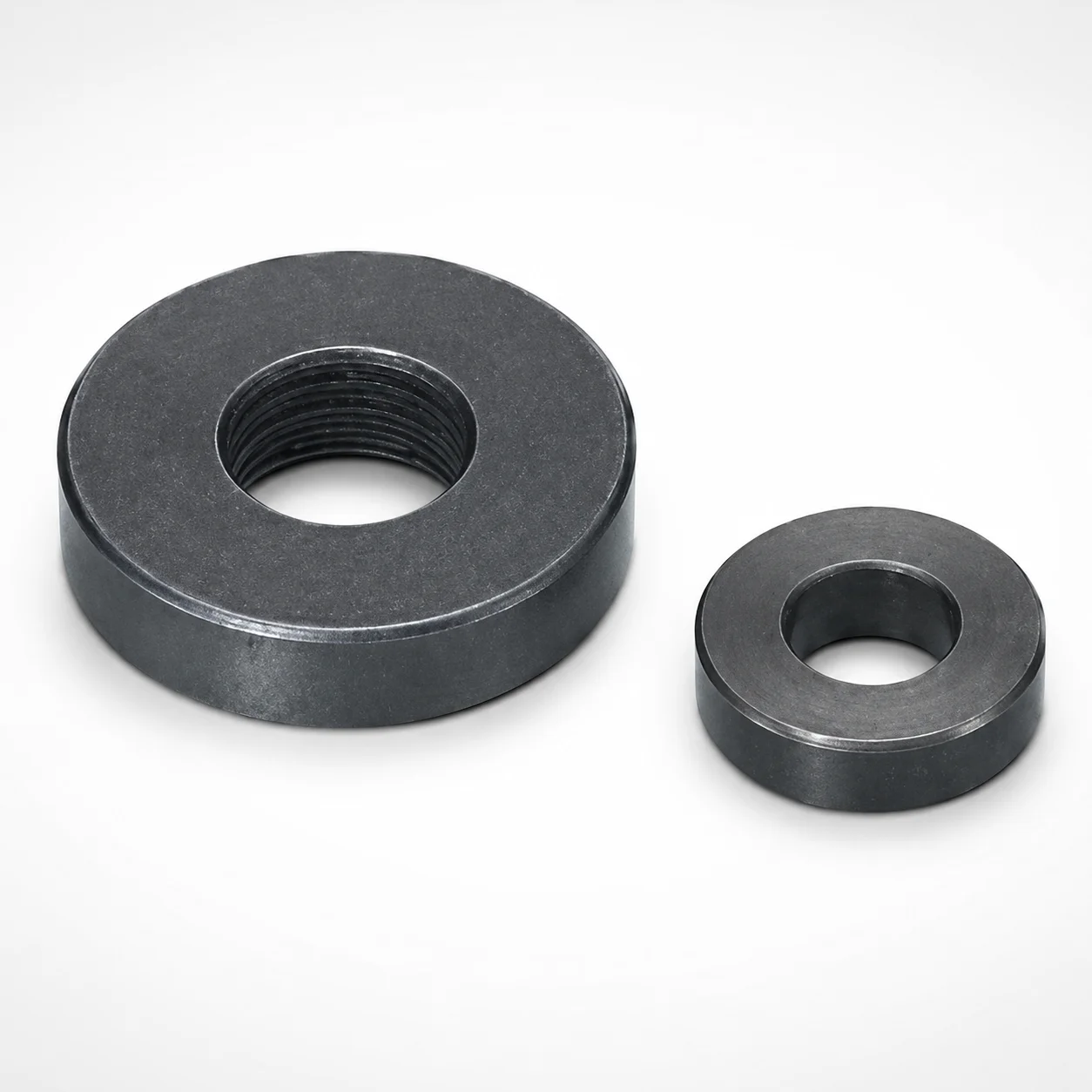
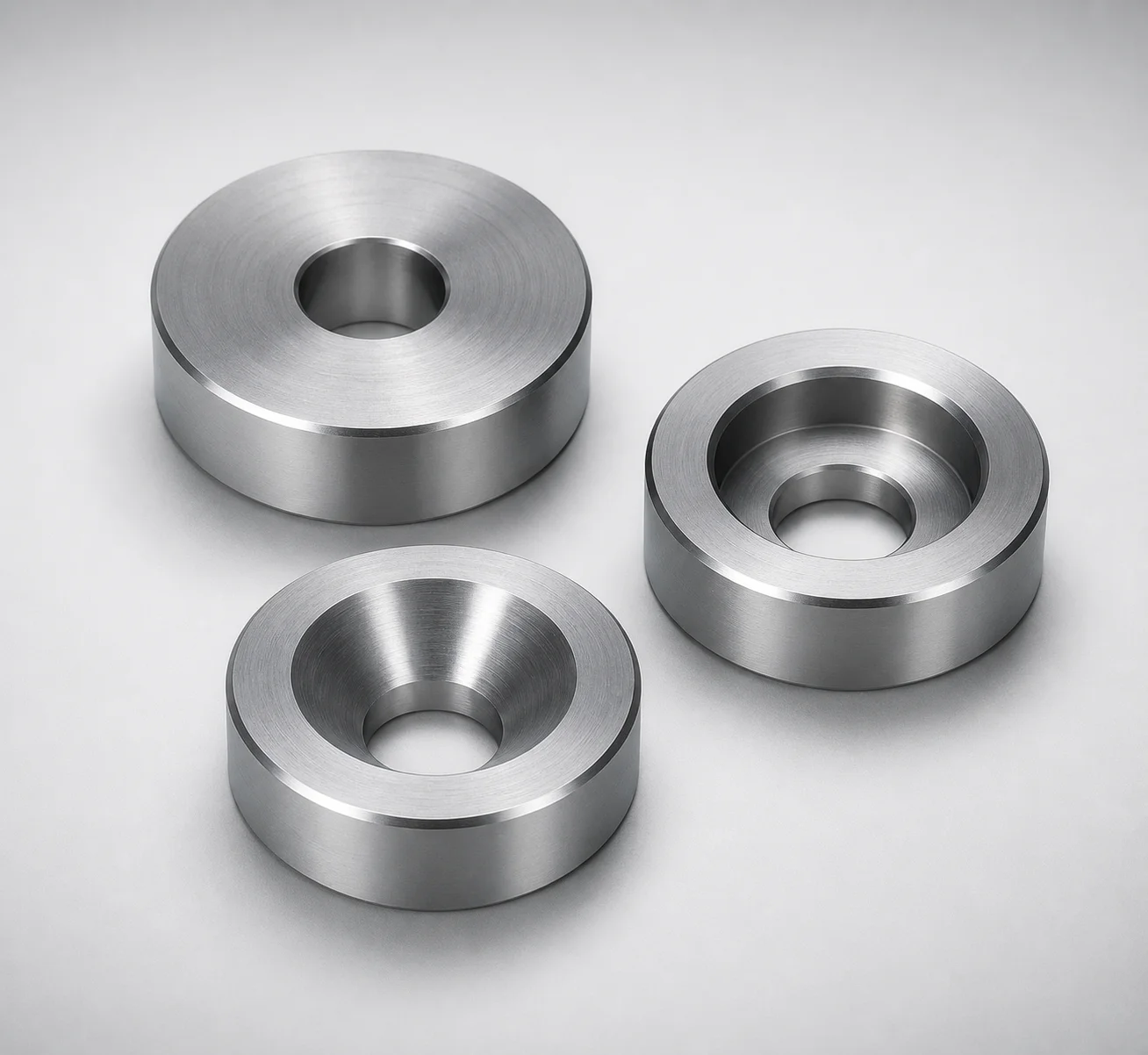
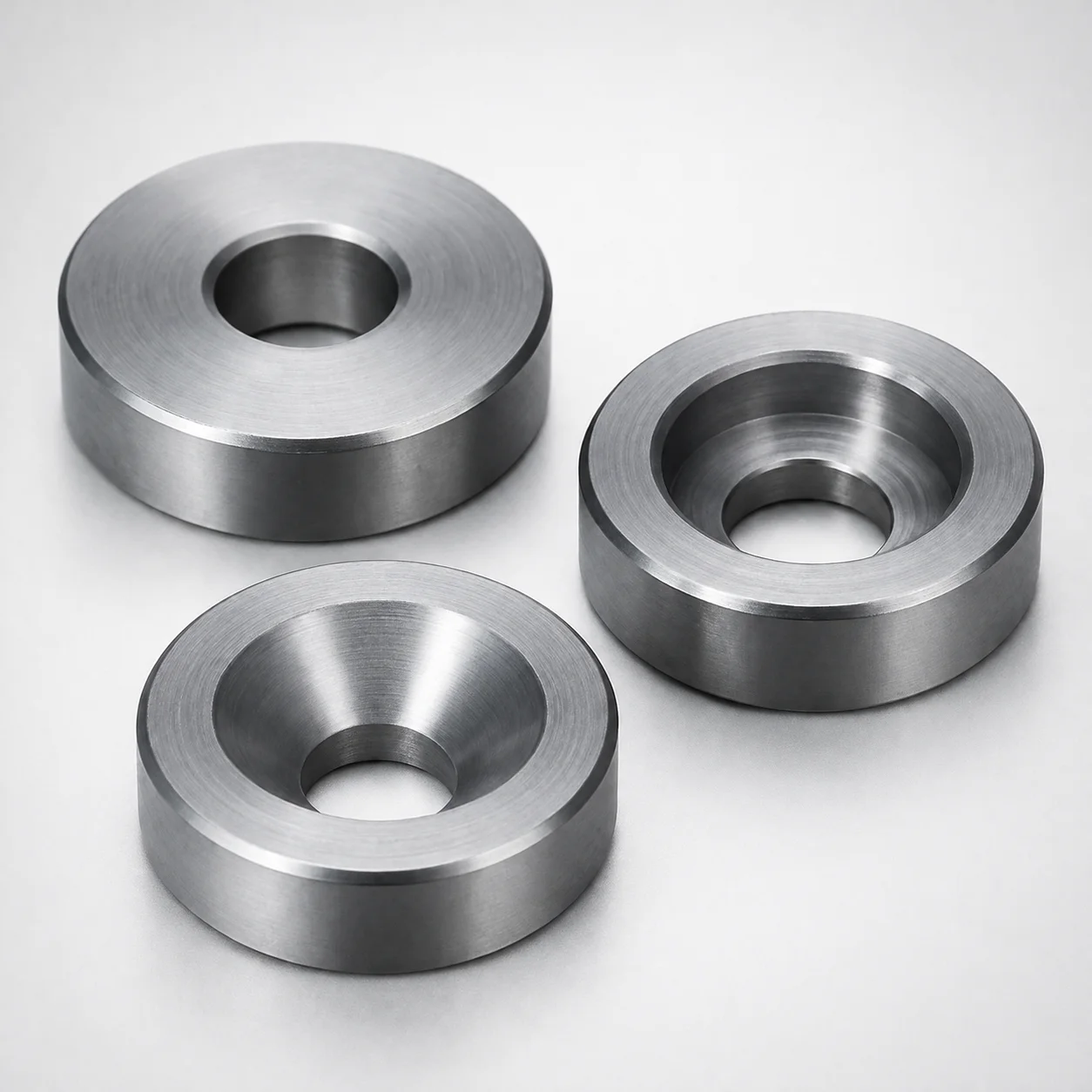
Need Custom Specifications?
Our engineering team can help with custom configurations, material selection, and volume pricing.