Tension Chains for Mold Plate Safety Restraint
Flexible chain assemblies that prevent complete plate separation during maintenance, crane operations, or unexpected mold opening. A critical safety device, not a precision control mechanism.
Products (1 Series)
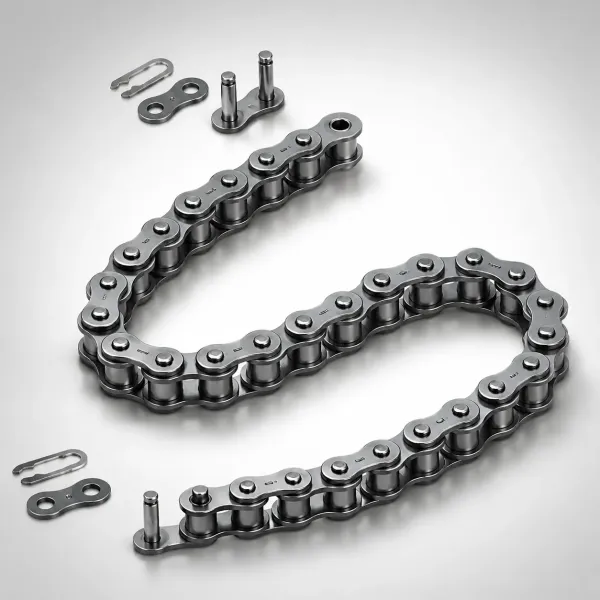
How Chain Safety Restraint Works
Flexible vs Rigid Restraint
Unlike rigid tension links that precisely control stroke through oval holes, tension chains provide flexible safety restraint. The chain allows free plate movement within its length — it only engages when the plate reaches the maximum safe distance. This makes chains ideal for safety backup during maintenance, crane lifting, or emergency situations where plates must not separate completely and fall.
Safety Factor
Tension chains should be rated for at least 3× the weight of the heaviest plate they restrain. This accounts for dynamic loads during mold opening, shock loads if a plate drops unexpectedly, and fatigue over repeated cycles. Chain holders must be bolted (not welded) to enable easy replacement if a chain shows signs of wear.
Chains vs Links — Know the Difference
✅ Use tension chains when:
- You need a safety backup to prevent plate drop during maintenance
- Plates are handled by crane and need anti-separation restraint
- Precise stroke control is not required — just a safety limit
- Your mold already has tension links but you want secondary safety
🔄 Use tension links instead when:
- Tension Links — you need precise, repeatable stroke control (chains have too much slack)
- Parting Lock Sets — you need sequence control, not just stroke limitation
Chain + Holder Pairing
Tension Chain
Select chain number by plate weight × 3 safety factor.
Tension Chain Holders
One holder per plate side. Match chain number. See Chain Holders page.
Frequently Asked Questions
What is the maximum safe load for tension chains?+
How do tension chains differ from tension links?+
Can tension chains be used as primary control?+
Engineering Resources
How Tension Chains Provide Safety Restraint in Multi-Plate Mold Systems
Safety restraint principles, load rating, and installation guidelines.
When to Use Tension Chains vs Tension Links for Mold Plate Control
Decision framework for choosing between rigid control and flexible safety.
Need a Custom Quote?
Specify plate weight, required reach length, and chain number. Custom chain lengths and holder configurations available.