Parting Lock Sets
Parting lock sets control the opening and closing sequence of multi-plate injection molds by locking and releasing parting surfaces in a precise order. Choose from four locking technologies based on your accuracy, temperature, and maintenance requirements.
Parting Lock Technologies
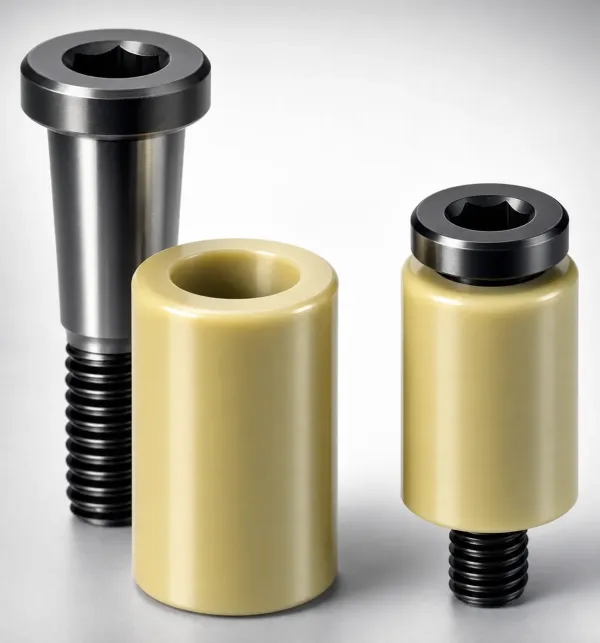
Resin Sleeve Parting Locks
Tapered bolt + nylon sleeve design for standard PL-face mounting. Affordable and proven.
View Products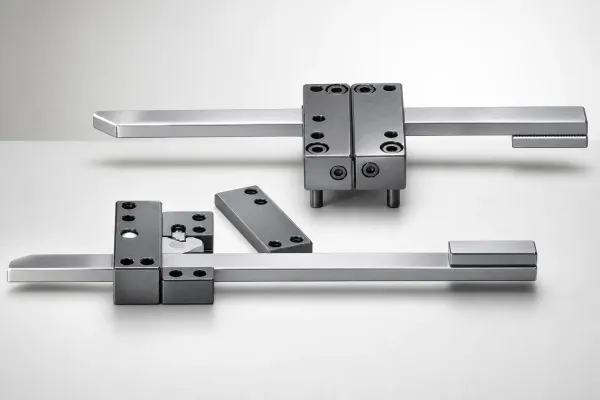
Side Mounting Parting Locks
External cam/slide locking for easy access and load-rated configurations.
View Products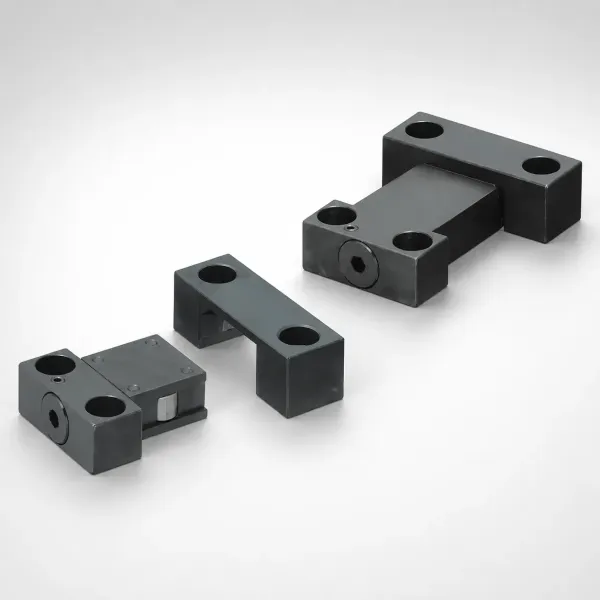
Roller Lock Sets
Precision roller mechanism for higher accuracy and reduced sleeve wear.
View Products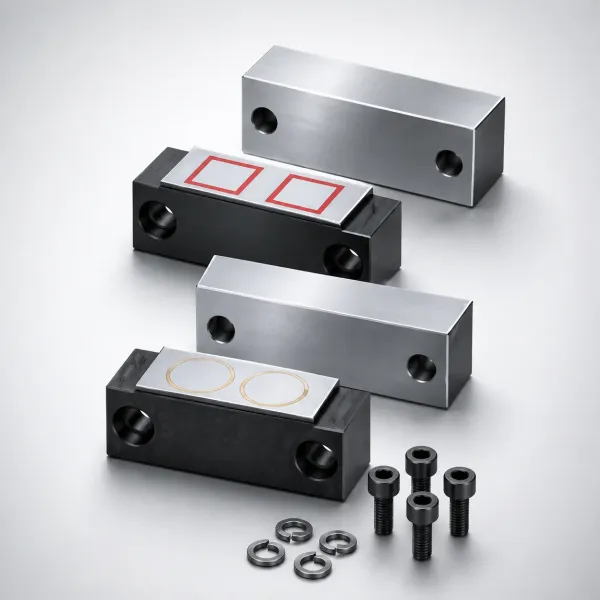
Magnetic Lock Sets
Permanent magnet locking — zero mechanical wear, maintenance-free operation.
View ProductsHow to Choose the Right Parting Lock Type
Compare four parting lock technologies across key decision criteria:
| Criteria | Resin Sleeve | Side Mounting | Roller Interlock | Magnetic |
|---|---|---|---|---|
| Locking Mechanism | Tapered bolt engages nylon sleeve | Cam/slide bar locks plate edge | Precision rollers engage bushing | Permanent magnets attract steel plates |
| Mounting Position | PL face (internal) | Mold exterior (side) | PL face (internal) | PL face (internal) |
| Positioning Accuracy | ±0.05 mm | ±0.1 mm | ±0.02 mm | N/A (force-based) |
| Max. Operating Temp. | 80°C (nylon) / 200°C (heat-resistant) | 150°C | 200°C | 80°C (magnet Curie limit) |
| Locking Force | Medium | Light / Medium / Heavy | Medium-High | Medium (fixed) |
| Maintenance Cycle | 200K-500K shots (sleeve replacement) | 100K-300K shots (lubrication) | 500K+ shots | None (permanent) |
| Sequence Control? | ✓ (via force balance) | ✓ (active mold open/close control) | ✓ (via force balance) | ✓ (via force balance) |
| Cost Level | $ | $$ | $$$ | $$$$ |
| Best For | Standard three-plate molds, general use | Molds requiring external access, multi-stage control | Precision molds, high-cycle production | Clean-room, zero-maintenance environments |
Decision rule: Start with resin sleeve locks for standard applications — they cover 70%+ of three-plate mold needs. Upgrade to roller locks when positioning accuracy below ±0.03 mm is required, or to magnetic locks when maintenance-free operation justifies the initial investment. For detailed guidance, see our How to Choose the Right Parting Lock Type for Your Injection Mold.
Which Parting Lock Fits Your Scenario?
Match your mold application to the optimal parting lock technology:
Standard Three-Plate Mold, ≤80°C
General-purpose injection molding with standard resins (ABS, PP, PE). Budget-conscious applications requiring reliable parting lock at lowest cost.
Multi-Stage Sequence Control from Exterior
Complex mold with multiple parting surfaces needing active open/close control. Requires external access for adjustment and maintenance during production runs.
High-Precision, Long-Run Production
Precision molds running 1M+ cycles where positioning accuracy ±0.02 mm and extended maintenance intervals are critical. Optical or connector molds.
Clean-Room or Zero-Maintenance Environment
Medical, food, or semiconductor applications where particulate from mechanical wear is unacceptable. Maximum uptime requirement with no scheduled maintenance.
How Parting Lock Mechanisms Work
Tapered Bolt + Resin Sleeve (Standard Lock)
A hardened steel bolt with a tapered tip is installed in one mold plate. When the mold closes, the taper engages a nylon or PEEK resin sleeve pressed into the opposing plate. The taper geometry creates a self-centering action while the friction between bolt and sleeve provides the holding force. The sleeve material deforms slightly under load, creating a controlled grip. Sleeve life depends on operating temperature — standard nylon sleeves are rated to 80°C, while heat-resistant variants using reinforced compounds withstand up to 200°C.
Cam/Slide Mechanism (Side Mounting Lock)
Side mounting locks use a cam profile or slide bar mounted on the exterior of the mold. A rotating cam or translating slide engages a matching receiver on the adjacent plate. The mechanical advantage of the cam profile converts small actuator movement into high locking force. Load capacity is determined by the cam profile angle and material hardness. These locks can be adjusted externally without disassembling the mold.
Precision Roller Engagement (Roller Interlock)
Roller lock sets replace the sliding friction of resin sleeves with rolling contact. Hardened steel rollers seated in a bushing engage precision-ground tracks in the bolt. Rolling contact reduces wear by 5-10× compared to sliding friction, delivering positioning accuracy of ±0.02 mm even after 500K+ cycles. The slim bushing option allows installation in existing PL-face bores without redrilling.
Permanent Magnet Attraction (Magnetic Lock)
Magnetic locks use rare-earth permanent magnets (typically NdFeB grade N35-N42) embedded in one plate to attract a ferromagnetic target plate in the opposing half. There is zero physical contact between locking surfaces, eliminating all mechanical wear. Holding force is fixed by magnet grade and surface area. The primary limitation is temperature — NdFeB magnets begin losing strength above 80°C and irreversibly demagnetize above 150°C (Curie point).
Engineering note: Understanding the locking principle helps predict maintenance intervals and failure modes. For a deep dive into each mechanism, see our How Parting Lock Mechanisms Work — Tapered Bolt, Cam, Roller, and Magnetic Principles.
Cost-Benefit: When to Invest in Magnetic Locks
Magnetic parting locks cost 3-5× more upfront than resin sleeve locks. Here's when the investment pays off:
| Cost Factor | Resin Sleeve (Baseline) | Magnetic Lock (Upgrade) |
|---|---|---|
| Initial Component Cost | $50-100 per lock | $200-500 per lock |
| Sleeve Replacement (per 300K cycles) | $15-30 + 30 min downtime | $0 |
| Annual Maintenance (1M cycles/year) | ~$100-200 + 2-3 hours downtime | $0 |
| 5-Year Total Cost (4 locks, 5M cycles) | $700-1,600 | $800-2,000 (initial only) |
| Particulate Risk | Nylon debris generated | None |
ROI analysis: Magnetic locks break even at approximately 2-3 million cycles when factoring in sleeve replacement costs and production downtime. For detailed cost modeling, see our Why Magnetic Parting Locks Reduce Total Cost of Ownership in High-Volume Production.
Parting Lock Accessories & Compatibility
Parting lock systems require matching accessories. Here are the key pairings:
Parting Lock Body (Tapered Bolt)
Standard or heat-resistant versions. Select by temperature and nominal diameter (10/13/16/20 mm).
Parting Lock Bushing
1045 steel bushing pressed into opposing plate. Match nominal diameter to lock body. Removable-from-PL-side option for easy maintenance.
Parting Lock (Stripper Plate)
Parting lock installed on stripper plate assembly.
Actuator Rod (PLRD Type)
Drives parting lock engagement/release on stripper plate configurations. Required when lock body is not directly accessible from PL face.
About Parting Lock Sets
Parting lock sets are the primary mechanism for controlling mold opening sequence in three-plate molds and multi-plate tooling. They physically lock parting surfaces together until the required opening force overcomes the lock's holding force, ensuring plates open in the correct order. Our range covers four distinct locking technologies — each designed for different precision, temperature, and maintenance requirements. All parting locks are fully interchangeable with MISUMI standard mounting dimensions and available in both JIS and metric configurations.
Frequently Asked Questions
What is the difference between resin sleeve, side mount, roller, and magnetic parting locks?+
How does a parting lock control the mold opening sequence?+
Are magnetic parting locks worth the higher upfront cost?+
What maintenance is required for parting lock sets?+
Can different types of parting locks be combined in the same mold?+
Engineering Resources
How to Choose the Right Parting Lock Type for Your Injection Mold
Complete comparison of all four parting lock technologies with application-specific recommendations.
Why Magnetic Parting Locks Reduce Total Cost of Ownership in High-Volume Production
ROI analysis comparing magnetic vs mechanical parting locks over the mold's production lifecycle.
How Parting Lock Mechanisms Work — Tapered Bolt, Cam, Roller, and Magnetic Principles
Engineering explanation of each locking mechanism with failure mode analysis.
Need a Custom Quote?
Specify your locking technology, nominal diameter, load capacity, and operating temperature. We'll recommend the optimal parting lock configuration for your mold.