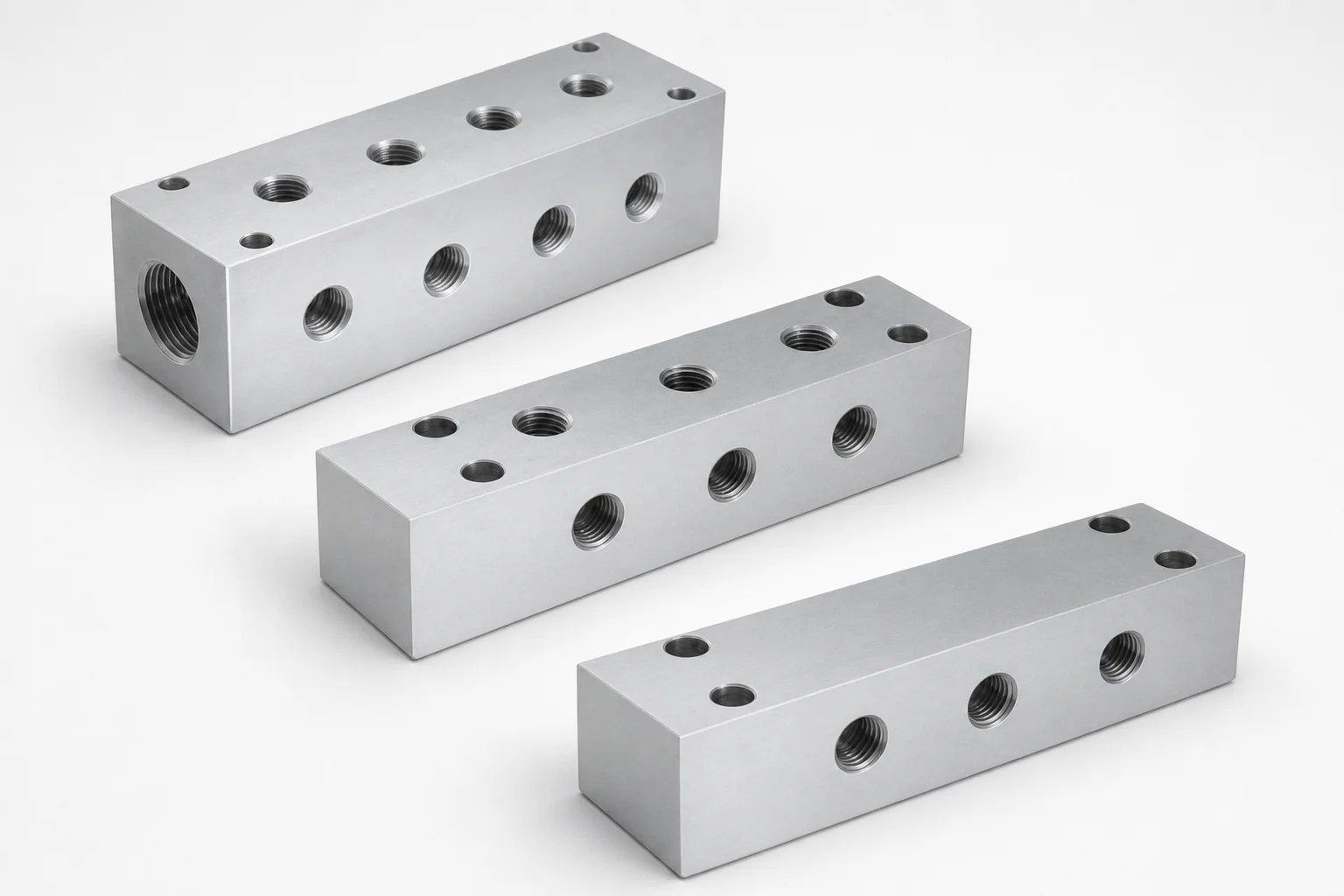
Cooling Water Mold Manifolds - Branching & Aggregating
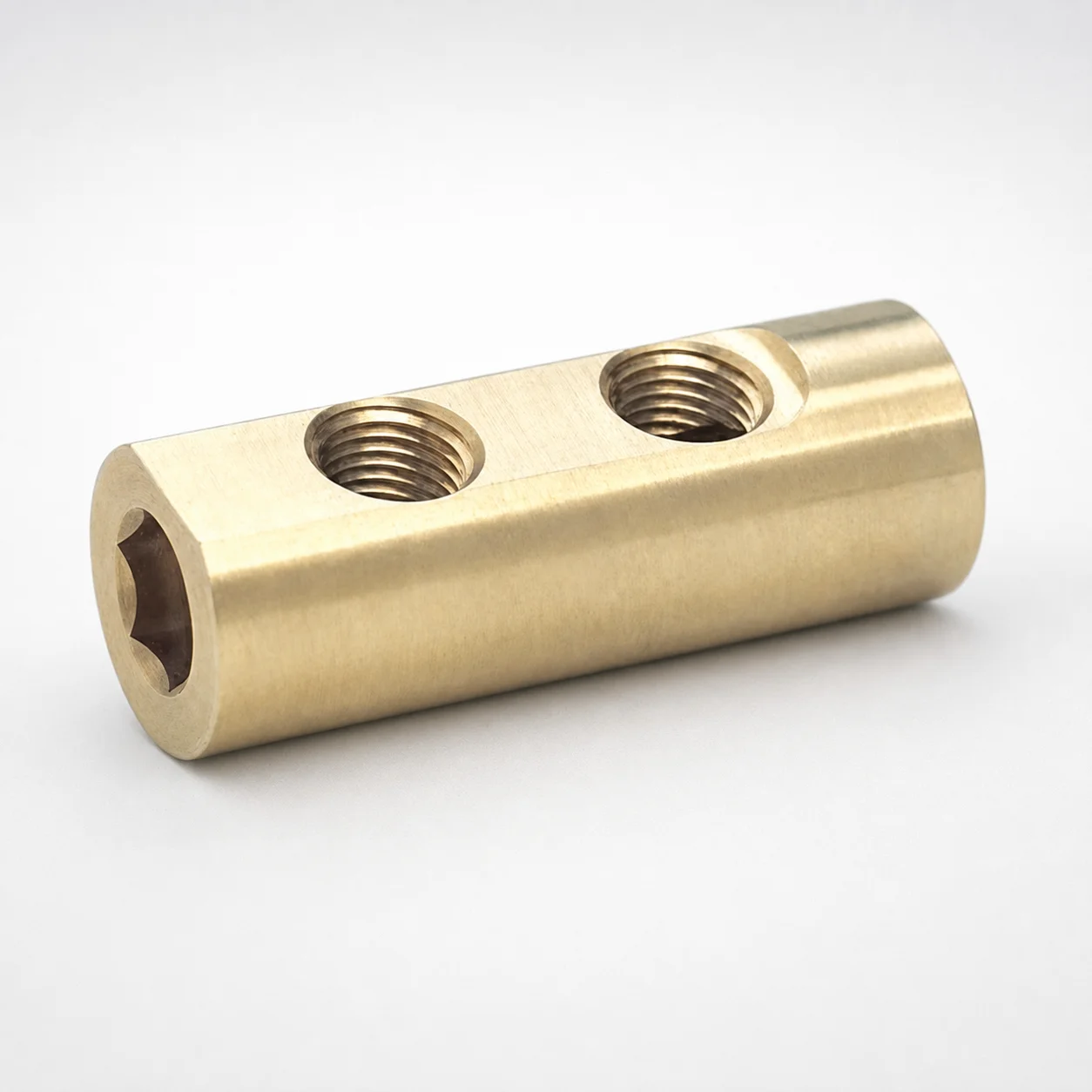
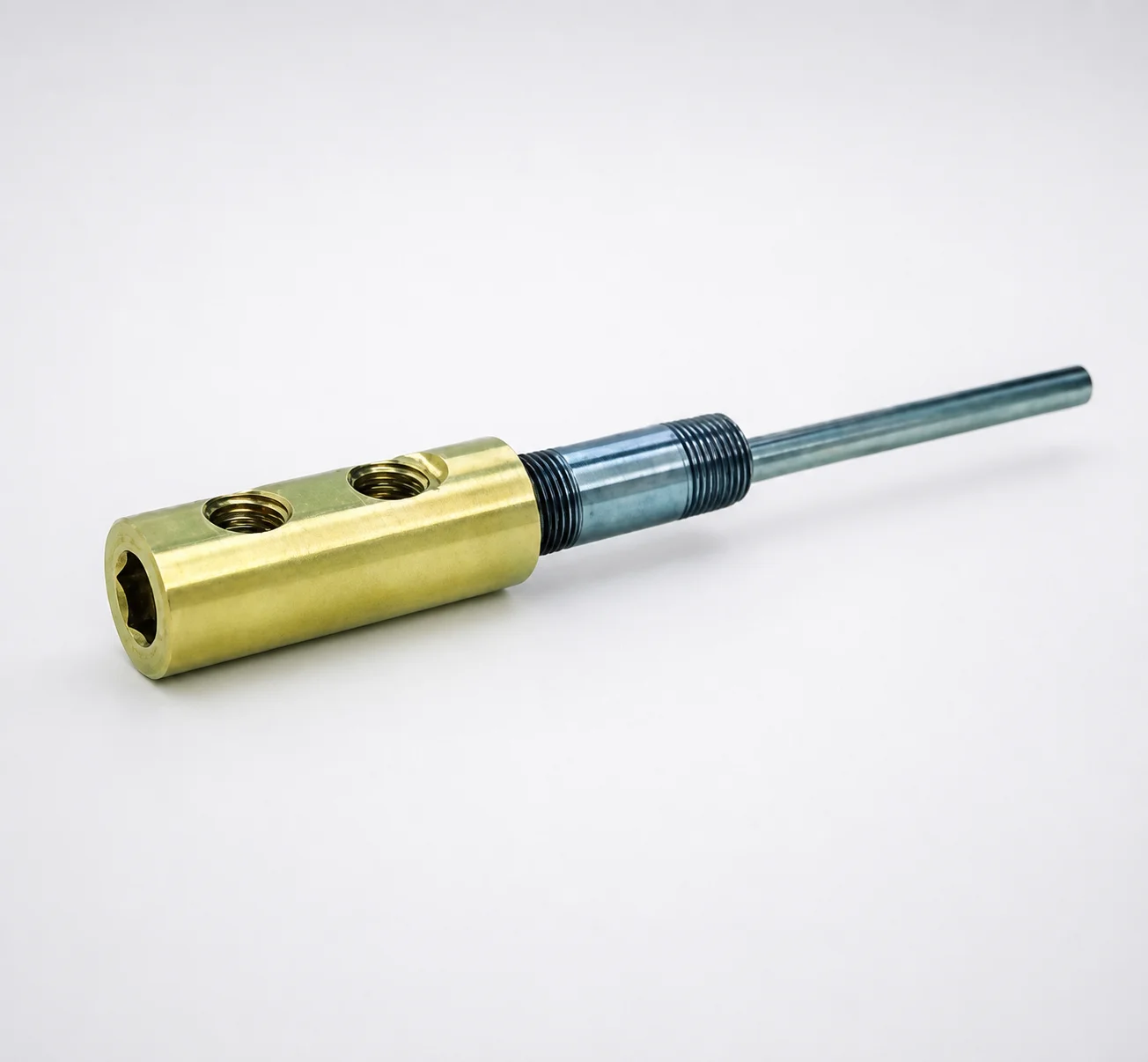
Cooling Water Mold Manifolds - Branching & Aggregating provide reliable thermal management by distributing coolant through complex mold piping. They help reduce temperature fluctuations, supporting stable process control and longer equipment life in injection molding.
- Branching and aggregating flow paths streamline coolant distribution
- Robust manifold design supports consistent thermal regulation
- Supports common hole layout selections for flexible plumbing integration
- Ideal for injection molding tools requiring stable cooling performance
Specifications
36 configurations available
| H (Hole processing surface) | N (Number of holes on one plane) (pieces) | G (Tapered screw selection) 1=1/8 2=1/4 3=3/8 4=1/2 6=3/4 8=1 10=1・1/4 12=1・1/2 | R (Tapered screw selection) 1=1/8 2=1/4 3=3/8 4=1/2 6=3/4 | type |
|---|---|---|---|---|
| A (1 face; up) | 1 | 1 ~ 12 | 1 ~ 6 | - |
| A (1 face; up) | 2 | 1 ~ 12 | 1 ~ 6 | - |
| A (1 face; up) | 3 | 1 ~ 12 | 1 ~ 6 | - |
| A (1 face; up) | 4 | 1 ~ 12 | 1 ~ 6 | - |
| AB (2 faces; up/left) | 1 | 1 ~ 12 | 1 ~ 6 | - |
| AB (2 faces; up/left) | 2 | 1 ~ 12 | 1 ~ 6 | - |
| AB (2 faces; up/left) | 3 | 1 ~ 12 | 1 ~ 6 | - |
| AB (2 faces; up/left) | 4 | 1 ~ 12 | 1 ~ 6 | - |
| ABC (3 faces; up/left/right) | 1 | 1 ~ 12 | 1 ~ 6 | - |
| ABC (3 faces; up/left/right) | 2 | 1 ~ 12 | 1 ~ 6 | - |
| ABC (3 faces; up/left/right) | 3 | 1 ~ 12 | 1 ~ 6 | - |
| ABC (3 faces; up/left/right) | 4 | 1 ~ 12 | 1 ~ 6 | - |
| AC (2 faces; up/right) | 1 | 1 ~ 12 | 1 ~ 6 | - |
| AC (2 faces; up/right) | 2 | 1 ~ 12 | 1 ~ 6 | - |
| AC (2 faces; up/right) | 3 | 1 ~ 12 | 1 ~ 6 | - |
| AC (2 faces; up/right) | 4 | 1 ~ 12 | 1 ~ 6 | - |
| B (1 face; left) | 1 | 1 ~ 12 | 1 ~ 6 | - |
| B (1 face; left) | 2 | 1 ~ 12 | 1 ~ 6 | - |
| B (1 face; left) | 3 | 1 ~ 12 | 1 ~ 6 | - |
| B (1 face; left) | 4 | 1 ~ 12 | 1 ~ 6 | - |
| BC (2 faces; left/right) | 1 | 1 ~ 12 | 1 ~ 6 | - |
| BC (2 faces; left/right) | 2 | 1 ~ 12 | 1 ~ 6 | - |
| BC (2 faces; left/right) | 3 | 1 ~ 12 | 1 ~ 6 | - |
| BC (2 faces; left/right) | 4 | 1 ~ 12 | 1 ~ 6 | - |
| C (1 face; right) | 1 | 1 ~ 12 | 1 ~ 6 | - |
| C (1 face; right) | 2 | 1 ~ 12 | 1 ~ 6 | - |
| C (1 face; right) | 3 | 1 ~ 12 | 1 ~ 6 | - |
| C (1 face; right) | 4 | 1 ~ 12 | 1 ~ 6 | - |
| K (Through hole) | 1 | 1 ~ 6 | - | - |
| K (Through hole) | 2 | 1 ~ 6 | - | - |
| K (Through hole) | 3 | 1 ~ 6 | - | - |
| K (Through hole) | 4 | 1 ~ 6 | - | - |
| L (L-shaped hole) | 1 | 1 ~ 6 | - | - |
| L (L-shaped hole) | 2 | 1 ~ 6 | - | - |
| L (L-shaped hole) | 3 | 1 ~ 6 | - | - |
| L (L-shaped hole) | 4 | 1 ~ 6 | - | - |
Product Guide
Application Scenarios+
These branching and aggregating cooling manifolds are used inside injection mold bases to split and re-combine coolant flow across multiple mold regions. In automotive connector molds, they help distribute coolant to densely cored areas, reducing temperature gradients that can affect knit lines and dimensional stability. The manifold’s multi-directional hole processing options (e.g., up/left/right face layouts) make it easier to align with existing drill patterns and flexible plumbing routing.
- Automotive connector molds: stable cooling across multiple cavities/cores to improve part-to-part consistency.
- Medical device housings: controlled thermal management supports tight tolerance molding where consistent shrink is critical.
- Thin-wall consumer components: efficient flow aggregation helps maintain uniform cooling and can support shorter cycle times.
The variant is suited for tooling where coolant must be routed through complex internal piping without sacrificing flow balance, enabling more stable process control during production.
Material & Process Details+
The provided product data specifies manifold geometry and hole/tap configurations, but it does not include a steel grade, heat-treatment state, or hardness value. As a result, the material properties (e.g., wear resistance, corrosion resistance) and thermal processing (e.g., quenching & tempering, nitriding) cannot be stated from the available specifications.
For similar mold cooling manifold applications, engineers typically select steels based on required cleanliness and corrosion resistance, then apply heat treatment to balance toughness vs. hardness for long service life in circulating water environments.
- Data available: hole processing surface codes (A/AB/ABC/AC/B/BC/C/K/L) and hole/tapered screw selection ranges.
- Data missing: steel grade, HRC, and heat treatment (pre-hardened, quenched & tempered, nitrided, etc.).
If you share the manifold material/part number revision or a datasheet that includes steel and hardness, I can add an accurate material + heat-treatment section.
Sizing & Selection Guide+
Select the manifold configuration by matching the hole layout and number of holes per plane to your mold’s internal cooling circuit design. The manifold supports hole processing surface options: A (1 face; up), AB (2 faces; up/left), ABC (3 faces; up/left/right), AC (2 faces; up/right), B, BC, C, and special forms such as K (through hole) and L (L-shaped hole).
- N (holes on one plane): choose 1, 2, 3, or 4 pieces to match the number of coolant branch connections required at that section of the cavity/core.
- G (tapered screw selection): select from 1=1/8 up to 12=1-1/2, with an indicated range of 1 ~ 12 (also shown as 1 ~ 6 for certain selections).
- R (tapered screw selection, fixed mapping): values map to 1=1/8, 2=1/4, 3=3/8, 4=1/2, 6=3/4 with an indicated 1 ~ 6 selection window.
When integrating into the mold, ensure the tapped/connection sizing (G/R selections) matches your hose/fitting or drilled passage sizes, and validate assembly clearances to maintain reliable coolant sealing. Because explicit dimensional ranges (e.g., outer diameter, length, port spacing) are not provided, confirm center distances against your cavity cooling layout before final procurement.
Frequently Asked Questions
How do I choose the correct hole processing surface (A/AB/ABC/AC/B/BC/C/K/L) for my cooling layout?+
Use the surface code to match where you need ports on the manifold relative to your mold orientation. For example, ABC is intended for ports on up/left/right faces, while A targets a single up-facing plane. If your design uses straight runs, consider K (through hole); for corner routing, consider L (L-shaped hole).
What does the N parameter (number of holes on one plane) control, and how does it affect coolant balancing?+
N specifies how many branch connections are available on one plane (1, 2, 3, or 4). Increasing N allows more distribution points, which can help reduce local temperature peaks in multi-region molds. To maintain balanced flow, pair N with the rest of your branch/aggregate plumbing strategy across the cavity/core.
Which tapered screw selection should I use: G (1–12) or R (1–6), and what port size do they correspond to?+
Both G and R represent tapered screw selections, but they have different indicated ranges and mappings. For G: selections map from 1=1/8 through 12=1-1/2, with the data indicating 1 ~ 12 (and also 1 ~ 6 for certain configurations). For R: 1=1/8, 2=1/4, 3=3/8, 4=1/2, 6=3/4, with an indicated 1 ~ 6 selection window.
Can I use this manifold variant for both branching and aggregating functions within the same mold cooling circuit?+
Yes—this series is specifically described as a branching & aggregating manifold, meaning it can distribute coolant to multiple regions and then combine flow for return depending on how you plumb the circuit. Choose the face layout (A/AB/ABC/AC/B/BC/C/K/L) and N (1–4) so your pipeline topology matches the intended split/recombine points.
What material grade and hardness is this manifold made from?+
The provided specifications list only geometry and screw/port selections (hole surface codes, N, G, R). No steel grade, hardness (HRC), or heat treatment state is included in the available input data. If you provide the datasheet/material revision for series_code 110200185520, I can map it to the appropriate material properties and thermal processing.
Related Products
Need Custom Specifications?
Our engineering team can help with custom configurations, material selection, and volume pricing.