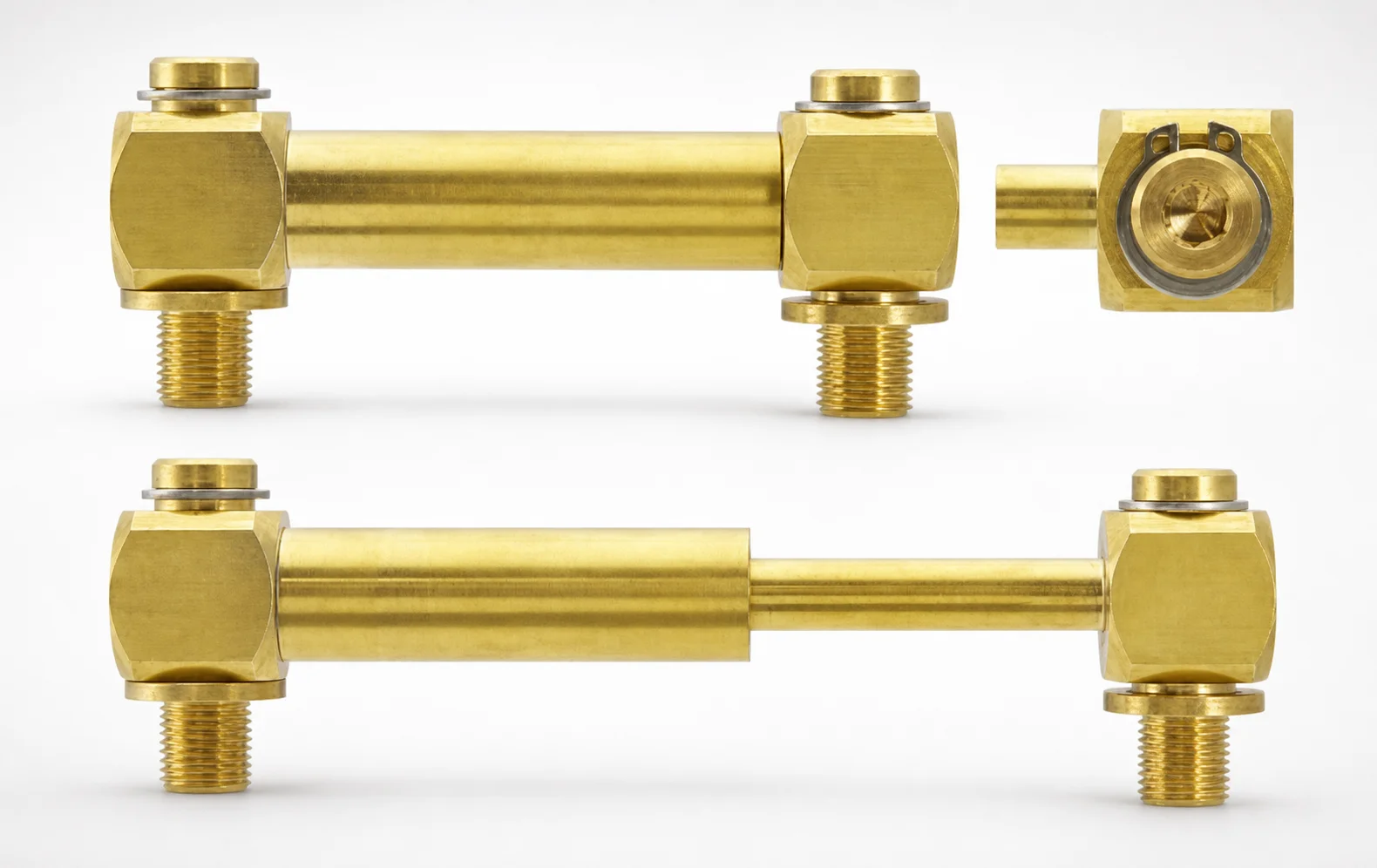
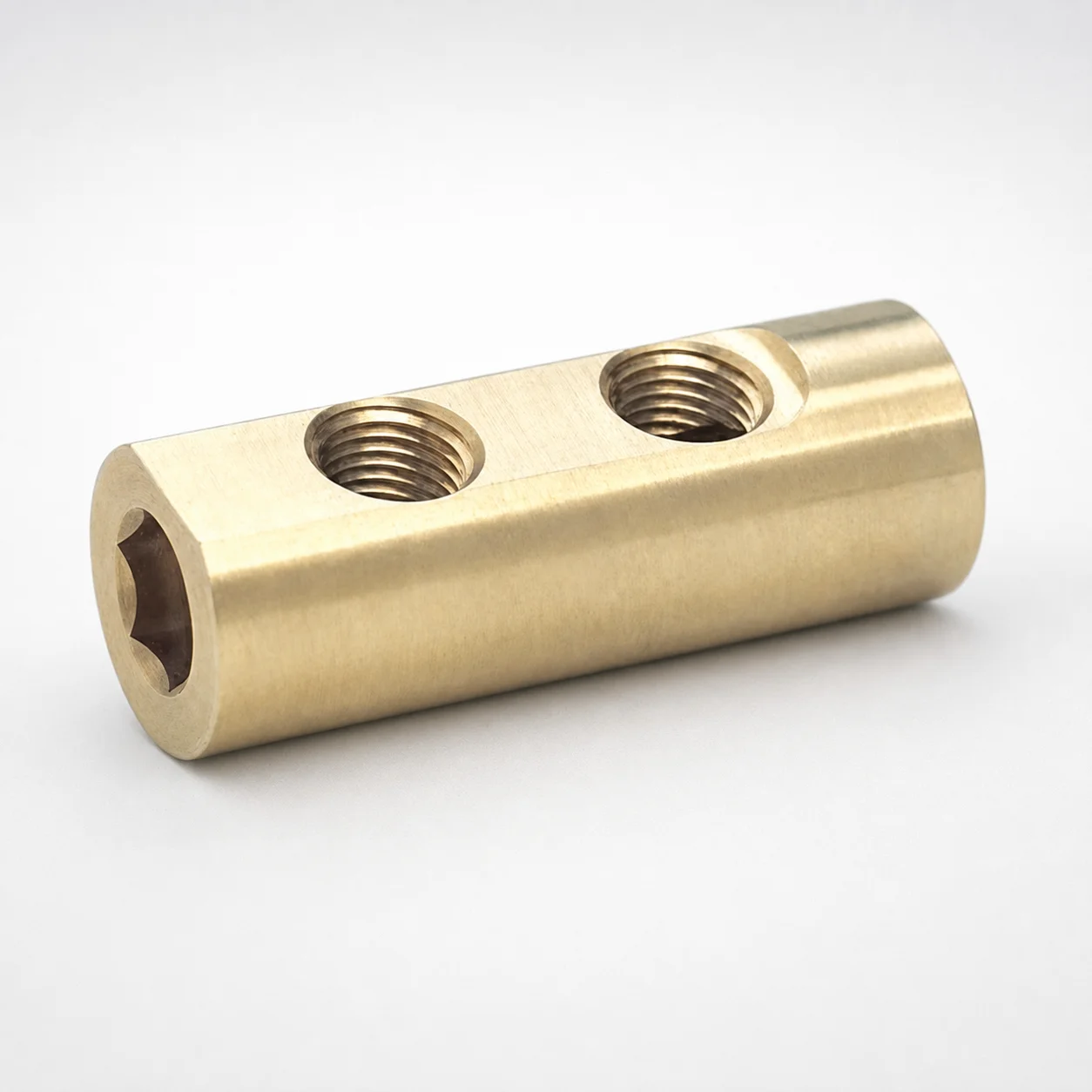
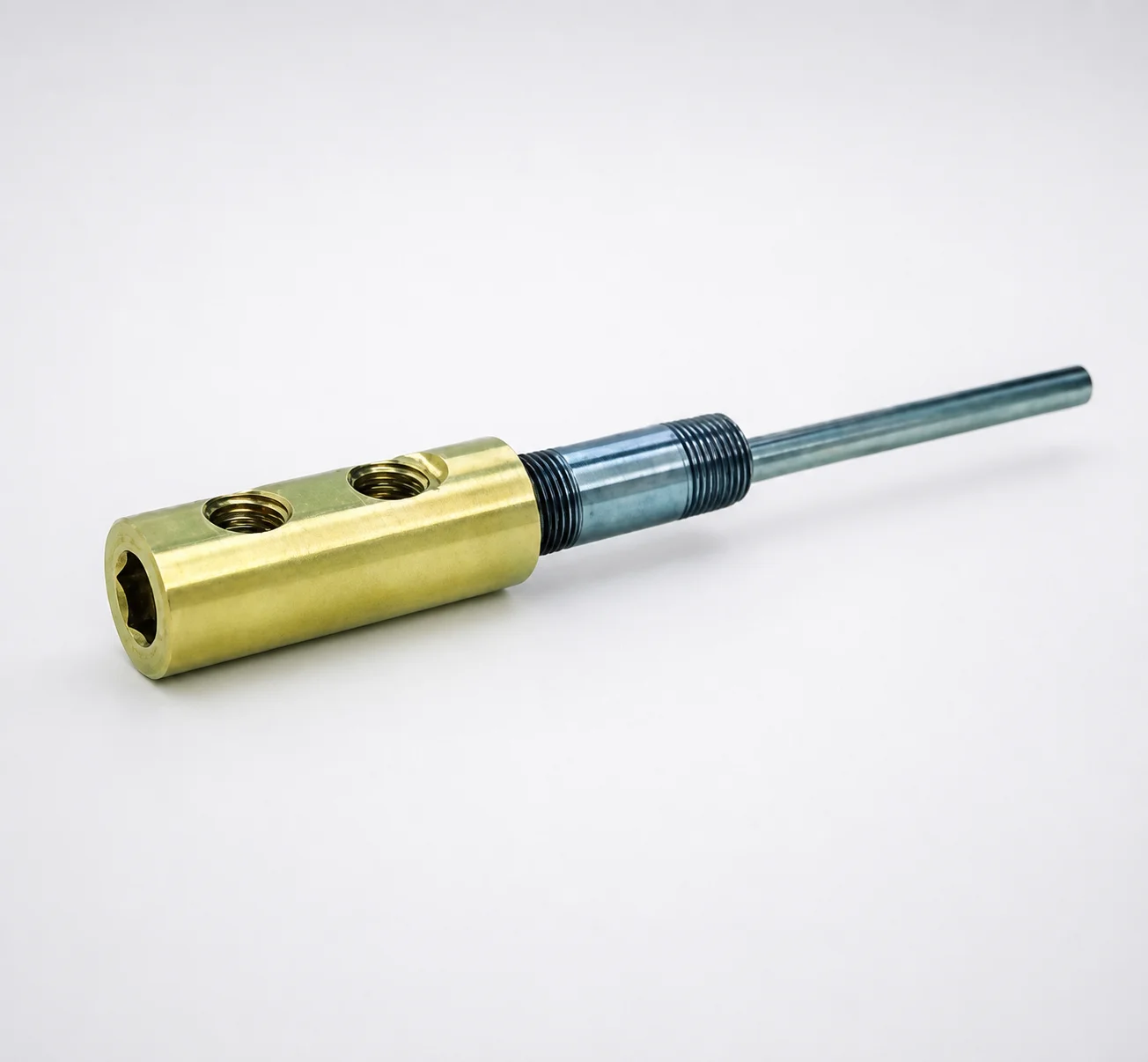
JWRH Cooling Uni-Joint Plugs (Brass) - Extendable Tube
Cooling Uni-Joint Plugs (Brass) for extendable tube cooling circuits provide heat-resistant insulation to reduce heat transfer between adjoining components. The JWRH type supports stable thermal management and helps protect sensitive systems from overheating in industrial environments.
- Insulates adjoining fittings to minimize unwanted heat transfer
- Brass construction designed for reliable, heat-resistant performance
- JWRH type cooling plug maintains consistent protection under load
- Used in cooling circuit assemblies requiring controlled thermal management
Specifications
2 configurations available
| Dimension L (mm) | type |
|---|---|
| 50 | - |
| 65 | - |
Product Guide
Application Scenarios+
These extendable-tube cooling uni-joint plugs are used inside injection mold interior cooling circuits where two adjoining fittings must be thermally insulated. In automotive connector and housing molds, the plugs help reduce heat transfer between neighboring cooling segments, supporting more stable cavity temperature control during high-cycle production.
They also fit well in medical device housings and other precision parts where localized temperature variations can affect dimensional stability. The brass construction and the JWRH configuration provide heat-resistant insulation to protect temperature-sensitive surrounding components without compromising cooling continuity.
- Cooling circuit assemblies: install as insulating uni-joint plugs between adjoining tube/fitting sections.
- Thermal stability needs: help limit unwanted heat migration across junctions.
- Extendable tube layouts: support modular circuit designs while maintaining insulation performance.
Material & Process Details+
The JWRH variant uses a brass body for insulating performance in mold interior cooling circuits. Brass provides good thermal conductivity compared with polymer insulators, while still supporting controlled heat transfer at the junction level, helping reduce excessive temperature influence between adjoining components.
Because the provided specification data does not include a specific brass alloy grade, hardness (HRC), heat-treatment condition, or nitriding/carburizing details, no exact HRC or tempering parameters are stated here. In general, brass components are typically manufactured from brass stock via machining and assembly, then deburred/finished to maintain reliable sealing and fit in the circuit.
- Property trade-off: brass balances machinability and service reliability with insulation-by-design at the fitting junction.
- Heat-treatment note: no specific quench/temper or nitriding state is specified in the supplied data.
Sizing & Selection Guide+
Select the plug length based on the required insulation span between adjoining cooling components. The supplied specification lists Dimension L (mm): 50, 65, so choose L to match the effective junction length in your circuit layout.
- Match cavity/core layout: determine the distance along the cooling circuit between the two adjacent fittings/tube ends and select L so the insulated section covers the overlap region.
- Consider assembly clearance: ensure the selected L does not interfere with surrounding mold hardware, especially in tight manifold or channel layouts.
- Fit & tolerance: use the same mating geometry and recommended connector/fitting specifications from your cooling circuit design to maintain stable thermal insulation at the junction.
Since only L values (50 or 65 mm) are provided, other dimensions are not configurable from the input data; confirm compatibility with your specific extendable tube fittings and connector interfaces.
Frequently Asked Questions
Which length options (L) are available for the JWRH cooling uni-joint plugs with extendable tube support?+
What role does the JWRH brass uni-joint plug play in mold interior cooling circuits?+
Is this plug designed to reduce temperature influence between neighboring cooling segments?+
What material and heat-treatment state should I assume for thermal/maintenance planning?+
Related Products
Need Custom Specifications?
Our engineering team can help with custom configurations, material selection, and volume pricing.