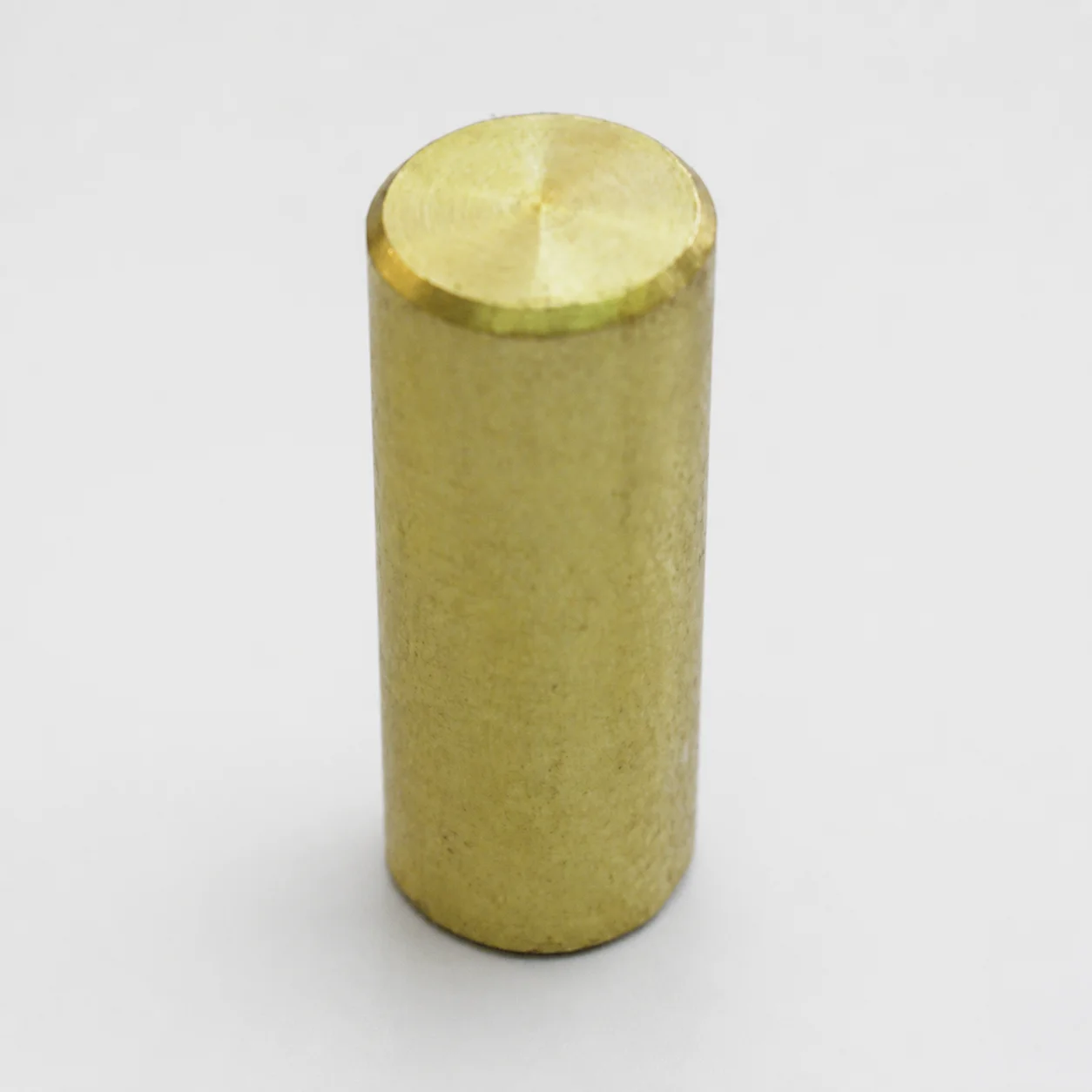
Brass Waterline Spacers - Inch
Brass waterline spacers - inch help redirect water flow in mold and cooling channel systems. Their longer-than-diameter design prevents intersecting waterlines while maintaining reliable coolant routing.
- Built to redirect water flow without creating intersecting passages
- Used with brass waterline rods for consistent line alignment
- Inch spacer sizes match common workshop and tooling layouts
- Supports stable cooling performance in industrial waterline assemblies
Specifications
2 configurations available
| Spacer Diameter (in) |
|---|
| 9/16" |
| 11/16" |
Product Guide
Application Scenarios+
Where it’s used: These inch brass spacers are installed in mold interior cooling circuit layouts to reroute coolant flow while avoiding intersecting waterlines. They are commonly used during machining of waterline channels, especially when additional spacing is needed between adjacent passages.
How it’s used: Pair the spacer with a compatible brass waterline rod so the rod alignment stays stable through assembly. The longer-than-diameter design helps keep drilled/formed segments from crossing, which reduces risks of poor sealing and erratic flow.
- Automotive connector and bracket molds: Helpful for organizing compact cooling near parting lines or thin ribs where channel spacing is tight.
- Industrial plastic housings: Supports predictable thermal management by keeping coolant routing orderly in multi-line cooling blocks.
- General tooling waterline assemblies: Inch-based sizing matches standard workshop layouts and simplifies repeat builds.
Why this variant fits: The inch spacer options (9/16" and 11/16") provide practical dimensional steps for routing without intersecting channels, maintaining reliable coolant distribution.
Material & Process Details+
Material: The spacer is made from brass, selected for its machinability and stable performance in coolant-contact tooling environments. Brass is typically chosen for interior cooling circuit components where ease of fit and consistent assembly alignment matter.
Manufacturing process: These spacers are produced to precise inch dimensions, designed to be used with brass waterline rods. In practice, engineers install them as part of a waterline assembly to support correct spacing and prevent channel intersections.
- Heat treatment: The provided data does not specify a specific heat-treat condition (e.g., quenched/tempered, nitrided). Therefore, heat treatment requirements should be confirmed with the production documentation for your lot.
- Properties: Brass generally offers good corrosion resistance in many cooling-water systems, but it is not as hard as tool steels; this is a trade-off versus wear resistance where components see abrasive contact.
Comparison note: For highly abrasive or high-wear applications, engineers often consider hardened tool steel components; however, this product is explicitly intended for waterline spacing/routing with brass rods.
Sizing & Selection Guide+
Step 1 — Choose the correct diameter: This product is available in Spacer Diameter (in) of 9/16" and 11/16". Select the diameter that matches the spacing requirement of your intended cooling channel layout.
Step 2 — Match the spacer to your waterline routing geometry: The spacer’s purpose is to help prevent intersecting waterlines while maintaining continuous coolant routing. Use the diameter that creates adequate separation between nearby drilled/formed channel paths in the mold block.
- Core/cavity blocks: When multiple parallel channels are close, select the larger diameter (11/16") if your layout requires greater separation to keep passages from crossing.
- Compact tool inserts: Use 9/16" where channel density is high but you still need non-intersecting routing.
Tolerance & fit considerations: The provided specifications list diameter values but do not include explicit tolerance ranges. Confirm fit requirements against your brass rod dimensions and your assembly’s sealing method to ensure correct alignment and consistent coolant flow.
Configurable vs fixed dimensions: Diameter is fixed per option (9/16" or 11/16"); lengths and other dimensions are not specified in the provided data.
Frequently Asked Questions
Which spacer diameter should I choose to avoid intersecting waterlines in a tight cooling block?+
Is this waterline spacer intended to be used with brass waterline rods, and how does that affect alignment?+
Does the provided spec include heat treatment for this brass spacer?+
What are the available dimensional options for this inch spacer?+
Is there a tolerance guidance for matching the spacer to my existing cooling channel and rods?+
Related Products
Need Custom Specifications?
Our engineering team can help with custom configurations, material selection, and volume pricing.