Pusher Pins
Spring-loaded pins for specialized ejector block applications. Built-in spring provides automatic return force after ejection stroke.
Available Pusher Pins
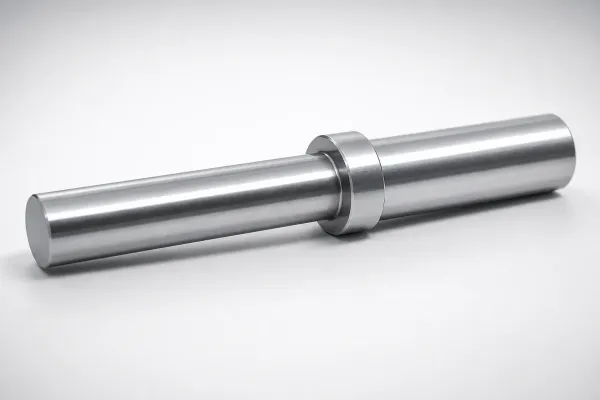
Pusher Pin vs Standard Ejector Pin
| Feature | Pusher Pin | Standard Ejector Pin |
|---|---|---|
| Return mechanism | Built-in spring | Ejector plate retraction |
| Independence | Self-returning | Tied to plate stroke |
| Applications | Ejector block, secondary ejection | Primary ejection |
Pusher Pin vs Standard Ejector Pin
Pusher pins add a spring-return mechanism. Confirm you need the automatic return feature:
✅ Pusher pins are the right choice if:
- The ejector plate return mechanism is unreliable or has a history of delayed return
- The mold runs in a horizontal press where gravity prevents natural pin return
- You need guaranteed pin retraction before mold close to prevent pin damage
- The mold has a complex ejection sequence where some pins must retract before others
🔄 Use standard ejector pins if:
- The ejector plate return system works reliably → spring mechanism is unnecessary cost (+20-30%)
- The mold runs in a vertical press → gravity assists pin return naturally
- All pins retract simultaneously → no sequential return requirements
- See Straight Ejector Pins for the full standard product range
Decision rule: Pusher pins are insurance against ejector return failures. Use them selectively on critical pins (closest to gates, tallest pins) rather than replacing all pins with pusher types — a mixed approach provides safety at minimal cost increase.
About
Pusher pins are spring-loaded ejection components that provide automatic return force. Unlike standard ejector pins that are retracted by the ejector plate system, pusher pins use a built-in compression spring to return to the home position. This makes them suitable for secondary ejection stages, delayed ejection timing, and ejector block applications where the pin operates independently of the main ejector plate stroke.
Application Scenarios
Secondary Ejection Stage
Two-stage ejection where the second stage requires independent pin return timing.
Why it fits: Spring return allows the pusher pin to retract at its own rate, independent of the main ejector plate.
Recommended: Pusher pin with appropriate spring force for the part weight
Frequently Asked Questions
How does a pusher pin differ from a standard ejector pin?+
What is the spring return force of a pusher pin?+
Can pusher pins be used in high-cycle molds?+
Engineering Resources
Need a Custom Quote?
Specify your requirements — we respond within 1 business day.