Air-Jet Valves
Pneumatic ejection valves that release parts without mechanical contact — compressed air blast through a poppet valve breaks vacuum and lifts the part from the cavity. For optical parts, thin films, and cosmetic surfaces where zero witness marks are mandatory.
Air-Jet Valve Products
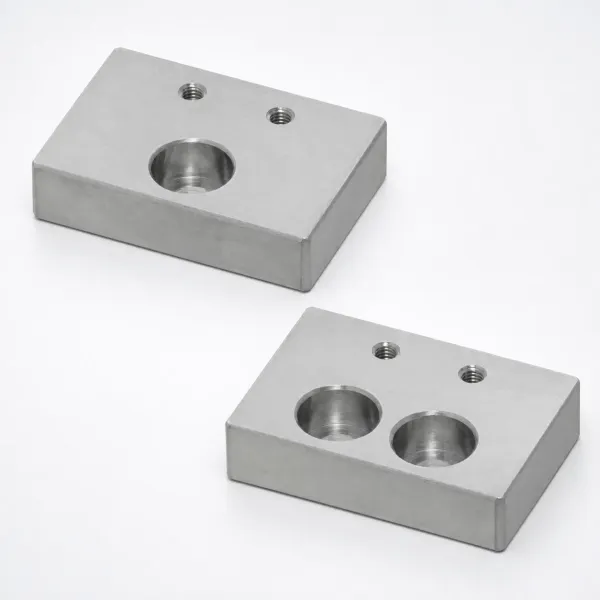
Complete Air-Jet Valve System
A functional air-jet ejection system requires several components working together:
| Component | Function | Source |
|---|---|---|
| Air-Jet Valve Body | Installed in mold, delivers air blast to cavity | This catalog |
| Replacement Seal Kit | O-rings and poppet seals for maintenance | Accessories catalog |
| Air Supply Fitting | Connects valve to shop air line | Standard pneumatic fittings |
| Solenoid Valve | Controls air blast timing (synced with ejection stroke) | Standard pneumatic controls |
| Compressed Air Supply | 0.3–0.6 MPa (3–6 bar) clean dry air | Shop air system |
Installation note: All components except the valve body and seal kit are standard pneumatic parts available from any pneumatic supplier. The solenoid must be synchronized with the mold's ejection stroke signal. For a complete installation checklist, see our Air Ejection vs Mechanical Ejection: When to Use Each.
Air Ejection vs Mechanical Ejection
Air-jet valves are a specialty product. Confirm you need pneumatic ejection:
✅ Air-jet valves are the right choice if:
- The part has optical or cosmetic surfaces where any witness mark is unacceptable
- The part is too thin or flexible for mechanical pin push (typically <0.3mm wall)
- Vacuum lock is preventing clean part release from a flat cavity surface
- Part weight is <50g (air pressure alone can eject it)
🔄 Use mechanical ejection instead if:
- Part weight exceeds 50g → insufficient air force for clean ejection
- Part has deep-draw features requiring directional push force → Straight Ejector Pins
- Small witness marks on B-surface are acceptable → mechanical pins are simpler and cheaper
- Budget is limited → air ejection systems cost 3-5× more than mechanical
Best practice: Air-jet valves are typically used as supplementary ejection alongside reduced-force mechanical pins. Pure air ejection is viable only for very light, thin parts. For a full comparison, see our Air Ejection vs Mechanical Ejection: When to Use Each.
Application Scenarios
Optical Lenses & Light Guides
PMMA or PC optical parts where any surface imperfection causes light distortion or scattering.
Why air-jet fits: Zero-contact ejection preserves optical surface quality. Air blast simultaneously breaks vacuum lock common on flat optical surfaces.
Recommended: Air-jet valve at center + minimal support pins at non-optical edges
Medical Device Packaging
Thin-wall blister packs, vial trays, and sterile packaging where mechanical contact risks part deformation.
Why air-jet fits: Parts too thin and flexible for mechanical push. Air provides distributed ejection force across the entire surface.
Recommended: Multiple air-jet valves spaced across the cavity floor
Frequently Asked Questions
When to use air ejection?+
Required air pressure?+
What accessories are needed?+
Engineering Resources
Need a Custom Quote?
Specify bore diameter and required air pressure — we'll recommend the right valve configuration.