Taperless Core Pins
Cylindrical retention shank — no taper reaming required. Faster plate machining, simpler pin replacement.
Product Categories
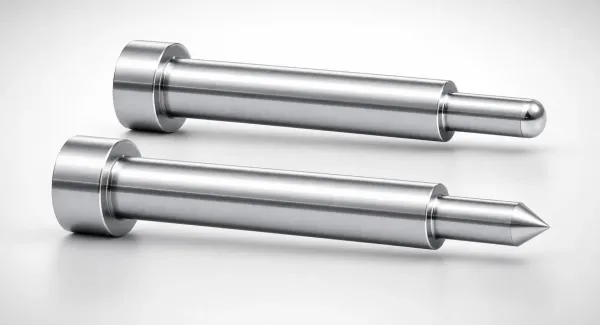
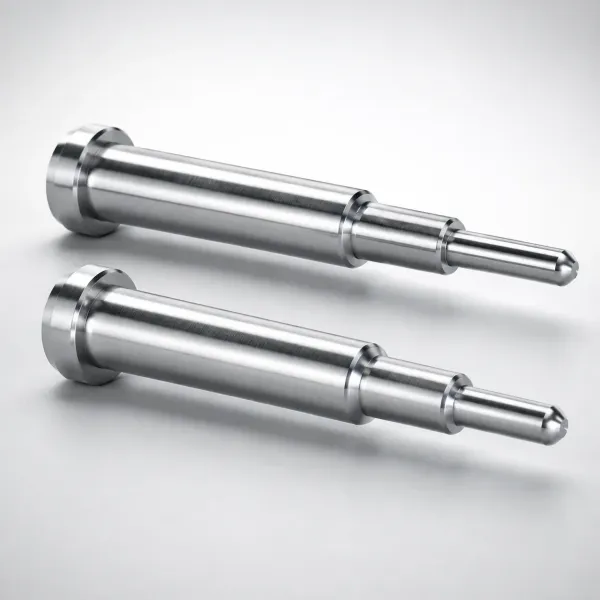
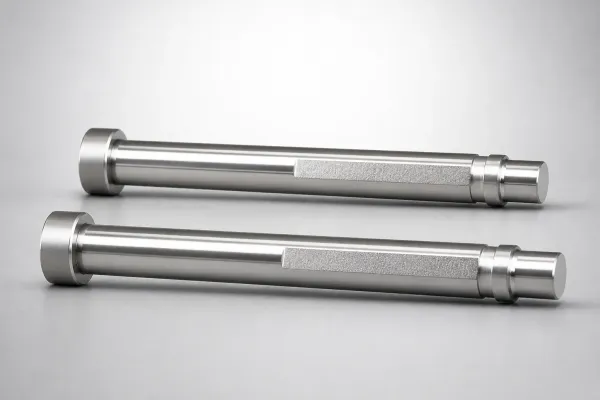
Taperless Variant Comparison
Three taperless configurations available. Select based on your cavity geometry and venting requirements:
| Criteria | One-Step Taperless | Two-Step Taperless | Gas Release Taperless |
|---|---|---|---|
| Diameter Sections | 2 (one transition) | 3 (two transitions) | 2 + venting |
| Retention Method | Cylindrical interference fit | Cylindrical interference fit | Cylindrical + vent flat |
| Best For | Standard counterbored holes, fast mold build | Multi-diameter with fast maintenance | Deep cavities needing venting + fast swap |
Cost Advantage: Taperless vs Standard Taper
Taperless pins eliminate taper-reaming from plate machining. Quantified benefits on high-cavity molds:
Technical Overview
In conventional installations, the mold plate bore must be taper-reamed to match the pin's tapered shank — a time-consuming precision operation. Taperless core pins bypass this entirely by using a precision-ground cylindrical shank retained by interference fit in a straight bore.
This approach offers two practical advantages. First, plate machining is faster and simpler — standard drill and ream operations replace taper reaming. Second, pin replacement is more straightforward — any pin of the same shank diameter can be swapped in without verifying taper angle compatibility.
Taperless designs are particularly valued in high-cavity molds where dozens of core pins must be installed and periodically replaced. The time savings compound across every bore in the mold.
Frequently Asked Questions
Advantages of taperless?+
Suitable for high-cycle production?+
Best vent type for taperless?+
Related Product Categories
Engineering Resources
Case Studies
Need a Custom Quote?
Send your specifications — material, dimensions, quantity — and receive a quote. MOQ: 1 piece. Custom dimensions available.